
 Support ZN.ua











What if Temperatures Drop to –20°C? Can Ukraine’s Energy System Cope?
“Peace Referendum”: Can Authorities Rely on People’s Will

20 january, 2026, 11:30
Share
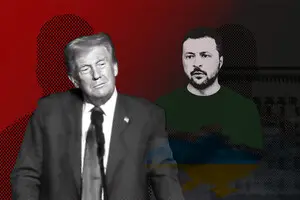
Ukraine is entering a phase of complex and potentially painful negotiations. Territorial issues are among the most acute. Russia insists on the withdrawal of Ukrainian troops from the Donetsk and Luhansk regions. The President of Ukraine has publicly spoken out against such conditions. At the same time, external pressure is intensifying: in particular, Donald Trump has directly stated that concessions may be necessary as a condition for ending the war.
The internal situation is also far from stable. Crisis phenomena in the system of governance, corruption scandals, serious problems with mobilization and public fatigue after four years of full-scale wa all create a context in which the country may objectively require a pause. The only question is on what terms.
What exactly the negotiations will lead to remains unknown. However, a key idea has already been voiced: the president has acknowledged that at a certain point he may need to rely on public opinion. It is precisely at this point that political logic collides with legal logic.
ВАС ЗАИНТЕРЕСУЕТ
Do the current legislation and the Constitution of Ukraine allow such issues to be put to a nationwide referendum today? And if political reality pushes the authorities toward such a step—is there a way to do it, and is it worth seeking such a way at all?
Yes, history offers similar examples. In the United Kingdom, the decision to leave the European Union was taken following a referendum. Formally, the country did not have a “general” law on referendums as a mandatory institution of democracy—the British constitution is uncodified and is based, inter alia, on case law and acts of the Parliament. However, the Brexit referendum was conducted on the basis of a special legal act—the European Union Referendum Act 2015, adopted by the Parliament. This, however, did not ease political tensions; on the contrary, it triggered a years-long institutional crisis and deep societal division.
Ukraine is not the United Kingdom. It has a written Constitution, clearly delineated powers of state authorities and significantly higher risks to statehood under conditions of war. That is why the issue is not only whether the authorities can appeal to the will of the people, but also whether there exists a constitutionally permissible mechanism for doing so—and what will happen if an attempt is made to create such a mechanism politically rather than through legal means.
What Ukraine’s Constitution says about referendums
The Constitution of Ukraine delineates quite clearly when, by whom, and on what issues a referendum may be held. The space for political improvisation here is far narrower than is often assumed in public debate.
The Basic Law distinguishes between local and nationwide referendums. Local referendums are possible only at the level of territorial communities—villages, settlements, cities and the Autonomous Republic of Crimea—on matters falling within its competence. The Constitution does not provide for regional or district referendums, as no corresponding communities exist as agents expressing popular will. At the same time, since 2012 Ukraine has had no valid law on local referendums. This means that no local referendum can currently be lawfully called, and any attempts to conduct such a vote are legally null and void.
The only form of referendum that remains regulated by law is the nationwide referendum. The Constitution establishes an exhaustive list of actors empowered to call it.
The President of Ukraine may call a nationwide referendum in only one case: to approve a law on amendments to Chapters I, III or XIII of the Constitution, already adopted by the Verkhovna Rada.
The Verkhovna Rada of Ukraine, for its part, may call a referendum only on changes to the territory of Ukraine—and exclusively within the constitutional logic of preserving the sovereignty and territorial integrity of the state.
ВАС ЗАИНТЕРЕСУЕТ

The Constitution contains no other powers to call a nationwide referendum—neither for the president nor for the parliament.
Separately, the possibility of a referendum by popular initiative is provided for (subject to the collection of at least three million signatures in no fewer than sixteen regions, with at least 100,000 signatures in each). But here, too, a fundamental limitation applies: such a referendum may not go beyond the Constitution or concern matters that, by their nature, are inadmissible for referendum consideration. Article 74 of the Constitution of Ukraine contains a far from exhaustive list of restrictions on initiating and proclaiming a nationwide referendum by popular initiative.
Thus, a nationwide referendum in Ukraine is not a universal instrument for “relying on the will of the people”; it is a strictly limited mechanism of direct democracy with clearly defined agents, subject matter and procedures.
What a “peace referendum” means—and why this is a problem
In public discourse, the formula “peace referendum” is being used with increasing frequency. From a legal standpoint, however, it is closer to a political metaphor than to a defined legal instrument.
The Constitution of Ukraine does not recognize such a subject of referendum. Under this label, very different things may be implied: approval of an international agreement, consent to certain of its provisions, a general political consultation with citizens or a plebiscite. None of these options, in this form, is envisaged by the current constitutional model.
The issue of treaties is particularly fundamental here. The Constitution clearly delineates powers in this area: the President of Ukraine concludes treaties, while the Verkhovna Rada gives consent to their binding force or decides on the denunciation of treaties already in effect. A referendum is not part of this procedure.
Moreover, pursuant to Article 9 of the Constitution, only those treaties whose binding force has been approved by the parliament become part of national legislation. Submitting such matters to a referendum would therefore amount to bypassing the constitutional procedure.
Why decisions “on peace” cannot be legalized through a referendum
Even theoretically, the conclusion of treaties that contradict the Constitution of Ukraine is possible only after amendments to the latter are made. At the same time, the Constitution itself contains rigid safeguards.

It may not be amended if the proposed changes envisage restrictions on human rights and freedoms, the elimination of independence or a violation of the territorial integrity of the state. In addition, the Constitution explicitly prohibits amendments during martial law or a state of emergency.
Thus, even hypothetically, it is impossible to legalize through a referendum the decisions that fall outside constitutional provisions on sovereignty and territorial integrity. For this reason, a “peace referendum,” in a legal sense, is a fiction: it has no permissible subject matter.
Legal consequences of the referendum
It is sometimes assumed that even in the absence of a constitutional basis, a referendum could be advisory in nature. However, the Ukrainian legal model does not allow for such constructs.
The Constitution of Ukraine does not provide for consultative referendums. The Constitutional Court has repeatedly emphasized that the results of popular will expressed through forms of direct democracy are binding.
At the same time, the binding nature of the result does not remove the core problem: if the subject of the referendum is unconstitutional, its decision cannot be implemented within the legal framework. In such a situation, the state finds itself in an institutional trap—the result of the popular vote formally exists, but there is no mechanism for its execution.
Referendum, plebiscite and the dangerous conflation of concepts
In global practice, there is a clear distinction between a referendum and a plebiscite. A referendum is typically an instrument for adopting normative decisions—constitutions or laws. A plebiscite, by contrast, serves as a means of political legitimation of a course already determined by those in power.
ВАС ЗАИНТЕРЕСУЕТ
The Constitution of Ukraine makes no provision for the concept of a plebiscite. This is why substituting a referendum with plebiscitary logic is dangerous: it creates the illusion of popular sovereignty while blurring the lines of responsibility between the people and state institutions.
The Constitutional Court as a safeguard
The Ukrainian constitutional system does contain an institutional mechanism designed to prevent unconstitutional scenarios. The Constitutional Court of Ukraine is empowered to assess questions proposed for a nationwide referendum initiated by popular initiative as to their compliance with the Constitution.
Such a motion may be initiated by the President of Ukraine or by at least 45 MPs. The Court does not evaluate political expediency; its task is limited to determining constitutional permissibility.
Martial law and the limits of democracy
The context of martial law deserves particular attention. One of the core principles of a referendum is free participation, which encompasses not only the act of voting itself but also the prior free formation of political will.
ВАС ЗАИНТЕРЕСУЕТ
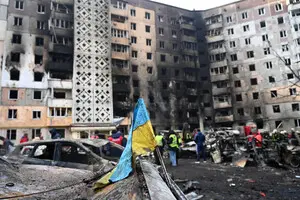
Under wartime conditions, this principle cannot be ensured. Restricted access to information, unequal conditions for campaigning, security risks and structural inequality of participation make the conduct of a genuinely democratic referendum incompatible with accepted standards.
The formal possibility of amending the law on nationwide referendums during martial law does not automatically render such decisions legitimate.
A personalized referendum as a political trap
In public discourse, assumptions are increasingly voiced that a hypothetical “peace referendum” might not concern territorial issues as such or the ratification of an international treaty. Given the desire of certain representatives of the authorities to combine a referendum with presidential elections and thereby strengthen the incumbent president’s electoral position, the personalized nature of such a question cannot be ruled out. For example: “Do you approve of the peace plan of the President of Ukraine, Volodymyr Zelenskyy, as made public?”
Inviting citizens to endorse a static “peace plan” under conditions of a dynamically evolving war would be both short-sighted and irresponsible. Geopolitical and military circumstances may change, opening up alternative and potentially more favorable scenarios for Ukraine. All the more so because the strategic objective of the Russian Federation extends beyond the revision of borders to the dismantling and disappearance of Ukraine from the political, ethnographic, and linguistic map of the world.
The aggressor state systematically disregards fundamental principles of international law, including pacta sunt servanda—the good-faith performance of international obligations. Any “peace guarantees” obtained under pressure or threat of force therefore cannot be considered reliable.
It is also important to emphasize that no nationwide referendum on altering Ukraine’s territory—whether initiated by popular initiative or called by the Verkhovna Rada—can amend the Constitution of Ukraine. The procedure for constitutional change is clearly defined in Chapter XIII of the Basic Law and cannot be circumvented by political decisions.
International law likewise leaves no room for legitimizing the consequences of aggression. Under UN General Assembly Resolution No. 3314, aggression constitutes an international crime, and any territorial acquisitions resulting from it cannot be recognized as lawful. Pursuant to the Vienna Convention on the Law of Treaties, an agreement concluded under the threat or use of force is legally void.
ВАС ЗАИНТЕРЕСУЕТ
Thus, even a hypothetical referendum approving a “peace plan” would have no real legal consequences. Instead, it could become an element of an electoral strategy. But if electoral gain rather than the Constitution, national interests and international law becomes the priority of state policy, the risk of losing independence will move from the realm of metaphor into that of practical reality.
Why the referendum idea is appealing—and dangerous
Calling for a referendum appears politically attractive. It creates a sense of shared responsibility and ostensibly allows the burden of difficult decisions to be distributed. Yet in a state governed by the rule of law, popular sovereignty does not mean extra-legal expression of will. This is precisely what distinguishes democracy from mob rule: in the former, the people exercise power through existing constitutional mechanisms; in the latter, the Law itself is disregarded.
Accordingly, in a democratic system, the people’s power is exercised in the forms, on the grounds and in the manner prescribed by the Constitution and laws. A referendum that goes beyond these limits does not strengthen unity but creates the risk of deep institutional and societal division—especially under conditions of war.
The question, therefore, is not merely whether the authorities can rely on the will of the people, but whether there exists a constitutionally permissible mechanism for doing so—and what price the state may pay for attempting to substitute law with political expediency.
In lieu of conclusions: Responsibility that cannot be delegated
Ukraine finds itself in circumstances for which no ready-made constitutional scenarios exist. Full-scale war, the erosion of international law, pressure from external actors, territorial issues, and societal fatigue together form a reality that the Basic Law neither could nor should have detailed exhaustively. The Constitution contains no “wartime peace plan,” just as it provides no ready-made recipes for decision-making at a moment of civilizational rupture.
For this very reason, responsibility for such decisions cannot be mechanically distributed or shifted—neither to the people, nor to a referendum, nor to an abstract “will of the majority.” Under the Constitution of Ukraine, international treaties are concluded by the president, while the Verkhovna Rada grants consent to their binding force. This is not a technical detail but a fundamental logic of responsibility: the state entrusts complex and potentially fatal decisions to elected institutions rather than exporting them beyond the legal framework.
ВАС ЗАИНТЕРЕСУЕТ

Relying on public opinion in this situation may have different motivations. It may be an attempt to share the moral burden of a decision. It may be a sincere search for societal consensus. Or it may be a reaction to an internal crisis of trust in institutions currently suffering from corruption and managerial exhaustion. But regardless of motive, a referendum cannot substitute responsibility—and cannot legitimize it where the Constitution does not permit this.
The problem is compounded by the fact that the parliament and the government themselves are experiencing a crisis of trust. Corruption scandals, the dependence of some political decisions on informal influence, and the loss of institutional agency all undermine the authorities’ capacity to act as a coherent whole. Against this background, however, the president remains the figure who—despite all caveats—retains a higher level of public trust during wartime than parliament or government, particularly given his status as Supreme Commander-in-Chief of the Armed Forces of Ukraine, as confirmed by sociological data. This makes the issue of responsibility even more acute.
Under such conditions, genuine leadership consists not in outsourcing decisions to an external mechanism—even under the banner of popular sovereignty—but in assuming them within the framework of the Constitution. Taking societal sentiments into account, openly explaining the logic of actions and bearing political and moral responsibility for their consequences—without replacing legal procedures with plebiscitary simulations.
ВАС ЗАИНТЕРЕСУЕТ
Popular sovereignty in wartime is not a vote “for” or “against” complex international decisions. It is trust in institutions acting within the Constitution and the readiness of those institutions to answer for their decisions. Anything else—even if it appears democratic—creates the risk not of unity, but of rupture.
Noticed an error?
Please select it with the mouse and press Ctrl+Enter or Submit a bug
Stay up to date with the latest developments!
Subscribe to our channel in Telegram
 Follow on Telegram
Пожалуйста выберите один или несколько пунктов (до 3 шт.) которые по Вашему мнению определяет этот комментарий.
Пожалуйста выберите один или больше пунктов
Нецензурная лексика, ругань
Флуд
Нарушение действующего законодательства Украины
Оскорбление участников дискуссии
Реклама
Разжигание розни
Признаки троллинга и провокации
Другая причина
Отмена
Отправить жалобу
ОК
 Login with Facebook
 Login with Twitter
 Login with Google