

 Support ZN.ua








What if Temperatures Drop to –20°C? Can Ukraine’s Energy System Cope?
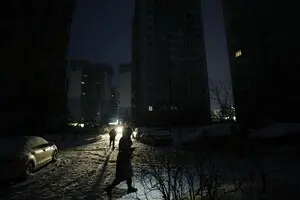

By methodically “liberating” Ukrainians from electricity and heating in their homes, Russia is counting, among other things, on the support of a situational “ally”—winter weather. Meteorologists warned in advance that this winter might not be as mild as previous ones. Since November, Ukraine has already gone through several periods of sharp temperature drops. Fortunately, they were short-lived and therefore largely unnoticeable.
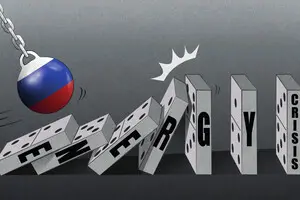
The forecast for the coming weekend and the following week, however, is genuinely alarming. Severe frosts lie ahead—down to –15, –20 and even –23°C. Moreover, the weather surprises of the past few days have reminded us that in winter trouble comes not only with frost but also with its “offspring”: snowfalls, ice and others. Using meteorologists’ language, these are “meteorological phenomena” that can damage both the energy system and communal utilities.
In autumn, specialists and officials reported that Ukraine’s energy sector was more or less prepared for the winter period. But the resumption of massive enemy attacks on power generation facilities and transmission networks since October has nullified many of those earlier efforts and now requires renewed extraordinary work by energy workers to restore what has been destroyed. So what should we expect if temperatures do indeed drop to –20°C?
Every degree means an additional 200 MW of electricity demand
No matter what the weather brings (and it is impossible to avoid snowfalls, icing of networks or periods of significant temperature drops even during relatively mild winters), Russian attacks on generation facilities and electricity and gas supply infrastructure are still the main challenge for the energy sector. The enemy’s tactic has changed in recent years: from pinpoint strikes on large thermal, hydro and combined heat-and-power plants, it has shifted to “carpet” bombardment of energy infrastructure in specific regions (primarily frontline ones), with an emphasis on distribution networks. The goal is to disconnect cities, districts or even entire regions from Ukraine’s Integrated Power System—and, “ideally,” to split the energy systems of left-bank and right-bank Ukraine.
Oftentimes, the aggressor strikes again at facilities that energy workers have only just managed to minimally restore after previous shelling (“a shell never falls into the same crater twice” does not apply to this war). Naturally, the enemy eagerly exploits problems that Ukraine’s energy system and local communities face due to weather conditions. One example is the massive attack on Kyiv on the night before Friday, immediately after snowfalls, strong winds and icing had already caused damage—toppling power poles and trees, which, among other things, led to breaks in power lines.
Unfortunately, the expected intensification of frost could become yet another catalyst for such activity. That is why experts speak about any scenarios for getting through a period of extreme (by today’s standards) cold with caution: “If there are no new shellings…” But we should be under no illusions: there will be more.
At Ukrenergo, they remind us that cold weather always means higher energy consumption—primarily due to the active use of heating appliances. Network overloads increase the risk of accidents and large-scale disconnections, forcing energy workers to impose emergency restrictions. Frost also complicates repair and restoration work.
Stanislav Ihnatiev, an energy expert at the Ukrainian Institute for the Future, told ZN.UA that in winter, a drop in the average daily temperature by 1°C adds about 200 MWh of electricity to consumption volumes. “Accordingly, if the average daily temperature is –10°C (for example, –15°C at night and –5°C during the day), consumption will increase by approximately 2 GWh,” the expert said, continuing his calculations.
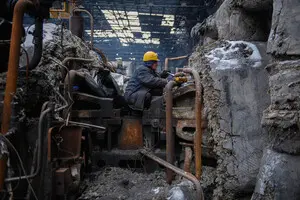
He noted that even at current temperatures, the electricity deficit sometimes exceeds 4 GWh. Up to 2.3 GW can be compensated through imports, with some additional volume covered by large businesses that have their own generation. The remainder—around 1.5 GW—has to be saved by limiting consumption.
“But if temperatures drop to –20°C (–25°C at night and –15°C during the day), and, for example, such conditions persist for three to four days in northern Ukraine, including Kyiv, we will additionally need up to 4 GWh of electricity. That would bring the total deficit to 8 GW. This corresponds to the combined generation capacity of the Zaporizhzhia (before its temporary occupation by the enemy) and Khmelnytskyi nuclear power plants,” Stanislav Ihnatiev explained.
Electricity imports: support, not panacea
Covering such an energy deficit is unrealistic. Even despite ongoing efforts to restore generation facilities destroyed by the enemy, it is virtually impossible to significantly increase domestic electricity production. Situational injections of electricity from alternative sources do not solve the problem comprehensively, even though steps taken earlier to develop renewable energy sources have undoubtedly mitigated it to some extent.
Thus, during the expected cold spell, much will depend not only on temperature but also on other weather factors. A sunny, albeit very cold, day is one thing; an overcast day with heavy precipitation and strong winds is quite another. Periods of sharp cooling after thaws, rain or wet snow are also dangerous (fallen trees and power poles during this week’s bad weather are a case in point).
On clear winter days, solar generation can still provide some relief for Ukrainians. Under such conditions, solar power plants are capable of feeding up to 20 percent of their installed capacity into the grid.
“We remember the blackouts in Odesa and the region over two consecutive winters. In clear weather, solar generation helped save at least critical infrastructure. Of course, solar plants are more helpful in summer, when they provide up to 40 percent of total generation in the energy balance. In winter, this figure is around 8 percent. But in such difficult times, every additional percentage of electricity matters,” Ihnatiev notes.
The situation with energy supply could also be somewhat improved by increased imports. Opportunities—primarily technical capacities—for purchasing electricity abroad have improved recently. For example, in January, the maximum capacity of cross-border interconnections for electricity imports from the European Union was increased from 2,300 to 2,450 MW.

However, this does not mean that purchase volumes will grow proportionally. It is not enough merely to accept electricity generated in Europe; it must also be delivered to consumers. And this is where problems arise: due to damage to transmission infrastructure, it is difficult to deliver power to the regions that need it most. Hence the experts’ conclusion: even the import capacities available in December were not fully utilized.
Another factor must also be considered: there is currently no surplus electricity among Ukraine’s European neighbors from whom we can buy power. They, too, are experiencing winter conditions and an expected cold spell. Opportunities to increase generation by European producers certainly exist, but financial incentives are lacking. For generation—and with it, European electricity exports to Ukraine—to grow, Ukrainian businesses would need to ramp up commercial electricity purchases. But during peak periods, electricity on neighboring markets is extremely expensive. In Ukraine, meanwhile, so-called price caps operate on the day-ahead market (DAM), which limits import supplies.
Lifting price caps is one possible way to increase imports during the most difficult periods. But first, such electricity would be prohibitively expensive, and second, significant losses during transmission across the country’s vast distances must be taken into account—along with the already mentioned shortage of transmission capacity.
As a result, experts conclude that even in the best-case scenario, imports can cover no more than 15 percent of Ukraine’s electricity needs.
Expert forecasts: 12 to 18 hours without electricity
Under these conditions, the only viable—though unfortunate—option is a significant tightening of outage schedules for household consumers. The worst-case scenario would see a situation in which, during 20-degree frost, Ukrainians are guaranteed stable electricity supply for an average of just 6–8 hours per day.
Naturally, conditions will be better in western regions, especially those located close to nuclear power plants (Rivne, Khmelnytskyi, Ternopil, Chernivtsi). In the prolonged absence of new strikes on energy infrastructure, even during frost, outages there may not be applied at all or limited to just one shutdown group.
“Kyiv, Kyiv region, Odesa, Mykolaiv, Kherson, Zaporizhzhia, Poltava, Dnipropetrovsk, Kharkiv, Chernihiv and Sumy regions will face stricter schedules and longer blackout periods. If the average temperature does not fall below −10°C, people will be without stable electricity supply roughly from 12 to 14 hours,” the expert forecasts.
The situation in frontline areas is altogether unpredictable. Even if the intensity of enemy attacks on energy infrastructure remains minimal for relatively extended periods, emergency power outages there will most likely continue throughout the winter.
Whereas over the years of war Ukrainians have learned to live with electricity available for only a few hours a day, district heating systems remain a particular pressure point and the top priority in eliminating the consequences of enemy attacks. According to Ihnatiev, during preparations for the heating season, risks to heat supply in most regions (with the exception of some frontline areas) were minimized thanks to generators, gas-piston units and mobile boiler houses.
“In Kyiv, for example, residents of older housing stock—Khrushchev-era buildings, Stalin-era buildings and nine-story panel blocks—will be in better conditions because the entire city heating system was designed specifically to maintain sufficient pressure for heating these buildings. Residents of high-rise buildings, however, may face problems if homeowners’ associations or management companies failed to provide generators or backup power sources for pumping stations in time. We need to understand that the responsibility of district heating companies ends at the building’s entry-point meter,” the expert notes.
Supplying water and heat to each apartment in a high-rise is the responsibility of the homeowners’ association or management company. On the other hand, such buildings are usually better insulated, meaning it takes longer for them to turn into “refrigerators” in the absence of heating.
“Another critically important element that is rarely discussed is wastewater disposal—that is, sewerage. This concerns ensuring power supply to pumping units operating both within buildings and at sewage pumping stations,” Ihnatiev stresses. Unfortunately, there is no reliable data on the condition of this infrastructure or its readiness to operate during severe frost. Experts do not rule out that in many regions this could also become a serious problem.
“The priority issue is ensuring electricity supply to critical infrastructure facilities—boiler houses, sewage pumping stations and the like. Clearly, whenever it is possible to supply even minimal electricity, such facilities will be powered first. But what happens if power lines are destroyed by shelling? The situations in Dnipro, Kryvyi Rih and Zaporizhzhia have shown that many critical infrastructure facilities, including cell phone towers, still lack generators. This was promised back in 2023, when operators justified tariff increases by citing these needs,” says Oleh Popenko, head of the Union of Utility Services Consumers of Ukraine, in a comment to ZN.UA.
He separately cites the example of Kryvyi Rih, where—astonishingly, in the fifth year of the war—six boiler houses have no backup power supply at all.
According to the expert, in most places local authorities have failed to develop clear algorithms, action plans or designate responsible officials for situations in which, due to the absence of a heat carrier, water must be drained from building systems. For instance, in one of Kyiv’s district administrations, a meeting on these issues was held for the first time only last week—after meteorologists had already warned of an impending cold snap.
We hope that there will be no need to drain water not only in individual buildings, as happened in Kyiv last Friday, but across entire neighborhoods or settlements. Still, we are forced to state the obvious: Ukraine is once again making the same mistake. Instead of minimizing risks in advance, we are compelled to exert heroic efforts ex post facto to deal with the consequences of unfinished work. The enemy and the weather, unfortunately, do not forgive such delays.
Read this article in Ukrainian and russian.
Please select it with the mouse and press Ctrl+Enter or Submit a bug
 Follow on Telegram
 Login with Facebook
 Login with Twitter
 Login with Google