
 Support ZN.ua








Not a Toy with a Camera: Why Ukraine Must Register Its Drones and License Its Pilots
 Reader Survey


Ukraine is in an odd position right now: the country has become one of the world's principal testing grounds for the drone revolution, yet the rules for that revolution are still operating in "we'll sort it out later" mode. Martial law is in force, civilian UAV flights are prohibited, the airspace is closed, safety comes first. But the problem has not gone away. There are more and more drones: FPVs, quadcopters, agricultural drones, camera platforms, home-built craft, training kits, sports models. People want to fly, to train, to film, to test, to launch "somewhere out in a field where no one is in the way." And, often, with no malicious intent at all. But a drone is not dangerous only when a criminal launches it. It is dangerous when an enthusiast operates it on the principle of "there's no one around here, after all."
A car does not become safe simply because the driver is a nice person. Which is why there are licences, MOT tests, number plates, traffic rules and liability. The sky needs to work on the same logic. Because a drone is not a toy with a camera. It is something that can fall on a person, fly into a strategic site, cause panic, get in the way of aircraft or become an instrument of crime.
The first pancake comes out lumpy
In the Verkhovna Rada, an attempt has already been made to regulate this. Draft law No. 13600 was meant to bring order to UAV use; it was backed by the working group of the law-enforcement committee, and the discussion brought in representatives of the defense sector, the Office of the President, the State Aviation Service and other bodies. But the votes were not there: the parliament did not back the document in the first reading. And here it is important not to throw out the idea along with the bad draft. Because registering drones and training pilots are things that need to happen.
The MP Yuliia Klymenko criticized the draft precisely for "shoehorning absolutely every drone into the register," as well as for paid, opaque registration and compulsory paid training and certification at obscure companies. And it is hard to disagree, especially if the state turns safety into yet another "nice little earner in permits." But the absence of a law is worse still.
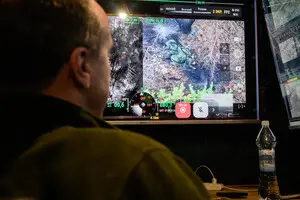
At the time, the head of the National Police, Ivan Vyhivskyi, explained the logic of the register as follows: it was meant to work as a state information system, analogous to the registration of motor vehicles, but adapted to the peculiarities of UAVs. According to him, registration was envisaged in electronic form through an online platform or the Diia app, with the owner's details and the technical specifications of the drone entered into the system.
Safety by weight
Europe has already been here. In the EU, there are rules for UAVs, specifically Regulations 2019/947 and 2019/945. The European Union Aviation Safety Agency (EASA) explains that from 31 December 2020 the registration of drone operators and certified drones became compulsory, and that from 2023 all flights in the "open" category must comply with European rules. The logic is simple: not every flight is equally risky, so the rules ought to be not uniformly strict, but proportionate. For unlawful flights, by the way, the fine is around €1,000.
The EU has three basic levels: open, specific and certified. For most amateur and low-risk flights, the open category applies.
- Open category: small drones flying within direct line of sight—the lowest risk to bystanders.
- Specific category: for flights at moderate levels of risk—prior authorization required.
- Certified category: high-risk flights—certification of both drone and pilot required.
The open category is in turn split into three subcategories—A1, A2 and A3: A1 for drones up to 900 g, A2 for drones from 900 g to 4.5 kg (most specialist filming drones) and A3 for those between 4.5 and 25 kg (large sports models and agricultural drones).
Dmytro Slediuk, the founder of one of Kyiv's oldest UAV pilot training schools, says that grading drones by weight is not entirely logical. Among the 250-gram drones, which in Europe can be used without paperwork, there are models capable of carrying a few grams of explosive—enough to take out a live target. As an alternative, Slediuk proposes a classification by purpose. There are, incidentally, age limits as well.
"Until last year [in Europe—Ed.] the cut-off was 16; today it is 14. From the age of 14, in other words, you are entitled to obtain a UAV pilot's license. Before that you can fly in the presence of a certified pilot. In the same way that, if you are a father with a driving license, you can teach your son to drive even if he does not yet have one of his own. You are there beside him, and you take responsibility for him," Slediuk explained.
UAV registration system for Ukraine
The model might look like this.
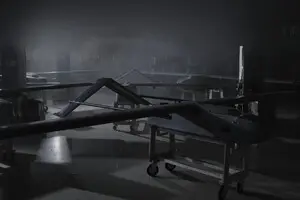
First: an electronic register of operators and drones. Not a paper fortress of certificates, but a simple account in Diia or on the State Aviation Service platform. The owner enters their details, the model, the weight, the serial number, the type of use—hobby, education, sport, agriculture, media, business, scientific work. The drone receives a unique number, which is then applied to its body.
Second: pilot training. Not "a course for 15,000 hryvnia at a firm run by some aviation huckster’s mate," but a state-run or accredited online course with a test. The basic level should be free or available for a symbolic fee. A person ought to know not just where the take-off button is but what altitude is, what restricted zones are, signal loss, liability, privacy, flights near people, the risk of falling out of the sky, batteries, wind, no-fly areas.
Third: a risk-based grading. A small drone up to 250 g, with no dangerous flights over people, can have lighter requirements. Anything above 250 g—mandatory operator registration. Heavier drones, FPVs, flights near people, commercial filming, agricultural treatments, flights beyond line of sight mean a higher level of certification.
Fourth: a map of permitted and prohibited zones. A pilot should be able to open an app and see: no flights here; flights here after a request; flights here under the basic rules; a temporary restriction here on account of a military site, a fire, an evacuation or aircraft operations. EASA states explicitly that countries must provide information on geographical zones for drones in digital form.
Fifth: remote identification. Something on the lines of a number plate, only in the air. Law-enforcement bodies or the relevant services should be able to see what drone is in the sky, who it belongs to and who the operator is. Not so that they can chase a wedding cameraman around a field, but so that they can tell a legal flight from an unidentified object.
Sixth: liability for the consequences. Anyone flying unregistered, uncertified, in a prohibited zone or while drunk will face a fine. If such actions cause harm to people or substantial damage, criminal liability should follow.
Seventh: exemptions for defense, manufacturers and training. Here you have to tread very carefully. Ukraine must not strangle its own drone ecosystem. The war has shown that FPVs, the engineers, the volunteers, the clubs, the start-ups and the test grounds are not a hobby but an element of the state's survival. Which is why manufacturers, schools, military training centres and scientific institutions should have a separate regime: registration in place, safety in place, but without the bureaucratic crucible.
The optimal option?
Drones are a fast, mass-market, anxiety-inducing technology. If the law simply tightens the screws, people will work around it. If the law is sensible, the owners of UAVs will want to legalize themselves of their own accord—because it will give them the right to fly, insurance cover, access to test grounds, clear rules and less risk of being mistaken for a saboteur.
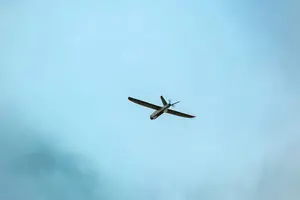
The optimum option for Ukraine is the European model, adapted for war. That is, not to reinvent wheel with some unique Ukrainian contraption, but to put together a system that has, to a large extent, already been tested, is working and includes the following:
- basic online registration of the operator;
- registration of drones weighing 250 g and over;
- a free basic test for amateurs;
- a separate certificate for more demanding flights;
- a digital zone map in an app;
- remote identification for higher-risk categories;
- a simplified regime for education, sport, science and manufacturers;
- strict liability for flights near critical sites, near people, near military areas and while under the influence.
And, crucially, the register should not be a public list of "who has a drone at home." This is a question of safety. But authorized services should have access to it.
***
Post-war Ukraine will be a country of hundreds of thousands of people who can fly drones. Some will come back from the front; some from training centres; some from business, agriculture, media, engineering schools. For all those people, what is needed is not bans for the sake of bans. What is needed is a culture of the air. Just as with the roads: licenses do not make every driver a good one, but without licenses and rules the road turns into a steel zoo. The same goes for drones. The sky cannot be a place where anyone launches whatever they like wherever they like.
Drone-savvy Ukraine is already born. All that is left now is to provide it with papers, to teach it the rules and to explain: you can fly—just not like a sparrow after a cup of coffee. Because in the modern world, the right to take to the air begins with responsibility on the ground.
Please select it with the mouse and press Ctrl+Enter or Submit a bug
 Follow on Telegram
 Login with Facebook
 Login with Twitter
 Login with Google