
 Support ZN.ua








Inside Fire Point: Drones, Missiles and Politics—An Interview with Chief Designer Denys Shtilerman

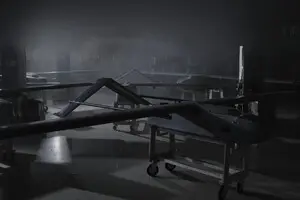

The manufacturer of Ukrainian strike drones and cruise missiles spoke about the company’s history and the use of its products and future plans. He also answered questions about its connection with Tymur Mindich, a close associate of President Zelenskyy, and criticism from Yurii Kasianov.
In the past two months, Fire Point and its Flamingo missile have been everywhere in the media. But beyond the stories of blown-up oil refineries, military plants and the pilots of Russia’s Rubikon, another storyline has surfaced—about a possible connection to Tymur Mindich, a longtime associate of President Volodymyr Zelenskyy; a NABU investigation; and the apparent lack of actual Flamingo missile use.
A ZN.UA correspondent decided to clarify all the questions that matter to our readers. For this, he chose a rather difficult path and managed to secure the opportunity to interview Fire Point’s chief designer, Denys Shtilerman, the man who developed the FP-1 drone and the FP-5 Flamingo missile.

VK: Mr. Shtilerman, I’d like to go back to the beginning of your company’s activity. How did it all start?
DS: I think it’s worth starting with the beginning of Russia’s full-scale invasion in 2022. Together with my good friends, I began helping the military. We fed people, assisted artillery units with logistics, refueled that very artillery and transported people to combat positions. Everyone helped in whatever way they could: with money and action.
Then I started buying drones with my own money and realized there was nothing on the market. And whatever was available was insanely overpriced. So in November 2022, we decided to build a drone with a 50-kilogram payload, about 800 kilometers of range and, most importantly, with a price around $60,000 dollars, no more. Although it wasn’t easy, we built the drone and later met the Special Operations Forces. They saw great potential in our product, understood its importance and essentially took us under their wing for which we are very grateful.
So, we built our first drone back in 2022, started flying in January 2023, and in May it was codified. In August, we received our first contract for 50 units, then another for 150, still a very small quantity. We manufactured them and handed them over to the military.
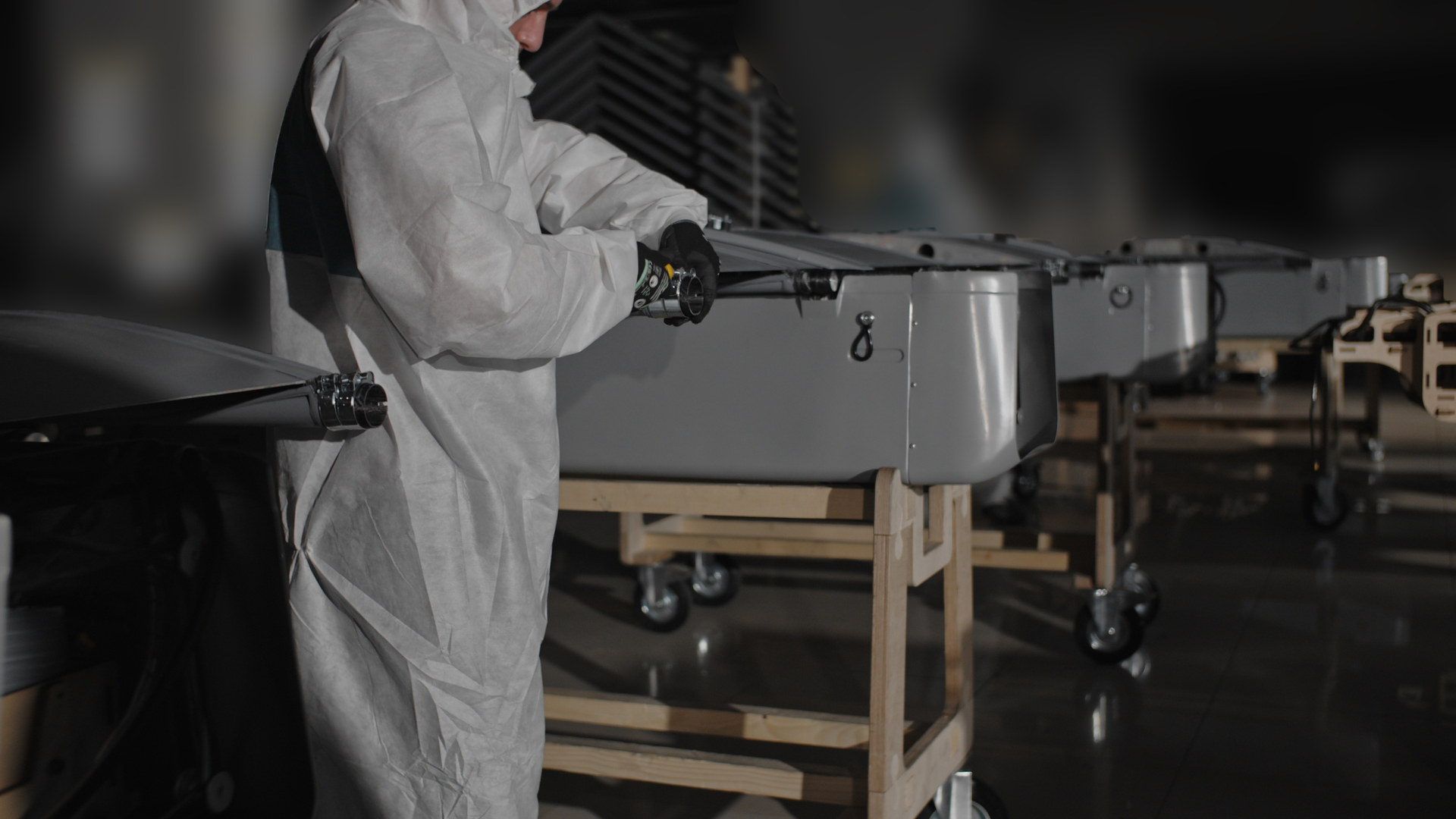
2024 started for us with no contracts, nothing at all. That’s how it was during the first months of 2024. Then the US Embassy, together with the Defense Forces, organized trials at a special testing range. Many manufacturers participated—I wouldn’t like to list all the names, they might not want that. But the competition was decent. However, the only company that fully passed all trials was Fire Point. And that was our victory.
VK: And what exactly was the task?
DS: During the trials, we flew in automatic mode under multiple electronic warfare (EW) systems—not just some basic setup but very serious complexes—and we passed through all obstacles. We also hit the target under EW influence and demonstrated the capabilities of the warhead. After that, an analysis was carried out by both our own and European and American specialists, and we began receiving large orders. and those drones went on to deliver multiple successful strikes in Russia.
Tikhoretsk, Toropets, Kotluban, Borisoglebsk, Morozovsk, Baltimor and a bunch of Russian oil refineries—all of that was work by our Defense Forces using our drones, and it became possible precisely after those trials.
VK: I can’t help being skeptical here: in Ukraine, there are many strike drone projects with rather good characteristics, yet their manufacturers don’t receive large contracts for years. You’re saying the issue is only the trials at the testing range?
DS: Go win open trials or competitions, and then you’ll receive funding. If you have a successful case that works not on paper and not in your dreams, but in reality, you will get contracts.
For example, there are many manufacturers now showing their CRPA antennas and claiming they work. But when we test them, we see they’re garbage. Or even global brands bring their navigation systems, and they differ completely from their paper specifications. Make quality products and you will get contracts, it’s that simple.
VK: So you believe the recipe for receiving large state contracts lies only in the quality and efficiency of the products?
DS: The recipe is to create something that actually works. Another example: under one of the contracts, we delivered a batch of FP-1 UAVs to the customer, and they were literally stored standing in puddles for four months. In theory, after that the drones should be completely unusable. We took them back, repaired them, replaced the failed antennas, upgraded several other components—and they flew again, performing successfully in combat.
Going back to our story, the most important moment was when regular successful strikes began. That is, the confirmation of effectiveness and all the declared characteristics. It was in 2024 that our drone began to be used effectively and on a massive scale. However, we discovered that navigation solutions which had initially worked reliably began to fail. Antennas that EW had never suppressed started getting jammed. We needed to find new solutions. And we identified several manufacturers producing the best antennas. And to prevent spoofing (signals that mimic legitimate GPS signals to deceive positioning receivers—V.K.), we developed our own detection algorithm, which has already proven effective. And now, we can confidently argue that our drones cannot be spoofed.
VK: If FP-1s are so reliable, what can you say about strikes by your drones on Moscow, which is surely Ukraine’s primary target now? Why haven’t we ever seen an FP-1 in sky over Moscow?
DS: It’s very hard to reach Moscow because they have a huge air-defense ring. They have a large number of helicopters, they scramble them all at once and begin shooting down drones. Getting through Moscow is extremely, extremely difficult, but it’s possible. We’re working on that now. As of autumn 2025, we understand that the future lies in operating in GPS-denied environments. Based on that, we created a practical solution: a night map-matching system that works at low altitudes. Daytime map-matching has existed for a long time, but night operations at low altitude have still been used rather sparingly.
VK: Can you explain the details for our readers?
DS: You’re flying, say, at an altitude of 50 metres, and you capture a certain number of terrain points. The system instantly compares the points it recognizes with the coordinates loaded into it at launch. That way it corrects itself during flight. That allows you to successfully follow the whole route to the target.
Previously that system worked at night only at altitudes of 150 metres or higher. But for us that height is almost a guaranteed detection by radars and a shoot-down, so we had to improve our system dramatically. I think we can even that a game changer.
In this respect, there is only one thing left: we need to create a satellite constellation that will provide independent communications across the whole territory of Russia and also supply reconnaissance data. Then everything will work perfectly.
VK: Why wouldn’t Ukraine simply buy satellites from partners? Or get access to them?
DS: That’s a different matter altogether. If you buy someone else’s satellite, you depend on that country. For example, if you take a satellite from some American company, a situation could easily happen where you pay a lot of money and then that government simply forbids you from using the satellite. This is an area where independence is extremely important.
VK: Let’s talk about your cruise missile. How did the Flamingo story begin and what is its main difference compared to competitors?
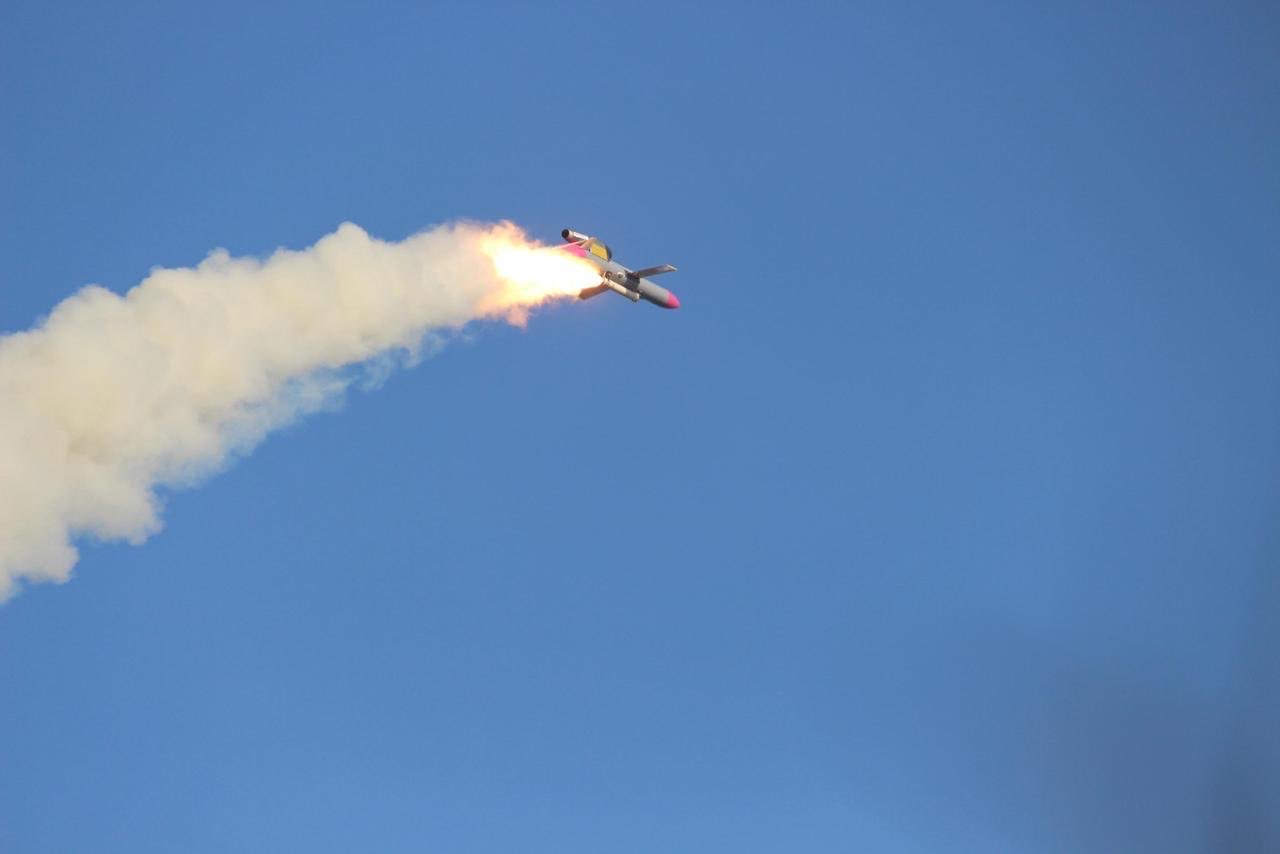
DS: In 2024, we decided to make our own cruise missile. One of our partners came with an idea to clone the Strizh, the Soviet Tu-141. We looked at it and immediately realized it was a ridiculous idea. In the end, we used only its booster. Later, we developed the world’s best missile in terms of range and warhead mass. At the same time, it is a missile with a decent modern solution that works for moderate money.
VK: What specific solution are you referring to?
DS: I mean counter-spoofing. The main problem for all similar projects is that they don’t even imagine what electronic environment they will operate in. And one more important detail is that the missile is made of composite material: it’s less visible on radars than aluminium missiles.
VK: Let me ask you about production rates. You mentioned seven missiles per day that were supposed to be ready by the end of the year. Are you managing to reach that target now?
DS: We currently produce two to three missiles per day at the moment, and plan to ramp up to full production as scheduled. But it should be understood that Flamingo production will match the volume of orders.
VK: Then why do we see relatively few combat uses of this missile? So far the only publicly known case is the strike on an FSB base near Armyansk.
DS: That question is for the military. There were uses, successful ones. Why they aren’t used more widely is not for us to answer. We are the manufacturer, not the end user.
VK: So the issue is only with orders and use by the Armed Forces? The company has no problems with scaling production?
DS: Of course, some issues can be on our side as well. For example, with engine testing. It is no longer a secret that the Flamingo uses the AI-25 engine, which was fitted on many Soviet aircraft. Now we use engines that have a small but sufficient residual service life. Each of these engines requires separate testing. That takes extra time, but I repeat: if there is an order, all these issues will be resolved.
VK: You emphasize effectiveness and success for both drones and missiles. Yet those concepts are rather subjective: what do you mean by “effective”? Is it only hitting the target or how do you define it?
DS: There is a certain formula that measures deep-strike effectiveness. It looks like this: the number of kilograms delivered, multiplied by a certain number of kilometres, divided by the amount in hryvnias required for that. But there certainly is an adjustment for resistance to EW, success rate and other factors that affect performance. If all these components are achieved, then we can speak of maximum effectiveness.
VK: Let’s clarify the price. The cost of the missile is already known: it reaches $500–600,000 per unit. But if we talk about the project cost, what sum is it?
DS: It’s roughly $50 million. Those were funds from the company’s profits, the sum we invested in our project from the moment of its launch. The main thing is that we didn’t take any money from the state; we did everything with our own funds.
VK: You received a grant from Brave1 a little over a year ago. Isn’t that state financing?
DS: We have returned it to the state in full.
VK: Still, that price is an extremely small amount for a cruise-missile project. If compared to similar American projects, they cost tens of times more and took years to, if not decades, to develop.
DS: It’s very simple: we don’t have that time for development, so we must make do with available conditions and resources. It was very important from the start that we worked in an environment where the state removed all bureaucratic burdens. Bureaucracy hindered effective work in our industry. For example, the testing of European cruise missile prototypes took 82 months. Ours lasted three months, all thanks to eliminating bureaucracy and focusing on effective management.
VK: With all due respect, those figures seem unreal even if bureaucracy completely disappeared and management was the most efficient in the world.
DS: If we go into details, the matter is also about the specifics of the missile itself, the engines we installed, how our product is tied to domestic components that could be rapidly scaled, and many other details, many of which cannot be public.
For instance, we do not order one of the machines we need from Europe because it costs five million euros and is takes more than nine months to develop. We order all the components that arrive in a month and a half, then assemble it ourselves in three months. And all of this for a price under €500,000 in total.
VK: About your plant in Denmark. How far along are you in opening the plant?
DS: That’s definitely not something we can discuss at length right now. What we can say is that this project is being implemented for security reasons so as not to expose our most sensitive and complex technologies to Iskander strikes. In particular, we will manufacture rocket engines for our future ballistic missiles there: FP-7 and FP-9 rocket engines. We’ll announce more details once the plant is fully operational.
VK: Speaking of FP-7 and FP-9: at what stage are your ballistic rockets that were announced recently?
DS: I think you will learn more about this in the near future. For now we cannot give more detailed information other than what was stated at the Kielce exhibition in September.
VK: According to ZN.UA sources, Fire Point is currently in negotiations with a Middle Eastern country that plans to buy part of the company. Can you confirm that?
DS: We are indeed negotiating with one of the major market players. But I can’t go into details.
VK: Aren’t you afraid that Russians could enter the company in this way? Through a shell firm or some other method.
DS: Theoretically yes, it could happen. For example, in Airbus about 8 percent belongs to Russian business. But right now I highly doubt that any partner country or large defence company would take the risk of acting as a front for Russia in such a public deal.
VK: More than a month ago, media reported that your company’s co-owner is Tymur Mindich, a close friend of Volodymyr Zelenskyy. MP Yaroslav Zhelezniak and military designer Yurii Kasianov wrote about this. Journalists and law enforcement officials also talk about it informally. Is Mindich a co-owner of the company and what is his influence on Fire Point?
DS: Mindich has no influence on the company whatsoever, he is not a co-owner. As for his involvement, he came to us when we won the trials at the testing range. He became very interested in the company and expressed a desire to join the list of shareholders. But nothing came of it because we refused him. That was back in spring 2024.
VK: So after that you haven’t crossed paths with him?
DS: No, we have crossed paths in our personal matters, since we are both Jews, but not in company affairs at all.
VK: There is information that Mindich plans to come to Ukraine soon. Do you plan to meet with him?
DS: No, I do not.
VK: We already mentioned the designer and military expert Yurii Kasianov, who has been relentlessly criticizing your company in recent months. What could you respond to his criticism, which, I assume, you read and analyze?
DS: I don’t read him, I don’t have time for that. I only once read his analysis about price inflation for the FP-1 drone. I used to respect him as a renowned media specialist, but when I see that a person in his calculation does not include the most expensive components of our product and still claims to be objective, then for me he loses all authority. We are currently producing the cheapest—the most effective—drone in its class.
VK: In that case, what can you say about the National Anti-Corruption Bureau case related to FP-1 drones, namely the procurement of their components? As far as we know, the investigation is still ongoing.
DS: The official NABU response to our inquiry, which has already been published in the media, emphasizes that the case was not opened against our company. It clearly states that the proceedings were initiated against officials of the Ministry of Defence and the State Service of Special Communications, who, in collusion with representatives of supplier companies, may have inflated procurement prices for drones. Seven companies are being examined as part of the case, including ours. These are completely different things. Yes, the case is open, investigative actions are underway, but there are no suspicions or accusations. Let me stress that they are simply conducting an examination.
Lastly, I’d like to repeat: our drone is the cheapest in its class and the most effective. This has been confirmed by hundreds of uses and the analytics carried out after them by various sources, including the end users of our products.
Read this interview in Ukrainian and russian.
Please select it with the mouse and press Ctrl+Enter or Submit a bug
 Follow on Telegram
 Login with Facebook
 Login with Twitter
 Login with Google