
 Support ZN.ua








War for Some, TikTok for Others. Inside Ukraine’s Wartime Decisions

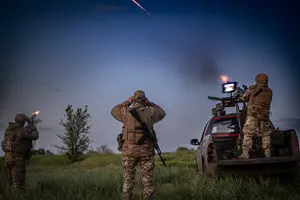

As part of an “experiment” to counter Russian Shahed drones, Ukraine’s government has authorized the creation of mobile fire teams within Voluntary Territorial Community Formations (VTCFs). This decision permits volunteer air defense personnel to shoot down enemy drones using machine guns, drones, and even manned aircraft—after completing the necessary training and certification, of course. At the same time, the General Staff has ordered that all medically fit VTCF members without draft deferment be mobilized for army service. This glaring contradiction at the highest levels of decision-making starkly illustrates the quality of state governance—and, by extension, the wisdom of its leaders.
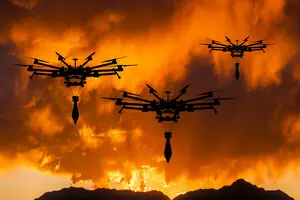
The logic of the General Staff is clear: the army is suffering from a severe personnel shortage, and commanders are using every legal means to conscript whoever the military enlistment offices can reach. The government’s rationale is also understandable: as enemy airstrikes intensify and mobile air defense teams remain in short supply, why not allow a motivated, organized, and trained segment of the population to take on drone defense?
Both goals are legitimate—Ukraine needs mobilization and air defense. But pursuing both simultaneously doesn’t work in practice, because there is no overarching defense strategy or operational plan. Instead, agencies react to growing threats within the narrow confines of their authority and expertise, issuing contradictory orders as a result.
This is far from the first such troubling episode. Remember the Territorial Defense Forces (TDF), which effectively dissolved at the front. Why were they created? To defend local areas as auxiliary forces tasked with guarding key state infrastructure, building defensive lines, combating saboteurs, preparing the population for war, maintaining public order, and providing civil defense—including air defense against Shaheds. Where are the TDF now? We know all too well.
And now the VTCFs, originally established as a supplement to the TDF, are also being sent to the front. Their rear-area responsibilities will be assumed by regular units of the Armed Forces and the National Guard. What’s the logic behind this? There isn’t any. Because the state’s right hand doesn’t know what its left hand is doing.
In October 2022, at the height of the war, the Verkhovna Rada abolished conscription during martial law. This populist decision had a profoundly negative impact on the staffing of the active army, reducing the number of fighters and combat effectiveness, and influencing the course of hostilities—resulting in loss of lives and territory. Currently, the personnel shortage is being addressed partly through the VTCFs, just as it was earlier through the TDF, with young people being lured into the army by substantial cash incentives. Yet, had conscription not been abolished, we would have at least 200,000 additional troops today. Even if these conscripts were not deployed to the front lines, they could have staffed all rear units—those guarding the borders with our western neighbors and Belarus, in the relatively secure Chernihiv region; those protecting warehouses, nuclear power plants, government and military facilities, airfields; those engaged in air defense; and logistics units.
The formation of women’s military units would also greatly bolster the existing army. Women’s companies and battalions could undertake the same rear-area tasks that young conscripts could fulfill, tasks which now fall on the shoulders of regular Armed Forces units already stretched thin at the front. Importantly, this does not imply mobilizing women—that is not necessary; rather, it would suffice to announce open recruitment for such units, publicize it broadly, and tens of thousands of Ukrainian women would enlist.
These measures might seem straightforward—tested in many countries across different wars—but for some reason they remain unimplemented here. Perhaps such ideas never even occur to high-ranking government officials, who, lacking any knowledge of military history, derive their understanding of war and statecraft from TikTok and Hollywood movies.
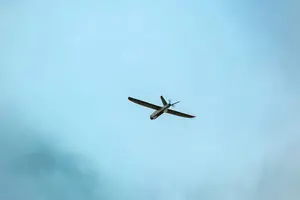
But let’s go further—to the military-industrial complex. We are told that Ukraine is increasingly producing its own weapons. And that is true. But what kind of weapons? Some types of artillery systems and mortars, limited licensed production of small arms, armored vehicles, certain types of radars, electronic warfare (EW) and signals intelligence (SIGINT) stations, drones, “missile drones” (cruise missiles) and even a few genuine missiles. Explosives, detonators, mines and ammunition are also produced; old Soviet-era weapons are being modernized, including surface-to-air missile systems, and older Western systems are being adapted to current Ukrainian realities.
What characterizes our defense industry, and where is it most vulnerable? We lack a full production cycle anywhere. We do not manufacture chassis or engines for armored vehicles but import them; we do not produce armor steel but assemble hulls from imported armor plates; we lack all necessary chemical components for explosives production; we do not produce electronic components for radars, EW and SIGINT stations, nor for unmanned aerial vehicles (UAVs)—almost none are made domestically. Although some drone “manufacturers” claim local content of “up to 90%,” this is pure marketing spin. Essentially, we have “screwdriver assembly,” especially for FPV drones, which renders our defense capabilities highly vulnerable. Tomorrow, if China refuses to supply drone components, the front lines could crumble within two weeks.
To prevent such a scenario and ensure that the military-industrial complex reliably supplies weapons and continuously develops so that sufficient and relevant armaments are available, the state must do more than merely “provide funding.” It must create conditions for the emergence of new sectors and entire industries, new materials, components, and weapon types, and foster genuine weapons production in Ukraine—not just assembly from imported Chinese components.
Why must the state take this responsibility? Because establishing new defense production facilities is extremely costly and inherently risky. In wartime, the state is the sole consumer of weapons (exporting is out of the question amid shortages), and very few businesses are willing or able to secure, attract, and invest tens or even hundreds of millions of dollars—for example, in producing armor steel or drone components—especially when state policies remain unclear, ambiguous or altogether absent.
We still lack a coherent state policy on weapons development and production, and there are no meaningful plans for advancing the defense industry—aside from the declarative intention to purchase a million drones. The state pays virtually no attention to military-economic enterprises and sectors, does not create growth points, build factory infrastructure, invest in expanding the production base or train workers (and we have no vocational education system). It fails to establish production chains or supply manufacturers with raw materials and components—except for a select few, often corrupt, producers. At best, the state acts as a financial manager for a bank, a mere “buyer” distributing scarce funds among enterprises. Much like the magpie in the Ukrainian nursery rhyme: “I gave to some, I gave to all, but left a few with none at all.”
There are always a thousand excuses: bureaucratic red tape, corruption schemes and, most critically, the incompetence of the procurement agencies themselves (the Defense Procurement Agency, the State Special Communications Service), whose officials neither understand—nor are capable of understanding—the hundreds of different types of drones, nor grasp what is genuinely needed on the battlefield today, in what quantities, and what will be required tomorrow.
One might argue that there are established procedures, formal technical specifications, state testing protocols, and finally, the much-coveted Demand document, which manufacturers seek as the official basis for procurement. However, all these factors and conditions remain highly subjective and detached from the realities of war. Consequently, drones purchased for frontline deployment often formally meet all specified criteria but operate on incorrect frequencies, fail to perform as required under current conditions, are equipped with inappropriate warheads or detonators, and long-range strike drones are incapable of reaching Moscow.
A defining feature of our era is amateurism. This amateurism stems from inadequate, superficial education, the allure of quick and easy money, social status, inflated self-esteem, and “knowledge” acquired through watching popular media such as the Discovery Channel, BBC, TikTok and similar sources. There is a widespread assumption that if a person is sufficiently wealthy and holds a high governmental position, they are ipso facto intelligent and competent in all matters—from potato planting to ballistic missiles. In reality, amateurism combined with the pretentious folly of certain senior officials, institutionalized as state policy, results in catastrophic errors in defense strategy and military-industrial policy. Regrettably, our ranks lack genuinely knowledgeable people and real scholars; instead, we are left with homegrown know-it-alls, “cruise ship floozies” (a phrase used by a Ukrainian politician) and housewives.
There is little reason to believe that our senior officials have even heard of the Organisation Todt. In Nazi Germany, this massive construction organization, led by the capable engineer and administrator Fritz Todt, was responsible for building defensive fortifications, bridges, and roads for the German military. Working in conjunction with private companies on military infrastructure projects, it relied heavily on forced labor, including prisoners from concentration camps. At its peak, this construction giant employed over half a million workers, who built the Western and Eastern Walls, tens of thousands of bridges, pillboxes, earth-and-timber emplacements and hundreds of thousands of kilometers of roads.
Unlike Ukrainian practice, the Germans preferred to have a single responsible organization and a single accountable manager—someone who could be held to account for both quality and cost. In contrast, here each regional administration often builds fortifications that are either unnecessary or poorly located for effective defense. These projects are carried out primarily to “spend the money,” not to serve military needs. It is common knowledge that corruption and outright theft in such construction projects are rampant. As a result of poor-quality fortifications, we are losing territory. The enemy is preparing offensives on Pokrovsk, Kostiantynivka, and Sumy, yet no one is being held accountable, and no significant government decisions are being made to correct the situation. Most likely, our senior leadership does not even reflect on this problem, simply because they don’t have the slightest idea how to reconcile systemic corruption with the actual defense needs of the military.
About army corps. The creation of army corps is a long-overdue and correct decision, since brigades are suitable for peacetime or low-intensity conflicts. At the same time, it is crucial to understand that a corps is not merely a large military formation, but also a command structure responsible for a sector of the front. The core idea is that the corps commander and his staff should directly conduct operations—fully aware of the local situation and equipped with the resources necessary to act. However, in practice, our troops are still commanded by the operational-strategic and operational-tactical groupings, which are not institutionally accountable. So far, the establishment of army corps has only resulted in an increase in the number of headquarters layered above existing brigade command structures. The number of staff officers is growing, but the quantity, quality, and training of personnel in these units remain unchanged. Once again, we are witnessing a farce—a case where wisdom degenerates into folly, like wine turning into vinegar. And all this is happening because certain senior officials have a very poor understanding of military organization and command and control.
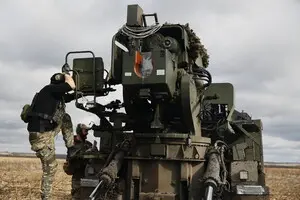
And about drones. On June 12, 2025, Vladimir Putin ordered the acceleration of efforts to create Russia’s Unmanned Systems Forces. The formation of this new branch of the armed forces was first announced in December 2024—one year after President Zelenskyy had declared the establishment of Ukraine’s own Unmanned Systems Forces (USF) and appointed Colonel Sukharevskyi, as deputy commander-in-chief, to lead them. Unfortunately, due to staff infighting, conflicts of interest, divergent visions for the development of unmanned capabilities and personal animosities, Ukraine’s USF never managed to even gain control over the unmanned assets of the Ground Forces—let alone other branches of the military or security services.
What we ended up with was a fragmented structure in which nearly every institution created its own “unmanned systems forces”: the Ground Forces (with the heavily publicized “Drone Line”), the Marine Corps, the Air Assault Forces, the National Guard, the Main Intelligence Directorate of the MoD, the Security Service, the Foreign Intelligence Service and the State Border Guard Service.
Does this “diversity” help strengthen Ukraine’s unmanned warfare capabilities? No, not at all. Drones are high-tech weapons, and high technology requires highly intelligent, well-educated and thoroughly trained personnel—who are, by definition, in short supply. There simply aren’t enough of them to staff every branch of the armed forces or each security agency. Thus, this fragmentation of effort and lack of a unified drone policy lead nowhere. Meanwhile, the Russians are already surpassing us—both technically and organizationally.
Now that the USF commander has been replaced, the sharp internal disagreements within the Armed Forces of Ukraine may subside. However, this is unlikely to improve the overall state policy on unmanned systems—for the simple reason that such a policy does not exist. Nor is there any single interagency state body responsible for developing and implementing one. Imagine this: we are engaged in a war increasingly defined by drones, yet we have no Ministry for Drones, no national Drone Committee—meanwhile, we do have a Ministry of Youth and Sports. It is absurd.
We are likely not even utilizing half of the reserves and capabilities available to us—capabilities we must mobilize if we are to survive and prevail in this existential total war. But we continue to wage war as though filming the next episode of a television drama: there is plenty of media buzz, PR campaigns and rhetorical flourish—but little actual work and few sound, competent policy decisions. There is far too much amateurism, greed and sheer stupidity. And the consequences are measured in lives lost, soldiers wounded and territory surrendered.
This must not continue.
Please select it with the mouse and press Ctrl+Enter or Submit a bug
 Follow on Telegram
 Login with Facebook
 Login with Twitter
 Login with Google