
 Support ZN.ua








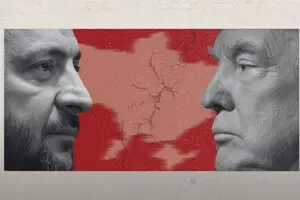
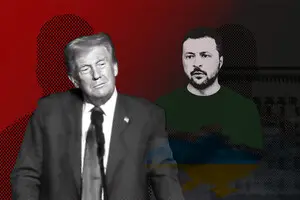
Trump trash-talking Zelensky only helps Putin
The West's dangerous illusions: why Europe is still not ready for major war

11 december, 2025, 15:00
Share
The key to successfully confronting Russia is for Ukraine and Europe to work together as if they shared a single, common fate. In search of an answer to what this cooperation should look like, leading European experts, diplomats and policymakers from the Netherlands, Germany, France, Great Britain, Poland and Ukraine have come together in a strategic defence group hosted by the Ukrainian analytical centre Ukraine Facility Platform (UAFP). The group’s task is to develop a joint defence and security strategy for Ukraine and the European Union.
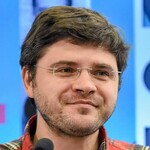
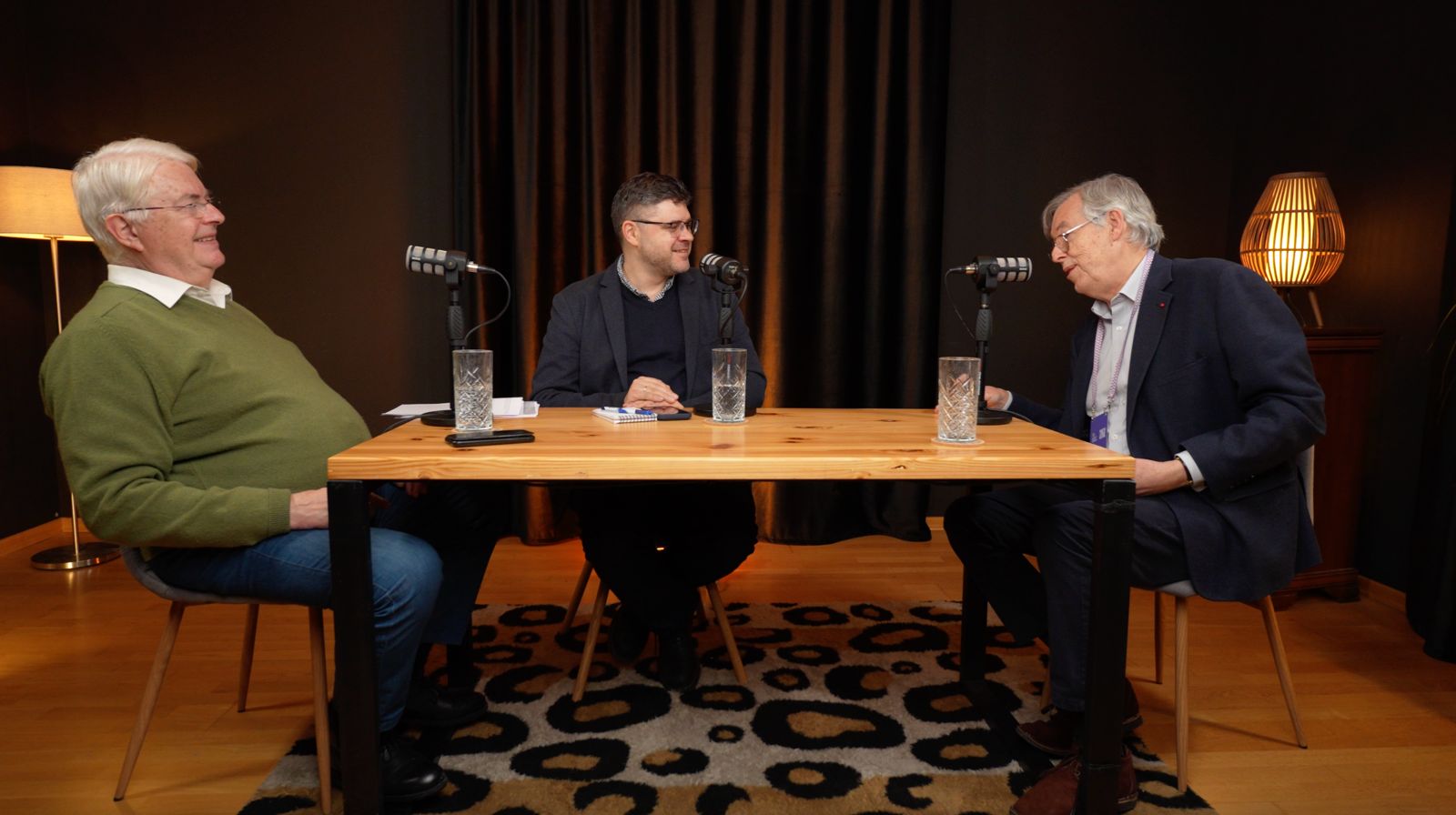
In this conversation, moderated by UAFP co-founder Roman Vybranovskyy, Kees Klompenhouwer, Ambassador of the Kingdom of the Netherlands to Ukraine in 2013–2017, and François Heisbourg, special adviser at the French think tank Fondation pour la Recherche Stratégique, discuss how to confront the threats facing Ukraine and Europe, the role of Donald Trump, Europe’s new security architecture – and how to defeat Putin.
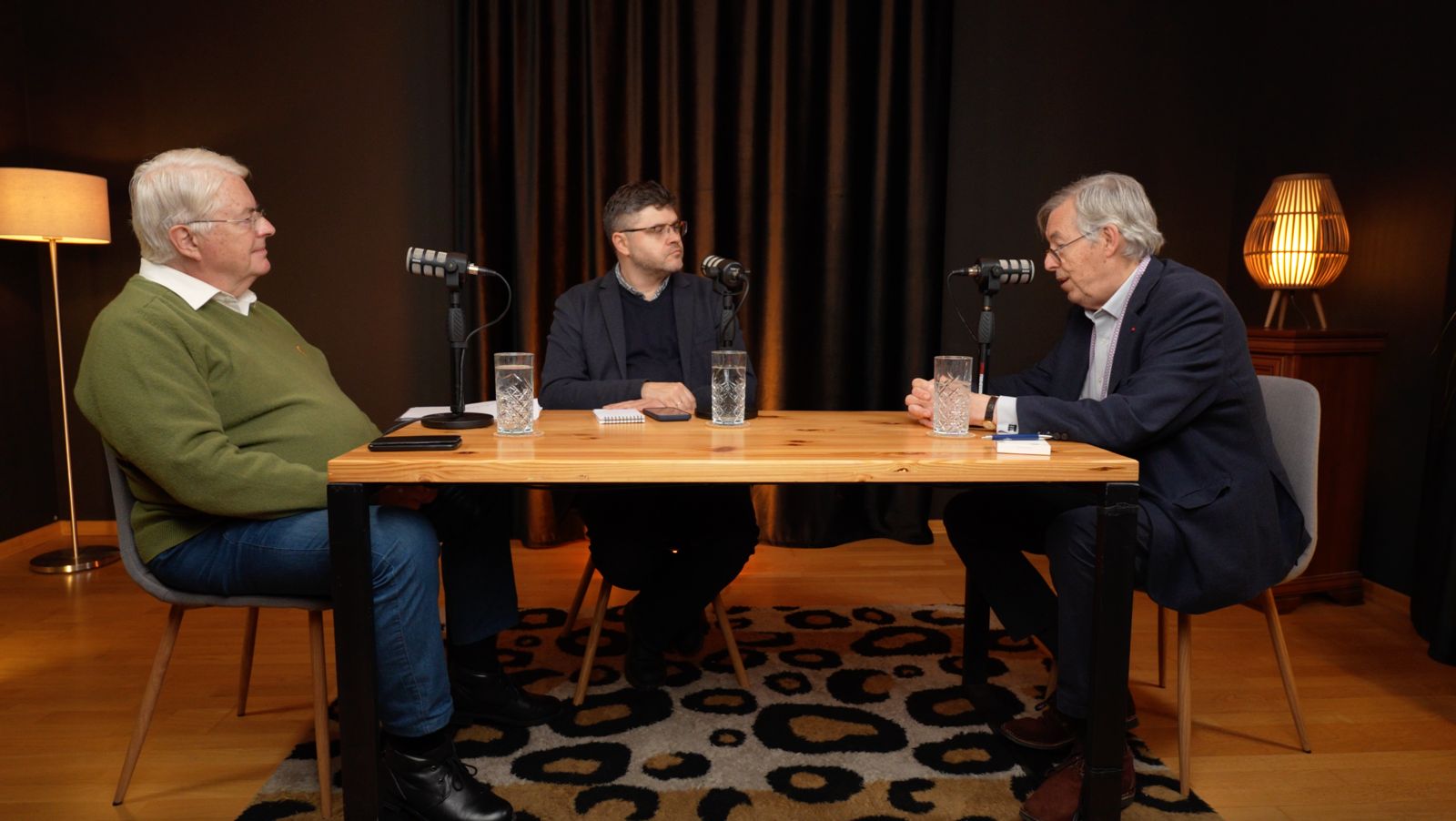
Ukraine Facility Platform
– What is the real discussion in Europe today about the threat posed by the Russian Federation, and how is this threat perceived?
François Heisbourg: It is a more difficult question than it looks. At one level, there is a general understanding that it is Russia which has invaded Ukraine, and a fairly widespread understanding that Russia has broader ambitions in Europe. That is true at government level and, to a large extent, at the level of public opinion.
But this is where things become more difficult. There is very little sense of how far this could go and what it could really mean. Thinking about war is not something that Europeans – in the EU or in NATO – are yet seriously engaged in, certainly not at the level of public opinion.
ВАС ЗАИНТЕРЕСУЕТ
Many governments and individual ministers simply cannot bring themselves to grasp that there is a fundamental difference between full-scale war and the absence of war. Hybrid activity may be unpleasant, but it is still seen as relatively innocuous – not war in the full sense of the word.
So, we have this dichotomy: on the one hand, a fairly high level of intellectual understanding of what is happening; on the other, a “gut feeling” which is still disconnected from the notion that there could be something like war beyond Ukraine.
– Do you believe that this level of understanding in Europe is sufficient?
Kees Klompenhouwer: No, it is not. For those who have listened carefully to what the Kremlin has been saying over the last ten years, it is clear that Russia wants to restore the influence that the Soviet Union had before it collapsed. That influence is not limited to Ukraine; it includes all the countries that used to be part of the Warsaw Pact and are now members of NATO of their own free choice.
What we are not used to is war. The experience of the Second World War was such that, for the European population, the motto became “never again war, never again conflict”. Now we have to move to a more vigilant approach – “never again naіve”. To make that mental jump, you need a shock, a real feeling of threat.
Those who are geographically close to Russia feel that threat directly. The further away you are, the less you feel it. In my own country, the Netherlands, we feel it because Russia shot down an aircraft with 300 civilians on board, 200 of whom were Dutch (the Malaysia Airlines Flight MH17 plane, which Russia shot down in 2014, – ed.). We have seen what Russia is capable of doing, and we have seen the lies that were spread to hide this crime.
So yes, in the Netherlands there is awareness not only of Russia’s political ambition to restore its sphere of influence, but also that Putin is ready to use military force. And of course, Ukrainians are the first to experience this.
– Do the recent actions of the United States help Europeans better understand that the threat is not limited to the war in Ukraine alone?
François Heisbourg: America is increasingly being seen as part of the problem, not as part of the solution. During his first term, President Trump, according to NATO Secretary General at the time, Jens Stoltenberg, actually tried to remove the United States from NATO.
Today, Mr Trump acts with extraordinary disdain towards his allies in general and European allies in particular. This has not yet gone as far as Mr Trump openly saying that the American security guarantee to Europe no longer applies. But he did say, in front of journalists, that NATO’s defence guarantee, Article 5, could be interpreted in different ways. President Putin probably listened very carefully to that statement. What he will make of it, I do not know.
What we now see is that the United States is threatening countries like Canada and Denmark with the appropriation of their own territory. These are two members of NATO in good standing and very pro-American. It is no longer enough to be pro-American to be regarded as a good ally by Mr Trump. Mr Trump does not like allies. He likes strong countries with strong leaders, like Xi Jinping or Putin.
– Even though they are adversaries?
François Heisbourg: I am not sure he sees President Putin as an adversary. I think he sees him as an opportunity, with difficulties no doubt, because interests can diverge. But he has, over the years, been quite fascinated by the personality of Mr Putin.
Mr Trump tends to act with personal issues being at the centre of what he does. There is a form of “hard-headed, interest-driven” approach that we see with people like Putin or Xi Jinping, who are driven by the interests and ambitions of their regime. Mr Trump is driven by his own interests and by the impression he wants to give to the world.
ВАС ЗАИНТЕРЕСУЕТ
But he is not a traditional strongman. He is a very unusual individual. You cannot really put him into realpolitik terms or pure interest-driven terms. You have to see him as someone who is self-centred, where in the end everything comes down to his own person, to the way he sees himself and to the way he wants others to see him.
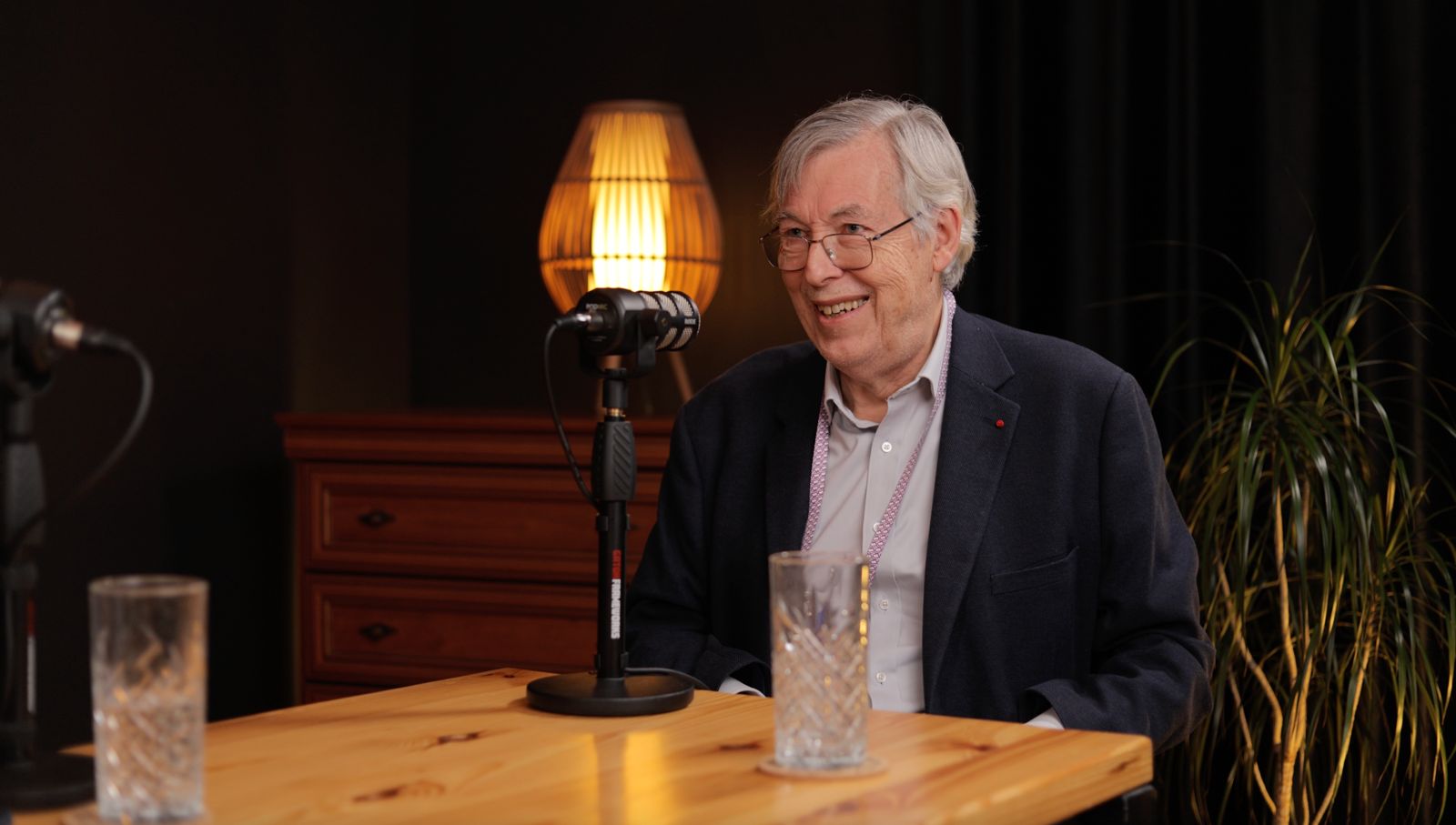
François Heisbourg
Ukraine Facility Platform
He says that he loves the Europeans, but at the same time he has contempt for the Europeans. And he has no hesitation in taking initiatives involving Europe or Ukraine over the heads of the peoples and the governments of these countries. He tells us where we should deploy aircraft – and of course that they should be American aircraft. He tells the Ukrainians what size their army should be, and how much of their territory they should give to the Russians. That is Mr Trump. Is that part of the solution? I doubt it.
– Experts say that if we combine the GDPs of the EU and the United Kingdom – even without the United States – Europe’s economic superiority over Russia is far greater than during the Cold War. This means the resources to deter Russia exist. Are these resources being used effectively and at a sufficient scale?
Kees Klompenhouwer: The economic power of Europe compared to Russia – it is no match. Russia, in theory, should not stand a chance.
But unfortunately, because Europe is not a state – it consists of more than 27 nation-states, each with its own policies – the practical effect is less than the total of the various economic positions. So instead of synergy, we often have a lack of it, particularly in the field of defence.

We do have some synergy in the economic field, and that is why, when the EU has to take measures, it often uses economic instruments such as sanctions. But unless we are led by the United States, we in Europe do not really know how to play power politics. It is not part of the political DNA of most of our leaders – there are some exceptions, but I would say most.
Most countries are also tied up in what I would call “household questions” – pension reform, social issues, and that sort of thing. National politics tend to be self-centred and focused inward. That is why common problems do not receive sufficient priority, and why the instruments to actually act and do something on the ground remain weak.
– Yet there is now a decision to increase defense spending to 3.5 percent of GDP. In theory, this should change the situation.
Kees Klompenhouwer: Yes, that is right. So the means are there. And now the question is how to use those means effectively.
First of all, we should not prepare for the last war, but for the war that is taking place now. And that requires a rethinking by our military establishments of what modern warfare is.
Secondly, if you look at the costs of certain capabilities – the famous “enablers”, such as command and control, intelligence, strategic transport, and dealing with enemy air defences – these enablers are in the hands of the United States. And we, as Europeans, need to develop those collectively. So far, we have not done this. We did not feel the need to do it, because we could rely on the United States to always be there to provide them. So we never made a plan to provide them for ourselves. But now the time has come to do that.
ВАС ЗАИНТЕРЕСУЕТ
The United States has decided on what they call a pivot to Asia – that Asia is more important than Europe. The fallacy is that they think that by abandoning Ukraine they will be more successful in the Asian and Pacific region. Whereas I think that if they abandon Ukraine, and if they abandon Europe, it will create so many problems that we will not be able to help them in Asia. So abandoning Europe – which is what this amounts to – is a very dangerous policy.
– There are three ways to deter Russia: nuclear deterrence through mutual assured destruction; building up large stocks of conventional weapons and trained troops; or staying two technological steps ahead so that any attack has no chance of success. Which model of deterrence should Europe rely on today?
François Heisbourg: Your question is a good one, but it assumes that some upstream questions have already been answered. One of them, of course, is budgets, which Kees has already talked about.
But I would add one important point: the difference in GDP does not explain who is going to win a short war. In the long run, of course, if a world war lasts five or six years, the countries with the greatest capacity for economic mobilization will probably win. That is what happened in 1945.
But in 1941, a country with about 10 per cent of the GDP of the United States decided to attack the United States – Japan, with Pearl Harbor, Singapore and so on. And it took the United States five years to resolve that problem, and it had to use nuclear weapons to do so.
This is another way of saying that it is not because Europeans are going to increase defence budgets to 3.5 per cent – which is necessary, which we should have done a long time ago, that we are in any position, by that fact alone, to win a war. To win a war, we have to be able to produce the armaments.
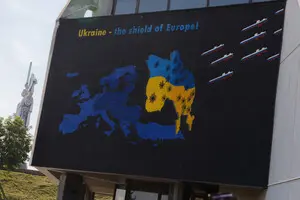
For twenty-five years, during the peace dividend era, we ratcheted down our defence industrial base in an extraordinary manner. We also gummed up all the systems to buy armaments. And, mercifully, our Ukrainian friends are now beginning to help us think in a new way about how to run production in wartime conditions – at high levels, at high speed, with very short development times. Ukraine is not only the shield of Europe, but also a country to learn from.
We should not assume that President Putin does not have to respond to domestic inputs. He does. He also has to deal with pensions for older people, making sure they arrive on time. He makes sure that young people in Moscow and Saint Petersburg are protected from the horrors of war. But he does so in a way that helps prepare the war. This is something we do not know how to do.
He also has to manage public opinion. It is not a democratic system, but dictators, like leaders in democracies, do take public opinion into account – even if it does not express itself freely as it does in our societies.
This has been one of the elements of Russian strength: President Putin has been making, from his point of view, the right moves in balancing the external front – the war – and the internal necessities needed to maintain his rule. He is a wildly clever, nasty dictator. And this is also a lesson that we in Europe have not yet fully learned: the world is now populated with people like that. We have forgotten that sometimes we have to be nasty too. We have to be brutal. And that does not come naturally to us because of our “never again war” mindset.
– What concrete steps should Ukraine take to become not only a provider of battlefield information and expertise, but a full part of a joint European defense industry that must now be built differently?
Kees Klompenhouwer: Yes, this is a very important point. That is why we have come together, with the help of the Ukraine Facility Platform, in what is, in fact, a defence strategy group – a joint group consisting of Western European experts, Central European experts, and Ukrainian experts.
The idea behind this is that we should jointly develop a defence strategy and a military strategy to deal with the threats that we are facing. And in that process, Ukraine can provide not only information, but also lessons learned. The Ukrainian military can teach our militaries. Ukrainian industry can teach our industry. And the way to do that is by forming partnerships.
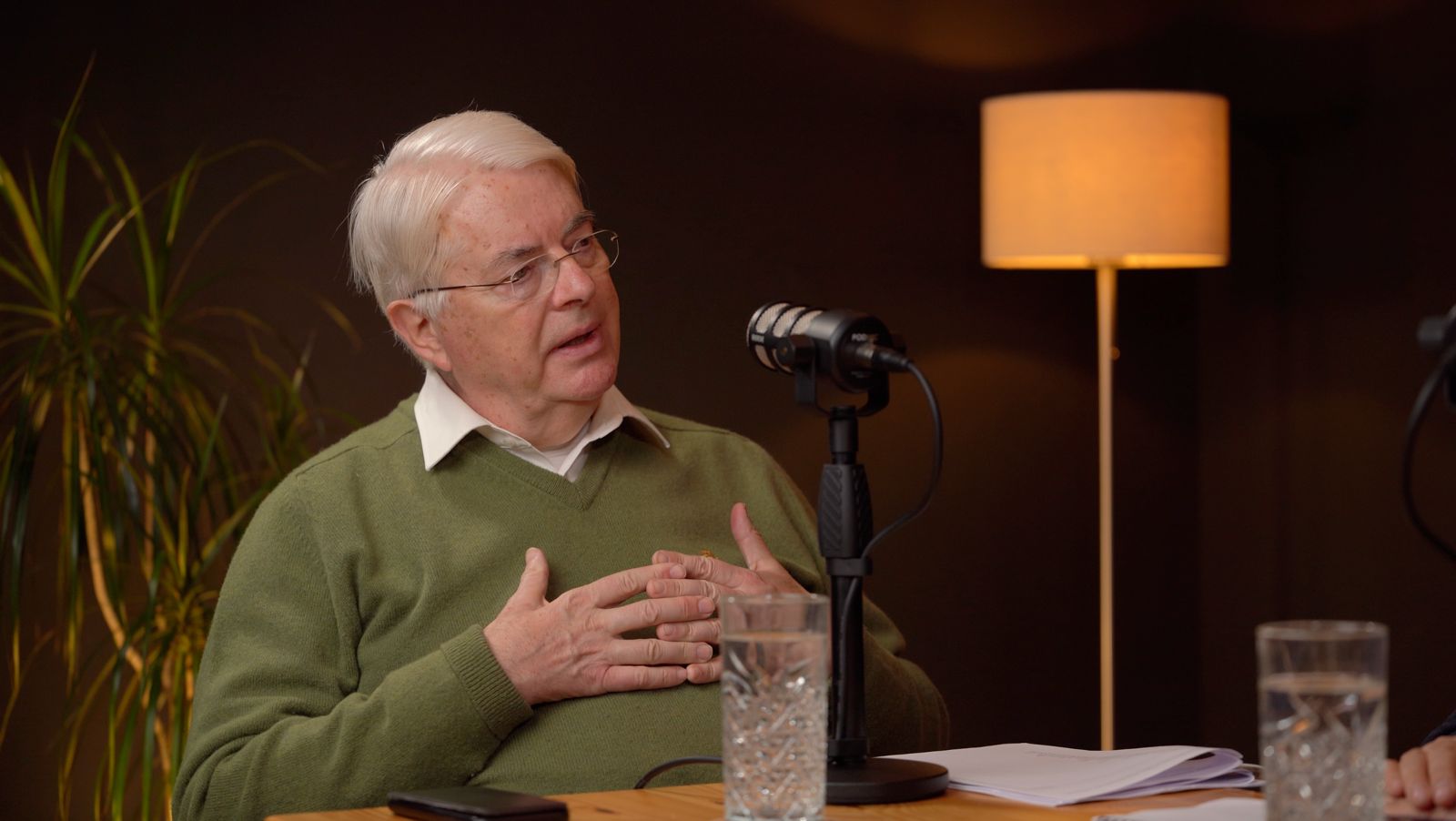
Kees Klompenhouwer
Ukraine Facility Platform
Many EU member states, including my own country, the Netherlands, but also other countries, are trying to build such partnerships through their embassies in Kyiv. There is another area that should be of interest to both us and you – an integrated, layered air-defence system.

In fact, Ukraine is now putting into practice a concept that we had in theory, but that we no longer applied because of the peace dividend. Ukraine is facing threats of different levels every single day – drones, cruise missiles, ballistic missiles and everything in between. Europe, in turn, can offer solutions that involve highly sophisticated radar systems and advanced missile technology. Together, we could develop an integrated air-defence system that would protect both Ukraine and Europe. This is in our common interest.
– François spoke about the concept of a “short war” as the most favorable scenario for Russia. At the same time, our current defense systems are largely focused on a long war of attrition. Does this mean that European defense industries need to rethink their priorities?
Kees Klompenhouwer: Well, that depends. I do not think we will see another tank battle like the one at Kursk during the Second World War. The battle space is changing.
Electronics, reconnaissance and surveillance play a much higher role. The time between the acquisition of a target and the killing of a target is much shorter. Hence also the importance of artificial intelligence, in order to strike faster and better. And also to save resources, because every shot has to be on the right target.
So, in fact, we do not know exactly how the Russians plan the next military battle in case we would have to face them. That is something we have to think about together.
And my concern is that our military establishments too easily take as a model the previous war that they know. For example, in Iraq one precision-guided missile could make a lot of difference. But today it is a totally different situation.
– How do you assess the factor of time and speed? You mentioned that speed has become a critical factor. Do we still have enough time to change?
François Heisbourg: In strategy, timing is everything. And the timing for Ukraine and the timing for Europe are different. And that is one of the problems.
You are in a war – and you have to win it. You do not have the luxury of thinking five years or ten years ahead. You have to be in a fighting mood every day. And you are doing that very remarkably.
ВАС ЗАИНТЕРЕСУЕТ

Europeans are in a different situation. Now, at last, we have the money, but we do not have the productive capability, at least not at the level that is required, including to help Ukraine. We have a window of vulnerability which the Russians can exploit. And which the Americans may make worse.
What do I mean by that? Today, the United States is the prime leader in long-range air defence – Patriot – and in command, control, intelligence and strategic reconnaissance, and the enablers which go along with that. The Europeans have the technical know-how to catch up and to replace the Americans. Because we are no longer in the logic of an automatic American alliance. We are now in a logic of maybe being able to work with the Americans, but essentially being able to substitute for them.
Today, the United States does not give material to Ukraine. It only sells material to the Europeans so that we can give it to Ukraine.
But we are not yet able to replace Patriot. In the short run, we have just committed ourselves, within the French-Italian project, to providing eight Mamba batteries – a system comparable to Patriot. President Zelensky has said that he needs 24 new Patriot batteries. Mamba is more or less the equivalent of Patriot. Eight is one third of 24. So, within a few years we will be able to replace one third of the American capacity – while you need it now.
And therefore, we are going to have to spend European money to buy American arms. That is assuming that our electorates will accept this. It is easier to convince people to help Ukraine with their own money than to convince them to spend money to enrich American defence firms which no longer want to help Ukraine militarily.
ВАС ЗАИНТЕРЕСУЕТ

And furthermore, what I have said also implies that the Americans will actually continue to provide the Europeans with the authorisation to re-export American weapons to Ukraine. Now imagine for a moment that Ukraine says no to the Russian-American peace plan. Do you think that the Americans would still authorise the Europeans to provide American weapons to Ukraine?
So, we are caught in a timing problem which we are going to have great trouble handling. But we have to be aware of the problem.
Ukraine Facility Platform
Kees Klompenhouwer: We are between the hammer and the anvil – you know, the place where the blows will come.
The Americans are asking for very large financial compensation for their efforts, and the price is going up all the time. In order to avoid punitive tariffs, Europe had to concede and agree to provide 500 billion of investments to the United States.
Іmplementing this will be rather difficult, because these 500 billion would have to be provided by the private sector, which takes its own decisions. But this is just one example of how Europe has to pay in order to avoid punitive tariffs.
ВАС ЗАИНТЕРЕСУЕТ

The present US administration sees Europe as a lemon, or an orange, to press the juice out. And I think that is a problem. And indeed, at some point the European taxpayer will start to wonder whether this really delivers the goods that we expect.
– What is the smarter way out? What can Ukraine and Ukrainian society do – not only leaders, but the broader public – to properly understand and respond to this moment?
François Heisbourg: The two of us – you and we – have to work together as if we had a single fate. And that will be something quite new, because before that we used to have NATO on the West. The Americans will put pressure on you to sign things. And we need to be extremely careful about how we will work together.
On the Ukrainian side, you cannot expect that the Europeans will be, as we say in French, more Catholic than the Pope. In this story, Ukraine is the Pope. You are the ones who are immediately threatened. You are the ones who are at war.
If you give the impression that whatever conditions the Americans and the Russians want to impose on you are acceptable items for discussion and for brokering, the Europeans are not going to say: “Hey, you Ukrainians, you are irresponsible. You should be much tougher.”
On the contrary, I suspect that we will help Ukraine all the more if Ukraine demonstrates early on that it is not only going to be resilient – which it has been, of course, magnificently, and continues to be – but that Ukraine is not simply going to work towards some watered-down version of American and Russian conditions. Because if you do that, then the Europeans will do the same.
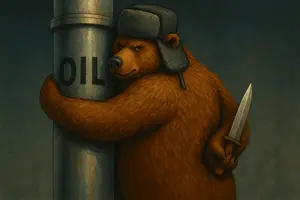
Let me give you a practical example. Part of the plan is to lift sanctions against Russia. Therefore, the Europeans could import Russian gas and Russian oil like they did before. This is not something we actually want to do. But if the Americans and the Russians say that there will no longer be any sanctions between the United States and Russia, why would the Americans be the only ones to benefit from this situation?
I think the European reaction will be that the Americans should no longer expect us to buy oil and gas from them.
Kees Klompenhouwer: We have not seen the official text. We have seen various versions, translations of versions. And to me it strikes as a very bizarre collection of points – military, political, financial and economic – and I think it will be very difficult for Europe to digest.
And I would hope that Ukraine would, very shortly, feel encouraged by the support of European leaders to politely but clearly make it known that this is not a valid peace plan.
Noticed an error?
Please select it with the mouse and press Ctrl+Enter or Submit a bug
Stay up to date with the latest developments!
Subscribe to our channel in Telegram
 Follow on Telegram
Пожалуйста выберите один или несколько пунктов (до 3 шт.) которые по Вашему мнению определяет этот комментарий.
Пожалуйста выберите один или больше пунктов
Нецензурная лексика, ругань
Флуд
Нарушение действующего законодательства Украины
Оскорбление участников дискуссии
Реклама
Разжигание розни
Признаки троллинга и провокации
Другая причина
Отмена
Отправить жалобу
ОК
 Login with Facebook
 Login with Twitter
 Login with Google