
 Support ZN.ua








Spoiled Oil and Operation “Valve”: How Russia and the FSB Are Squeezing Competitors Out of the Market



On July 22, oil with a high content of organochlorine compounds hazardous for oil refining was discovered at the Turkish terminal, the end point of the Baku–Tbilisi–Ceyhan (BTC) oil pipeline that transports Azerbaijani oil to the Mediterranean market. Few would have noticed, aside from industry experts. Yet against the backdrop of deteriorating relations between Moscow and Baku, the emergence of contaminated oil in the pipeline at that moment appears highly suspicious. Almost simultaneously, tensions began rising in the roadstead of the port of Novorossiysk due to measures introduced by a Russian presidential decree on July 21 this year, enabling the FSB to exercise control over foreign vessels entering Russian ports. The decree mandates all vessels, regardless of cargo type or port category, to obtain approval from the Federal Security Service.
At first glance, these events seem unrelated.
A few words about the new measures
The Russian presidential decree “On Amendments to the Regulations on the Entry of Foreign Vessels into Seaports of the Russian Federation,” dated July 21, 2025, No. 502, stipulates that entry into Russian ports from foreign ports shall only be permitted with the consent of the port captain, coordinated with an authorized FSB officer. This provision took effect immediately upon publication. Notably, this decree was preceded by FSB Order No. 205 of May 25, 2024, “On Amendments to the Border Regime Rules,” approved by Order No. 454 of August 7, 2017.

The FSB Directorate for St. Petersburg and Leningrad Oblast was the first to announce the implementation of new border regime rules last year. According to these rules, captains of foreign vessels transiting Russian territorial waters or entering Russian ports had to submit to the FSB a standardized notification for each actual port entry. The format, contact details and methods of transmission (telephone, email, fax, VHF) were defined by the order. A 24-hour advance notice before entering the port and a four-hour notice before actual entry became mandatory. Entry, exit and vessel maneuvers in the vessel traffic service (VTS) zone were placed under strict control: captains must submit movement requests 15 minutes in advance and maintain constant VHF contact with the authorized operator.
The driving force behind these changes were this year’s sabotage attacks on five tankers carrying Russian oil. All five had entered Russian ports just weeks prior to mysterious explosions. Many experts pointed fingers at Ukraine. The true culprit remains unknown, but Moscow decided to take extra precautions. In reality, the Kremlin’s plan is far more multifaceted than simply preventing sabotage.
In fact, the Kremlin decided to act in a hybrid sabotage mode itself.
Pressure on Kazakhstan
Kazakhstan relies heavily on the port of Novorossiysk for exporting its core raw materials and products—oil, coal, grain, ferroalloys, copper concentrates, mineral fertilizers. Despite efforts to develop alternative routes (via the Caspian Sea, South Caucasus and Türkiye to Europe, or via the Caspian Sea and Iran to the Middle East), Kazakhstan remains dependent on the Russian route. This gives Moscow leverage over Kazakhstan’s economy and politics. Therefore, any additional complications along the main logistics corridor, especially those involving FSB inspections, are met with concern in Astana—all the more so given the strained relationship with Moscow. Recall that the Kremlin has not forgiven President Tokayev for his refusal to recognize the so-called DPR/LPR, Russia’s claim to Crimea and other Ukrainian territories it has occupied, among many other issues.
Kazakhstan’s main export item is crude oil from the Tengiz, Kashagan and Karachaganak fields, produced by Western consortiums. American companies Chevron and ExxonMobil play a leading role, alongside European Shell, ENI and TotalEnergies. Russian Lukoil holds a minority stake.
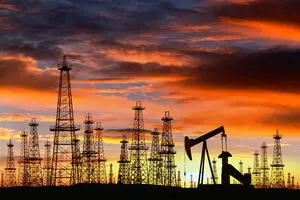
According to available information, Putin’s decree of July 21 was driven not only by a desire to prevent sabotage against Russian oil tankers. In a context of falling oil prices and rising war expenditures, Russia’s strategic goal is to reduce competitors’ oil volumes on the market to drive prices upward. Kazakhstan and Azerbaijan are among such competitors. Of course, they are in a different league compared to Russia or Saudi Arabia, but their exports still impact the global oil market. Kazakhstan is particularly relevant, with production approaching 90 million tons annually and 2024 exports reaching nearly 69 million tons. The main export route from landlocked Central Asia runs through Russian territory.
Through these added security checks, the Kremlin seeks to:
- create obstacles to Kazakh oil exports to reduce market volume and spark an upward price trend;
- prompt European companies to pressure their governments (Italy, France, the Netherlands, the UK) and the European Commission to change their sanctions approach against Russia’s oil sector (stop targeting the so-called shadow fleet), since Kazakhstan supplies 11.5 percent of EU oil imports and any reduction would seriously impact EU refineries;
- generate additional friction between Kazakhstan’s government and American producers who wish to expand exports after recent investments, while Astana must observe OPEC+ export quotas;
- force US oil majors to pressure the Trump administration to, in turn, push Ukraine toward a swift end to the war by ceasing weapons and military equipment (WME) deliveries.
Shipowners and oil traders, true to form, remained silent for several days, unwilling to incur FSB wrath by disclosing delays of tankers in the Novorossiysk roadstead or bans on loading.
The chain of blackmail works
Particular attention should be paid to the covert, behind-the-scenes actions of American companies, notably Chevron. It has long been a quiet lobbyist for Russian interests in the US. Together with Russia’s pipeline monopoly Transneft and Sovcomflot, Chevron co-founded the Russian-American Fort Ross Dialogue in 2012. Since 2014, it opposed sanctions against Russia’s oil sector, and in 2021 lobbied against US sanctions on the Nord Stream 2 pipeline. ZN.UA already reported on Chevron’s peculiarities in 2023.
Russia effectively leverages pressure on American firms to advance its goals. A recent case is illustrative. On Sunday, March 30, Trump said on NBC News that he was “very angry and pissed off” at Putin and threatened new tariffs on Russian oil buyers. The next day, March 31, Transneft issued an order temporarily shutting two of three berths at the Yuzhnaya Ozereyevka terminal in the Novorossiysk port area. Notably, on April 1, Chevron stated that oil production at its Tengiz field and deliveries to the CPC pipeline continued uninterrupted, while avoiding mention of any disruption to tanker loading, despite only one berth functioning. Kazakhstan’s Energy Ministry also stated that “loadings continue as scheduled via the third operating berth.”
On April 2–3, Kirill Dmitriev, head of the Russian Direct Investment Fund, visited Washington and met with Trump’s special envoy Steve Witkoff. In the following days, Trump softened his rhetoric toward Putin and blurred the prospect of further sanctions on Russian oil. It is worth taking into account that Russia periodically “shuts the valve” on US oil majors by suspending shipments for alleged reasons—poor weather or security threats such as Ukrainian naval drone strikes seen in 2022 and 2023.
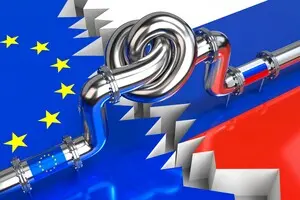
Currently, Russia is trying to persuade the Trump administration to drop proposed sanctions against consumers of Russian oil (China, India, Brazil) in exchange for ensuring uninterrupted Kazakh oil shipments by US companies from Novorossiysk. Otherwise, “the valve will be shut,” with all the negative consequences: less oil sold—less revenue—lower shareholder dividends—problems for top executives.
Lobbyists for Chevron and ExxonMobil, and Dmitriev-Witkoff contacts, are now engaged in resolving the issue triggered by Putin’s July 21 decree. Meanwhile, Moscow proposes that the Trump administration halt WME supplies to Ukraine, arguing that “the Zelenskyy regime rejects peace and acts like a dictatorship.” In return, Russia promises to secure stable oil traffic from Novorossiysk, prioritizing tankers from Chevron and ExxonMobil.
The narrative being quietly promoted to the White House is as follows: “Because of Zelenskyy, American oil business can’t operate normally.”
Putin’s July 21 decree will hurt Kazakh exporters (primarily KazMunayGas) through lost revenue. This will further damage an already troubled economy, causing tenge depreciation and declining household income.
Spoiled oil
Contaminated shipments of Azeri Light oil could, of course, result from negligence at the Sangachal terminal laboratory in Azerbaijan, where the pipeline begins. The Azeri–Chirag–Gunashli fields are in depletion, requiring enhanced recovery techniques—organochlorines could, albeit undesirably, enter the stream. But the BTC has recently also carried oil from the eastern Caspian coast—small volumes (up to 1.5 million tons annually) from Turkmenistan and mostly Kazakhstan. BTC operator BP-Azerbaijan insists third-party oil can be transported provided that it does not affect Azeri Light quality.
From Kazakhstan’s Aktau terminal, tankers cross the Caspian Sea and inject oil into the BTC. Thus, hypothetically, oil with excessive organochlorine content could be of Kazakh origin. While KazMunayGas denies this, Kazakh sources say that security firms serving the Tengizchevroil joint venture are infiltrated by a myriad of Russian mercenaries from private military companies with experience beyond basic protection.
In 2023, 1.1 million tons of Kazakh oil were shipped via BTC; in 2024—1.4 million tons; 2025 plans are at 1.5 million tons. This reflects Kazakhstan’s steady push to reduce dependency on Russia’s CPC route, which faces various “issues.” While still small compared to KazMunayGas’s total 2024 exports (nearly 12 million tons), even this irritates Moscow— as does closer Astana-Baku cooperation beyond Russia’s pseudo-integration frameworks in the post-Soviet area. Moscow noted how Tokayev thanked President Aliyev for supporting Kazakhstan’s efforts to boost exports to Europe—a statement made on May 21 at the Organization of Turkic States summit. The Kazakh leader also said the Trans-Caspian oil pipeline project, connecting Kazakhstan and Azerbaijan across the Caspian, is again under expert discussion and being placed on the agenda.
The Kremlin has been plotting retaliation against Astana and Baku for their “defiance” for six months. In March, Defense Minister Andrey Belousov inspected the Caspian Flotilla, paying particular attention to naval special forces—especially the 336th Independent Marine Battalion’s diving-diversion unit and the 137th Special Detachment of PDSS (anti-sabotage assets). Moreover, Russia continues training for amphibious landings aimed at the coasts of Azerbaijan and Kazakhstan—a trend since the Kavkaz-2020 drills—rehearsing scenarios for seizing ports, maritime infrastructure, and destroying subsea assets.
In short, Russia could stage a “technological accident” on Azerbaijan’s offshore infrastructure. But such sabotage would quickly be exposed and damage relations not only with Baku but also other capitals whose companies work in the Caspian region. London’s stance can be brushed aside (“perfidious Albion”), and Paris ignored. But Ankara’s—unlikely because Russian oil passes through the Bosphorus. Hence, the choice of subtle, non-lethal sabotage—mere “hints” that cause short-term losses for the disobedient. Still, the message to Baku and Astana is clear: next time may bring spills, fires and casualties.
Thus, Russia continues its typical tactics, aiming for multi-pronged success through blackmail and intimidation, the classic KGB/FSB playbook. The message: impose more sanctions on Russian oil, and non-Russian oil will suffer too. Can this be countered? Yes. Stricter EU measures against Russian oil in the Baltic, Trump acting on promises to flood Europe with US energy. But the most effective “sanctions” should come from Ukraine’s Defense Forces—targeting the aggressor’s oil infrastructure.
Please select it with the mouse and press Ctrl+Enter or Submit a bug
 Follow on Telegram
 Login with Facebook
 Login with Twitter
 Login with Google