
 Support ZN.ua








Will Ukraine Get Anything More than Ersatz Guarantees?



In recent weeks we have witnessed a cascade of international events and statements concerning the war in Ukraine, differing in scale and political weight. Unsurprisingly, their impact on the dynamics of the situation, both diplomatic and military, will vary as well. Still, taken together, they allow us to draw some conclusions about the likely behavior of the main actors and the state of key issues, the resolution of which will determine the conditions for ending the war or, most likely, its current phase.
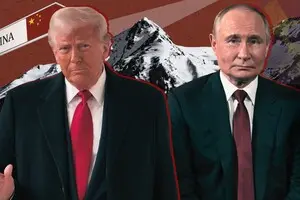
Donald Trump’s position is best described as inconsistent—a wartime “carousel”: constant movement, contradictory statements, declarations of “victories” against the backdrop of a complete absence of concrete results, all designed to keep himself at the center of the news cycle.
By contrast, the meeting with Putin in Anchorage, with its protocol “fireworks” and informal understandings, once again showed that Trump sees resolving the “Ukrainian problem” as possible only through agreement with the Russian ruler. To the American president, Putin is not a dictator and war criminal but a strong leader worthy of respect and a desirable partner in implementing the mythical but dear-to-Trump mega-projects and his plans to reformat the international system into a playing field dominated by authoritarian “throne-holders” who dictate the rules unchallenged.
This logic drives Trump’s efforts to organize a two- or three-way meeting with Putin, Zelenskyy and himself, which he considers absolutely necessary to stop the war in Ukraine. The idea has support in Europe and Kyiv. Yet given Putin’s demand for Ukraine’s capitulation as the basis for any talks, it is hard to see how such a meeting could even be useful. Nor is it clear whether the Ukrainian side can count on the US president to act even as an impartial broker.
The extent of Putin’s sway over Trump is illustrated by the fact that the American president twice sacrificed his “friendship” with the former for a supposedly coordinated European position on an immediate ceasefire, backed by threats of genuinely painful sanctions. The first reversal brought a revival of the 2022 Istanbul peace process, which Russia exploited as propaganda cover for continued aggression. The second had still more serious consequences: Trump executed a political U-turn, dropping the ceasefire demand in line with Putin’s tactic of endless, pointless negotiations to erase the “root causes of the conflict.” This is hardly surprising considering the similarity between Trump’s and Putin’s “peace plans” for Ukraine: both require territorial concessions from Ukraine and rule out NATO membership.
After the Alaska meeting, talk of new primary or secondary sanctions against Russia and its allies virtually disappeared from the rhetoric of the US president and his foreign policy team. They even began to dismiss the advisability of sanctions in light of the meeting’s outcome. Following the applause and joint car ride, irritation at Putin’s behavior evaporated—something some observers rushed to portray as a shift in the US president’s attitude toward the Russian leader.
Given Putin’s defiance and his clear unwillingness to meet Trump halfway in arranging a summit with Zelenskyy, the issue of influence—specifically influence, not pressure—on Russia to hold “negotiations” resurfaced, again hanging in the air. No direct harsh criticism of Putin followed, even after yesterday’s deadly strike on civilian targets in Kyiv.
Secondary sanctions? Yes, a decision was implemented to raise tariffs on India. Was this, as announced, punishment for buying Russian energy? Not necessarily. Trump was primarily unhappy with India’s intransigence during tariff talks. As for China, the tariff truce has simply been extended.

It is also worth noting that in today’s sanctions discourse Trump has suggested that Zelenskyy is “not innocent” and sometimes “absent at key moments.” Trump is ready to wage “economic war” on everyone, including Ukraine, which he would prefer to see more compliant. Clearly, more is to come.
Nor was Trump swayed by the mass landing in Washington of America’s leading European allies. He reaffirmed his commitment to negotiations along Putin’s lines and defended the logic of “territorial exchange,” even finding time in his packed schedule for a “call to a friend” in Moscow.
For me, the Washington meeting was very revealing in terms of European behavior. On the one hand, it was an important demonstration of European solidarity with Ukraine, which impressed even the US president. Yet it also showed how limited their influence on Trump is—and how dependent they remain on the US when it comes to Ukraine.
This reflects both the relative weakness of Europe’s military capabilities and the gap between the generally sound rhetoric of European politicians and their concrete actions. Despite large volumes of financial, economic and military aid to Ukraine, European countries have still failed to muster the extraordinary effort that was already called for back in early 2024. Apparently, neither European politicians nor their societies are prepared for this—even though the war is unfolding on European soil. The best safeguard against its escalation into an all-out European war would be precisely those extraordinary efforts, the implementation of which would demand social and economic sacrifice. Even a relative defeat for Ukraine would mean defeat for all of Europe, with grave consequences for stability and for the European way of life itself. As Emmanuel Macron put it, trust in the EU and NATO is now at stake.
The uncomfortable reality is that our American and European partners have practically stopped speaking of the inadmissibility of rewarding Putin’s aggression by allowing him to retain control over Ukrainian territories seized in 2014. If such an approach was expected from Trump’s administration, the negative shift in Europe’s stance on this issue is a consequence of their lack of independence and their reluctance to take radical decisions that lack public support. It is unlikely the situation will change until the gangrene of Russian aggression spreads to territory protected by NATO’s Article 5. In the meantime, nearly all our partners—with varying degrees of enthusiasm—are engaging in the debate over what concessions Ukraine should make to stop the fighting.
Security guarantees for Ukraine, intended to compensate for the absence of a near-term NATO membership prospect, are seen as a safeguard against renewed Russian aggression. The height of verbal acrobatics is the Italian idea of “Article 5-like guarantees” without NATO accession, attractively packaging a set of important crisis-period security measures, but sharing nothing (apart from the name) with real security guarantees, collective defense or rapid and forceful response. This and other “guarantee” schemes can at best be described as ersatz guarantees of varying utility and varying chances of implementation.
Looking more closely at the main options circulating in the “marketplace” of guarantees, one can identify the elements most likely to shape the final proposal. European NATO members will take the lead, while the US will, at best, confine itself to providing air, intelligence and logistical support. Military contingents from the “decisive” states may be stationed on Ukrainian territory, but far from the front line, and with no instructions to respond by force to Russian provocations or incursions. Under such conditions, it is unclear how they could effectively deter the aggressor or at least provide real support to Ukraine’s Armed Forces on the front line.
It is also unclear whether, in my view, the most useful of these ersatz guarantees have any chance of being realized. I mean closing the skies over Ukraine and securing its maritime borders—measures that would indeed strengthen our security. But for that to happen, the guarantor states’ militaries would have to be ready for direct confrontation with Russian weapons and warships.
On the other hand, more realistic are continued supplies of Western weapons to Ukraine and partner participation in restoring and strengthening our security sector’s combat readiness. But this will depend above all on how effectively the mechanism for purchasing American weapons with European money operates—which in turn will depend on Trump’s will, prone to swing in one direction or another.

The outcome of this process should be to turn Ukraine into a “porcupine” state whose “quills” can force Russia to refrain from new acts of aggression. Such a transformation would enhance Ukraine’s ability to defend its territory and sovereignty, though it is unlikely Putin or his successors will abandon expansionist aims. Ukrainian society must finally understand that it must prepare for a long confrontation with Russian aggression—and for life under even harsher domestic and international conditions than before 2022.
This prospect cannot be called encouraging. But it does reflect the realities of contemporary international life, where the already weak mechanisms of European and global security have collapsed—and the road to new rules of coexistence will most likely run through large-scale conflicts and wars.
The recognition of these hard and even bitter realities should become an essential part of an honest dialogue between the authorities and Ukrainian society.
Read this article in Ukrainian and russian.
Please select it with the mouse and press Ctrl+Enter or Submit a bug
 Follow on Telegram
 Login with Facebook
 Login with Twitter
 Login with Google