
 Support ZN.ua








Gallup Data Reveal Ukrainians’ Shift: From Euphoria to Realism, Not Optimism to Pessimism

Coincidence or not, but shortly after the announcement of a Trump–Putin meeting in Alaska, the Gallup Institute, known for its public opinion research, published a study on Ukraine showing that, for the first time since the start of Russia’s full-scale invasion, most Ukrainians would like to end the war as soon as possible through negotiations.
Do the figures presented in the study reflect the moods in Ukrainian society recorded by Ukrainian sociologists? Do they indicate that Ukrainian society is ready to give up territories just to end the war? Are new social upheavals possible after the “cardboard protests” over anti-corruption institutions that could prove dangerous for a war-afflicted country? Where are the cracks in our society that could potentially turn into serious fault lines, and how can this be avoided? What will Ukraine be like after the war, and what will Ukrainians’ expectations be in the post-war elections?
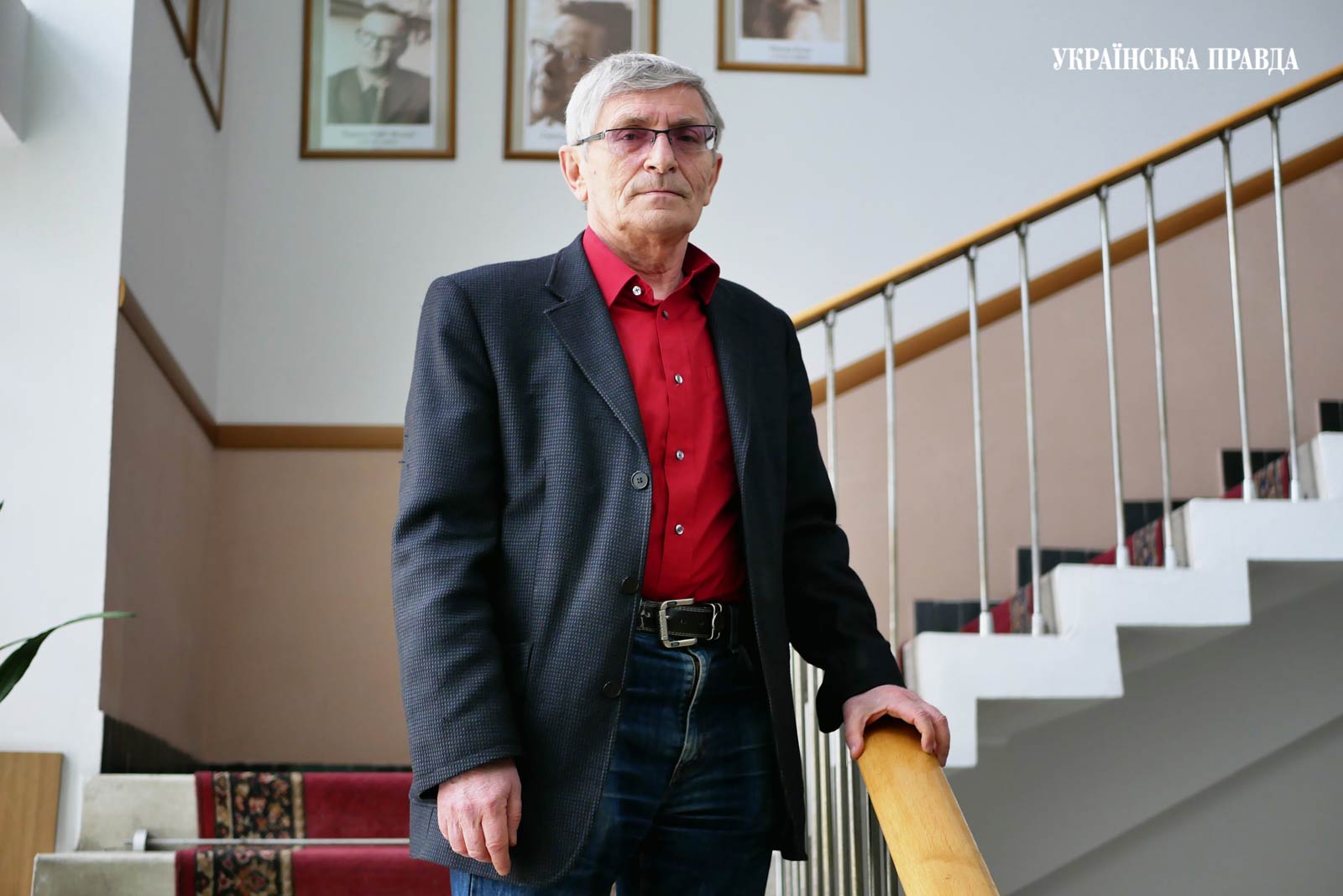
ZN.UA spoke about this with Yevhen Holovakha, Director of the Institute of Sociology of the National Academy of Sciences of Ukraine, sociologist, philosopher and psychologist.
AK: Mr. Holovakha, according to Gallup’s latest study on Ukraine, 69 percent of Ukrainians support ending the war as soon as possible through negotiations. It is claimed that this is a dramatic shift in public opinion compared to 2022, when 73 percent supported fighting until victory, and only 22 percent wanted to see the war settled through negotiations.
In your view, why did Gallup decide to measure the situation in Ukraine right now, when negotiation processes are underway? Don’t you think this was done to support certain decisions that we, Ukrainians, would strongly dislike?
YH: Anything is possible. Gallup does not have its own separate polling center in Ukraine. They regularly conduct global surveys. But this poll was conducted specifically in Ukraine. Gallup is a commercial company, and it is entirely possible that there were clients who commissioned such a survey. The company is not obliged to name them if they wish to remain anonymous.
Although, frankly, I don’t see anything here that could be particularly surprising in light of the data already obtained by Ukrainian polling centers. There is a general view that, regardless of whether we win the war or not, it is necessary to negotiate its end. The point is to find worthy conditions that meet the core demands of Ukrainians.
AK: So the figures in Gallup’s study correspond to the moods in Ukrainian society that you record?
YH: There are interesting polls (in this case I refer to recent data from the Kyiv International Institute of Sociology (KIIS)) showing that Ukrainians are absolutely not ready to accept the conditions voiced by Russia. But what Ukraine and Europe propose (a cessation of hostilities along the line of contact, which, incidentally, is most likely the only possible formula for ending the war) — that is acceptable.
Yes, Ukrainians have changed their views since 2022, by the end of which we experienced euphoria from not only having stood our ground but also having driven Russian troops out of part of the occupied territories. There was a feeling of national unity.
However, the much-publicized counteroffensive of 2023 proved ineffective, and attitudes began to change. The figures clearly show this. And this is the result of unrealistic expectations. We underestimated the seriousness of the enemy’s intentions and the fact that international circumstances might not facilitate the realization of our optimistic hopes.
Euphoria is an unhealthy state that can lead to inappropriate actions. A sober assessment of the situation is always better. So I believe these data show a shift not from optimism to pessimism, but from euphoria to realism.
AK: Do you think this study should convince Trump that, unlike the Ukrainian president, Ukrainian society is ready to give up territories just to end the war?
YH: Not quite. Let us turn to the KIIS data for July–August—Ukrainians’ attitudes toward three versions of peace plans (the Russian plan—four Ukrainian regions go under Russian control; the American plan—the US officially recognizes Crimea as part of Russia; the Ukrainian–European plan—control over occupied territories remains with Russia, but Ukraine and the world do not recognize this). The response options were as follows: “I would easily agree to this option,” “This would be a difficult option but overall acceptable,” “This option is completely unacceptable.” The first option in response to the Russian plan was chosen by 5 percent, the second by 12 percent. Seventy-six percent categorically rejected this plan. The Ukrainian–European plan was supported by 54 percent (10 and 44 percent, respectively). It was rejected by 35 percent. That is, 54 percent are willing to end the war along the line of demarcation (as most wars, in fact, end), but are not willing to recognize the loss of territories legally, leaving these issues for the future, possibly for diplomatic negotiations.

AK: Let’s talk about the scandalous law on NABU and SAPO. Although the authorities, under pressure from society and partners, had to backtrack, returning powers to the anti-corruption bodies, their objectives have not changed. And even if the methods become more sophisticated, open confrontation between the president’s security forces and the anti-corruption institutions is already a reality. What risks for the state do you see in this situation?
YH: A state at war is generally prone to decisions that restrict democratic procedures. Especially a state with an unestablished democracy, like ours.
I have an ambivalent attitude toward this specific situation. On the one hand, under no circumstances should any apparatus extend its power over what was created to oversee that apparatus. This is what is called checks and balances. We have never had it under any president. Their apparatuses have always made all the decisions. And only the Maidans could somewhat bring them to reason.
On the other hand, there are doubts about the effectiveness of these anti-corruption bodies. All the more so when, throughout the ten years of NABU and SAPO’s existence, there was no political will to actually fight corruption and, at the legislative level, give the anti-corruption agencies all the necessary tools. And this is, again, the problem of an unestablished democracy.
But even if there are no genuinely functioning institutions or organizations, there should at least be nominal ones that, even symbolically, counter absolute arbitrariness by the state apparatus. They must not be touched. Civil society expressed its protest, and that is right.
Let me reiterate this: in wartime, the state machine tries to limit freedoms. This is inevitable. It is good that Ukraine has civil society to remind it that it should not go down that path. And I think, with the support of international partners, we will continue to prevent this.
AK: After the “cardboard protests,” in whose fairness and necessity one part of society believed, there were attacks on the military enlistment offices, which another part of society considered fair. Where else is the social fabric thin, where might it tear?
YH: The “cardboard” protests showed that we have a generation of young, engaged people. For Ukrainians, there are several things we call red lines.
First, Ukraine’s European path is now undoubtedly one of them. Anything that artificially limits our ability to join Europe will spark protests.
Second, it’s anything related to injustice.

AK: Well, avoiding conscription and attacking enlistment offices is at best a strange way to restore justice...
YH: Yes, in wartime, when what is at stake is, generally speaking, the very existence of the state and possibly the nation as a whole (because, if occupation takes place now, I fear Russia will engage not just in bringing Ukrainians to imperial obedience but in bloody denazification), if the Ukrainian state, the Ukrainian nation and Ukrainians want their country to exist, then conscription is necessary. Otherwise, we surrender and are enslaved by Russia. There is no third option.
And then, as has always been the case in states that preserved their statehood for centuries, members of the elite should be the first to fight and defend the country. They should set the example.
But that did not happen here. And that is an injustice.
AK: On the one hand, that is true. On the other, it is an excuse for one’s own fears, unwillingness to risk one’s life, and so on.
YH: Absolutely. That is what I am talking about. There should be an example. One must not give an excuse to a faint-hearted person. “I am an ordinary person. I go to war, while they all sit here. Go to restaurants, drive SUVs.” If you belong to the elite, then set an example. That does not mean everyone must go to the trenches. But vivid examples are needed, and they must be constantly shown to society by the media. But examples are lacking so far.
AK: What other excuses does the state now give to the faint-hearted?
YH: The faint-hearted are indeed afraid and may cling to any argument. To leave no excuse, state policy should be transparent. There must be no sense that one part of society is parasitizing on the sacrifice of another. There must be a very transparent and clear law on how, on what grounds, in what order, taking into account health, age specifics, and profession, people are called up to the army. Everything must be clearly spelled out. Then, I think, there will be fewer questions and fewer opportunities to evade. Not the current situation where this one is caught, but that one is not. That is exactly the kind of excuse that can be used. An incident can always become a pretext.
AK: In hybrid warfare, the enemy looks for any cracks in society and tries to widen them into serious fault lines. In your opinion, what other cracks might Russia target?
YH: The war has led to the emergence of new potentially antagonistic social groups that, after the war, could threaten serious tension and conflicts: those who were at the front and those who were not; those who migrated abroad and those who stayed; those who lost loved ones, homes, jobs, businesses, health, and those who did not...
We did not write the book Stress States in Wartime Conditions for nothing. The physical and mental health of Ukrainians has, naturally, suffered greatly during the war. This must be taken into account. If, on top of the stresses of war, we add the stresses of relations with each other, we might truly not withstand it.
So the potential for deepening fault lines in the country is quite real. And, of course, Russia will hit all these lines. But all these threats are significantly less urgent and important than those hanging over all of us. And we must say that most Ukrainians understand this. Until recently, surveys have not shown such a level of tension along these potential fault lines that could lead to destructive social conflicts.

Again, let me refer to KIIS data from June: in response to the question “How do you assess unity among Ukrainians and the overcoming of contradictions?” 61 percent of respondents chose the answer “Ukrainians are gradually overcoming internal contradictions and moving toward a united political nation.” Thirty-three percent believe that “Internal contradictions among Ukrainians are deepening and Ukrainians are heading toward division.”
It’s encouraging that public opinion is dominated by the view that we are uniting rather than splitting apart. And I see that, in most cases, people are trying not to aggravate the situation. They should be helped in this, explanations should be given to them by the media and the humanitarian intelligentsia.
AK: Still, did the “cardboard” protests open Pandora’s box? Could new protests prove deadly for a war-torn country? And how, in your opinion, can this be prevented?
YH: This raises the question: should certain sores be exposed in the course of such complex social situations?
I do not think this will lead to serious repercussions. There had been attacks on enlistment offices before, by the way.
Of course, when enlistment offices are attacked, this is very disadvantageous in terms of our capacity to resist. On the other hand, it is better for us to go through several small societal stresses and try to solve the problem than to get one big explosion. I think, in this case, it was a decent wake-up call for the authorities. They must understand that measures need to be taken and that explosive social energy has built up. Anything can be the trigger; you never know in advance.
AK: Well, it does not look like adequate measures will be taken in the near future. Could there be new explosions that might really be dangerous?
YH: I do not yet see grounds for this to happen in the foreseeable future. But much will also depend on the situation at the frontline. Constant negative information does not help relieve the growing inner tension among people. If the tremendous tension and explosive potential cannot be eased by some successes at the front, then it must be eased through information policy and clear legislation. There is this term, sociological intervention. This is when sociologists go and explain to people what is happening. In this case, not only sociologists should do it; there are too few of them. Psychologists, philosophers, political scientists, lawyers, historians should all do it together. We are all responsible for explaining to people the situation they are in and what the real threats are. I think few people have come to understand their existential nature. And this must be explained, showing that this existential threat runs through the entire history of Russia’s attitude toward Ukraine—and not only toward Ukraine but toward everyone else.

AK: Clearly, the negotiation process is now more active than ever before. Suppose an agreement is reached on a ceasefire. What awaits us afterward? What are your forecasts regarding the state of society?
YH: I once made a prediction that the hostilities would end in 2026. Of course, I would be glad to be wrong. But, frankly, I do not yet see serious grounds to believe that hostilities could stop in the near future, unless Russia develops a sense that its economy is collapsing. Possibly, there are already deep internal reasons for this. But by 2026, they will definitely be there. And we must endure until then.
As for the state of society, there are several factors.
First, will there be a massive return of people? It is still hard to say at this point. At least a third of refugees planned to return to Ukraine. This is a very important process that will give a significant stimulus to the development of society.
Second, how much help will we get in supporting our ruined economy? If the support is substantial (It seems unlikely we can count on US aid, but if there is European support, that would already be good), we could make quite a sharp economic leap.
Ukraine’s previous inertia and sluggishness were due to the fact that it was not at all an agent of international politics. It was of no interest to anyone, known mainly for Chornobyl disaster and rampant corruption.
Now Ukraine truly has agency. It has acquired the status of a very important country, at least for that part of humanity that adheres to the principles of democracy. And in this sense, Ukrainians should not underestimate the internal feeling of their importance and agency. This can significantly influence how we recover and how others establish relations with us. I believe that in terms of our integration into the world, the situation will be much better than before the war. Therefore, if the hostilities can be stopped and stay in that condition for at least some some, I would expect certain growth.
And, of course, political battles will begin in the run-up to elections.
AK: We will talk more about that. As for social forecasts, is there another scenario?
YH: The second scenario is that contradictions will deepen, and people will start settling scores—who was where and who has what. I consider it less likely. But it will materialize if Ukraine does not receive international support. Then contradictions, poverty, political uncertainty and squabbles will deepen. In general, the situation will be challenging.
As for public sentiment, until now, most people still believed in a positive future for Ukraine after the end of the war. Surveys in May–June already showed a crack in this opinion, taking some shine off my optimistic vision of the post-war situation. “In 10 years, Ukraine will be a prosperous country”—43 percent of respondents chose this answer (as opposed to 88 percent in October 2022). Forty-seven percent think that Ukraine will be a country facing a ruined economy and an outflow of people (in December 2024, 24 percent had this opinion). We will see what happens this fall.
I have always said that Ukrainians are tactical pessimists (they always look at the near future skeptically) but strategic optimists. But 10 years is already a strategic timespan. If people do not expect anything good in 10 years, this is a serious sign that something must be done about it. It will be difficult to rebuild the economy and public life if such moods prevail.

AK: After the Second World War, the inert part of French society channelled its shame at not participating and not resisting into especially zealous attacks on those who could not defend themselves—in particular, on women who had slept with Germans. Could a similar scenario happen here? How might it manifest? How much latent “vatnik” sentiment do we have that could surface after the war?
YH: Yes, that is possible. Of course, there is a certain reserve of those who sympathize with the imperialists. And certainly, a threat could come from them.
But Ukrainians, by and large, are a very tolerant people. This tolerance is, so to speak, shallow. It does not grow into some sort of mass support for, say, charity, as in America. But Ukrainians have always been marked by tolerance toward otherness. I think this will work now as well. Therefore, I do not think there will be such settling of scores as we saw in European countries after the Second World War.
And the difference is not only that. The fact is that, back then, virtually the entire territory was occupied. Even what was called Vichy France was, in fact, also an unfree territory. The French accumulated internal tension. As did Ukrainians in the occupied territories. But most likely, after the end of hostilities, our territories will, unfortunately, remain under occupation. And the rest did not experience occupation, if only briefly. Psychologically, this had a strong impact on them, but it will not lead to a change, to the accumulation of feelings of negativity and hatred.
AK: Putin and Trump’s task (for different reasons, but here they share a consensus) is to reset power in Ukraine. What will this power be like, and who will ultimately take the lead? Will it be a military figure? A moderate pro-Russian politician? Someone who will demand revenge? In your opinion, what type might interest the electorate if it is not Zelenskyy?
YH: A popular military figure. I see no such figure among all others. Either Valerii Zaluzhnyi or someone who will be successfully promoted by then. The army enjoys huge trust.
AK: What will people’s expectations be in the post-war elections? Previously, there were main points—language, Russia–West, EU–NATO—that divided and shaped the electorate. In your opinion, what slogans, thoughts and ideas will be supported now? And how, in your view, will the elections themselves take place?
YH: There will be very populist slogans that will pour balm on the real wounds of tired people. The ones that will be accepted are those that pour the most balm. Unfortunately, that is the fate of young democracies.

AK: Populist slogans of what kind?
YH: They will take shape in the process. There will be virtually no ideological differences between the candidates. And that is remarkable. All will be pro-European, non-communist. Pro-Russian sentiments will definitely not be accepted, except for a few isolated “hidden” percentage points. According to polls, overtly pro-Russian sentiment is at 1 percent. Hidden sentiment, in my opinion, is about 10–15 percent. It has always been there and will continue to exist.
In fact, it will be a struggle not of ideologies, but of promises—a contest that will be won by the more successful populist.
AK: So will we be voting for populist promises or still for a personality?
YH: Well, of course, for a personality. Ukrainian politics has always been personalized because there is no established system or serious party. Perhaps apart from Zaluzhnyi, someone else may appear. It is always difficult to judge before the start of the campaign.
Please select it with the mouse and press Ctrl+Enter or Submit a bug
 Follow on Telegram
 Login with Facebook
 Login with Twitter
 Login with Google