
 Support ZN.ua








A Decision with Pitfalls: What Awaits the Tribunal for Russia's Aggression Against Ukraine


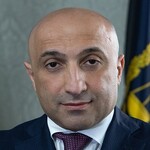
Over eleven years since the first shot was fired, and more than three since the full-scale invasion began, we've witnessed a historic decision: the signing of an agreement with the Council of Europe to establish a Special Tribunal for the crime of aggression against Ukraine. More than 35 nations, along with the European Union, have expressed their political support for its creation. This isn't just about diplomacy; it's about the very philosophy of law, which mandates that aggression should be recognized as a crime. The significance of this event shouldn't be underestimated. From both a legal and political standpoint, it's an incredibly ambitious undertaking. Yet, even here, certain hidden challenges and a degree of legal vulnerability demand open discussion to avoid disappointment and a gap between expectations and reality.
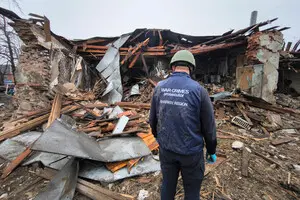
The crime of aggression isn't simply about combat or shelling; it's about a decision. The decision to invade another sovereign state despite the prohibition in the UN Charter. It's the primary act, without which there would be no crimes against humanity or war crimes. For a long time, this primary crime remained beyond the reach of international justice. In fact, for the first time since World War II, the crime of aggression is now becoming the subject of criminal prosecution. The UN General Assembly (notably in resolution ES-11/7 of February 24, 2025) has acknowledged that Russia's aggression against Ukraine must be legally assessed.
The urgency of establishing this Tribunal is further underscored by the fact that the International Criminal Court, despite its global importance, lacks the jurisdiction to hear aggression cases if the involved parties are not signatories to the Rome Statute. We cannot ignore that the very interpretation of the crime of aggression led to significant disagreements among member states. It wasn't until 2010, in Kampala, that states party to the Rome Statute adopted amendments defining the crime of aggression. However, these norms only apply with the consent of the parties (this is one of the conditions) and, as in Russia's case, they simply don't work. This created a jurisdictional void that needed to be addressed.
Serious discussions about creating a special tribunal first began back in 2022. The initiative garnered support from numerous influential legal figures, including Philippe Sands, who wrote an article on the topic that set the tone for the discourse. Subsequently, Benjamin Ferencz (now deceased), a former prosecutor at the Nuremberg Tribunal, along with former UK Prime Ministers Gordon Brown and John Major, all backed the idea. They drew parallels with Nuremberg: the world had already set a precedent where international law empowered itself to name the crime of waging war. The crime of aggression, as a distinct international offense, was first explicitly codified in the 1945 Nuremberg Tribunal Statute under the term "crimes against peace," encompassing the planning, preparation, initiation, or waging of aggressive war.
Thus, the undisputed need for the crime of aggression to receive legal assessment is clear, as is the complexity of achieving it.
From its inception, the idea rapidly took shape. Mykola Gnatovsky, now a judge at the ECHR, was instrumental in its early development, with Anton Korynevych, Ukraine's Ambassador-at-Large for the Ministry of Foreign Affairs, continuing his work.
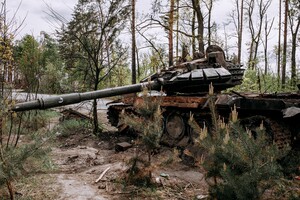
The Tribunal established is an innovative model: a hybrid with an international core. This means it isn't a universal international court like the ICC or the Tribunals for former Yugoslavia or Rwanda. However, it has enough international characteristics to be recognized as part of the international criminal justice system. Its structure includes judicial chambers, a Prosecutor's Office, and a Registry. Judges and prosecutors will be nominated by the states that have joined the agreement, and an independent commission will assess their professional qualifications. The exact composition is yet to be determined — it's an ongoing, open process. Crucially, the Tribunal is designed not only to deliver verdicts but also to establish a new legal framework for accountability for a crime that has often gone unaddressed. As for compensation, the Tribunal's Statute provides for the transfer of funds collected through fines or confiscation measures to an international mechanism, with priority given to the compensation mechanism established pursuant to United Nations General Assembly Resolution A/RES/ES-11/5 of 14 November 2022, for reparations of damage caused by the internationally unlawful actions in or against Ukraine.
The Tribunal's mandate is to hold accountable the individuals who made the decision to use armed force against Ukraine in violation of the UN Charter. This specifically refers to the "ruling trio" — the president, the prime minister, and the minister of foreign affairs of the Russian Federation. Formally, the court will be able to investigate their actions, but it will not be able to conclude proceedings while they remain in office. The Statute stipulates that the process will be suspended until they lose their official status. This is one of the weakest points of the entire framework, as no verdict can be delivered until the accused vacates their position.
Interestingly, even the question of launching investigations against the "leadership trio," who enjoy immunity, sparks debate among experts. They argue this could constitute a violation if interpreted through the lens of the UN Convention on Jurisdictional Immunities of States and Their Property and the European Convention on State Immunity. One precedent is particularly relevant here. In the case of «Democratic Republic of the Congo v. Belgium» (2002), the International Court of Justice ruled that incumbent foreign ministers enjoy full immunity from the criminal jurisdiction of foreign states, even in cases involving serious international crimes. This decision confirmed that such immunity is a procedural safeguard that does not eliminate personal responsibility but prevents prosecution while in office. At the same time, it was noted that a current or former foreign minister may be subject to prosecution by certain international criminal courts if those courts possess jurisdiction.
Moreover, the Tribunal will definitely be able to provide legal assessment of other members of the Russian Federation’s military-political leadership (primarily members of the Russian Security Council, which includes over 30 individuals), and likely also of Belarus and DPRK. However, if the Tribunal ultimately determines that Russia’s actions did not constitute so-called self-defense, as Russian propaganda claims, then even functional immunities will not protect the “trio” in the future.
The Tribunal will also include an in absentia mechanism — proceedings in the absence of the accused. This is not new in international law but remains a relatively rare provision, offering the possibility of convictions even without the defendant’s presence. In particular, the use of in absentia proceedings was foreseen in the tribunals for Lebanon, Sierra Leone, and the Central African Republic, although even there it was applied with limitations.
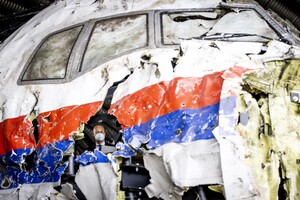
In our case, the Special Tribunal may consider a case in the absence of the accused if they have clearly refused to be present or if all reasonable measures have been taken to summon and inform them of the charges, but the interests of justice require that proceedings continue. In such cases, the tribunal ensures that the accused is properly informed about the case and has legal counsel — either appointed by them or, if necessary, by the Tribunal itself. If a person is convicted in absentia, they retain the right to have their case retried in their presence unless they explicitly waive this right or accept the judgment. For example, during the hearings on the downing of flight MH17, more than three hours were spent reading out how the suspects had been properly notified of the charges.
Furthermore, it is very important that the Special Tribunal also covers events starting from 2014—the occupation of Crimea, the Ilovaisk tragedy, and the establishment of occupation administrations. The Ukrainian parliament, in the Law of Ukraine “On Ensuring the Rights and Freedoms of Citizens and the Legal Regime in the Temporarily Occupied Territory of Ukraine” (Article 1), established the start date of the temporary occupation of the territory of the Autonomous Republic of Crimea and the city of Sevastopol as February 20, 2014. The European Court of Human Rights (ECHR), in its decision in the case “Ukraine and the Netherlands v. Russia” (applications nos. 8019/16, 43800/14, 28525/20), recognized that Russia had established effective control over Crimea no later than February 27, 2014. Therefore, these dates can be considered the starting point of the aggression. The Statute currently employs flexible wording, making this a matter of mandate interpretation and political will. However, such an approach would allow for not only symbolic justice but also a complete recognition of the war's origins.

The uniqueness of this tribunal also lies in the fact that it is being created not by the UN Security Council, but in partnership with the Council of Europe, with the possibility for other countries to join. At the same time, it is important to avoid giving it a regional character. Otherwise, some states may not recognize the Tribunal’s legitimacy. This must be a collective response from nations that uphold the rule of law to a challenge to international security.
This raises toogical question: wouldn't it have been better to establish a tribunal based on the UN General Assembly? This would have mitigated concerns about its legitimacy, which inevitably tie into the very architecture of international legal order laid out in the UN Charter. Clearly, the path through the Security Council is closed to Ukraine. When a conflict of interest arises in the Security Council, and the aggressor is one of its permanent member states, it effectively blocks any accountability. The General Assembly on its own cannot create tribunals. However, there are precedents for responses: historically, the General Assembly has repeatedly assumed some functions of the Security Council — particularly under the Uniting for Peace resolution (1950), which allows for action when the Council is unable to respond due to the aggressor’s veto. We witnessed this mechanism in action in February 2022. We must understand that the UN Charter is a living document; its provisions are dynamic and have been reinterpreted multiple times to address new challenges. Moreover, such a tribunal could have encompassed all international crimes, making it more universal. We have examples of mechanisms for Cambodia and Myanmar. Why wasn't that path taken? We can only speculate.
So, for now, we must analyze the existing format. Russia has already declared that it will not recognize this court but justice does not cease because a presumed perpetrator refuses to consent. Accountability mechanisms must remain effective even when the guilty remain silent.
The signing of the agreement is not the finish line; it's the starting gun. The next stage is organizational implementation: forming the composition, securing financing, and arranging procedural logistics. The most critical aspect is effectiveness. Ideally, given the sheer scale of war crimes and crimes against humanity, the Tribunal shouldn't limit itself solely to the crime of aggression. Rather, it could become part of a full-fledged architecture of justice in response to the Russia-Ukraine war. Currently, all other crimes — war crimes, crimes against humanity, and probable genocide — remain within the purview of the ICC, national systems, and the principle of universal jurisdiction, which is inadequate for the horrific scale of these offenses.
Therefore, we must closely monitor this process, which will be long and demanding. The international community must be prepared to see it through, sending a political and legal signal to the world that aggression will not go unpunished, even when committed by a permanent member of the Security Council. At the same time, it would be deeply regrettable if the verdicts remained merely declarative and unenforced, or if the process became politicized. The stakes are incredibly high: we face either success or the end of international criminal justice as we know it. Because justice, above all, is not a symbol, but a tangible result.
Read this article in Ukrainian and russian.
Please select it with the mouse and press Ctrl+Enter or Submit a bug
 Follow on Telegram
 Login with Facebook
 Login with Twitter
 Login with Google