
 Support ZN.ua








Why Are We Losing the Drone War — And What Can Be Done About It?



Russia is creating regiments of unmanned systems within its navy. These regiments will operate in the air, on land and at sea, will be armed with surface, underwater, ground and air drones, and will perform reconnaissance and strike functions in the fleet's area of operations.
It is planned that there will be at least five such regiments, three of which will be part of the fleets in the European part of Russia and two will be part of the Pacific Fleet. These regiments will be armed with unmanned boats, unmanned underwater vehicles, medium- and long-range unmanned aerial vehicles, Forpost and Orlan, as well as Lancet-type loitering munitions, reconnaissance and strike drones of various types.

The Russian navy's unmanned systems regiments will actively adopt Ukraine's experience in the use of maritime drones. In particular, there are plans to arm the unmanned boats with air drones, guided and unguided missiles and small arms. In addition, one of the tasks of the regiments being formed will be anti-submarine defense, a sign that Russia is actively preparing for a drone war at sea against leading maritime powers.
Separate regiments of unmanned systems (similar to separate battalions, regiments and brigades of unmanned systems within the Armed Forces of Ukraine) are being created by the enemy on land as part of military districts within the Unmanned Systems Forces. The creation of the latter was announced in December 2024, a year after Ukraine announced the creation of its Unmanned Systems Forces.
The Russians, as we know, are slow in getting into gear but then slam on the gas. Russia is acting late, but it is tackling the issues systematically, on a grand scale and for the long haul. Ukrainian troops were the first to use civilian drones for reconnaissance in Donbas, and now Mavic drones are the unspoken standard on both sides of the front line; the first bomber drones and kamikaze drones were Ukrainian, but Russia built large factories and quickly caught up. Ukrainian naval drones were able to paralyze the Russian Black Sea fleet, but here too the situation is changing rapidly. The use of unmanned kamikaze boats (branders) is no longer effective, causing the search for new solutions, such as arming the unmanned boats with missiles and drones.
Thanks to the decentralization of the drone industry and competition between different agencies, Ukraine has great flexibility and operational efficiency in introducing various technical innovations. Eight security agencies in our country are involved in making aerial drones, each of which has its own separate Unmanned Systems Forces; six security agencies are involved in producing ground drones, and four are involved in the production of maritime drones... The Armed Forces of Ukraine alone (among other security agencies) have Unmanned Systems Forces, (former favorites), Drone Line (current favorites), and “simple” companies and battalions of unmanned combat complexes as part of brigades and corps.
Each department, each security agency, brigade and company has its own policy with regard to drones: what to buy or produce independently, how to recruit pilots, engineers, how to train them, where to find money... Each drone unit has its own tactical techniques, its own experience of use, its own successes and failures, which are evaluated in points that are converted into additional drones. This stimulates the development of our diverse, motley, varied and decentralized unmanned systems forces.

At first glance, it is a good thing: unmanned companies, battalions, regiments and even a brigade led by a Ukrainian hero report the destruction of hundreds of enemy vehicles, thousands of soldiers and officers; naval drones shoot down enemy aircraft and helicopters, attack coastal targets with airborne drones and ground robotics is actively developing — land drones patrol the gray zone, mine fields and roads, deliver ammunition and evacuate the wounded, while commanders and operators receive well-deserved high state awards. What else to aspire to?
But there is a flip side of the coin: the technological advantage has been lost; the “zoo” of drones supplied to the troops does not allow them to be used effectively, and mass deployment has long been on the enemy's side. The worst thing is that diversity and decentralization are ineffective now, when consolidation and the concentration of all forces are needed to overcome the already obvious technological gap.
Two years ago, FPV drones could be assembled literally “in the kitchen” from cheap Chinese kits, and this work did not require high qualifications. Today, however, such consumer goods supplied to the troops are inevitably reworked and redesigned because they do not meet the requirements of modern warfare. But even in the troops themselves, in the workshops of drone operators, there are not enough engineers, electronics specialists and programmers to develop technologies, such as autonomous navigation systems, automatic target search systems and automatic target guidance systems.
War has become more technologically advanced. With our decentralization, disunity and competition, we are inevitably falling behind. Where hundreds of highly qualified specialists should be solving problems, only a few people in Kyiv garages or dugouts on the front lines are trying to do so. A striking example is fiber-optic drones, which the enemy, not us, was the first to apply en masse, despite all our multifaceted decentralization, competition and entrepreneurship.
Needless to say, the enemy easily surpasses us in the number of drones supplied and deployed: parity has long been achieved on the front lines (at least) — our troops suffer just as much from skids and FPVs on the front lines, we are just as bothered by bomber drones and even more so by medium-range aircraft-type drones, such as the Molniya and Lancet, to which we still have no adequate response (despite all our diversity and resourcefulness). When it comes to long-range kamikaze drones (for deep strikes), the situation is even worse: every night, Shaheds attack Kyiv (the most heavily defended city in Ukraine), but Ukrainian drones very rarely reach Moscow.
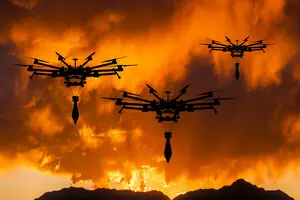
As is known since the times of Frederick the Great, wars are won by large battalions, and modern high-tech wars are won by large engineering teams and large factories. More than 400 specialists are working on improving the Shahed drone in Russia — designers, engineers, electronics specialists and programmers. Only half as much engineers are working on the creation and improvement of Ukrainian long-range drones, of which we have a dozen different types, in two dozen semi-garage-based companies. It is not surprising that Ukrainian drones do not reach Moscow. Fragmentation, disunity, fierce competition for budget funds, the pursuit of medals and orders, privileges and status have a favorable effect on Moscow — which does not suffer from bombings — and on Russia's robust position in the newly launched negotiations.
Today, unfortunately, we are not waging a total war against a ruthless enemy; today we are waging a war for position in society, for budget funds, for privileges, status, the attention of the Supreme Commander-in-Chief and the notorious media coverage. In this war, our special services have a great advantage because they can more freely (in fact, uncontrollably) dispose of budgetary and extrabudgetary resources, partners' money and can attract qualified specialists to work for them, promising decent salaries and coveted status in return. That is why the Main Intelligence Directorate, the Security Service, the Foreign Intelligence Service and the Special Operations Forces (not quite a special service, but still) are developing their own local drone projects, competing fiercely with each other and dividing the finite engineering resources among their departments, thus impoverishing Ukraine's overall scientific and technical potential. Add to this the similar efforts of their “less successful” brothers — the Armed Forces, the National Guard, the State Border Guard Service and the National Police — and we will end up with fairly mediocre drones created by mediocre teams for not-so-mediocre money for the sake of short-term and very expensive publicity for the leaders of the top security agencies.
In general, it is preposterous that the Main Intelligence Directorate, whose main task, as stated in its name, is intelligence (and our intelligence is far from perfect), is involved in making air, sea and ground drones, has its own aviation and conducts large-scale ground operations, as if it were an oversized Special Operations Force, and even launches its own operational-tactical missiles based on the S-200 anti-aircraft missile systems. Good job, but where is the intelligence?
The Security Service of Ukraine, whose main task during wartime is to protect the constitutional order and fight spies (counterintelligence), is not lagging behind the Main Intelligence Directorate: it is actively engaged in making FPV drones, medium- and long-range strike drones and naval drones. That’s very nice too, but where is the counterintelligence?
The Special Operations Forces, whose main task is to conduct special operations in the combat zone (which is now mainly done by the Main Intelligence Directorate, although this is not its main task), is also involved in producing drones of all types, and the SOF’s combat resources are used as assault infantry units, which is equivalent to hammering nails with a computer.
The Territorial Defense serves as a “cheap” infantry support, utilizing hypertensive people and substance abusers in the most dangerous areas. The Foreign Intelligence Service has its own combat units, including its own “unmanned systems forces.” The National Guard has become an elite combat formation of the Ukrainian Ground Forces, while the navy, air force and air defense are supplied on a residual basis, becoming donors of personnel for the ground troops; therefore, not even half of their capabilities and functional responsibilities are utilized. And then there is the Offensive Guard run by the Ministry of Internal Affairs and the Iron Border unit of the State Border Guard Service. All that’s left is to create separate brigades of prosecutors, judges, lawyers, customs brokers and pimps. And create special “unmanned systems forces” in each new “military” structure.
As William Shakespeare put it, something is rotten in the state of Denmark if no one is doing what they are supposed to do, choosing the opposite instead. As a result, senior commanders on the front lines simply do not understand the combat capabilities of the motley units temporarily assigned to them and cannot use them adequately, effectively and with fewer losses. The effectiveness of drone operators from various departments is often determined not by the leadership qualities of the commanders of unmanned units or the level of professionalism of operators and engineers but by the amount of money their bosses can attract, that is, their proximity to powers-that-be, with favorites receiving many times more while the unpopular ones get significantly less.
The established system of personal power and personal relationships in the corridors of power produces a chimera of “professionalism” based on short-lived media effects. If today it is possible to skims the choicest morsels from some operation (including the use of drones), they will certainly do so, the guilty will be rewarded and the innocent will be punished. Even if tomorrow it turns out that this operation was prohibitively expensive, untimely, unnecessary and has caused far-reaching and serious consequences.
This was particularly the case with the use of unmanned surface vessels and long-range kamikaze drones. When the element of surprise still had an effect and the enemy was completely unprepared to repel new threats at sea and on land (in its rear), these drones were used sporadically, on a small scale, only for publicity purposes. In the end, they were unable to accomplish even half of the tasks they could have performed because every successful and not-so-successful attack immediately became a media sensation and forced the enemy to take active measures to counter potential threats. And then, when the production of long-range flying and floating drones reached industrial scale, it suddenly turned out that the “train had left the station”: their original form and characteristics were already hopelessly outdated, and the enemy had found effective ways to defend against them.
The populist war in the media must finally be replaced by a war between professionals. Naval drones must be part of the Ukrainian Navy, and there must also be a specialized center of expertise on drone and robot warfare at sea. Long-range combat drones should be part of the Ukrainian Air Force, which should also have a center of expertise in deep strike operations. Operational-tactical missile systems should be under the command of the Main Missile and Artillery Directorate. Each department and every law enforcement agency should carry out its tasks in accordance with the Constitution and laws of Ukraine: territorial defense for the Territorial Defense Forces, special operations on the front lines for the Special Operations Forces, intelligence for the Main Intelligence Directorate, counterintelligence for the Security Service, political intelligence for the Foreign Intelligence Service, rear security for the National Guard, border security for the State Border Service, maintaining law and order for the police. Only then will we find happiness.
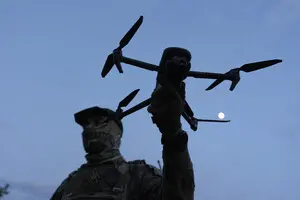
There should be no permanent (today's favorites, tomorrow's rejects) competing drone “projects.” There should be a single supradepartmental governing body made up of professionals, not bureaucrats and publicity people, headed by professionals, not generals “sent wherever they are told,” which would deal with drones and robots. And it would deal exclusively with them, whilst also forming and implementing state policy in the respective field.
In our current situation, there is no shame in learning from our enemy, who has been learning from our achievements and mistakes for the last few years. Mistakes must be corrected. There must be more centralization, more consolidation of forces, professionalism, experience, knowledge (which is lacking), unification and standardization. The time of small media armies is over; there is not much time left to correct mistakes. The time has come to act.
Please select it with the mouse and press Ctrl+Enter or Submit a bug
 Follow on Telegram
 Login with Facebook
 Login with Twitter
 Login with Google