
 Support ZN.ua








“Trump’s “New” “Peace Plan”: What Ukraine Is Being Compelled To Accept. Analysis of Four Documents”

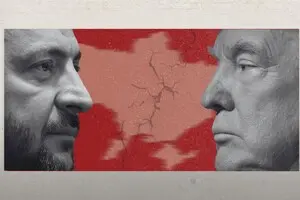

While briefing the public on the progress of the “peace” negotiations, Volodymyr Zelenskyy said that the current “peace plan” proposed by the United States is “better than the previous one,” pointing to the reduction of the initial draft from 28 points to 20 and the removal of the “overtly non-Ukrainian” clauses as a positive development.
ZN.UA has, however, examined the “new” version of the “Trump peace plan,” and we can confidently argue that the “new” is nothing more than the not-yet-forgotten old. In substance, it is merely a slightly reworked edition of the notorious “28 Trump points,” which, as you might recall, originated in Russia and were only later commercialised by the Americans. The difference now is that these points have been distributed across four documents, each with its own list of signatories.

Of the genuinely fundamental “non-pro-Ukrainian” provisions, only one has been removed from the new plan: the proposal to grant amnesty for wartime actions “to all those involved in the conflict.”
The four documents comprising Trump’s new “peace plan” are as follows:
- Agreement between Ukraine, Russia, the United States and Europe (20 points);
- Framework Security Assurances for Ukraine (3 points);
- Commitments of the United States regarding NATO (4 points);
- Agreement between Russia and the United States (12 points).
This package of documents bears no resemblance to serious international agreements; it reads instead like an improvised set of “under-the-table understandings” hastily sketched on a napkin in a Miami golf club during a break between rounds of a game its authors know far better.
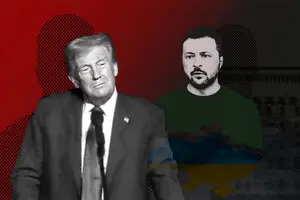
Even the titles of some documents raise immediate questions. For instance, who exactly is “Europe”? Who would sign the “20 points” on its behalf? The EU? But then where does that leave the United Kingdom, which is actively participating in the peace process? And should Norway or Switzerland—also part of Europe—have to give their consent? As we have already seen, geography is hardly the strong suit of the current US administration.
As one seasoned Ukrainian diplomat remarked ruefully after reading the “new Trump peace plan,” it feels as though a group of middling fifth-graders sat through a meeting of the Federal Reserve, scribbling down whatever they managed to catch, as they understood it, and then tried to apply their notes in a faraway Ukrainian land…
Territories
So, as before, the question of territories remains the most painful and difficult topic in the negotiations—something Volodymyr Zelenskyy does not hide: “Russia insists that we give up territories,” the president says. But the problem is that it is not only Russia insisting—the Americans are pressuring Ukraine just as forcefully.
The 20-point agreement included in the American package of proposals stipulates the following.
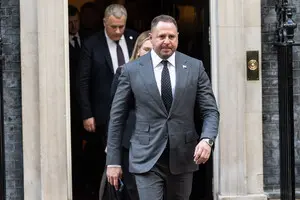
The signatories recognise Russian control over Crimea and the Luhansk and Donetsk regions. Any possible change in the status of these territories in the future may occur only through diplomatic means, not through the use of force.
One of the innovations in this document is the clarification of the size of the “neutral demilitarised buffer zone” in the Donetsk region: 30 percent. In the “28 points”, it was stated that this zone would be “internationally recognised as territory belonging to the Russian Federation.” In the new document, this passage has been removed. Instead, it states that Ukrainian and Russian forces will be positioned behind the administrative boundary (which is yet to be defined) and will not enter this demilitarised zone. But who will guarantee that the FSB, with all its “machine guns and peacock feathers”, will not be present there?
As for the Zaporizhzhia and Kherson regions, the new document, like the previous one, envisages a freeze and, in fact, recognition of the current line of contact.
Moreover, Russia must withdraw from all other territories it controls beyond the five aforementioned regions of Ukraine.
Once all territorial arrangements are reached, Ukraine and Russia must undertake not to violate them by force.
All these provisions concerning territories must still be discussed and approved by the presidents, though the document does not specify which ones or how many.
Zaporizhzhia Nuclear Power Plant
A particularly tempting slice of the Ukrainian pie—Europe’s largest nuclear power plant, the Zaporizhzhia NPP, seized by Russia—is, quite obviously, stirring American appetites. The new document speaks of restarting the plant not under the control of some IAEA but under the management of a new owner—naturally, from the United States. Fifty percent of the electricity generated by the plant is to be transferred to UkraineThe document offers no indication of who would receive the remaining 50%. In the original “28 points”, this share was intended for Russia.
NATO membership
Some good news: the new “Trump peace plan” package no longer obliges Ukraine and NATO to set down Ukraine’s non-accession to the Alliance in the Constitution of Ukraine and in NATO’s foundational documents, respectively. Moreover, Ukraine does not assume any commitments not to join NATO. Nor is the Alliance required anywhere in the text to promise never, under any circumstances, to accept Ukraine into its ranks.
This, however, does not mean that Washington and Moscow have abandoned their intention to close NATO’s doors to Ukraine for good.
The United States has taken upon itself the historically dubious and unseemly task of overturning multiple NATO summit decisions. Unlike Republican President George W. Bush, who once exerted extraordinary yet ultimately unsuccessful efforts to persuade European allies to grant Ukraine a Membership Action Plan at the 2008 Bucharest Summit, Republican President Trump — in a gesture clearly intended to satisfy Russia — seeks to strip Ukraine of any chance of joining the Alliance.
Apparently anticipating complex and, above all, protracted negotiations with European allies who currently support Ukraine, Washington has opted to cut the Gordian knot and exercise its veto power within the Alliance: in a separate document within the “peace package,” the United States pledges that NATO will no longer expand and will not invite Ukraine to join.
These assurances are then reiterated in the very first point of the bilateral US–Russia agreement. The second point goes further, stating that the United States intends to “mediate”—as an outside mediator, not as a NATO member?—the dialogue between Russian and NATO leaders in order to address all “concerns” (a telling Russianism) in the security sphere. The purpose of this dialogue, the document claims, will be to create conditions for “de-escalation” and “ensuring global security.”
And what exactly do “addressing concerns” and “de-escalation” imply? What does this clause mean? A return of NATO to the borders of 1997 and the exit from the Alliance of all states that joined after that year? Poland, the Czech Republic, Hungary, Slovakia, the Baltic states and so on—out? After all, Putin has repeatedly called NATO expansion and its approach to Russia’s borders one of the main “concerns” and the “root cause” of the war against Ukraine. Or does it mean the withdrawal of American troops from all European countries where they are now stationed? Or perhaps this point implies a new division of Europe and the “transfer” of all former Warsaw Pact countries back into Russia’s sphere of influence?
But there is more. The United States will oppose the deployment of any “NATO troops” in Ukraine. And never mind that the notorious “NATO troops” do not exist in nature—there are only the armed forces of individual allies, whose units may participate in various operations. And, in principle, any sovereign state may station its troops in another country under bilateral or multilateral agreements, without NATO’s involvement as an organisation. If there is political will…
The legal status of the “NATO document” remains unclear. Whereas in the multilateral “20 points” it is clearly stated that the Agreement is legally binding, the NATO-related document contains no such provision. Does this mean that a future US president may revoke this “Trump legacy”, just as Trump overturned most of Joe Biden’s executive orders? If so, then all is not lost for Ukraine.

Another positive difference between the “20 points” and the “28 points” concerns the size of Ukraine’s Armed Forces: Ukraine is now allowed to maintain 800,000 troops in peacetime rather than 600,000. Though from the outset it is difficult to justify why a sovereign state—and, most importantly, the victim of aggression—is being coerced into limiting its armed forces, while no such demands are placed on the aggressor. After the Second World War, it was the aggressors, Germany and Japan, who were subjected to military restrictions. The world has indeed changed…
Security guarantees
So what does our “strategic partner” promise us while depriving Ukraine of the chance to come under NATO’s security umbrella and limiting the size of its army? How does it intend to prevent a new Russian aggression and protect us if Russia attacks again?
In the “20 points”, the Ukrainian eye is pleased by references to “security guarantees”, this time resembling NATO’s Article 5. These guarantees are to be provided by the signatories of the document: the United States, NATO and Europe.
Otherwise, the guarantees clause nearly verbatim repeats the provisions of its predecessor. The United States intends to receive compensation for its guarantees. The exact kind of it is not specified. Apparently, the price has not yet been determined.

If Russia invades Ukraine, then besides a “decisive military response”, it will also face the reinstatement of all sanctions. If, however, Ukraine invades Russia, it will forfeit all its guarantees. The same will occur if Ukraine shells Russian territory “without cause.” But if it is Russia shelling Ukraine, the guarantees remain in force for our country. Yet no mention is made of sanctions against Russia or a “decisive military response”; does it mean that Russia may fire as much as the “Russian soul” desires?
A novelty in this section is a clause stating that the Agreement does not exclude bilateral security guarantees. This seems positive at first glance, but the three dozen bilateral “security guarantee” agreements signed by Zelenskyy have provided Ukraine neither with any real sense of security, nor confidence in tomorrow—as do the latest “security guarantees” formalised in a separate document within the “Trump peace plan”.
First, unlike in the “20 points”, where the word “guarantees” is used, this document uses the term “assurances” everywhere, including in its title, a term that carries a rather different meaning. Something akin to the 1994 Budapest Memorandum.
Second, this framework agreement is not legally binding and is not subject to ratification by the parliaments of its signatories. Meaning we are once again being handed the same old trap we fell into in 1994.

Third, the list of signatories chosen by the authors seems peculiar. And unconvincing. For example, Finland, which is mentioned among the “guarantors”, promptly disavowed this honourable mission and stated that while it has helped and continues to help Ukraine, it is not prepared to provide security guarantees. Poland, also inserted into the document, remains silent for now—though its leadership has repeatedly stated that it does not intend to send troops to Ukraine or jointly enforce a no-fly zone. And yet the “guarantees” in the “Trump peace plan” presuppose a “decisive military response”. So what, exactly, would this response entail? And whom else does Washington envisage as a signatory of the document—beyond Ukraine, the United States, France, the United Kingdom and Germany—when it includes… NATO?
This agreement states that it creates the conditions for a ceasefire between Ukraine and the Russian Federation and provides “assurances” of security modelled after Article 5 of the North Atlantic Treaty.
One of the three points of this “broad” document concerns the “assurances” of the United States in the event that again attacks Ukraine again and violates the “ceasefire line”. However, this attack must be significant, deliberate (one wonders how one might attack unintentionally?) and prolonged. Thus, the allies will have ample room to reflect and deliberate in the event of an incident: what constitutes a “significant” attack (recall how President Biden was fiercely criticised for using a similar term before Russia’s invasion), and what constitutes a “prolonged” one (is that a week, a month, a year?).

If the attack meets all the above requirements, POTUS, after immediate consultations with Ukraine, NATO and European partners, will determine what measures must be taken to “restore security”. The list of possible measures includes the use of armed forces, intelligence support, logistical assistance, economic, diplomatic and other actions which the “leader of the free world” deems necessary. A joint mechanism with NATO and Ukraine will also be established to assess each alleged violation by Russia.
Another point of the document concerns the actions of NATO members, with France, the United Kingdom, Germany, Poland and Finland mentioned separately. These states, in Washington’s view, must affirm that Ukraine’s security is an integral part of European stability, act in unison with the United States in the event of Russian violations, and ensure a unified and reliable deterrence posture.
It is envisaged that this agreement will enter into force immediately upon signature and will remain in effect for ten years, with a possible extension upon mutual consent. A special joint monitoring commission will be created—under the leadership of European partners and with participation of the United States—to oversee compliance with these arrangements.
EU membership
Here is some “good tidings”—Ukraine will become a member of the EU by 1 January 2027. At least, that is how things appear from Washington. Or rather, from Miami.
What the EU itself thinks about this—the EU which has not yet deigned to open a single negotiation chapter with Ukraine—and whether the Union is ready for such a step (especially Trump’s friend Orbán) is not addressed in the document. Instead, the text promises that while Ukraine spends a year loitering in anticipation of EU membership, the Union will grant it short-term preferential access to the European market.
Elections
Five hours of conversation between Washington’s “shuttle diplomats” and the Kremlin’s master bore fruit: President Trump once again became concerned about elections in Ukraine and troubled by the state of Ukrainian democracy. The state of Russian “democracy,” for some reason, has never once troubled him.
Hence, the clause on the necessity of elections appears in both the old and “new” Trump plans—but it concerns only Ukraine. In the previous 28-point version, Ukraine was imperatively instructed to hold elections within 100 days; in the current version—as soon as possible after the signing of the Agreement.
Frozen assets and Ukraine’s reconstruction
This part of the “new plan” is almost a copy-paste from the “28 points”. The American desire to earn handsomely from Ukraine’s reconstruction has not gone anywhere. They remain particularly interested in mineral extraction, the gas infrastructure—including pipelines and storage facilities—and other infrastructure assets.
A novelty in this edition of the “Trump plan” is the creation by the United States and Europe of an equity fund (target: $200 billion) for investing in Ukraine’s reconstruction.
As for frozen Russian assets, the Americans, as before, intend to unfreeze them, with an agreed percentage of these funds to be invested in rebuilding Ukraine.
However, this clause is accompanied by a note that these issues must be discussed with the Europeans.

A more detailed description of the use of frozen Russian assets, previously found in the “28 points,” has now migrated to the fourth document of the “new plan”—the Agreement between the United States and Russia—in which the United States still intends to lead Ukraine’s reconstruction and spend only $100 billion of the unfrozen Russian assets on this undertaking, expecting a 50 percent profit in return. According to Washington’s vision, the Europeans must unfreeze their share of Russia’s assets as well. The funds remaining after expenditures on Ukraine should, in the authors’ view, be channelled into a separate US–Russia instrument for implementing joint American–Russian projects.
Agreement with Russia
The 12 points of this document essentially duplicate many provisions of the “first edition” of the “Trump peace plan,” which initially gave grounds to suspect its American co-authors of playing on the Russian side. It also incorporates several points from other documents of the “new” package: from US promises not to allow Ukraine into NATO and to oppose the deployment of “NATO troops” in Ukraine, to Russia’s reintegration into the global economy, prospects for its return to the G8 “at an appropriate time” and the signing of a long-term US–Russia agreement on economic cooperation covering numerous sectors.
Against this abundance of economic and geopolitical “treats,” Russia’s commitments “not to invade its neighbours” and to set out a policy of non-aggression in its legislation appear modest and far from convincing.
***
In all other respects, the Trump’s “new” “peace plan” is a near verbatim rewrite of the previous 28-point plan, which outraged and alarmed Ukraine and its European partners. As noted earlier, only one of the four documents in the “new” package—the one in which Ukraine assumes commitments—is intended by the authors to be legally binding. Its implementation will be monitored and guaranteed by a “Peace Council” headed, of course, by Donald Trump. The authors do not specify, however, who will lead this body once the “president of peace” for all times and nations ceases to be President of the United States. Nor do they clarify what sanctions will be applied to violators of this document.
A careful analysis of the “new” “Trump peace plan” offers no hope for a swift, dignified or lasting peace on terms acceptable to Ukraine. And the persistent impression remains, in Pushkin’s words, that “here is the Russian spirit, here Russia’s smell is felt.” As does the predatory (to avoid saying marauding) mindset of Trump’s negotiating team, which does not harbour the slightest sentiment toward the victim of aggression and does not consider this “case” in moral terms, avoiding concepts such as “aggressor” and “victim of aggression.”
Chancellor Friedrich Merz of Germany put it extremely diplomatically, saying that he was “skeptical” about “some of the details contained in the documents coming from the US side.” In reality, European partners are shocked and horrified—both by the proposals of the American negotiators and by the level of their competence.
But our enormous problem also lies in the fact that, on the Ukrainian side, these vital negotiations—unquestionably the most important in the entire history of Ukraine’s independence—are being conducted by dilettantes who lack sufficient experience and competence to stand firm against today’s existential challenges confronting a country bleeding out, exhausted and weary of war, yet unwilling to surrender to the aggressor.

One cannot send to negotiations “owls” who, like in Harry Potter, are capable only of carrying letters back and forth. What kind of counterpart to the Americans can Rustem Umerov be—a man unfamiliar with international law and not possessing the instruments of subtle diplomacy, yet owning property and business in the United States and having his family there? How, do you think, will he argue with the Americans—and how forcefully?
If Volodymyr Zelenskyy truly wishes to save the country and not merely his own power (a rhetorical question: is that even possible if Ukraine collapses?), he must urgently set aside his prejudices—both personal and those carefully cultivated by Andrii Yermak—and call upon a team not of loyal executors, but of experienced and effective negotiators, regardless of their past or present political preferences or geographical location. It is essential to urgently mobilise the old diplomatic guard, which—unlike today’s neophytes—possesses a broad geopolitical outlook and enormous negotiating experience, and repeatedly demonstrated its competence in talks with Russia, the United States and the EU alike. Pavlo Klimkin, Kostiantyn Yelisieiev, Oleh Shamshur, Kostiantyn Hryshchenko, Hryhorii Nemyria, Lana Zerkal are certainly not fans of Volodymyr Zelenskyy, but they care about Ukraine and are ready to help her.
As far back as 2013, ZN.UA wrote that Ukraine must not allow itself to be “murdered for body parts.” Today this danger is greater than ever. Some covet our territories, others quietly siphon away our human resources, and still others eye our mineral wealth and infrastructure.

If Ukraine signs the “Trump peace plan” in the form currently being thrust upon us by the Americans—irritably shouting “hurry-hurry-hurry”—then our country will be left without its territories, without security guarantees, without the ability to manage the funds for its reconstruction and without its natural resources, already taken under control by the Americans through the “minerals” agreement.
And this affront concerns not only Ukraine but every country that is not the United States, Russia, China or India. If such documents—punishing and stripping the victim while rewarding the aggressor—are signed, a Pandora’s box will be opened, unleashing the appetites of other great predators who today reason as follows: “Power belongs to me; you belong to the menu.”
Please select it with the mouse and press Ctrl+Enter or Submit a bug
 Follow on Telegram

 Login with Facebook
 Login with Twitter
 Login with Google