
 Support ZN.ua








Why Trump Reached Out to Lukashenko

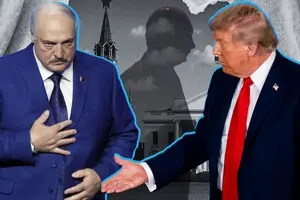

Like Moscow, Minsk has now considerably warmed its relations with Washington.
But the self-proclaimed president of Belarus, Alexander Lukashenko, has achieved what Putin could not: the partial lifting of US sanctions. After a series of visits to the Belarusian capital by representatives of the US administration and a telephone conversation between Donald Trump and Lukashenko, the White House decided to remove restrictions on the Belarusian airline Belavia and to resume the work of the US embassy in Minsk. In return, Lukashenko released 52 political prisoners.
The release of political prisoners is always good news. The problem is that there are still more than a thousand of them in Belarusian prisons, and the authorities have no intention of ending the repression of opponents of the regime. One of the latest sentences was handed down to ZN.UA author and political scientist Igor Ilyash: in September, the Minsk City Court sentenced him to four years in a strict-regime colony on charges of “discrediting” Belarus and promoting “extremist activity.”
Lukashenko’s motives for developing relations with the Trump administration are more or less clear.

First, he seeks to expand his room for manoeuvre in a situation where Minsk is politically and economically dependent on Moscow, while Belarus’s cooperation with China cannot offset Russia’s influence. This personally gives Lukashenko greater political latitude, including when discussing his own future. At the same time, as a representative of the Ukrainian special services noted in a conversation with ZN.UA, these contacts are not related to Lukashenko’s plans for his younger son, Nikolai.
Second, Lukashenko is interested in easing regional tensions, lifting sanctions against Belarus, and reopening the European market to Belarusian goods. Although Minsk is pursuing an active campaign to penetrate the markets of Asia, Africa and Latin America, it is Europe that remains the main consumer of Belarusian products. Yet this market closed in 2022, and the Russian market is unable to compensate fully for the loss of the European one.
However, the European Union has taken a firm stance against Belarus and has no intention of lifting sanctions for now.
In particular, Brussels does not plan to lift the ban on Belavia flights to European countries. The same applies to the sanctions imposed on the Belaruskali fertilizer company in 2022. Before that, Minsk earned up to $2.5 billion a year from fertilizer exports. The sanctions also affected freight transit through Belarus as deliveries of goods from Russia to Europe ceased. Those deliveries had brought substantial revenue to the state budget. Minsk has managed to address this problem only partially by increasing Chinese freight traffic: 90 percent of rail shipments between the EU and China now pass through Belarusian territory.
Poland and the Baltic states have been the main drivers of the EU’s tough policy. Lukashenko has been unable to undermine the EU’s united position, even with Hungary’s help. But unlike the EU, the United States is showing greater flexibility towards Belarus, even though Lukashenko has no intention of taking any steps to liberalize his regime.

So what are Trump’s goals in throwing Lukashenko a lifeline and bringing his regime out of international semi-isolation?
This is primarily linked to the personality of the American president: Trump, with his blurred ethical boundaries, is by nature willing to engage with any regime and takes steps radically different from the policies of previous US administrations. “Trump is a collection of unjustified illusions and wheeling-and-dealing diplomacy,” says Bohdan Yaremenko, a member of Ukraine’s parliament who has dealt with Belarusian issues for the past decade, in a comment to ZN.UA.
Apparently, Washington no longer trusts its old communication channels and is unsure whether Putin is actually receiving the messages the Trump administration seeks to convey. Not long ago, US Special Presidential Envoy Keith Kellogg explained that the goal of dialogue with the Belarusian authorities was “to ensure an open channel of communication through which our messages can be conveyed to President Putin.” Kellogg openly admitted that this—and not the release of political prisoners in Belarus—was the main task of the American envoys visiting Minsk.
ZN.UA sources in the Ukrainian special services note that Lukashenko has repeatedly signalled his readiness to mediate between the West and Russia and to advise Western politicians in their dialogue with Putin by explaining the Russian president’s words and actions. “Most likely, one of these signals was heard in the White House, and they decided to transmit information to Putin through Lukashenko. If Lukashenko is his confidant, why not use this contact?” says a representative of the Ukrainian special services, explaining the motives of the Trump administration.
According to him, Moscow is responding positively to this dialogue between Washington and Minsk, as it provides an additional communication channel not directly linked to Russia. “This channel is effective—information is not distorted. Overall, the dialogue between Lukashenko and Trump is one of the elements in the process of forming a certain regional arrangement: the Belarusians are representing Russian interests in the context of ending the war,” our interlocutor believes.
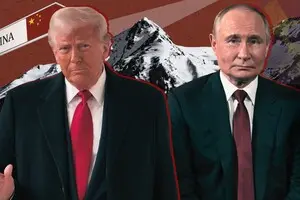
Washington’s new course is dividing the once-unified Western position and weakening the already fragile Belarusian opposition. Naturally, Lukashenko will try to exploit this situation in his domestic propaganda, presenting it as a sign of easing international pressure. In addition, Minsk will use Washington’s move to demonstrate that it is capable of conducting separate dialogues with various Western actors.
What the Belarusian-American thaw will lead to remains unclear, as it depends on many factors. At the same time, Artyom Shraibman, an expert at the Berlin-based Carnegie Russia Eurasia Center, noted in his comments to ZN.UA that if relations between Russia and the United States deteriorate again to their pre-Trump level, “at some point Putin may say: ‘Sasha, you’ve gone too far—enough of you building relations with our main enemy.’ ” And Sasha will have to obey because that would pose an entirely different level of risk for Lukashenko’s regime.
In turn, our interlocutor from the Ukrainian special services noted that although Minsk is Moscow’s ally, it has always maintained contacts with the West: without them, Lukashenko would have no leverage in his relations with Putin.
How far Washington is prepared to go will largely depend on how far Minsk itself is willing to go. Belarus will, of course, continue releasing political prisoners: Lukashenko seeks to stabilize the regional situation, as this would allow Belarusian products to return to the European market. And although illegal migrants are crossing the border from Belarus into Poland, Latvia and Lithuania, Minsk—according to ZN.UA sources in the Ukrainian special services—is trying not to provoke Warsaw, Vilnius or Riga.
Lukashenko’s further actions will determine the EU’s response. It is possible that the easing of EU sanctions is the subject of negotiations between Minsk and Washington. It is unlikely that Brussels will soften its policy toward Belarus in advance. Nor will European countries be satisfied if Lukashenko releases political prisoners only in small groups. For his part, Lukashenko fears selling himself short in the “bargaining” over political prisoners.

Artyom Shraibman believes that Washington’s current course toward warmer relations with Minsk largely depends on how long Trump remains focused on achieving a peace agreement between Ukraine and Russia: this largely defines the White House’s interest in Eastern Europe in general and Belarus in particular. It is possible that at some stage Trump will lose interest and shift his attention to other issues. Without his engagement, it is hard to imagine the “thaw” continuing.
The present “thaw” between Washington and Minsk looks extremely fragile. Ultimately, everything will depend on the course of Russia’s war against Ukraine. For now, Lukashenko remains under Putin’s thumb, and any attempt to break out of Russia’s sphere of influence would be extremely risky for him and his family.
Read this article in ukrainian and russian.
Please select it with the mouse and press Ctrl+Enter or Submit a bug
 Follow on Telegram
 Login with Facebook
 Login with Twitter
 Login with Google