
 Support ZN.ua








Financing Ukraine’s Winter Gas Imports: Who Will Pay for Heat?

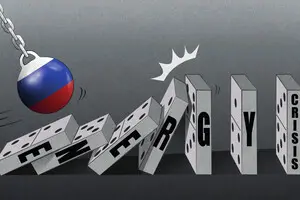

The continuing enemy strikes on Ukraine’s energy sector have led to a significant reduction in the country’s own gas output, which requires Naftogaz of Ukraine to import an additional 4 billion cubic meters of gas. These are painful losses, but with a sufficient level of storage filling, the increased imports can even cover a substantial share of the lost production and allow the country to pass safely through the winter without crisis.
Therefore, the main problem is not the availability of gas on foreign markets; rather, it’s the availability of funds at Naftogaz to finance such purchases. The amount in question is $2 billion.
Ukraine’s partners will probably allocate part of the funds as grants, but most of the sum will have to be borrowed by Naftogaz, including under state guarantees. The repayment of these loans in the future will inevitably fall either on Naftogaz or on the state budget, that is, on taxpayers.
And if the problem of the winter of 2025 can still be covered with external financing, the question of the next heating season already arises: where to find money for gas in 2026? That is another $4 billion. Therefore, it is already worth forecasting the financial standing of Naftogaz and thinking how to prevent a catastrophic accumulation of debts.
Regulated prices: a lifeline or a liability?
In a market economy, the company could pass the increased costs on to consumers through price. But in reality, Naftogaz is obliged to sell most of its gas at regulated prices—from 8 to 21 hryvnias per cubic meter ($0.19–0.50), while imports cost about 24 hryvnias ($0.57).

Domestic production partly helped maintain the balance: Naftogaz buys gas from Ukrgazvydobuvannia PJSC at 7.24 hryvnias ($0.17) and from Ukrnafta PJSC at 12 hryvnias ($0.29). But after Russian attacks, the volumes of domestic production sharply decreased, and the share of cheap resource is shrinking. As a result, the company sells imported gas at a loss, which will not allow it to accumulate funds for purchases next winter and will create accumulated losses that will later have to be covered from the state budget—at the expense of all Ukrainians.
Price, the best tool for regulation
The economy knows no more effective way to manage demand than price. When gas becomes more expensive, people and businesses start saving, increasing energy efficiency or looking for alternative energy sources (firewood, coal, etc.). But Ukraine has consciously deprived itself of this instrument, turning gas prices into a political taboo.
If raising prices is politically impossible, the government should at least reduce the number of categories receiving subsidized gas; otherwise, subsidies will continue to consume the resources of Naftogaz and the budget.
Who receives subsidized gas
- Households — of which there were 12.5 million households before the war (for individual heating and cooking).
- District heating companies — for centralized heating.
- Regional gas distribution companies — technological losses (up to 1.4 billion cubic meters per year before the war).
- Energy producers — gas for gas-fired generation, including distributed generation.
- Budgetary organizations.
Let’s look at each category in turn.
Households: populism instead of economic balance
The authorities have clearly stated that they do not plan to raise prices for households, either for gas or for heat. Yet prices have not been revised for more than five years, despite inflation and the growth of real household incomes. Politically, this decision is understandable, but it creates deep economic distortions.

A fair and rational approach would be a gradual increase of prices to a justified level, combined with targeted support for low-income citizens through the system of subsidies. Even annual indexation by 10–15 percent would gradually reduce the burden on the budget.
Differentiated tariffs by consumption volumes would also make the system fairer: the owner of a 400-square-meter house with a high salary should pay the market price, not the same as a pensioner in a small apartment.
For now, however, there is no political will for such decisions. Changes will be possible only in a critical situation, as has already happened with electricity tariffs. This also applies to heating prices, where a moratorium on increases remains in place.
Regional gas distributors: subsidies for all
Regional gas distribution companies annually consume up to 1.1 billion cubic meters of gas for technological needs. The tariff allows for a purchase price of merely 7.42 hryvnias ($0.18) per cubic meter—well below what gas actually costs on the market. To prevent an increase in distribution tariffs, the government obliged Naftogaz to sell gas to regional distributors at the same price.
In November 2020, the National Commission for State Regulation of Energy and Utilities tried to bring distributors’ tariffs to economically justified levels. The final gas price for consumers would have risen by only one hryvnia on average (about 11 percent). But after the president’s intervention, the decision was quickly canceled. Since then, tariffs have remained almost unchanged.
Today, when regional gas distribution companies have returned under state control, one could introduce a single nationwide tariff for their services, eliminate regional distortions and include the market price of gas in the tariff to stop the practice of hidden subsidization. This would, on the one hand, relieve Naftogaz of the obligation to import and supply up to 1.1 billion cubic meters of gas to distributors at a loss-making 7.42 hryvnias ($0.18) per cubic meter, and on the other, remove social injustice, where residents of wealthier Kyiv and Kharkiv pay 0.384 and 0.516 hryvnias ($0.009–0.012) per cubic meter for gas distribution, while in the more depressed Kyiv and Kharkiv regions the rates are 1.788 and 2.388 hryvnias ($0.043–0.057) per cubic meter. Such a difference also affects the investment attractiveness of regions.
Operators of the gas transmission system and underground storage facilities have long been purchasing gas for their own needs through open tenders at market prices. Regional distributors could do the same if their tariff allowed it. But for now, the price difference is effectively subsidized by Naftogaz (i.e., the state budget).

Moreover, about 25 percent of the gas distributed by regional companies is consumed by private firms and industrial consumers who can and should pay the market distribution tariff. Under the current low tariffs, the state practically subsidizes private business. According to my estimates, Naftogaz’s losses from this scheme alone amount to about 4.15 billion UAH ($99 million) annually (the sale of 250 million cubic meters of subsidized gas).
Commercial consumers now pay 24 hryvnias ($0.57) per cubic meter, and an increase in the final price by only one hryvnia would raise the cost by 5 percent in total but would close the tariff gap and ease the burden on Naftogaz and the state budget.
Budgetary institutions: with resources in hand, they still get subsidized gas
Budgetary organizations receive gas from Naftogaz at 16.39 hryvnias ($0.39) per cubic meter, although imports cost 24. The low price does not encourage them to save energy or improve efficiency. Meanwhile, local authorities could support budgetary institutions instead of spending money on parks, paving stones and roads. As of the end of 2024, local budgets in Ukraine held about 190 billion hryvnias ($4.5 billion) in unused funds that could have been directed to purchasing imported gas. But the system is built in such a way that it is easier to subsidize than to demand responsibility.
Energy companies: generating losses
Gas-fired generation is another example of distorted logic. Naftogaz is obliged to sell gas to energy companies at 16–21 hryvnias ($0.38–0.50) per cubic meter, that is, below the cost of imports. Thus, the state company subsidizes private energy producers, although under market conditions, it might be more profitable to import electricity rather than burn subsidized gas. Every cubic meter of such gas burned generates losses for Naftogaz.
The solution lies on the surface: the profitability of generation should be regulated not through cheap gas but through price caps on electricity.
What can be done without raising household tariffs
Even without changing prices for households and heating utilities, it is possible to reduce Naftogaz’s need for imports by 1.5–2 billion cubic meters a year. For this, it would be enough for regional distributors, energy producers and budgetary institutions to switch to market-based gas procurement. Some of them could even import gas independently, using their own financing.
This would not only ease the burden on Naftogaz but also reduce pressure on the state budget.
The main thing is to recognize the obvious: Naftogaz is not a bottomless wallet. All its losses from subsidizing prices will eventually be covered from the budget with taxpayers’ money. The longer the policy of non-market prices continues, the more expensive the illusion of cheap gas becomes for society.
The priority is defense, not subsidies
Even without taking households and district heating companies into account, the volume of hidden gas subsidies amounts to 15–20 billion hryvnias ($357–476 million) annually. These are real funds that the budget now lacks to finance the army and defense programs.
Now is not the time for populism and for handing out budget money left, right and center. On the contrary, it is time to look for even minimal reserves to eliminate inefficiencies and increase revenues to the budget.
It is time to say honestly: cheap gas does not exist. If someone is not paying the full price, it means that someone else is—and today that “someone else” is the state, that is, all of us.
Please select it with the mouse and press Ctrl+Enter or Submit a bug
 Follow on Telegram
 Login with Facebook
 Login with Twitter
 Login with Google