
 Support ZN.ua








Russia Escalates Energy Terror: How Can Ukraine Survive the Winter?

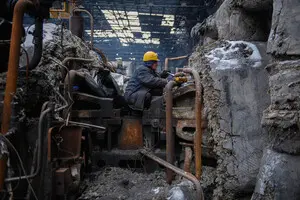

Who would doubt that, on the third anniversary of the first massive strikes on Ukraine’s energy infrastructure (October 10, 2022), the admirers of “sacred” dates in Russia would mark the occasion by stepping up missile and drone attacks on our electric and thermal generation facilities? Yes, it was not the first time the enemy struck these so-called “military” targets located in the middle of residential neighborhoods—and, unfortunately, it is unlikely to be the last. However, this time the focus was especially intense, including with particular attention to the capital. Critical infrastructure was targeted by 465 drones and more than 30 missiles, of which 60 strike UAVs and 13 missiles hit their targets.
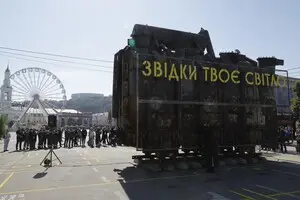
Over the weekend, the “energycide” continued: on the night before Saturday, Russia carried out a massive attack on critical infrastructure in Odesa region; on Sunday, it struck electricity and gas supply systems in Kyiv, Odesa, Donetsk and Chernihiv regions; and on the night and morning of Monday, Odesa region was once again at the epicenter of enemy strikes.
Attacks in 2022 vs 2025: we are stronger, the enemy is smarter
You don’t have to be an expert to understand: the situation is indeed difficult. However, today the country is better prepared to counter attacks on critical infrastructure and eliminate their consequences than in previous years, especially in the autumn of 2022. First, such attacks are no longer unexpected for us.
Second, we now have more air defense systems to protect energy facilities.
Third, the energy facilities themselves are better protected physically (although, as it turned out, still nowhere near as protected as they should be in the fourth year of the full-scale war), at least from UAV strikes and indirect hits.
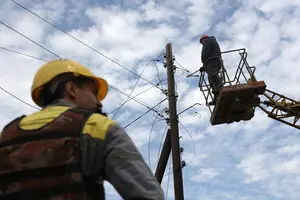
Response algorithms to attacks have also been developed and tested hundreds of times: additional backup lines have been put in place, many facilities have been equipped with powerful autonomous power systems, stockpiles of emergency repair equipment have been created everywhere and repair teams themselves work in a more coordinated manner.
At the household level, Ukrainians also know better what to do in the event of a power or water outage and have made the necessary supplies; at the very least, candles are no longer the primary means of emergency lighting in our homes.
But… the enemy has also evolved.
First, it has changed the technical characteristics of the weapons used against peaceful Ukrainian cities and villages: Russian ballistic missiles have become less vulnerable to Patriot and other Western air defense systems, moving along a quasi-ballistic trajectory; fast jet-powered UAVs have appeared; and Shaheds and Gerans now fly higher and longer, maneuvering more effectively. As a result, the effectiveness of our mobile air defense groups has significantly decreased. The intermediate layer—systems capable of shooting down UAVs at medium and high altitudes without using expensive and scarce air defense missiles—is lacking; interceptor drones are also not yet being produced in sufficient quantities.
Second, the enemy has changed the tactics of its attacks. Previously, Russia focused on strikes against generation facilities and large substations, hitting them simultaneously in different regions. Now, it carries out massive strikes on the energy infrastructure in one, two, or three regions in sequence.
“In 2022–2023, the attacks on the energy sector were no less powerful than they are now. But at that time, the enemy struck in a dispersed manner, across the entire energy system simultaneously. Now it concentrates on certain territories. There have already been very powerful, systematic attacks on the eastern and northeastern regions—strikes on Dnipropetrovsk, Chernihiv and Sumy regions. That’s why in some places the situation seems horrific,” explains Serhii Diachenko, head of the Bureau for Comprehensive Analysis and Forecasts, in a comment to ZN.UA.
At the same time, Ukraine, Diachenko says, is better prepared for such attacks, at least in terms of addressing their consequences. For example, we saw how quickly (albeit with some exceptions) power was restored for hundreds of thousands of consumers in Kyiv.
However, “better prepared” does not necessarily mean “prepared properly,” notes Oleh Popenko, head of the Union of Utility Consumers of Ukraine.
“Dozens of facilities turned out to be unprotected, even though both at the state and local levels, huge sums were allocated for their protection. For instance, at least 20 billion UAH was provided to Ukrenergo and the Agency for Restoration and Infrastructure Development for physical protection systems of critical infrastructure. But as it turned out, transformer substations were not even equipped with a second level of protection. At best, there are gabions filled with sand—even basic anti-drone nets were not installed,” the expert tells ZN.UA.
He also points to the low preparedness of other critical infrastructure facilities sensitive to loss of power in the grid. For example, for some reason, wastewater pumping stations of water utilities were not connected to generators, and the generator equipment itself was apparently not serviced properly. As a result, people in some areas were left without water for one or two days, sometimes even longer.
Oleh Popenko warns that the same may happen during the heating season with teplokomunenergo (district heating company) equipment. For example, a portion of the more than 90 gas-piston units once provided to Ukraine by USAID are still not connected.
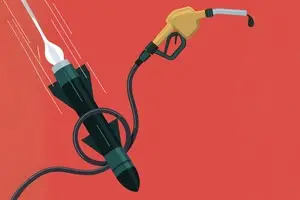
The main pain in the neck: the heating season
Most experts believe that Ukraine will not be able to avoid mass power outages this winter. There are several scenarios:
- periodic emergency shutdowns, when the consequences of strikes in most regions (except frontline areas) will be quickly eliminated;
- return to the already familiar schedules of outages for 4–8 hours per day;
- lack of electricity for hundreds of thousands or even millions of consumers for several days.
And while in the case of electricity, the second scenario is considered the most likely—scheduled hourly outages with periodic emergency interruptions of power supply after new strikes—the situation with heating is far less straightforward. For now, the goal is to delay the start of the heating season for most consumers as long as possible, except for social, medical and educational institutions. The mayors of major cities—Lviv, Dnipro and Kharkiv—are calling for the same approach. The delay is necessary to complete the restoration of damaged thermal generation facilities and to save scarce fuel, particularly gas.
As is known, in spring we had record-low reserves of gas, less than 5 billion cubic meters, most of which is technical gas that cannot be extracted from storage facilities. By mid-September, thanks to active imports, we managed to reach last year’s storage levels, and the pace of gas injection into storage has not slowed down. So even if this winter is harsher than the previous one, the accumulated resource, though with difficulty, should be enough—but only assuming that domestic gas production remains at normal levels. And with this, unfortunately, we also have serious problems.
In just the first ten days of October, the enemy destroyed approximately 60 percent of gas production capacity. Yes, restoration work is being carried out at a rapid pace. But the likelihood that Russia is planning new attacks is almost 100 percent. Therefore, Ukraine urgently turned to its international partners, particularly the G7, with a request to supply equipment to restore the energy system, provide air defense systems and allocate finance for additional imports of natural gas. Analysts have calculated that the required amount is $1.9–2 billion.
At the same time, if Ukraine’s nuclear energy sector continues operating, electricity will be present in the grid, albeit with outages, reassures Serhii Diachenko.
“Besides, we have not stood still. Ukraine has developed distributed generation. Heating supply is both simpler and more complicated at the same time because the enemy has started to launch heavy strikes on the gas production system, and heat generation in cities is mostly dependent on gas. However, gas can be imported in practically unlimited quantities. Our gas supply system is diversified, and despite the shelling, the pumping capacity of the system is quite solid,” the expert believes.
At the same time, he hopes that Russia will continue to refrain from striking our nuclear power plants directly. Yes, the enemy has repeatedly hit and, apparently, will continue to hit the nodes connecting nuclear power plants to the Unified Energy System. But this does not bring it any real benefit.
“We have good automated systems that immediately disconnect everything that needs to be disconnected. And then everything is restored quite quickly, although such strikes are genuinely dangerous. Meanwhile, in Russia itself, automated systems are much worse, so the risk of accidents is very high. Therefore, what may be preventing the Russians from intensifying such strikes is the threat of retaliatory actions. But I would consider this only as an extreme scenario. Because unlike Russia, Ukraine acts responsibly regarding its international obligations in nuclear safety,” says Serhii Diachenko.
It is obvious that in the few weeks left before the start of the heating season, it is unrealistic to catch up on everything that was not done earlier. But at the very least, it is possible to check how generator equipment works, finish connecting gas-piston installations and put anti-drone nets in at least some places.
Where possible, it is also worth continuing to install alternative power systems both for district heating companies and water utilities, as well as for apartment buildings—particularly by ensuring electricity supply to the pumping stations that deliver water above the ninth floor.
Oleh Popenko also advises conducting drills in cities to understand how to act in low temperatures and how much time is needed to drain water from heating systems in apartment buildings in case of prolonged power outages. After all, at –15 to –20°C, a typical Soviet-era panel apartment building will freeze solid in just 36–48 hours without heating.
Heading to work on Friday, many people noticed that generators had returned to the streets—the ones that owners and tenants of offices, stores and kiosks had pulled out of storage rooms. Marketplace management is counting profits, reporting a surge in demand for power stations (the sudden and coordinated price increases by market participants is another story), and the phrase “We operate even without electricity” has returned to commercials and announcements from retail and service providers.
Advice from government representatives and experts in the media and on social networks has also been familiar: charge power banks, stock up on candles, insulate your home to reduce heat loss, buy stoves and generators for private households, ensure a supply of water—both drinking and technical—at least for a few days, and also stock up on non-perishable food.
We went through similar situations last winter, and the one before that, and the one before that. Yet this time, it seems it will be much more difficult. But we must endure—to spite the enemy.
Read this article in Ukrainian and russian.
Please select it with the mouse and press Ctrl+Enter or Submit a bug
 Follow on Telegram
 Login with Facebook
 Login with Twitter
 Login with Google