
 Support ZN.ua








Chancellor Under Pressure: Why Merz Is Losing the Support of Germans

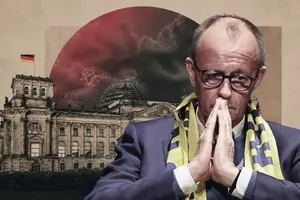

German Chancellor Friedrich Merz is a strong supporter of Ukraine. But he and his government are on the defensive at home. As one poll shows, the CDU/CSU is at 21%, the SPD at 12%, the Greens at 14%, the FDP at 3.5% and the Left Party at 11%—while Alternative für Deutschland (AfD), whose whole program is to attack the government for being too soft on immigrants, too politically correct, too little concerned with German interests and too supportive of Ukraine, sits at 29%. In one poll on personal popularity, AfD leader Alice Weidel is far ahead of Merz. (Though other polls show less dramatic results.)
What's going on with Friedrich Merz and his CDU/CSU-SPD coalition? And what does that mean for Germany, Europe, and Ukraine?
"From fairytale prince to frog," Neue Zürcher Zeitung wrote on Merz recently. His election had given many hope that Germany would reform itself and get EU reforms and foreign policy on track. And that a successful CDU/CSU-SPD coalition would win back voters from the AfD.
Since then, Merz has made strong announcements and started initiatives, but few have yet worked out. Some €185 billion in frozen Russian assets for Ukraine? Blocked by Belgium's prime minister, de Wever. Relations with America? A strong start combining tact and self-confidence, ruined by a slip of the tongue in a school classroom (where Merz said, with journalists present, that Iran had managed to “humiliate a whole nation” – the US, after which Washington announced it would withdraw 5,000 soldiers from Germany and would no longer station Tomahawk missiles in Germany as had been planned). The “autumn of reforms”? It turned into a winter, a spring and a permanent stop-and-go of reform attempts. Hundreds of billions in a special fund for defense and infrastructure? Experts say they are being misinvested and spent too slowly, and that, despite all this extra borrowing, the public debt and budget deficit keep growing. Instead of an economic upswing, companies are going bankrupt (insolvencies in the first months of 2026 are up 5%-10% compared to 2025) and jobs are being lost (e.g., in March 2026, 20,000 jobs were lost). Economic growth for 2026 is predicted at 0.6% (compared with, for example, Poland’s 3.5%), in spite of the spectacular 500 billion special investment fund. On the mighty German automotive industry in decline, a journalist wrote recently: “China no longer copies [German] technical concepts and ideas, or imports them—now it exports them to Germany.” And in an interview a head of the world's leading producer of tunnel-boring machines said of a Germany with high labor costs and relatively few working hours: "We are lying to ourselves, thinking we are still top dogs. We are in the shit." Coming from one of Germany's industrial champions, that is a damning verdict.
And Merz’ nerves are showing. Recently, journalists speculated the CDU/CSU might replace Merz with North Rhine-Westphalia's Minister-President Hendrik Wüst. Merz’ team hit back strongly against what was a pure rumor and could have gone ignored.

What is going on with Friedrich Merz? Are his reform projects and his coalition doomed? If so, what are the alternatives? And what does that mean for Europe and Ukraine?
On the coalition, one should say that many ambitious projects are underway and have not yet failed. Instead of €185 billion, the EU is giving Ukraine €90 billion. That is a significant sum—and one the EU might not have committed to without Merz's initiative. Refugee numbers in Germany have fallen sharply. The special fund of €500 billion for defense and infrastructure is being invested – even if the implementation deficits could jeopardize its success fundamentally. The first step of a reform of the healthcare system might succeed. Regarding de-bureaucratization, something is happening, and in such a complex endeavor it might take two to three years to get a tangible result. So, in fairness, this adds up to more than nothing.
And all this with a coalition partner that essentially gives Merz no chance. The SPD is blocking decisive austerity measures. The party invokes social justice, which is a good thing. But this leads to a position that, in many ways, is the antithesis of Merz's ideas: Balancing revenues and expenditures seems less fundamentally important to the SPD. Economic weakness and falling behind other countries is a problem, but not a red line that forces a complete change of course at any cost. The SPD seems more reluctant to repeal laws and regulations that are well-intentioned – even if these rules are too complicated and have unintended side effects. (For example, if recipients of state support earn roughly the same amount they could earn through work.) The CDU and SPD disagree on fundamental issues—so how can such a coalition work? The strains show: CDU Economics Minister Katharina Reiche is at odds with SPD Vice Chancellor and Finance Minister Lars Klingbeil; and when Klingbeil himself announces major reforms, his own SPD Labor Minister, Bärbel Bas, warns against going too far. And so it goes.
Therefore, it is a kind of success that anything has happened at all. And, in fairness to the government, the upheavals in global politics and economics, the frenetic media cycle, social-media hysteria and the AfD's highly effective destructiveness do make its life hard.
But there's no getting around it: Merz's government does suffer from a glaring lack of momentum. You cannot find any competent person who says that even remotely enough has been done, or that the government can continue doing what it does. And so it's no surprise that economic forecasts and poll numbers are dismal.
What might happen? The recent rumors that the CDU/CSU might replace Merz with North Rhine-Westphalia's Minister-President Wüst were mostly that, rumors.
Wüst, with his tall and thin, round-glassed and studious look not so unlike Merz, is a successful Minister-President. He heads a black-green coalition, which, as can also be seen in Baden-Württemberg, is perhaps a better ideological fit than a black-red one. (Merz, too, might have preferred the black-green, had that been possible.) He differentiated himself from Merz by advocating a more Merkel-like course toward the political center, rather than a more decisive conservative stance. Wüst has a firm position on Ukraine. “For three years, Ukraine has been bravely fighting every day for its freedom and our European values,” he wrote in 2025, for example, adding that because of Putin’s war, investments in security now had absolute priority.
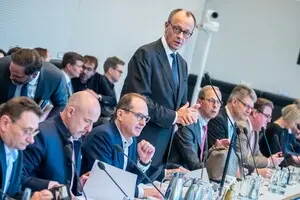
But the idea of Wüst ousting Merz is, while possible under the constitution, not very realistic politically. The CDU/CSU would have to initiate a so-called constructive vote of no confidence. At least 25% of the members of parliament would need to submit a motion to remove the chancellor and propose a counter-candidate. This candidate can then be elected as the new chancellor with an absolute majority. But would enough members of the CDU/CSU embark on such a high-risk project, which could also be considered an act of betrayal? And would the SPD support it? Not likely.
But that does not mean that the future of the Merz government is secure. It might be possible that the coalition won't last until the end of the legislative term: If the AfD wins a majority in the upcoming state elections, and if the CDU or the SPD suffer breathtaking defeats, it will be another shock for the governing parties. Whether they can agree on a political response to that, or whether the coalition partners will split, remains to be seen. What then? A minority government led by the CDU/CSU, as has been speculated? If that government were to vote with the AfD on some legislation, the CDU/CSU could split over it. It is also unlikely that a majority of CDU/CSU MPs would go down this road.
So, one can say this much: The government is under immense pressure. There are good reasons why the coalition will hold on. There is no better, realistic alternative.
And so one can only hope that everyone pulls themselves together. That Friedrich Merz has his party and his nerves under control. And that the SPD dares to support very decisive reforms, even if this might cost them some of their few remaining voters.
What could Merz change? For one, he has a strange combination of firmness with a dash of wobbling. He has a clear idea of what he wants, and that is usually a reasonable, thought-through, fact-and-values-based common-sense course. But he then says things that sound more radical: that the American people are being humiliated; that immigrants crowd Germans out of dentists' chairs to get their teeth fixed at taxpayers' expense; that he would not, for now, advise his own children to go and work in America; and so on. He also walks back things he has announced — Ukrainians remember the Taurus cruise missiles he backed in opposition but, in office, has not delivered. None of this means his compass is off: even after the Taurus episode, Ukrainians have good reason to see Merz as strong, consistent and reliable. He simply has a way of talking that must make his team squirm whenever he starts free-styling at the microphone. The real question is whether he can learn to speak as a chancellor rather than as an opposition leader.

Second—a point often made but still important—Merz has never worked in government before. He has been a member of the German and European parliaments, a party functionary, chairman of the supervisory board of BlackRock's German arm, and a lawyer and judge. And the common analysis is very likely right: he came into office expecting that whatever he said would simply be carried out. But German politics is complex, difficult and requires a lot of reaching out to and convincing all kinds of party representatives, labor unions functionaries, business and employers’ associations leaders, etc. By all accounts, Friedrich Merz did this badly in his first months, and the result was outrage within his own party and a string of failed initiatives. Since then he has replaced his chief of staff with an experienced CDU functionary long close to Germany's Mittelstand (its small and medium-sized firms), Philipp Birkenmaier. Together with CDU general secretary Carsten Linnemann, he seems to have moved relations with the party from bad to tolerable—though not yet relations with business, which is firing off ever more frantic appeals to get reforms moving at last. But Merz has spent political capital—on his bouts of apparent wavering, on his tough talk, and on bold announcements that stall in implementation—and spent it not only with voters but within his own party. And under the constitution a German chancellor has too little power to change the country's course without the full backing of that party. Will Merz win back the trust that would give him the room to act? Beyond knowing what he wants, will he also learn how to get there—becoming a virtuoso at coaxing and strong-arming his goals out of the dull but deadly thicket of German politics, media and society?
If that happens, and if the CDU/CSU/SPD coalition do implement their major projects until 2029, maybe Germany can turn the corner. For example, a moderately successful black-red coalition could give way to a black-green (or black-green-yellow?) coalition in 2029.
The CDU/CSU could partner with the Greens where the so-called realists might have an edge over the so-called fundamentalists: Take Baden-Württemberg, the powerhouse Land that is home to Mercedes, Bosch, Porsche and other top companies now struggling against decline. There the Green Minister-President Cem Özdemir, a former federal agriculture minister and long-time senior figure in his party, embarks with the CDU on a course of pro-business reform, deregulation, innovation and green transformation. Could that not be a blueprint for Berlin?
And the Free Democrats—who failed to clear the electoral threshold both nationally and in several Länder—have now turned, perhaps in desperation, to Wolfgang Kubicki as their leader. His political style is old-cowboy-shooting-from-all-guns-in-all-directions-dressed-in-a-conservative-jacket-and-never-not-holding-a-wine-glass. This style of a wild old man speaking the truth fits the social-media and hyped-up journalistic environment of our times (and probably could hold its place quite well in a face-off with most AfD populists). If Kubicki can combine his own brand of populism with something resembling a real program—one that taps the FDP's dormant strengths as a liberal party that trusts the individual and pushes back against state intervention—it might clear 5% again. And such a black-green-yellow coalition might just have what is needed. It might break the deadlock of a country that knows it cannot go on like this, but can’t bring itself to take any step that really hurts.
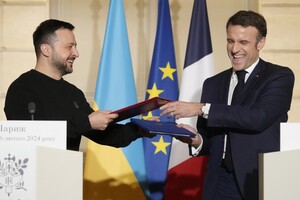
This new coalition could then press on decisively with the reforms begun under its predecessors. Judging from what we know and given the Greens’ firm position on Ukraine, it would be an even more determined supporter of Kyiv than the current one. And the SPD could rebuild itself in opposition.
It's possible. But unless Friedrich Merz and Lars Klingbeil start performing at their peak—or the world economy shifts unexpectedly in a way that hands an unreformed Germany a tailwind, getting profits going, jobs grow
Please select it with the mouse and press Ctrl+Enter or Submit a bug
 Follow on Telegram
 Login with Facebook
 Login with Twitter
 Login with Google