
 Support ZN.ua










A City of Endurance: How 700,000 People Live 20 Kilometres from the Frontline
Sumy Region: Life Where the Line Between Front and Rear Has Blurred

11 august, 2026, 17:18
Share
Russia is killing the Sumy region. There is hardly a day here without shelling. Daily Russian strikes, the mass evacuation of villages, offensive operations near the border, life caught between relocation orders and attempts to hold communities together—all of this has become ordinary. The question arises more and more often: leave or stay? And there is no right answer—each person has to find it alone.
And yet in the regional capital, now less than 20 kilometers from the line of contact, ordinary life appears at first glance to be carrying on. Cafés are open, universities are enrolling students, exhibitions open, babies are born. But behind these familiar signs of peacetime it is ever harder to miss another reality. Air raid alerts can run almost without a break, night attacks have become routine, and Russian guided bombs now terrorize the regional capital day and night.
War overhead: how Russia changed its strike tactics
The Sumy region shares the longest border with Russia—more than 560 kilometers. For almost four and a half years of full-scale war, the Russian army has been trying out different forms of terror here. At first, it was artillery and mortars, then came missile strikes and Shahed drones. Now the principal weapons are increasingly guided aerial bombs, UAVs of various kinds and FPV drones, including fiber-optic ones.
The border communities felt the new tactics first. But in recent months they have been extending to Sumy, Shostka, Konotop, Hlukhiv and Okhtyrka as well. Nowhere is this clearer than in the regional capital. In the first five months of the year, Sumy saw just four attacks with guided bombs; since the start of summer, the count has passed a hundred.
A regional capital living under guided bombs
The most tragic day for Sumy was April 13, 2025. On Palm Sunday, two Russian ballistic missiles struck the city center. Thirty-five people were killed and more than a hundred injured, making it one of the deadliest strikes on Ukrainian civilians of the entire war.
Over the past year, as I have said, the character of the attacks has changed, and guided aerial bombs have become the greatest threat to Sumy. They are hitting residential buildings and civilian infrastructure more and more often.
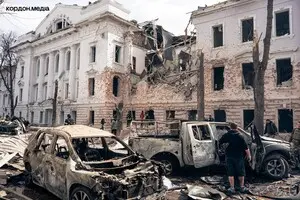
In early July, an aerial bomb destroyed a five-story apartment block in central Sumy. Four people were killed, among them a five-year-old girl and her mother. More than 30 were injured, including a 25-year-old woman who lost both legs.
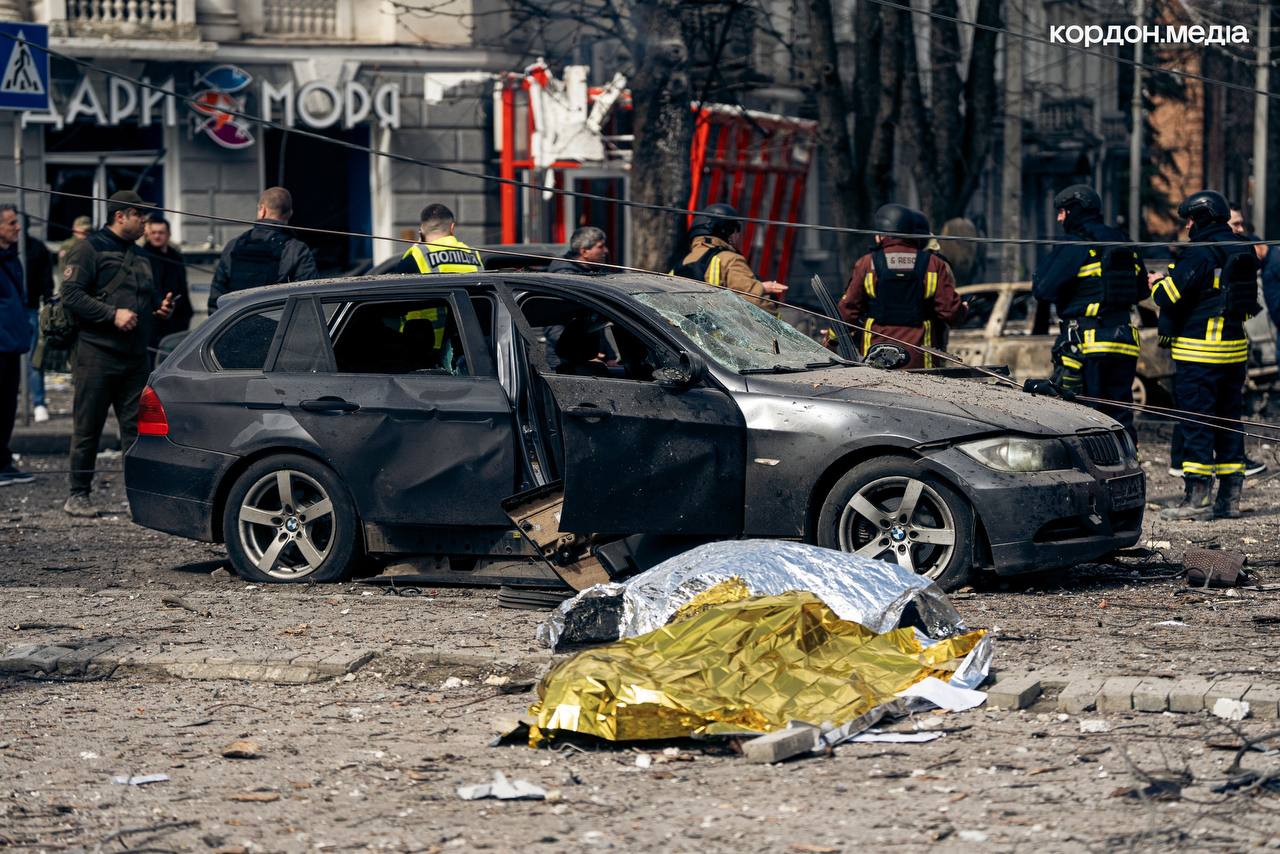
A week later two guided aerial bombs hit a residential district of the city. Six people were killed, among them a 13-year-old girl. About 40 more were injured. Sumy has since come under repeated mass air attacks that again took civilian lives and left dozens wounded. And in early August another airstrike killed two sisters—aged five and ten. The girls died in their sleep beneath the rubble of their own home.
One of the July strikes damaged Kordon.Media’s newsroom and studio, as well as the building where the outlet’s social media manager lived. And some of its journalists are themselves displaced people from border communities who had already lost their homes to the war.
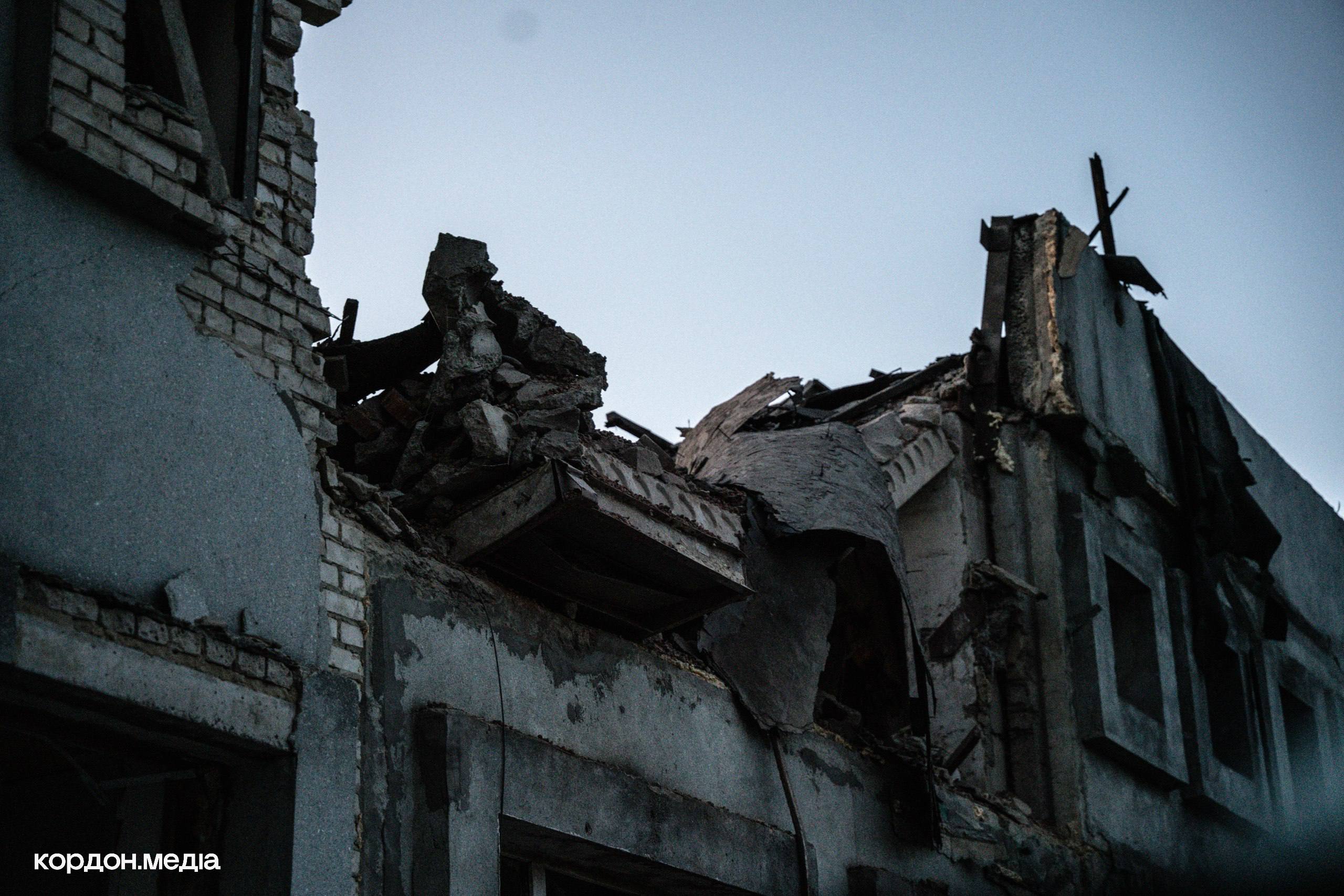
The building that housed the Kordon.Media studio
At the same time, Sumy has seen a rise in attacks by fiber-optic FPV drones, which electronic warfare cannot jam. Residential blocks, hospitals, schools, businesses, gas stations and water and heating facilities all come under fire. One of the most widely reported strikes destroyed the Epicentr hypermarket.
The city’s residents have grown used to air raid alerts running constantly, and for many people in Sumy a few hours of unbroken sleep have become the exception rather than the rule.
A borderland that is disappearing
The Sumy region is losing its border villages and small towns. A year ago, life here was measured by the number of people who had stayed. Today it is measured differently—by the number of houses left standing after the latest shelling.
Half the region’s communities now officially fall under the designation of territories of possible or active hostilities. And Russian tactics leave the borderland no chance of recovery. Artillery, guided aerial bombs, FPV drones and remotely delivered mines are systematically destroying housing, roads and critical infrastructure. Where schools, shops and clinics were working not long ago, all that often remains today is rubble.
Many villages are simply no longer fit to live in. According to Oleh Hryhorov, head of the Sumy regional military administration, mandatory evacuation has now been declared for 213 settlements. Since the beginning of the year alone, more than three thousand people have been evacuated from border communities, among them almost 70 children. A hundred settlements have already been left entirely without residents.
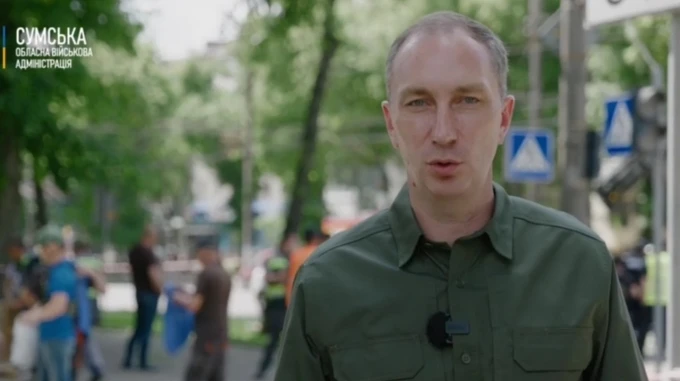
Oleh Hryhorov, Head of the Sumy Regional State Administration
Сумская областная военно-гражданская администрация
That does not mean the borderland has emptied out. Some people are staying on deliberately. By Hryhorov’s count, there are 35,000 of them. When Russian shells or aerial bombs destroy their houses, they move in with neighbors, into abandoned cottages, summer kitchens, sheds or garages. In effect they migrate from one surviving yard to the next, so long as it means not leaving their own village.
Everyone has an explanation of their own. Some believe the war will end soon. Others have nowhere to go. Some find it hard to ask for help, and some, at 70 or 80, simply cannot imagine starting life over from nothing.
One of those forced out of his home by FPV drone attacks is Ruslan, a father of four. He and his family lived in the village of Katanske in the Kyrykivka community. It was not their first flight from the war: since the start of the full-scale invasion they had moved several times, each time hoping to find somewhere safer.
Russian FPV drones, he says, began hunting houses, civilian cars, shops, the village hall, the farm. That was when the family understood they could not stay. Once they had left Katanske, Ruslan went back for the last of their belongings. On the way, a Russian drone began chasing his car.
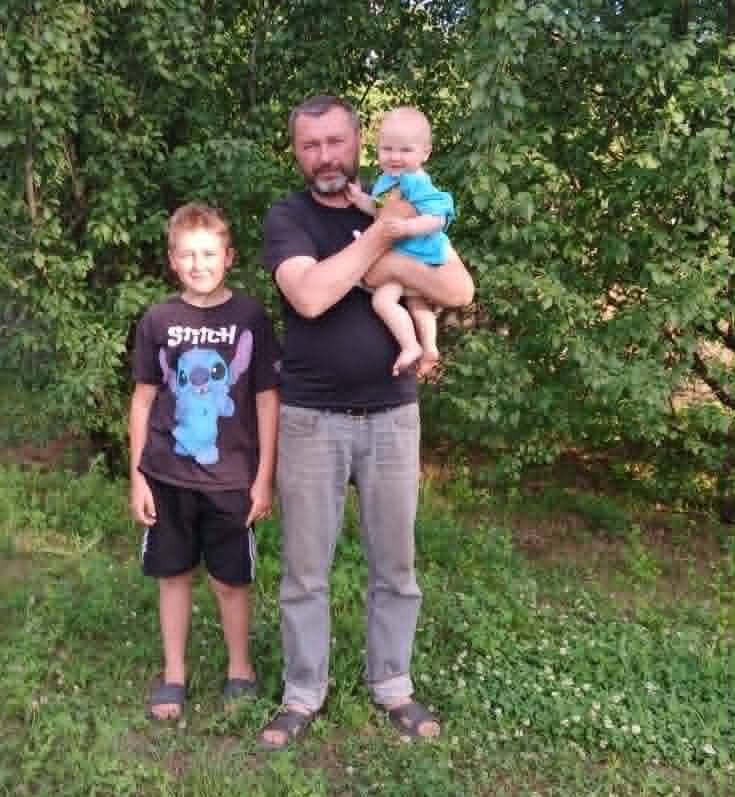
Ruslan Zavaliy
Фото предоставлено автором
“I saw the drone behind the car. I put my foot down, I weaved. The only thing that saved me was making it around a bend in time. It struck, but it missed,” he recalls.
A life with no familiar rules left
The war in the borderland has changed even the way people treat death. In some villages the constant shelling makes it impossible to evacuate not only the wounded but the dead. People are buried right there in their yards—without a coffin, without a priest and without a chance for relatives to say goodbye. For the residents of Velyka Pysarivka, this has become part of everyday life.
The editor of the Velyka Pysarivka newspaper Vorskla, Oleksii Pasiuha, recalls an episode that only a few years ago would have been hard even to imagine. The body of a man who had died of his wounds was being taken out of the settlement for burial. On the way, the vehicle was attacked by a Russian FPV drone. The people inside managed to jump clear; the car burned with the body still in it.
Pasiuha himself has lived through the war not only as a journalist but as a resident of the borderland. The Russians first struck his house back in 2022. The family covered the damaged roof with a tarpaulin and stayed on at home. But when the mass strikes with guided bombs began, it became clear that staying was no longer possible. He and his wife evacuated.
ВАС ЗАИНТЕРЕСУЕТ

The newsroom left too, though it never stopped working. The paper is still printed and delivered around the communities of Okhtyrka district, even though its print run has fallen by a third.
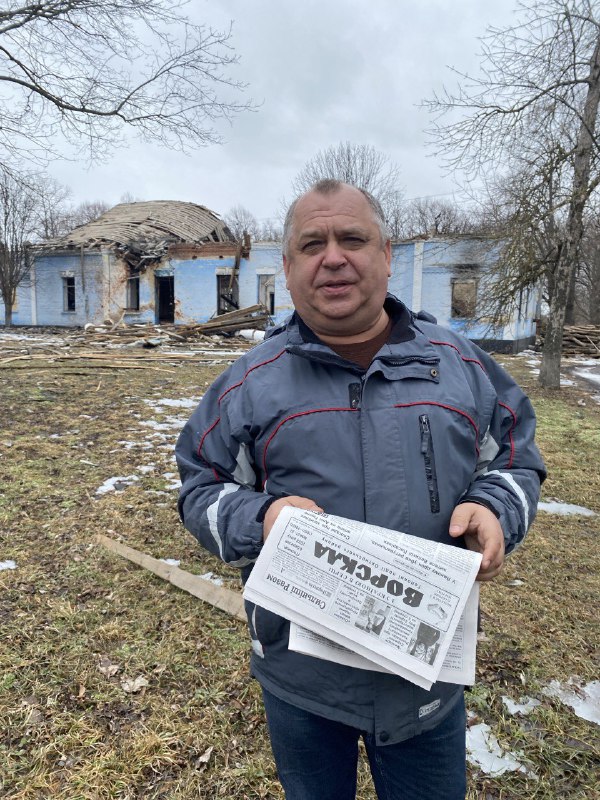
Oleksiy Pasyuga
Фото предоставлено автором
But the war reached Pasiuha even after the evacuation. In March this year, while he was delivering a fresh issue, he was told that a Russian shell had hit his house, leaving nothing but a pile of rubble in its wake.
The war is redrawing the region’s economic map
As the front line shifts, so does the economic map of the Sumy region. The sector that feels it most painfully is agriculture—the backbone of the economy in most border communities.
Over the years of full-scale war the region has lost roughly a fifth of its sown area. In communities close to the state border, thousands of hectares are no longer worked because of constant shelling, mines and the threat of drone attack. Some farms operate only on their more distant fields; others have had to give up cultivation altogether. More than 300 agricultural enterprises have relocated production within the region or beyond it, and others have suffered heavy damage from Russian strikes.
Industry in the Sumy region has come under the war’s blows as well. Dozens of enterprises in machine building, chemicals, processing and other sectors have moved to safer regions of Ukraine. Some plants, after constant shelling, have had to shut down altogether.
For a border region this means far more than the loss of production. Jobs disappear along with the enterprises, revenues to local budgets shrink, and more and more people decide to look for work and a new life in other regions.
A defense that changes along with the war
Russia keeps refining its air attack tactics, which forces Ukraine to look for new approaches to air defense. The new threats demand not only more air defense assets but a different model of command.
The coordination problems have been acknowledged publicly by former defense minister Mykhailo Fedorov after a working trip to the Sumy region. By his account, the region effectively had no single official responsible for air defense with all protective forces and assets under his operational command. “NOBODY is responsible for air defense in the Sumy region,” Fedorov said, stressing that the current system needs a different model of coordination.
After that statement, the security of the Sumy region became the subject of dedicated meetings at government level. The newly appointed prime minister, Serhii Koretskyi, visited the region, as did representatives of the General Staff and the Air Force. The main aim was to find solutions that would allow faster responses to shifts in Russian strike tactics and strengthen the region’s protection.
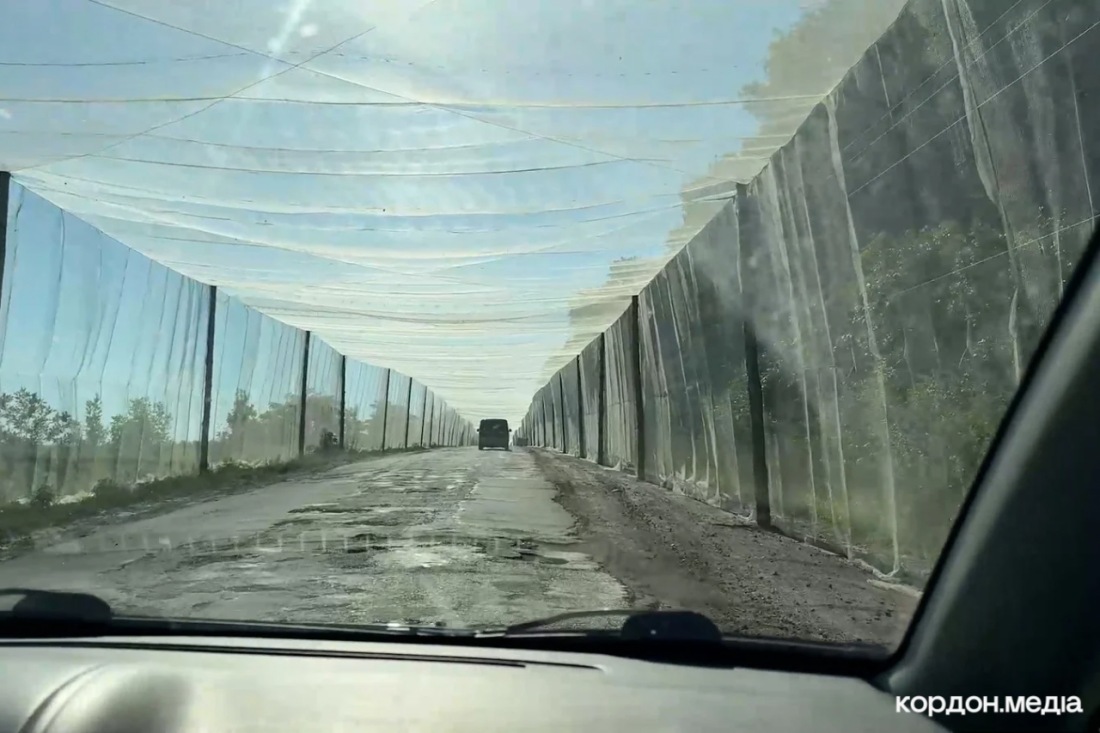
At the same time, the regional military administration stresses that even with the sharp rise in the number of attacks, air defense forces destroy or suppress most of the roughly 1,500 Russian drones recorded over the region each week.
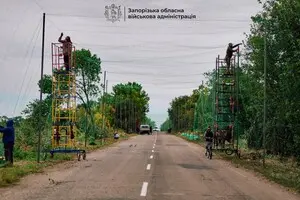
But the war is changing more than the work of air defense. The Sumy region is already installing anti-drone protection along its roads, putting up modular shelters and upgrading the alert system. All of it is an attempt to adapt to Russia’s new strike tactics and to give people at least a few extra minutes to save themselves.
Winter as another front
If in summer the main challenge for the Sumy region remains guided bombs and FPV drones, in winter one more may be added to them—the cold. After several waves of Russian attacks on energy infrastructure, preparing for the heating season long ago stopped being merely a utilities question. For a border region it is above all a question of safety, because every new strike can leave not a single building but whole communities without heat, light or water.
That is why the region prepares for the heating season the same way it prepares for new Russian attacks. Damaged networks are not merely repaired but made less vulnerable: backup power sources are installed, distributed generation is expanded and protection of critical infrastructure is reinforced. The goal is that even after fresh Russian strikes, hospitals, water systems and other critical facilities can keep running, and that people get heat, light and water back as quickly as possible.
No plan, however, offers a full guarantee. As long as Russia continues its targeted attacks on energy infrastructure, every winter in the border Sumy region remains one more ordeal.
The biggest battle—the one for people
Russia is trying to destroy more than houses, roads and power lines. Its aim is a broader one—to make life in the borderland unbearable. To make people leave not because of an evacuation order but because they can no longer live under the constant threat of strikes.
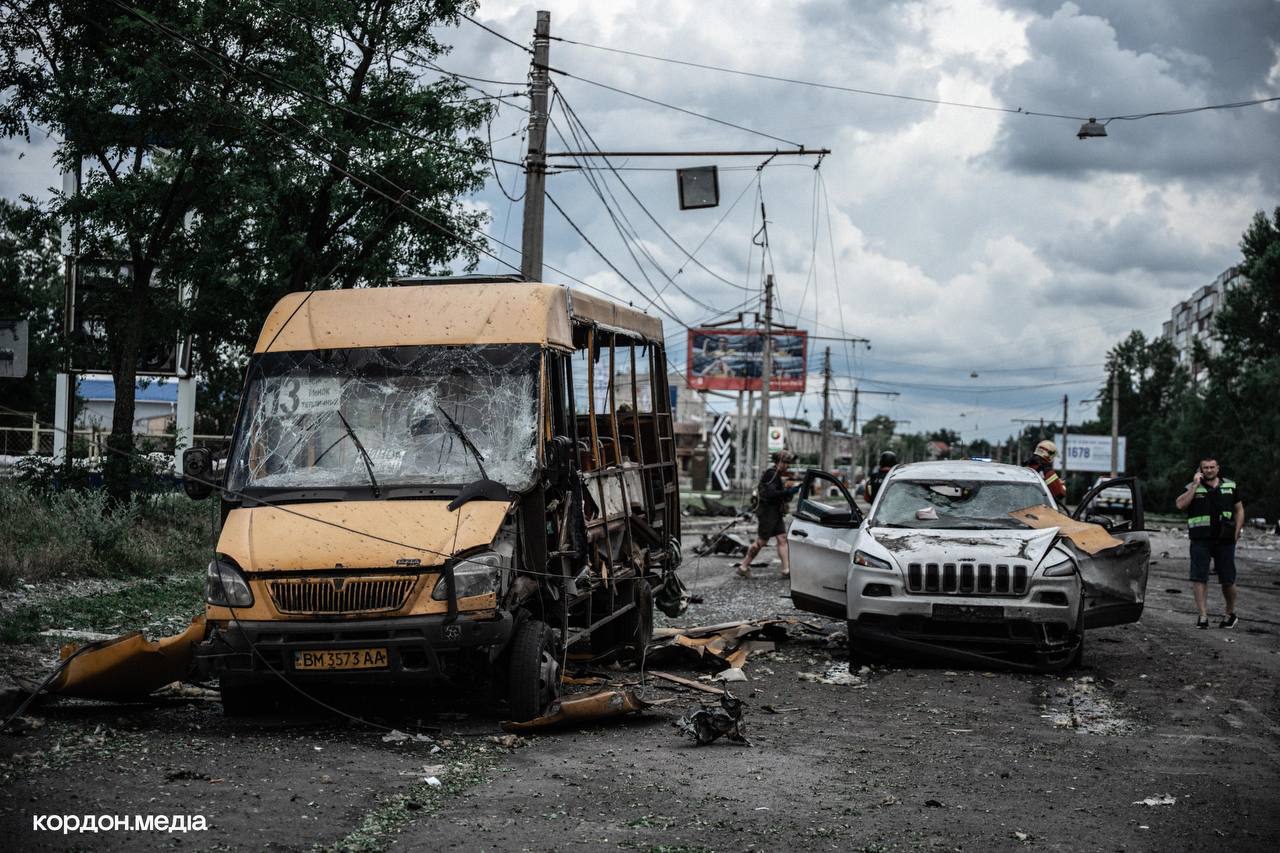
Over the years of war the Sumy region has learned to rebuild destroyed bridges, repair roads, put up shelters and bring the lights back on after shelling. Bringing people back is far harder.
Some leave temporarily. Others start a new life in other regions or abroad. Young people enroll at universities in other cities and come back less and less often. Businesses move their production. Whole villages vanish not because they are formally abolished but because there is no one left to live in them.
That is why, for a long time to come, the Sumy region will count its principal losses in something other than wrecked houses and enterprises. They will be measured in human lives: more than 750 civilians killed, almost 40 of them children, tens of thousands of displaced people, and whole communities that may never come back to life.
…The Sumy region has today become one of the testing grounds where Russia is trying out a strategy of attrition against border territories. Its aim is a broader one—not only to seize new kilometers but also to make life near the border so dangerous that people abandon their homes and the region gradually loses its economy, its infrastructure and its human potential. That is why the main battle is now being fought not only for territory, but for people. For those who will go on living on this land despite the war. And for those who will one day dare to come back.
Noticed an error?
Please select it with the mouse and press Ctrl+Enter or Submit a bug
Stay up to date with the latest developments!
Subscribe to our channel in Telegram
 Follow on Telegram
Пожалуйста выберите один или несколько пунктов (до 3 шт.) которые по Вашему мнению определяет этот комментарий.
Пожалуйста выберите один или больше пунктов
Нецензурная лексика, ругань
Флуд
Нарушение действующего законодательства Украины
Оскорбление участников дискуссии
Реклама
Разжигание розни
Признаки троллинга и провокации
Другая причина
Отмена
Отправить жалобу
ОК
 Login with Facebook
 Login with Twitter
 Login with Google