
 Support ZN.ua








A City of Endurance: How 700,000 People Live 20 Kilometres from the Frontline

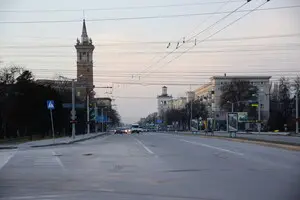

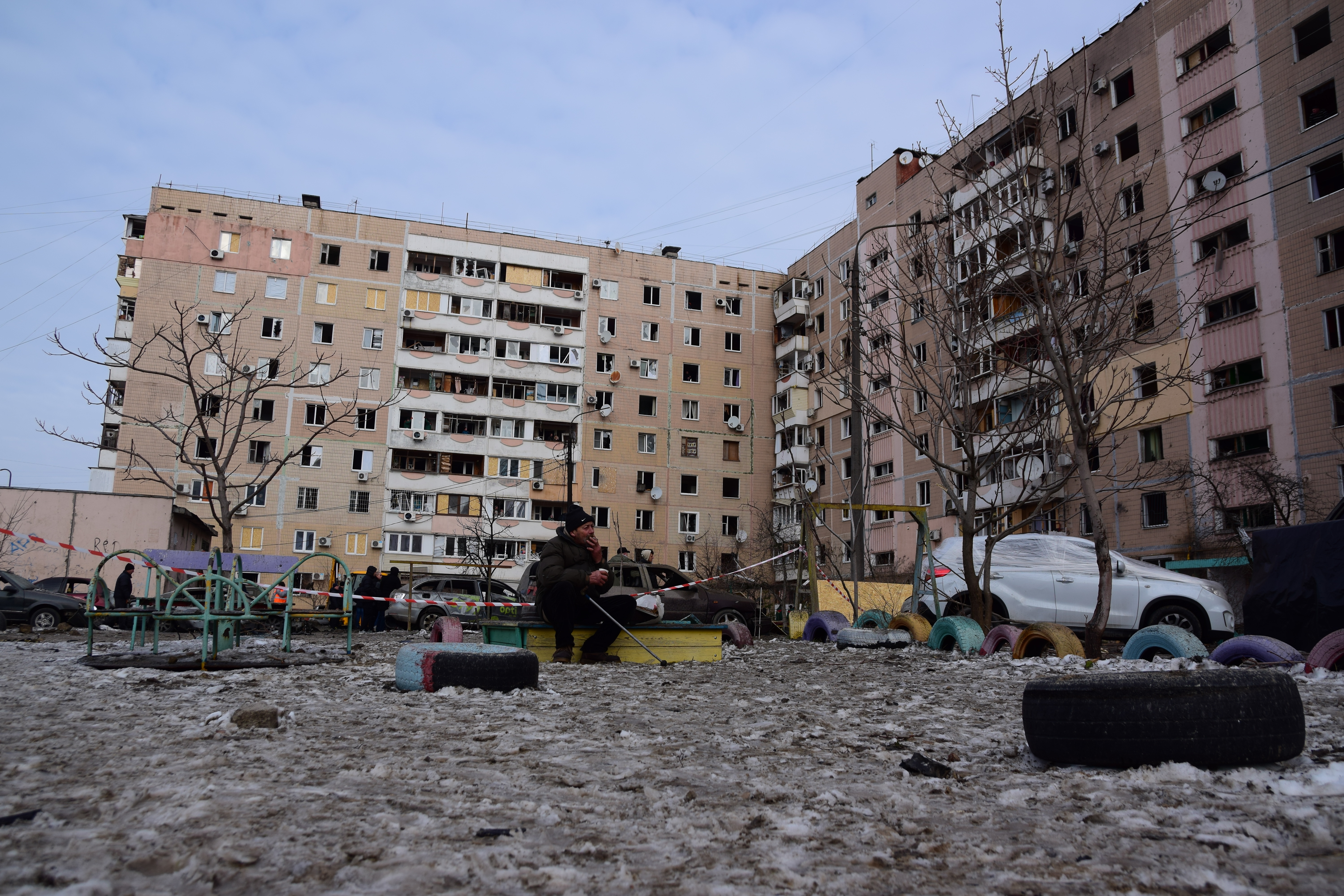
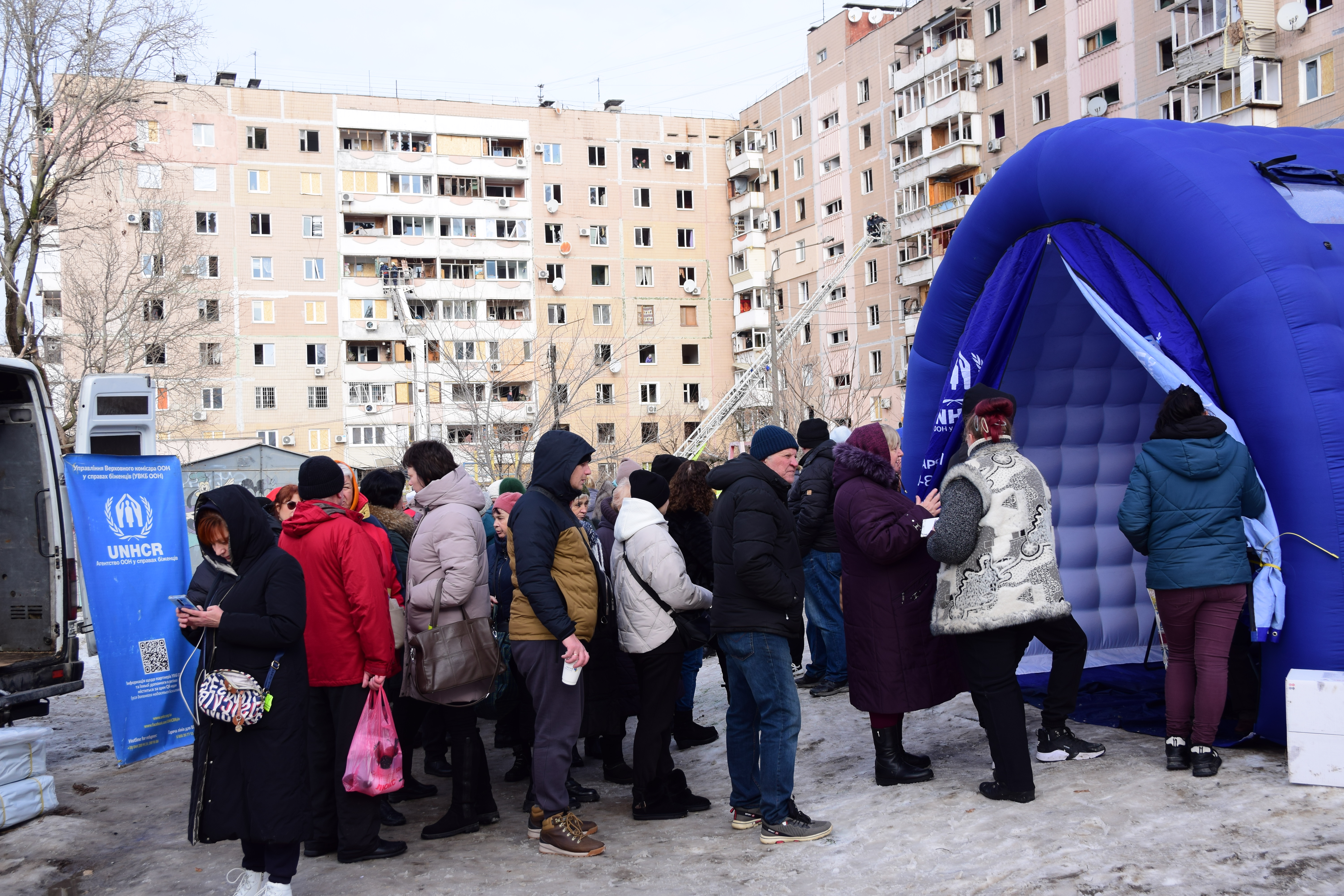
Zaporizhzhia has long been living under constant enemy attacks. In recent weeks, the situation has grown even more difficult. The proximity of the contact line—roughly 20 kilometres—makes it possible to strike the city with glide bombs, drones, ballistic missiles and multiple-launch rocket systems. Apartment blocks, a maternity hospital, car repair stations, petrol stations and shops have all come under fire. Windows shattered in people’s homes, damaged roofs and cars—and in some cases, homes reduced to rubble.
And yet the city continues to live. Businesses operate from restored or damaged buildings. Municipal services clear the aftermath of shellings. Underground schools function. Children’s playgrounds are being renovated in parks.
This is not about getting used to war. It is about a daily choice. Most residents are staying, for now. Some because of work or housing, some because of age or family, some because they cannot imagine themselves anywhere else. But the thought of leaving no longer feels distant. It surfaces in many conversations.
At the same time, there remains hope that the army will hold the line and the city will remain Ukrainian. It is this belief that helps people endure the uncertainty. Zaporizhzhia of today is a city suspended between fear and confidence, between doubt and decision to stay.
To understand how it lives and what sustains it, one must walk its streets and speak to those who make that choice every day.
Serhii Myrhorodskyi, a resident of Zaporizhzhia, lives in the Kosmichnyi district—one of the areas where explosions have become part of the everyday soundscape. Russian forces regularly shell the region, and this district often finds itself under attack.
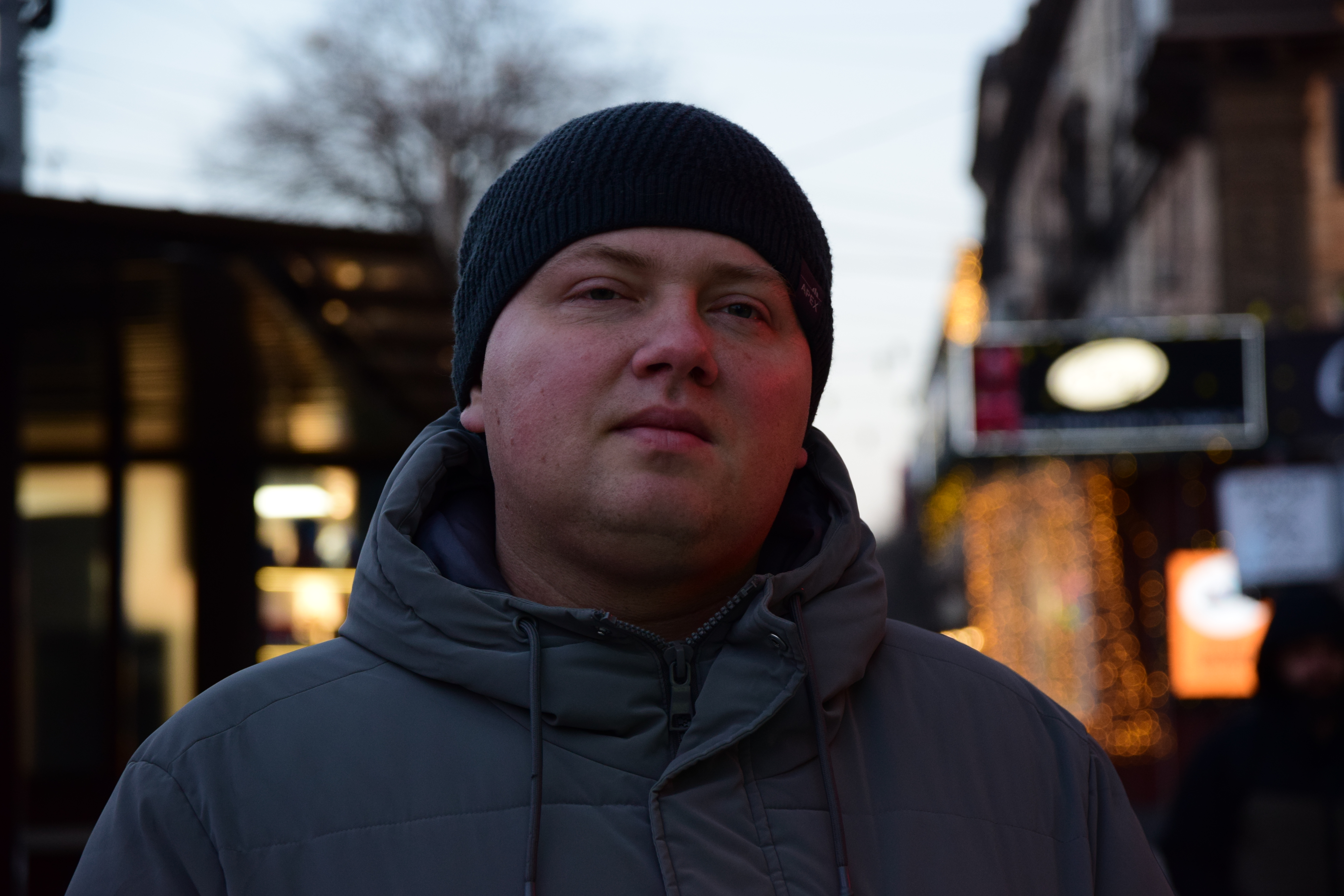
“From what I’ve observed, the shelling has intensified significantly,” he says. “As a result, psychological problems have increased. Local residents are gradually leaving. At the same time, people from parts of the region where the frontline is even closer are arriving. That partly offsets the population loss. If I’m honest, about half of my acquaintances are thinking more and more seriously about moving.”
Regina Kharchenko, secretary of the Zaporizhzhia City Council and acting mayor, says that every third high-rise apartment building in the city has been damaged.
“There are around 4,400 apartment buildings in Zaporizhzhia, and nearly 1,400 have sustained damage. Two districts, Shevchenkivskyi and Kosmichnyi, are closest to the frontline. The situation is especially difficult in the private housing sector. More than 2,500 private houses have been damaged, from shattered windows to severe destruction. People who spent their entire lives working at major industrial plants invested everything in those homes.”
What do you do when the density of shelling continues to increase? There is no simple answer—not for the authorities, not for residents. Rebuilding what may be destroyed again can seem pointless. But stopping repairs and support would effectively push people to leave and hand the enemy another argument.
The city runs support programmes for those affected, including the national eVidnovlennia scheme. Eight types of assistance packages have been developed depending on the level of damage. Private households can receive 58,400 hryvnias in aid, building materials or contractor work. At the latest council session, an additional 10 million hryvnias were allocated to the most heavily affected districts.
“We understand that reconstruction, whatever its scale, is still a bureaucratic procedure and a source of stress for people, not to mention the loss of loved ones,” Kharchenko adds.

Zaporizhzhia’s population has decreased significantly, yet the regional center now hosts 156,000 internally displaced people. Seventy percent of them are residents of Zaporizhzhia region from Melitopol, Berdiansk, Polohy, Huliaipole and other towns. Taking IDPs into account, the city’s population is once again approaching its pre-war level of around 700,000.
According to local authorities, in 2025 alone the enemy shelled civilian areas 90 times. Four hundred and twenty-eight residents sought medical assistance, more than 160 were hospitalized, and 12 people were killed. Over the course of the year, air-raid alerts have lasted a total of 86 days, five hours and ten minutes.
“Because of systematic shelling, people begin to migrate temporarily within Ukraine,” Kharchenko says. “If they have accommodation and work here, they may leave for a week to recover and then return. Heating and water supply in the city are stable. Even some Kyiv residents are coming here to ride out the cold.”
On weekdays, the city is less crowded than before the war. But at weekends it comes alive. In the cold months, cafés and restaurants are full, with people huddling closer together, lingering, as if trying to talk and warm themselves at the same time.
In parks, there are many teenagers and parents with children, even when sirens go off. Some walk quickly; others sit on benches, phones in hand.
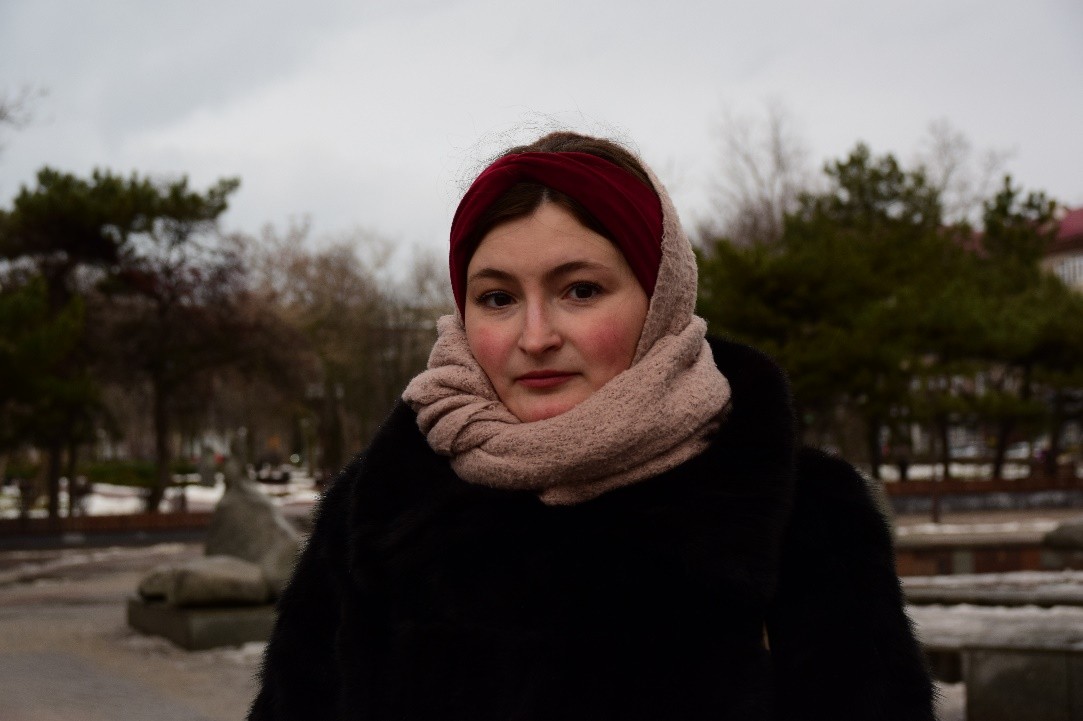
“You often see lots of teenagers and parents with children in the parks,” says Inna, a local resident. “It seems to me that cultural life is developing: creative spaces have opened, the cinema has been renovated. That adds beauty and gives people places to spend time. It’s necessary—it allows you to keep living and breathing. To find energy for the next day.
But the shelling has intensified. My parents live in the Shevchenkivskyi district, where the impact of Russian attacks is very visible. Many buildings are destroyed. Explosions are constant. Drones fly over the district every day.”
On the evening of 7 January, after a Russian strike on energy infrastructure, Zaporizhzhia and Dnipropetrovsk regions experienced a total blackout. Parts of Zaporizhzhia were left without electricity, water and heating; in many buildings, the lights went out suddenly, without the usual warning.
The city was plunged into darkness, but not for long. Local authorities and energy workers responded quickly. Some residents did not even fully experience the blackout, as power cuts had already been scheduled in their buildings. Within an hour and a half to two hours, electricity started to return.
“We had been preparing vigorously since 2024. All critical facilities have alternative energy sources: powerful generators, cogeneration units and fuel reserves. Staff were trained for a full blackout scenario. In December, we conducted drills so people understood how to deploy and connect everything quickly,” Kharchenko says.
Despite the worsening security situation, schools in Zaporizhzhia operate in a mixed format, with 97 institutions currently functioning this way. Small shelters and large radiation-proof bunkers have become part of the city’s daily security infrastructure. Nearly every school has effectively become a “resilience hub.” In total, 175 such centers operate around the clock, equipped with generators, fuel supplies, stoves, medicines, water and even secure radios.
Recently, residents have been able to check the location of the nearest shelters via the Diia app, crucial during mass attacks. But the city lacks enough modular shelters in high-traffic areas such as parks, bus stops and shopping centers. Missiles and drones arrive quickly; it is not always physically possible to reach cover. Some drones are difficult to detect even for surveillance systems.
Modular shelters are gradually appearing throughout the city, including some installed by the Red Cross—for example on Khortytsia island. During the early years of the full-scale invasion, small underground shelters were arranged in some parks. But they are insufficient, and some are unfortunately misused.
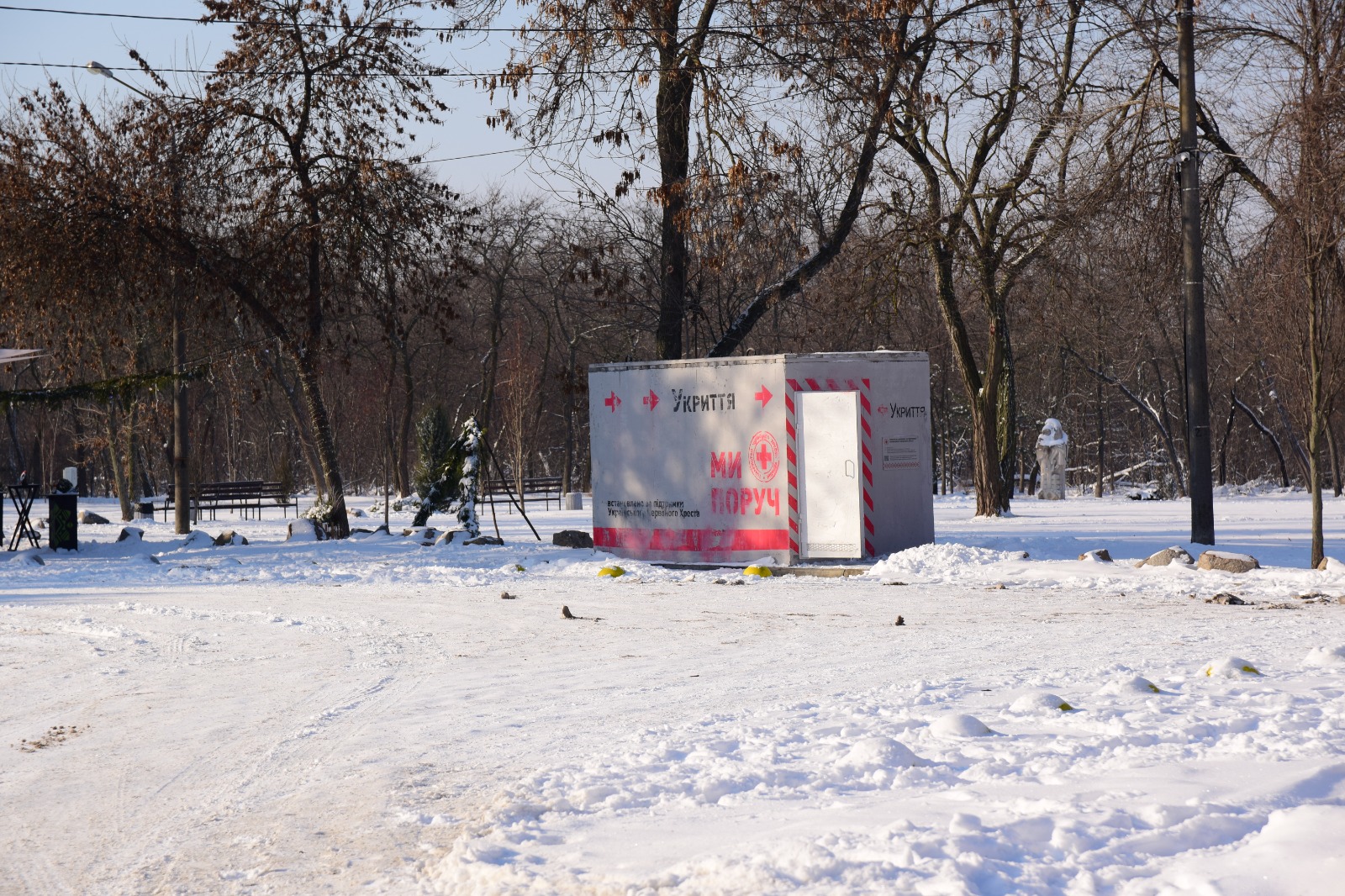
During prolonged power outages, “resilience hubs” and ordinary urban spaces become makeshift offices. In cafés, people work on laptops; in shops, queues form near sockets. Others work from facilities organized by the city authorities. Zaporizhzhia is learning to function even in darkness.
The operation of pre-school institutions is gradually expanding. Regina Kharchenko notes that kindergartens are not just educational institutions, but also a pillar of the city’s economic resilience. When one parent is forced to stay constantly with a small child, the family effectively drops out of economic life—people cannot work and earn properly.
“Organizing classes in a shelter is easier than ensuring the full daily cycle of a two-year-old in one. You need rest areas, play zones, learning spaces, places for naps and meals. You need to organize catering when kitchen facilities upstairs are not functioning. We have introduced catering services and are developing this direction. This year, we plan to build underground kindergartens and radiation shelters. They will be smaller: if schools are around 1,000 square metres, kindergartens will be about 500.”
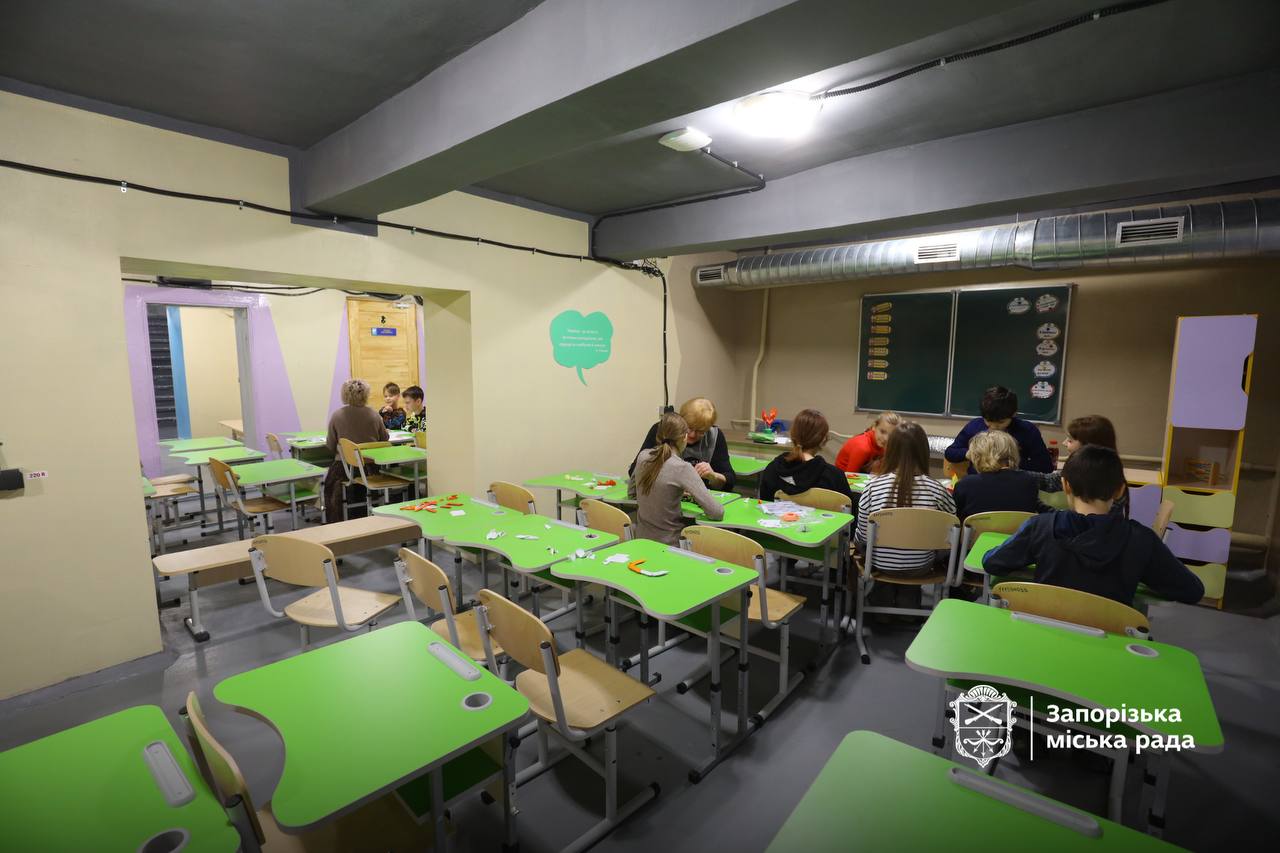
Serhii Myrhorodskyi’s daughter attends a school equipped with a shelter.
“Everything here is well organized, and there are opportunities for development beyond lessons,” he says. “In that respect, we are satisfied. The location is fairly protected. But when a child regularly hears explosions, it’s a huge stress. The most important thing for children is safety. If that is guaranteed, everything else works. But with the increase in shelling, we have to think about possible relocation—perhaps to the right bank of the city or region, or ideally to western regions, where a child can study without constant anxiety.”
At the same time, some residents criticize the authorities’ initiative to renovate playgrounds and improve public spaces. In a city under daily shelling, such spending seems inappropriate to many, with people believing funds should primarily support the military.
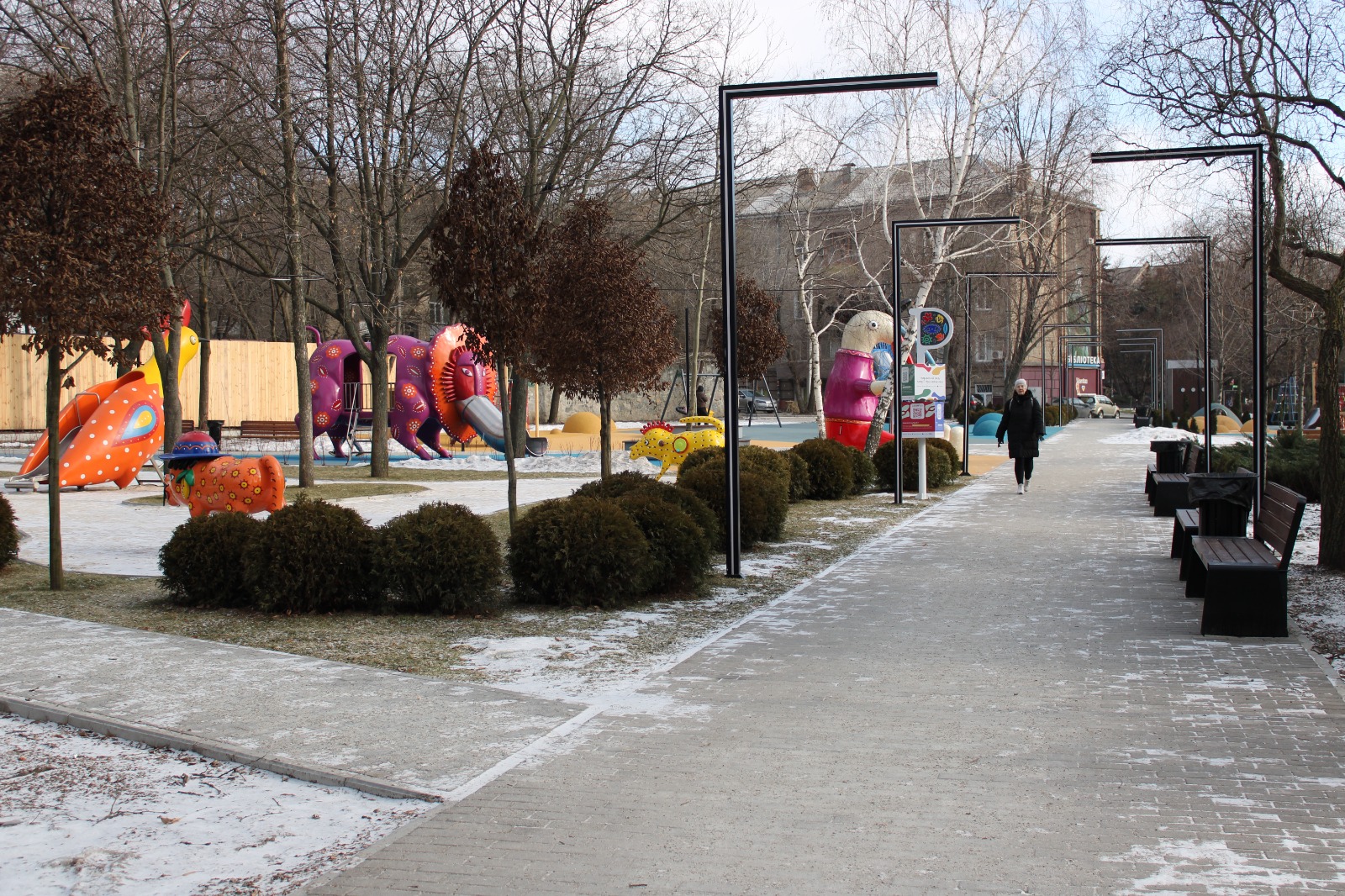
Kharchenko responds: “There is strong demand for local authorities to help the military. And we do—not only through subventions to military units, but through ongoing tasks we carry out jointly with them. At the same time, we must ensure jobs and the civilian space for which soldiers are fighting. Repairs and improvements are always necessary. Roads, parks, flowers, clean bins—behind all this is human labor. Hundreds of thousands of people live here. They also need points of support.”
According to her, there are many children in the city, but not enough modern, well-maintained parks for them, particularly in some residential districts.
“We have a local budget of 12 billion hryvnias. We are not the poorest community, despite the war. Why can’t we spend 30 million on improvement works? Even existing playgrounds require constant maintenance. If you don’t mow the grass, clean and remove rubbish, there will be no order or beauty. I have visited all the playgrounds and seen happy children and parents. Because the city and its people live here and now. Life cannot be put on pause until the war ends. Preserving normality is a way to support people—so that they stay, work and sustain Zaporizhzhia.”
Serhii notes that many establishments continue to operate in the city. But some closed at the beginning of the full-scale invasion and never reopened. Their signs still hang—reminders of another, pre-war life.
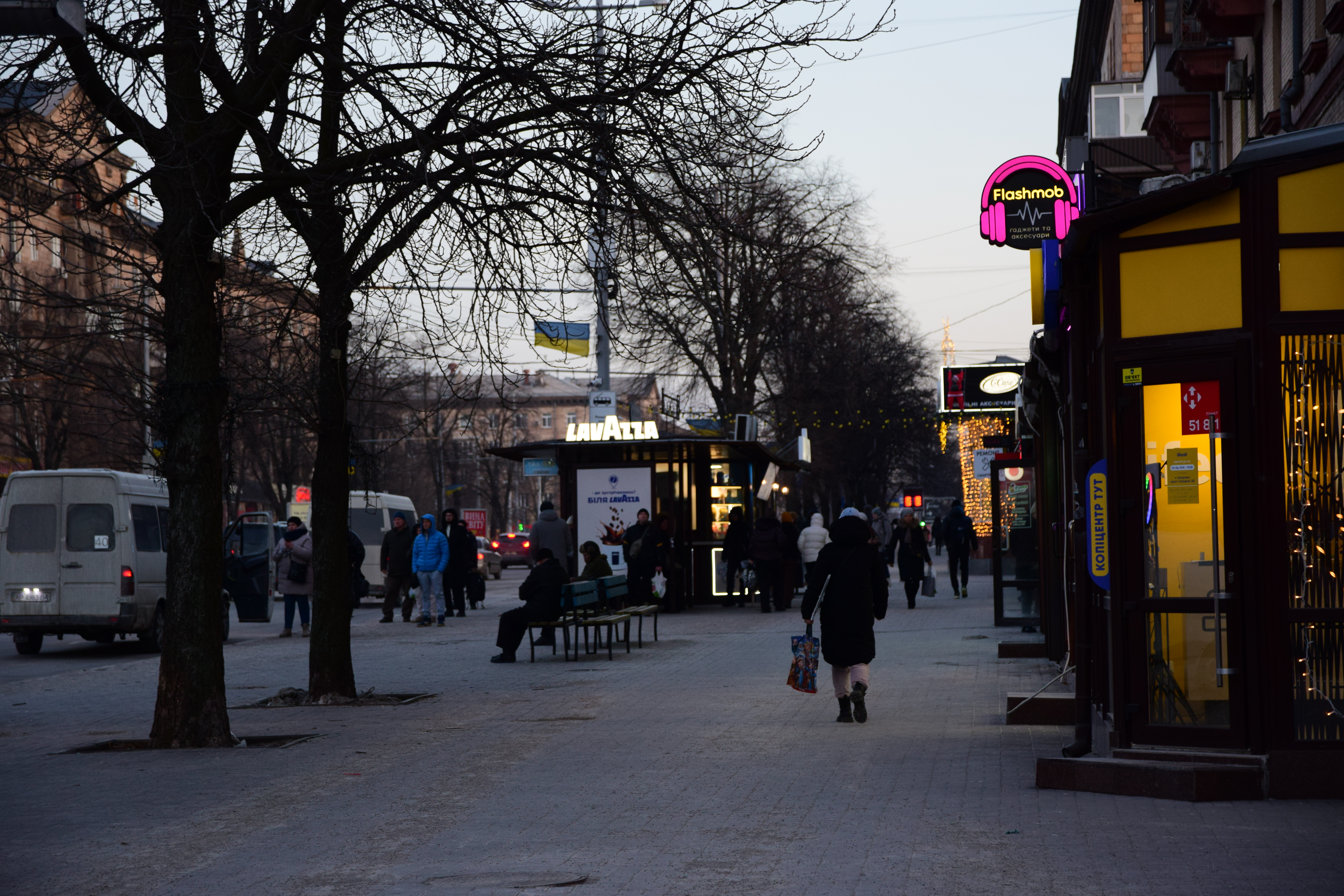
“There’s no shortage of places to go. Maybe they aren’t promoted as much as cinemas, theaters and cultural events. There are enough venues, but a lot of them are closed. For example, McDonald’s and other chains that left because of prolonged air-raid alerts. Perhaps incentives are needed to encourage them to stay.”
Inna, also a local resident, believes such places help people regain some strength and distract themselves, though budget debates continue.
“Perhaps it would be optimal if charitable foundations or grant funding covered this,” she says. “So that the city budget could focus directly on critical issues related to repairing shelling damage. That might help increase funds available for the military. But there is a certain balance that the authorities of a frontline city are trying to maintain.”
Among the urgent problems troubling residents across all districts is transport. In the evenings, bus stops empty quickly, and every minibus becomes a struggle for space.
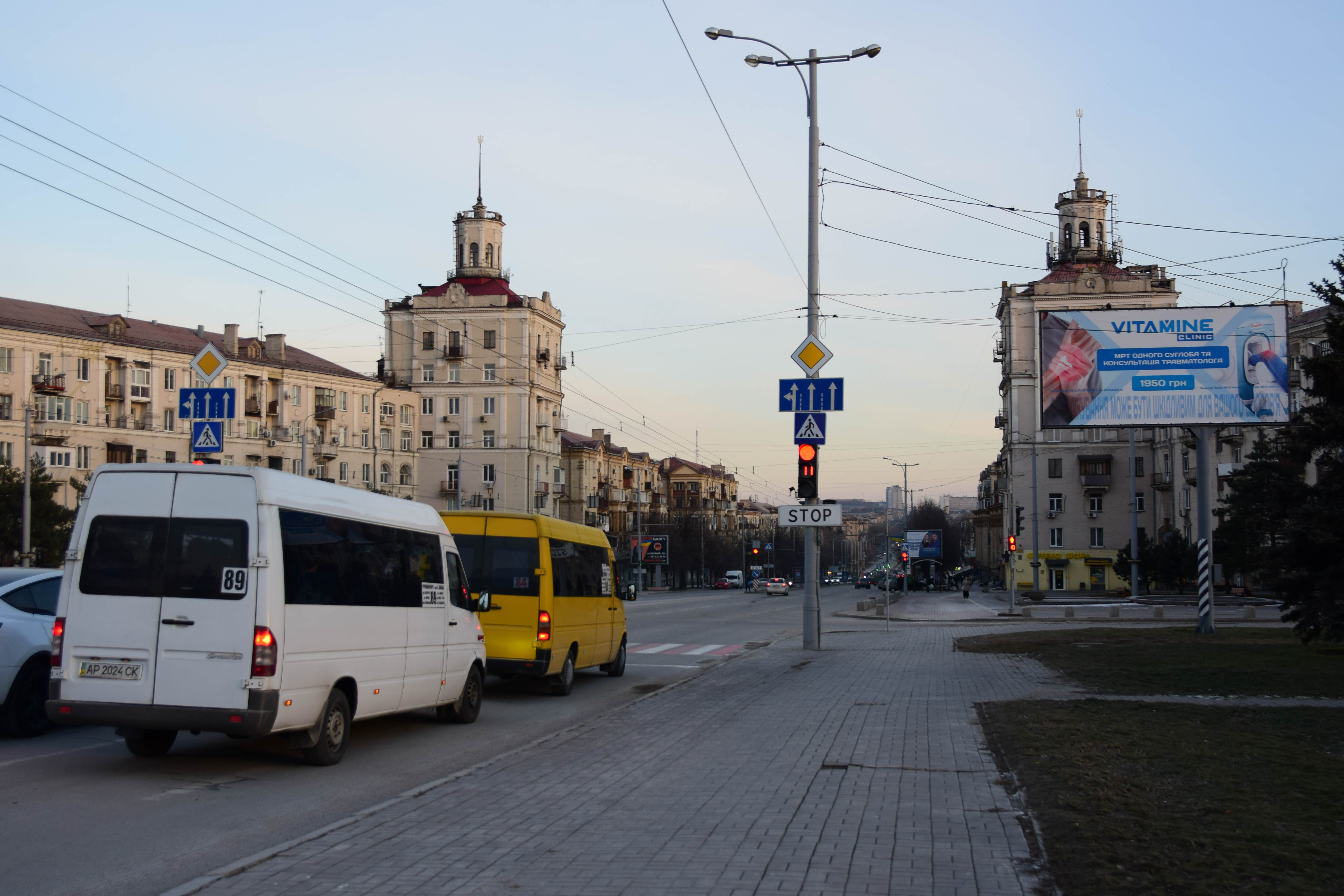
“It’s hard to get to residential districts after 8pm,” Inna continues. “Minibus schedules are unstable. In the evening it’s difficult to wait for one or even squeeze in. Municipal buses mostly follow the timetable; you can plan around them. But frequent air-raid alerts and proximity to the front make it impossible to fully resolve the transport problem.”
City authorities acknowledge these difficulties.
“We do need to expand municipal transport,” Kharchenko says. “Unfortunately, we cannot solve this completely right now, but we are trying. There are many private carriers operating under contracts. The city council does not have enough vehicles to replace them all. We lack large buses. First, drivers are still afraid of Territorial Recruitment Center officers who often stop minibuses. Second, temperature fluctuations. Third, economically unjustified fares—the price of fuel and ticket prices are incompatible. All these issues accumulate; they must be addressed.”
She adds that in 2025 new bus routes were launched, and additional vehicles were added to the most popular lines.
And what about staffing? This question arises increasingly often, especially after each strike, when people are urgently needed.
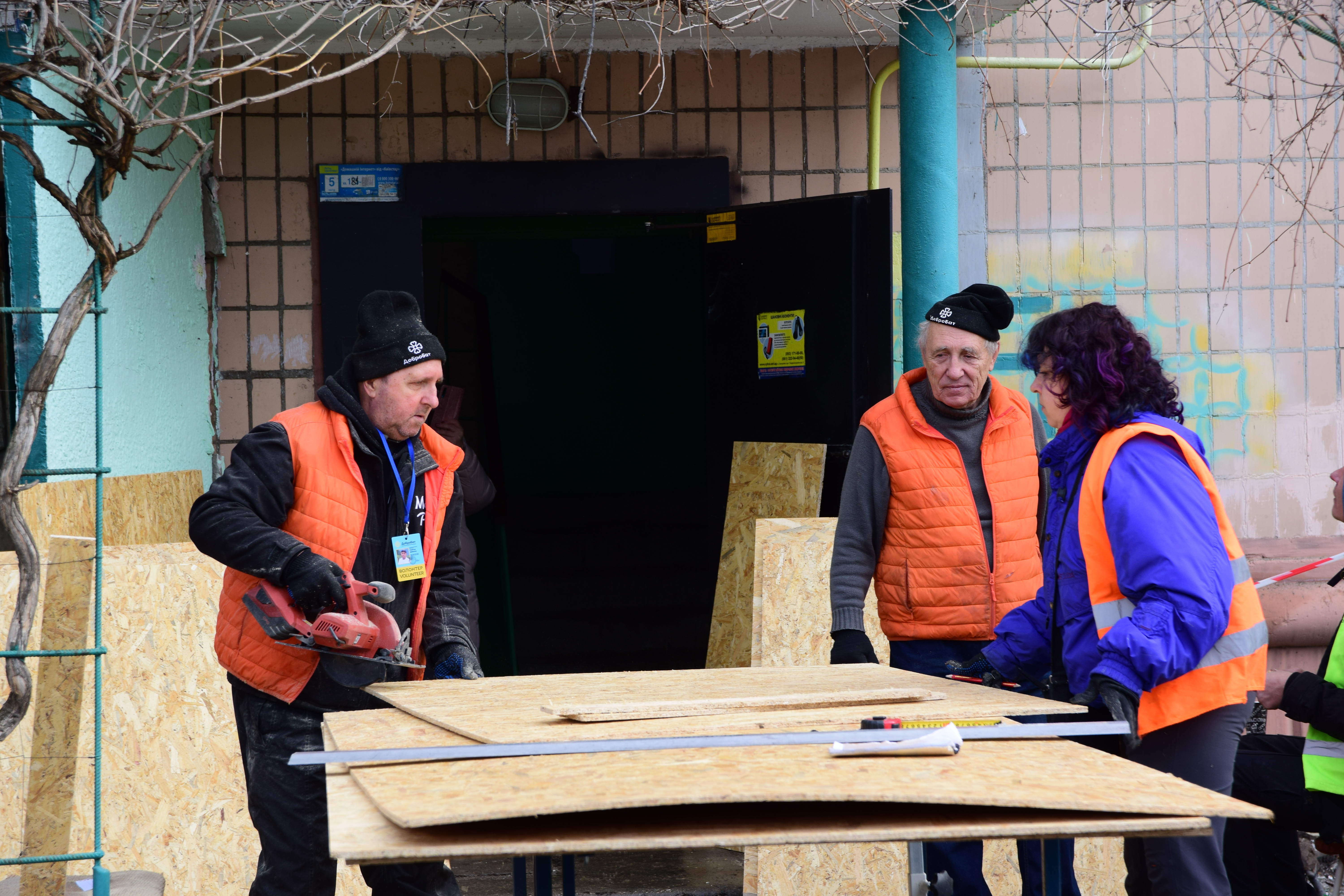
“We face a staff shortage across the board, from the Children’s Welfare Service to the municipal water utility,” says the acting mayor. “Despite mobilization exemptions and relatively attractive salaries, there is a lack of personnel. Electricians and plumbers are crucial professions. The city also desperately needs drivers. There are administrative issues to resolve. Ultimately, everything rests on people. Workers are needed at enterprises clearing shelling damage such as Zaporizhremservis municipal repair company, ELUASH road maintenance company, the emergency rescue service, the municipal specialized paramilitary service, etc.”
Because after every strike, someone must clear rubble, restore electricity, restart water supply, remove debris. And those people are residents too, going to work each morning under sirens.
Inna says that reports about Russian advances in the region and constant shelling create a persistent sense of tension. But despite this, people endure—not demonstratively, but daily.
“Of course, you constantly follow the news, trying to stay informed. But you still want to believe in something better. My parents live in a fairly dangerous district, yet they try to distract themselves by focusing more on work. In any case, they do not plan to leave. It is important for them to stay home; for them this is their homeland. They do not want to leave the city where they have lived for so long. And of course, they not only believe in the Armed Forces of Ukraine—they donate to trusted funds or acquaintances collecting aid for soldiers.”
This stance is not bravado. It is more an inner decision to live here while it remains possible, supporting the city and those defending it.
Many residents, like Inna’s parents, did not relocate during the full-scale invasion. Those who wanted to leave mostly did so in 2022. The majority stayed, each for their own reasons.
Some have housing and work here. Starting over elsewhere requires money—for rent, food, a new beginning. Not all employers can offer remote work. Older residents have lived here their entire lives and are not ready to leave, especially those in private houses with gardens or livestock. Some care for sick relatives. There were cases of people leaving, only to return—because this is home.
Today, around 700,000 people live in Zaporizhzhia. The city lies approximately 20 kilometers from the frontline. This is not a symbol or a dramatic number; it is a scale of responsibility.
Because the question is not only how the city lives under daily shelling, but what happens if the situation worsens. Where and how would hundreds of thousands be evacuated? What decisions have already been prepared? Is the state system ready?
Zaporizhzhia is today’s reality of a very close war. And it is important not to grow accustomed to that proximity.
Residents continue to work, teach children, support the military, donate and help one another. They do not want their city handed over to the enemy. They wait for strengthened defense, deoccupation, the return of prisoners.
And they choose to stay with Ukraine—each for their own reason.
Please select it with the mouse and press Ctrl+Enter or Submit a bug
 Follow on Telegram
 Login with Facebook
 Login with Twitter
 Login with Google