
 Support ZN.ua








Tribute from the war: how those in power claim Ukraine for themselves—and what we must remember so this never happens again

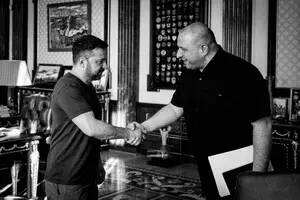
There are three categories of people. First, those who once joined Zelenskyy’s political cult and will never leave it—not even after seeing yesterday's photographs, released by NABU and SAPO, of the luxury complex whose interiors were personally signed off by former head of the Presidential Office Andrii Yermak as he was moving into the Dynasty housing cooperative. As this piece was going to press, Yermak was formally named a suspect. That makes three of the "investors" in these 1,000-square-metre mansions—former deputy prime minister Chernyshov, the president's friend Mindich, and Yermak himself—officially under suspicion, having between them sunk more than $9 million into their future homes, money NABU believes was stolen from the state. The fourth is shielded by the constitution for the remainder of his presidential term.
For people with critical faculties, neither the video about Yermak’s notice of suspicion nor the new batch of “Mindich recordings” published two weeks earlier offered anything new—they merely confirmed the suspicion that the characters gnawing on the bones of a country emaciated by war are quite as pathetic as they had thought. And finally, there are those who have been living through all of this without giving any thought to what is happening to the country. Despite the silence of the United News telethon and most of the million-strong Telegram channels fed by the authorities, word of mouth and YouTube have been spreading the new knowledge, pollinating this audience with scepticism—or with horror at the priorities of the people closest to the president. While society fought, donated, buried its dead, kept the army going, built drones, held the energy grid together and plugged the state's failures with volunteers and self-organization, those in power were building their own parallel system.
But for everyone—the well-informed and the newly awakened alike—there is now one principal question: what are we to do with this knowledge?
After reading and listening through the transcripts (these are official investigative materials, accepted by the High Anti-Corruption Court), any normal person feels like a patient with nausea and bloating whose every exit has been stitched shut. The only thing that can help is freeing the country’s body of its toxic government. But to change the government, you need elections. To hold elections, you need to end the war. And the date the war ends depends on Putin and, partly, on Zelenskyy (a Donbas-for-peace deal, which a majority of Ukrainians, according to the polling, still do not accept).
A Maidan now is not the answer. In a war of attrition, it could finish the country off. A junta is not the answer either: all our allies would turn away and stop sending the money that makes up half of every hryvnia we have. Only elections. Which means we are still in a cul-de-sac.
The “surgical division” (the codename used for the Presidential Office on the recordings) is not going to operate on itself; there is no one to correct the system of governance. That is a given. But Zelenskyy remains the supreme commander, and the outcome of the war, the negotiations and the West’s trust still hang on him. So God grant us all—the sane forces inside the state machine and, above all, the army and the president—the wherewithal to change things on the battlefield. And then, when the time comes, to remember to do two things: hand every last one of them their dues, and let our body turn all of this knowledge into the humus of memory. And to use it to make sure such a thing can never happen again.

So that any government Ukrainians elect in future will never again be able to build a parallel state in which the parliament is bought, the cabinet is assembled at a fire sale, and the only things of value are its own “Dynasties,” its own chosen few, its own interests.
For that, we need to remember several important things. Like commandments.
Point one. It does not matter who leaked the tapes. What matters is that it is the truth
There is no point trying to work out who leaked the “Mindich tapes” to journalists and politicians with the image of investigators. “NABU, at the Americans’ bidding, to weaken Zelenskyy”; or “Mindich, sulking that his elders took Fire Point off him”; or it was Herman Halushchenko’s lawyers, because of the whole crowd he is the only fall guy and is now held in pre-trial detention. You could even suspect the Russians: Halushchenko was not only the right-hand man of Andrii Derkach (a pro-Russian former MP later sanctioned by the US and granted Russian citizenship) during his reign at Energoatom; almost the entire patronage staff of Mindich’s back office consisted of people connected to Derkach.
At the Presidential Office, they are also considering a “Creator versus Creation” theory: that both Operation Midas and the new batch of recordings are the work of Ihor Kolomoiskyi, with Hennadii Boholiubov tagging along. While being questioned by NABU on the PrivatBank case, Kolomoiskyi offered the detectives advice on a great many subjects. He is a man who can serve up both hot dishes and cold ones.
The versions could be endless. But the answer to the question “who leaked the truth?” matters only to President Zelenskyy. The sanctions against former chief of presidential staff Andrii Bohdan (also Kolomoiskyi's former lawyer) and a fresh SSU case against Kolomoiskyi give an indirect clue to how the president is thinking. Because these recordings plunged us deep inside the system that runs the country — including parliament and government. With a very real Karlsson of its own (Mindich), who in our case lives on the roof of the state apparatus, and whom the Little Brother has allowed to eat someone else’s jam.

That is precisely why, once the tapes were published, the main squabble erupted not around their content but around who had distributed them, and how—which conveniently leads us away from what is actually on them.
The meeting of the parliamentary investigative commission chaired by Oleksii Honcharenko was telling in this respect. Former SAPO prosecutor Stanislav Bronevytskyi, who has been waging a campaign against NABU and SAPO and was the first to publish part of the transcripts via a Telegram channel close to the authorities, declared that law enforcement should not be leaking information to journalists, activists or members of parliament. To which Honcharenko, who had himself published material without disclosing his source, replied: “And who, then, leaked them to you?” “Sources in law enforcement,” Bronevytskyi answered.
It is not the scene itself that matters. It shows how rapidly the boundaries are dissolving between politics, the investigation, blogging, parliamentary oversight and information warfare. When the chairs of investigative commissions become simultaneously participants in the media circus around the very material the commission is supposed to be examining, that is no longer parliamentary oversight; it is a blurring of roles and a conflict of interest.
Even before Yermak’s notice of suspicion, there was already a growing sense that the government practises not only selective justice but a selective fight against corruption. The published episodes are almost entirely missing the people who were regulars at Mindich’s flat: not Yermak, nor Arakhamia, nor deputy head of the Presidential Office Tatarov, nor the keeper of the Economic Security Bureau back office Vitalii Hahach, and so on. But this is a question not only for those who released the tapes and failed to put sufficient emphasis on a whole row of key figures, but also for those who selected the material for court. One of the missing surnames, however—Yermak—has now appeared in a fresh episode of the official investigation. Which confirms that the recordings we are talking about now are only a small part of the entire mass of NABU material seized from Mindich’s flat.
A revealing detail: it was Tsukerman who introduced Tatarov to Mindich. They had known each other well since the days of the cash-conversion centers under the wing of the interior ministry. In time Tatarov became the curator of the law-enforcement system and, after Operation Midas, quickly worked out that a metered drip-feed of information can do wonders for weakening the eyesight of part of the anti-corruption establishment.
Point two. The system disposes of the less valuable, but never gives up those closest to it
Yermak’s resignation, the change of prime minister and head of the Presidential Office, the reshuffling at the defense ministry after Operation Midas began—none of it has changed anything. Because none of them are the key figures in the corruption story. What remains is the tax service, financial monitoring, the state-owned enterprises and the “tollbooths”, the other back offices (in the already-exposed back office of MP Kysil, the conversations with Serhii Shefir and Davyd Arakhamia could give what the public has heard on the Mindich tapes a run for its money). Yermak has not gone anywhere. He is on a direct line with Zelenskyy, Kuleba, Poklad, Tatarov, Pyshnyi, Syrskyi, Pronin. What more do you need to run a country?
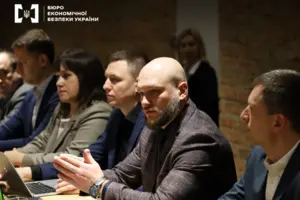
At the SSU, only Maliuk has been removed, while the commercial pillars beneath him, the ones who betrayed their boss in time, have been promoted in rank. And the graft of the former head of the Defense Intelligence, Kyrylo Budanov, neatly stitched onto the body of the Presidential Office, will ultimately fail; his departure is only a matter of time.
The president has been silent for three weeks now. As though yet another tape-bomb had gone off somewhere very far from the bunker, where an entirely different life is going on. We have been the witnesses to that other reality in wartime, as we listened to and read the transcripts. Why is the government silent? Because it understands that until the war is over, we can do nothing to it or with it. Because the government worked out long ago that every big news story is quickly erased by the next. Especially if you toss in an army reform with demobilization, or showily troll Putin with “permission” to hold a parade.
(2).jpg "Meeting in the President's Office, January 2026")
All this while, the answers have been arriving sideways, through back channels and muttered asides. Asked in the Presidential Office chat by journalist Olena Trybushna about the Dynasty cooperative, presidential adviser Dmytro Lytvyn snapped in the early days of the scandal: “No comment.” That, essentially, was the end of the “democratic” chat of the Presidential Office, which had been ostentatiously opened up to journalists after Yermak retreated into the shadows. The imitation of openness does not live long. Mykhailo Podolyak went so far as to call the entire High Anti-Corruption Court into question, declaring that it remained to be seen whether the recordings and transcripts were legitimate at all. Everything else: “No comment.”
A little later, Volodymyr Zelenskyy gave only two oblique signals that he knows how much the informational wounds it has sustained are hurting society—but that no help is on the way. The promised privatization of Sense Bank, whose supervisory board still includes Yermak’s people, looks like a demonstratively symbolic gesture. And the president’s black spot on Andrii Bohdan, for old business with Russian gas, looks like a signal: the government is not going to give up its own and will be punishing “traitors.” By the rules of the underworld, not by the law. So everyone remembers who is master of the house.
Zelenskyy’s reaction to the notice of suspicion against Yermak—the closest person in his circle — will be the final signal of a choice he made long ago. Ironically, that choice is shielded by the law on NABU itself: his predecessor Petro Poroshenko made sure that a sitting president could not become the target of an anti-corruption investigation.
Point three. Corruption has fused with results, and that chain has to be broken
A throwaway joke from Mindich at breakfast with former defence minister Rustem Umerov—when the waiter asked, "Water with gas?" and Mindich quipped, "No, gas is for the country"—is a fatal diagnosis of the entire system that has been built. To them it is funny; they will pack up and leave. We will not.
Dropping in on the president’s team back office on his way to work for the state, Umerov—a man with the highest level of access to state secrets—was reporting the details of the defense of a country at war to Mindich, a citizen of Israel. The same man is even now the secretary of the National Security and Defense Council and the head of Ukraine’s negotiating delegation in the United States. That is, Umerov’s connections in the Middle East and his access to the private funds of the Gulf sheikhs make him an indispensable operational instrument for the Presidential Office. At that altitude, the voices from the trenches do not carry.
We listened attentively as Umerov and Mindich discussed the sale of Fire Point, and we now know for a fact about the preferences this company enjoys. No one, of course, allocated 311 billion to it—the figure in the transcripts is a wish list. What is more, Serhii Pashynskyi’s Ukrainian Armoured Vehicles (Ukrbronetekhnika) LLC received more from the state budget. This does not, however, refute the version that “if you water one spot for long enough, you can be sure a bush will grow there.” It has grown, it is producing results, and it is expensive. That, in fact, is the main value of the company, which its beneficiaries are continuing to capitalize on and reinforce, so as to be able to sell it profitably down the line. Or to become a strong white-market player in the arms trade, fattened on your taxes and mine. A nice continuation of any political career.
The tragedy of all this is that corruption has fused with results. Any thoughtless blow at Fire Point—any nationalization in the middle of a war—would be a blow to the country’s defense capability. Which is precisely what crisis managers at the Presidential Office and certain “authoritative experts” are trying to exploit, while turning a blind eye to the public significance of what has been published. It is naked political technology. But corruption does not help win. Because before Fire Point there was a “tollbooth” at Energoatom: Russia was shelling the power grid while the president’s friends were carving up kickbacks from contractor firms that were supposed to be sheltering the country, in the literal sense of the word. Let us also note that those companies were silent before, are silent now, and intend to go on being silent. And until they stop doing that—until business finds its voice—there is not much we can change about corruption.
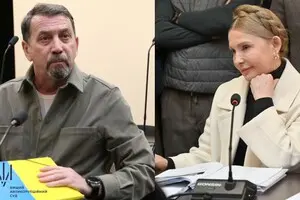
The official beneficiaries of Fire Point are known. Mindich is among the unofficial ones. According to our information, he came to Ukraine last autumn precisely to settle the question of the company. But it turned out not to be his. Just as Yukos was not Khodorkovskyi’s. Fire Point is the only company whose name President Volodymyr Zelenskyy mentions in all his negotiations, calling it the flagship of Ukrainian deep-strike and missile-building. In other words, the head of state is popularizing Flamingo—a missile from a private firm—rather than, say, the Neptunes of the state-owned Luch design bureau, which no one is supplying with foreign investment or plum government contracts.
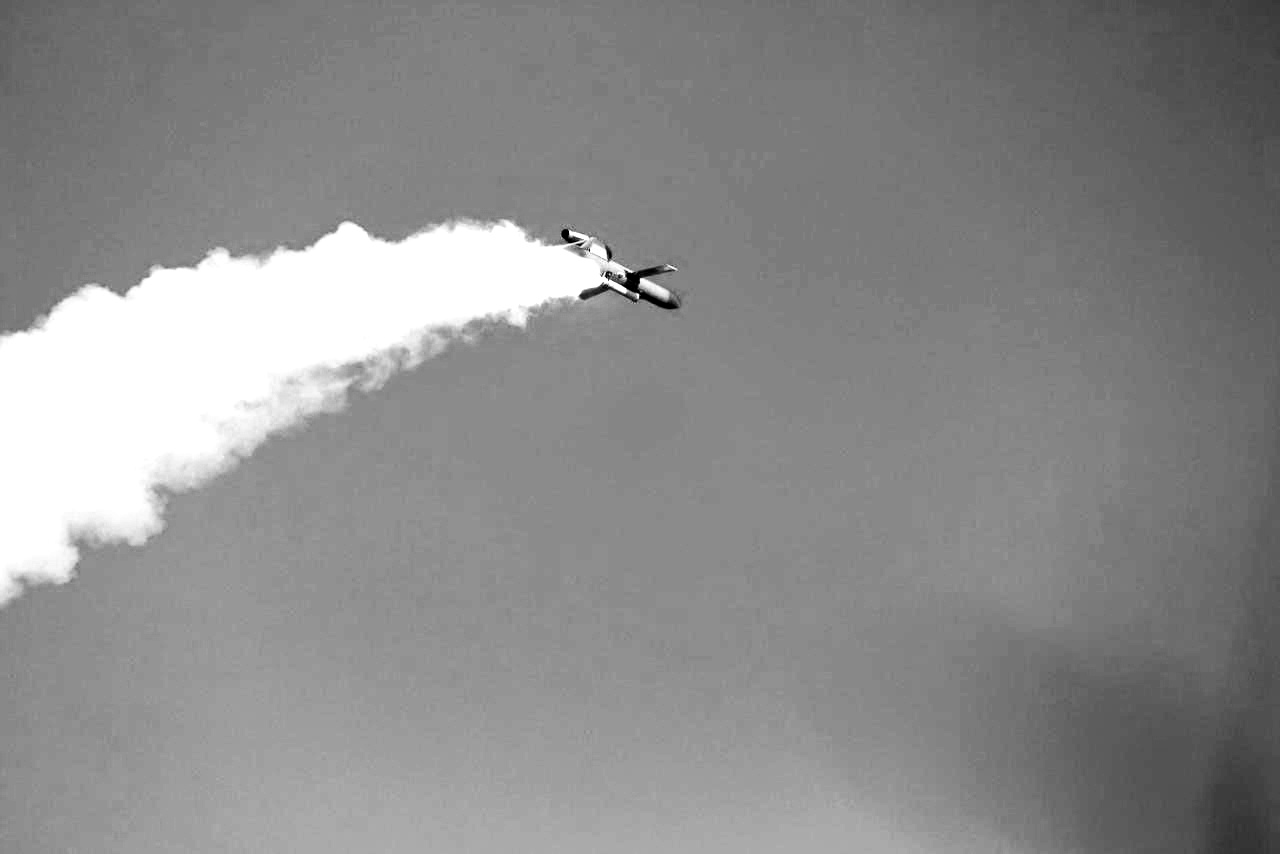
Breaking into outside markets—some of them very wealthy ones—is a promising direction. That is why Umerov will not be removed from anywhere. FP is already perceived inside the system as a company being lobbied at the very top. So the country’s transition to war footing has indeed taken place. Only it is private interests, not the state, that are throwing the switches.
Point four. The SSU did not stand up for Ukraine's interests
The SSU has systematically failed to react to critical threats—from the Bakanov and Naumov story at the start of the invasion to the existence of Tsukerman’s back office one wall away from the security service’s own safe house. Whereas NABU is still required to prove the corruption component, the SSU is required by law to react at the very level of the architecture of contacts dangerous to the state. The defense minister has the highest level of clearance. Umerov plainly did not visit just anyone at home to discuss state procurement—including his informal meeting with the director of the FBI in 2025. No one knows what he said there. No one knows what the president’s directives were, or whether there is a protocol of the meeting. But people ought to.
No one in this country has stopped to think about which network Andrii Derkach received his Hero of Russia for. Plainly not the Hlukhiv constituency. Many people in this back office were connected to Derkach, as the transcripts confirm, to say nothing of the fact that the bookkeepers lived in his flat. Which means that people from the Kremlin agent’s network had been sitting for years at the heart of the system that ran a country at war. The SSU did not notice it then. And it does not notice it now. Even though wartime theft is treason against the homeland.
There is no reaction from the security services of a country at war to the statements of businessman Serhii Vahanian. The point is not that his own record is hardly spotless, but that he has spoken publicly about everything that went on inside the SSU under Bakanov and Naumov, including the surrender of territory. And he has produced evidence.
Nor is anyone investigating the fact that on his last visit to Ukraine, lasting three days, the curator of the judicial system Andrii Portnov met Mindich twice—once at the flat, once outside the city. Which makes those meetings an important part of the context of the final months of Portnov’s life. Perhaps, if Mindich does come to Ukraine, as he is promising Mykhailo Tkach he will, he will tell us what he and Portnov discussed.
The SSU is supposed to be a guard dog for our interests and our security, not a gun dog dragging shot game to its master. And until it is, no victories at the front will guarantee security in the rear.
Point five. There is a contradiction: NABU cannot be rushed—and yet it cannot be waited for either
Tension around NABU and SAPO investigations has been building for months. “Where is Yermak’s notice of suspicion?” became a trigger for society, which wanted things to move faster, and for the anti-corruption bodies, which needed more evidence. And the pressure from those in power did not let up. NABU detectives Mahamedrasulov and Husarov are under investigation. There is a treason charge against SAPO head Klymenko ready at the SSU; and from the UAE, witness Khrystenko—"an FSB agent influencing NABU and SAPO"—was brought back personally by first deputy [head of the SSU] Poklad. The deal for his return was struck at the level of the top officials.
By force of habit, many in Ukraine still believe that NABU enjoys colossal support from the United States, which has influence over the policy of this anti-corruption body. But it is worth remembering that the administration in America has changed. And the fight against corruption is plainly not its priority. Europe is allergic to corruption—but we are its forward unit and main shield at this stage. Our resilience consists in resisting Russia, and the chance to keep on helping us is what forces part of the European establishment to shut its eyes to what is happening inside the country.
There are therefore grounds to suppose that European partners have been concerned, simultaneously, with two things—corruption in the president’s circle and in the parliament, and an excessively active NABU. The logic is simple: mass notices of suspicion against Servant of the People MPs could erode the trust of Western electorates in Ukraine. And Zelenskyy, in Europe’s eyes, is the guarantor of stability and continued defence. Corrupt, but predictable.
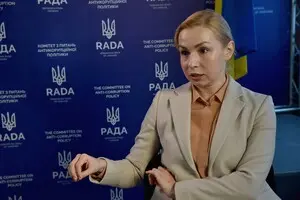
A separate question is how NABU itself, caught on the tightrope between government pressure, inflated public expectations and the extreme caution of its partners, assessed its own room for manoeuvre. And which line it chose for itself. Whether it considered carrying on the offensive of the investigation its priority—or, instead, reined itself in.
At some point NABU’s public activity began to look too much like publicity. NABU and SAPO listened to society and stopped publishing video from the tapes, while representatives of the anti-corruption side split over the reasons. “There's a deal with the Presidential Office in the air,” said some. “Chernyshov got his notice of suspicion four months after the searches. It’ll come,” insisted others. It was in this rift that the tension of waiting was building up. Yesterday it was, in part, released.
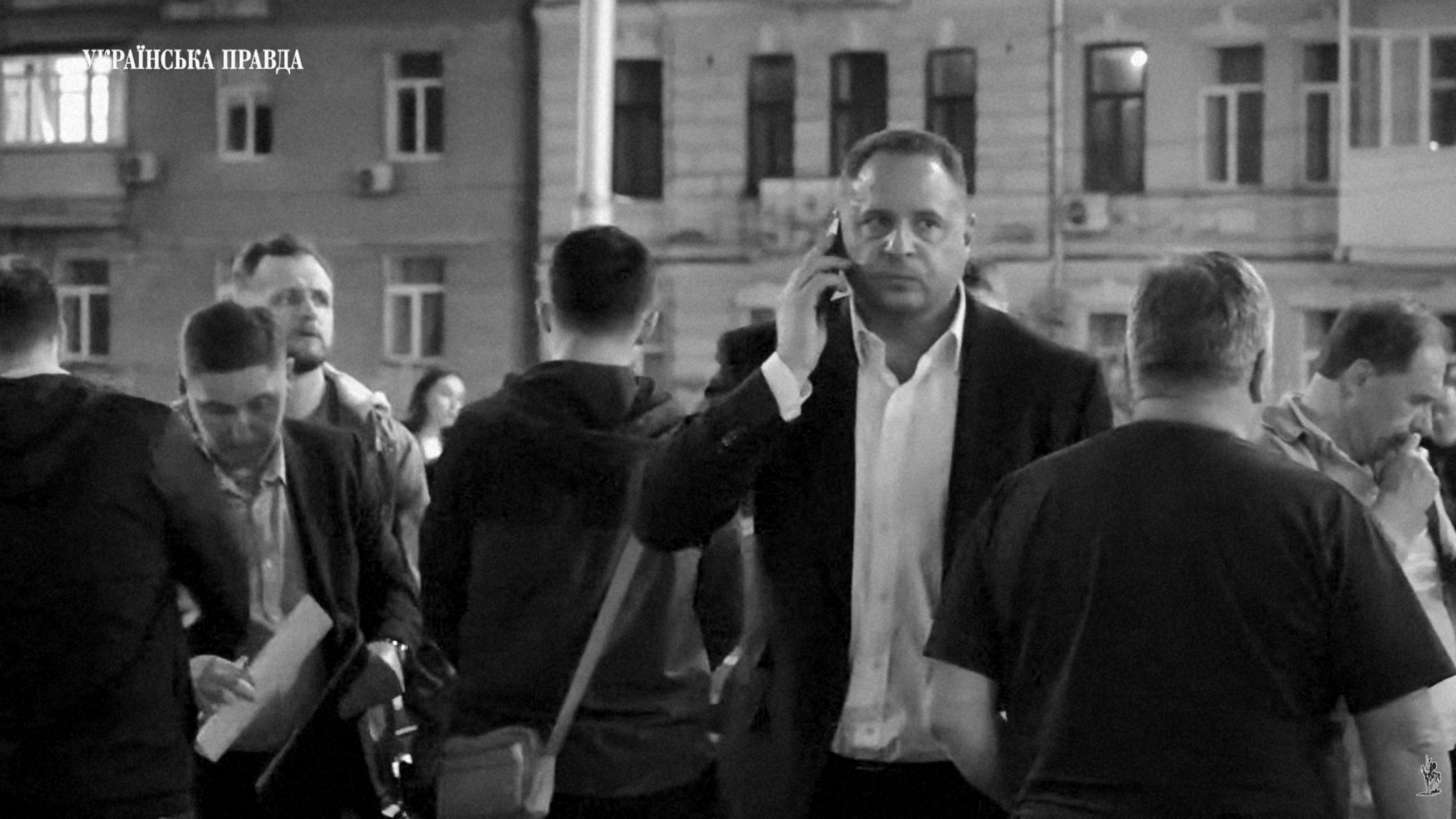
Everything has now been said about the body of transcripts attached to the case files at the High Anti-Corruption Court. Whole volumes were in the hands of the defense and were circulating from hand to hand among interested parties like samizdat once did. At some point, this story had to become public. And it has.
According to our information, the problem for NABU was precisely one of context: isolated fragments of conversation, without the full picture, did not provide a sufficient evidence base. And this explains why it is dangerous to rush an investigation. The anti-corruption bodies have their own procedural deadlines, and they are up against the sharpest and most knowledgeable defense lawyers (recall the case of the hacker lawyers). When detectives rush, they make mistakes. Sometimes fatal ones—as in the story with Mariia Berlinska, when a detective’s misinterpretation of recordings damaged her reputation.
But let us remember another thing too: the publication of the recordings has objectively changed NABU's and SAPO’s position inside this story, regardless of how exactly the material became public. And even if we suppose that some of the leaks were coming from the anti-corruption bodies themselves, they are now facing direct and uncomfortable questions of their own, alongside Yermak: where is the notice of suspicion for Umerov? For Arakhamia? Pronin? Tatarov?
At the same time, if that is the case, NABU can be suspected of a very clever play. On the one hand, publication of the tapes will hardly improve relations within Zelenskyy’s inner circle. If the lovers fall to quarrelling, only NABU stands to take pleasure in it. Hearing what your accomplice is saying about you behind your back is quite the motivator. And so the question now is: which of the suspects will be the first to start talking? Before the presidential election or after?
On the other hand, publication has untied NABU’s hands: there is now something to say to that part of Brussels which recommended not creating problems. Society knows everything, and it is impossible not to react. The speed of that reaction is a different matter.
Because the procedural side of this story has to be kept separate from the political. The political assessment always runs ahead of the procedural, and that is normal. What is obvious to society cannot always be proved quickly in court. The public's request is one: punish. NABU's job is to prove. To a court, above all. Resignation is not a verdict. And a notice of suspicion is not yet a fact of resignation. Yermak, without a notice of suspicion, was out, while Kyrylenko, with one, has a plum job at the Antimonopoly Committee.
But NABU cannot afford to drag its feet either—and that is the central contradiction. Rushing the investigation is dangerous. But when elections are impossible, a Maidan is impossible, the coming to power of disgruntled military men is impossible, the anti-corruption bodies remain the only valve for letting off steam. And they were silent until yesterday, just like Zelenskyy. Now it is clear that the heads of NABU and SAPO decided to walk into the parliamentary commission’s hearing on 14 May with a concrete result, rather than with verbal excuses. But all that time, their silence was being interpreted with relish by pro-government forces—and with disappointment by everyone else. When more than 80 percent of people are convinced that the investigation of corruption cannot be put off until the war is over, NABU and SAPO remain the only hope for justice. And that is a colossal weight and responsibility.

Let Klymenko and Kryvonos fight off the authorities, while the detectives and prosecutors behind their backs go on doing their work. Without the right to wait forever. Because society does not only remember, doing the work for the future; it also waits. It is bursting with the knowledge of injustice.
Point six. The only people who can find a way out are us
When ZN.UA first appeared, and was a pioneer of investigative journalism, politicians were ashamed to steal. Almost 30-odd years on, they are ashamed not to steal, because otherwise they feel like mugs. Which tells us one thing: all this time we have been heading the wrong way.
With one hand Zelenskyy pulls us along on the international stage; inside the country, he is drowning us. And as long as this system retains control of the country, you cannot change it from within. If you have a little strength left, watch, take it in and remember. Because we chose this government ourselves. And we ourselves failed to think about a great many things. We failed to factor in the war that had already been going on since 2014, for which, in essence, we did not prepare, naively trying to avoid its continuation. We failed to factor in power, which cannot come from nowhere and with nothing. Even if its leader rides into politics democratically on a bicycle.
.jpg "A still from the film «Servant of the People», featuring Vasyl Holoborodko—played by future Ukrainian President Volodymyr Zelenskyy—in the role of the president")
We cannot turn away from our own responsibility. We have grown used to treating elections as entertainment rather than as a decision. And we keep reproducing the same quality of government from one cycle to the next. If we want a qualitative change, then every guilty party has to go to prison; everyone who stole has to give back what they stole to the country, together with their families’ confiscated assets; everyone who helped to leak investigation data to the suspects, who helped them flee, who waved them through at the border, who put up murky bail, must likewise face criminal punishment. So that every future government takes its inoculation and absorbs the inevitability of punishment. Then, after the war, we shall have a chance at a new country, rather than at a bled-out version of the old one.
Power should proceed from thought. From experience. From values. That is what we are fighting Russia for now. We know what we ought to be. All that remains is to become it.
If you have more strength than that, then do everything you can for the country. In your family. At your workplace. Honestly. Because just as every soul that has gone up to the sky from a trench makes us stronger, so our honesty in the rear gives us a chance of a future.
Let us remember. And not repeat it. While we still have the chance to say all this out loud.
Please select it with the mouse and press Ctrl+Enter or Submit a bug
 Follow on Telegram
 Login with Facebook
 Login with Twitter
 Login with Google