
 Support ZN.ua








The Troublemakers: Who We’ll See When Orbán’s Shadow Fades

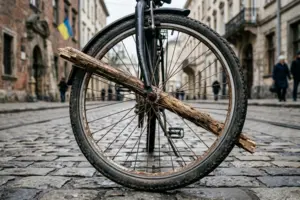

However much the results of Hungary’s parliamentary elections may encourage us, it is pointless to expect Ukraine’s dealings with the European Union to become cloudless from here on. For all that the overwhelming majority of EU countries publicly declare comprehensive support for Ukraine and condemn Russia’s actions, when it comes to the crunch, that “comprehensive” support often turns selective, and “condemnation” begins to look more like condoning. It is not only a Hungarian fence that stands between us and a cloudless future in the European family. There is a Slovak fence there too, a Brussels wall, a Greek dam and a French moat. Within the Union there are plenty of countries whose politicians resist the EU’s attempts to help Ukraine and make life harder for Russia. Some openly sympathize with Putin’s regime, some have fallen victim to Russian propaganda, some are guided solely by their own country’s economic interests, but one way or another they play into Russia’s hands by weakening Ukraine.
Even Péter Magyar, the winner of Hungary’s elections, will more than once unpleasantly surprise both Kyiv and Brussels. Once the Druzhba pipeline is launched and Russian oil begins flowing to Hungary, the presently progressive politician will have to resist a great many temptations if he is not to turn into Orbán 2.0. Orbán, too, was once a progressive reformer in his youth. Worst of all, Orbán has handed Magyar ready-made infrastructure for building a cozy quasi-autocracy, complete with all the necessary instruments and interested influence groups. So all we can do is hope that this chrysalis eventually turns into a beautiful butterfly rather than a dung fly.
Slovakia
Robert Fico, meanwhile, completed his metamorphosis long ago—not into a butterfly. And he will certainly not abandon attempts to complicate Ukraine’s cooperation with the EU. Before his return to power, Slovakia had been one of the most active donors of military aid to Ukraine.
In November 2023, Fico’s government officially rejected a 14th package of military assistance to Ukraine worth more than €40 million. Since then, Bratislava has stopped transferring weapons free of charge from its own stocks, limiting itself to commercial contracts and humanitarian aid. Slovakia also refused to take part in loan guarantees for Ukrainian borrowing and firmly protested against European Commission proposals to provide Ukraine with loans financed from the profits on frozen Russian assets, if that money was “intended for military needs.”
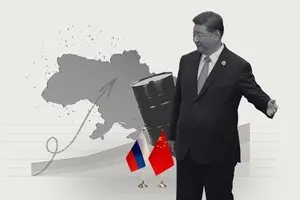
The absurdity reached its peak in investigations launched by the Slovak government against the previous administration over the transfer to Ukraine of MiG-29 aircraft and S-300 air defense systems. In total, the Slovak prosecution service opened four criminal cases related to military aid to Ukraine. Three have already been closed for lack of evidence of any crime. Still under investigation is the transfer of technical materials for the S-300 air defense system to Ukraine’s military attaché; the documents have been classified as “top secret,” and according to investigators this amounted to espionage. Yet, according to Slovakia’s former defense minister, the transfer of those materials was an integral part of the handover of the S-300 system to Ukraine at the start of the full-scale invasion.
Slovakia has also repeatedly blocked or delayed the adoption of sanctions against Russia. A fresh example came in March 2026, when Bratislava demanded that Alisher Usmanov and Mikhail Fridman be removed from the sanctions lists, threatening to block the extension of the entire sanctions regime. At the very last minute, Fico did in fact unblock the sanctions, dropping his demands.
And although Brussels generally manages to force Fico’s hand in the end, there will be no shortage of nasty surprises from him. Worse still, the electorate that brought him to power entirely shares his zeal. Among Slovaks overall, about 33 percent want Ukraine to win, while only 14 percent would welcome a Russian victory. But among voters of Fico’s party, Smer-SD, the share waiting for Russia to win is 35 percent.
Belgium
Belgium officially supports sanctions against Russia and aid to Ukraine. Even so, it was Belgium that played the decisive role in slowing down the mechanism for using frozen Russian assets for our benefit.
Belgium happens to be not only the heart of the EU, but also of the global financial infrastructure, in which the Brussels-based central securities depository Euroclear occupies a central place. It is there that the lion’s share of immobilized Russian assets ended up, and so Belgium itself has been subjected to chronic legal and other pressure from Russia, which is doing everything it can to ensure that its frozen money does not reach Ukraine.
From the outset, Belgium has opposed the use of Russian assets, putting forward new legal and financial conditions and demanding guarantees from EU countries that they objectively cannot provide. In 2025, Prime Minister Bart De Wever refused to support the EU proposal to grant Ukraine a €140 billion loan financed not by the Russian money itself, but only by the income generated by the assets held at Euroclear. The €90 billion loan we are now waiting for is not even Plan B, but Plan C. None of them would have been necessary had Belgium been more accommodating.
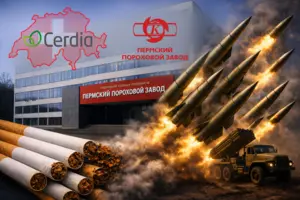
On the one hand, the pressure on Belgium is obvious. In December 2025, the Central Bank of Russia filed a claim in the Moscow arbitration court against Euroclear seeking to recover 18.2 trillion rubles. In March 2026, it filed a case with the EU Court of Justice in Luxembourg, challenging the decision to freeze the assets indefinitely. In addition, around a hundred lawsuits from private investors against Euroclear are pending in Russian courts. According to The Guardian, Russian intelligence services also intimidated Belgian politicians and financial executives, threatening them with “eternal retribution.”
On the other hand, Euroclear is currently earning roughly €5bn-€7bn a year from investing Russian money, whereas without it it would bring in no more than €300mn. Yes, part of that income now goes toward helping Ukraine, but even the €1.5bn-€2bn Euroclear keeps is many times greater than its prewar earnings. That pebble in the polished shoe is evidently what makes Belgium’s gait so uncertain.
Greece
While the Belgians are embarrassed to speak openly about their selfish interests, the Greeks have made exactly that argument central. Since Greek shipowners control a significant share of the world tanker fleet, their role in countering Russia’s “shadow fleet” is decisive. Yet Athens persistently blocks or waters down any measures that would restrict the transport of Russian oil, supposedly in order to protect its maritime sector. In practice, that has delayed the tougher next phase of oil sanctions under the 20th package. Together with Malta, Greece also blocked a proposal to replace the price cap on Russian oil with a full ban on related services—maritime, brokerage, insurance, cargo handling. Unlike northern European countries, these states are in no hurry to seize—or even refuse entry to—“shadow” vessels.
Last year, for the first time since 2022, Greece blocked an EU proposal for tougher restrictions on issuing visas to Russian citizens because Russian tourists matter to its economy. The European Commission also noted that Greece and Malta lagged well behind other EU countries in actually freezing the assets of sanctioned individuals.
Yes, Greece does transfer weapons to Ukraine and generally listens to Brussels, but Russia’s influence on the country—both on political forces and on economic circles—is considerable. And in the most principled question of all—countering the “shadow fleet”—money is still defeating conscience.

France
France is a joker that, depending on the situation, is either a trump ace or a lowly two of spades. The broader problem is that, influential though it is within the EU, France never takes an ironclad position. Today it serves haute cuisine, tomorrow it is austerity on a plate.
In 2023–2024, France for a long time blocked the use of European Peace Facility funds to buy shells for Ukraine in third countries. Because European money, it argued, must be spent exclusively on weapons made in Europe. A fine idea, except that Europe is still unable to produce the necessary number of shells. In January this year, France opposed an initiative that would have allowed Kyiv to use European funds to buy British Storm Shadow missiles. Again, on the grounds that financing should go only to EU manufacturers. Let them regret Brexit one more time.
In 2024, France cut by a third the financial aid it had promised Ukraine, citing budgetary concerns, and this year it again balked at the size of the overall EU package because of fears over its own public debt—which, truth be told, is indeed substantial.
Further confusion is created by President Macron’s recurring “peace initiatives,” all born of undeniable ambition. One day it is a ceasefire without conditions, the next it is taking Russian interests into account in security guarantees, then proposals in the spirit of “just stop shooting.” On one day, the French leader seems fully aware of the threat posed by Russia and committed to doing everything necessary to strengthen Europe’s defense capacity. On the next, he still appears convinced that a one-hour phone call with Putin could end the war.
***
Unfortunately, the list of countries that will, in one way or another, complicate support for Ukraine could go on. The realization that we are buying time for Europe to prepare for an attack has by no means reached every head.
Yet no such list would be complete without mentioning Ukraine itself. For all the heroism at the front, our rear keeps supplying fresh grounds for criticism—from odious corruption scandals to the authorities’ total inability to cooperate constructively.
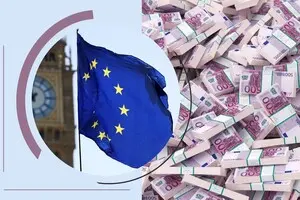
Only a few weeks ago, Ukraine was facing a very real, though fortunately short-lived, threat of a financial crisis because of delays in the arrival of a European loan. Experts had been warning of this risk since February 2026. It was obvious there was little time left. Even so, the government made zero effort to shield the country: it did not accumulate domestic resources, did not cut non-critical spending, did not look for alternative external sources and did not even speak honestly with public-sector workers about the prospect of spending several weeks without pay. A cash-strapped summer is coming—chew on the government’s feel-good handouts.
The parliament, too, failed to stir itself. ZN.UA wrote as early as February that Ukraine risked losing $115 billion in aid because of its failure to meet commitments to partners. The parliament stubbornly ignored the issue until April, then by a superhuman effort assembled itself, passed a third of the required benchmarks, and promptly folded up its activity until better times.
And this entire farce is unfolding against the backdrop of an unprecedented corruption scandal with consequences that are, for now, still far from clear.
The Ukrainian authorities themselves regularly pour fresh fuel on the fire of anti-Ukrainian sentiment in Europe, and Russian propaganda, pro-Russian politicians and champions of narrow economic interests—always on the lookout for extra arguments—make instant use of it. Yes, Ukraine has to be prepared for the fact that resistance to supporting it will certainly not disappear, even if it weakens. But Ukraine must also make an effort not to increase that resistance with its own hands. They can manage without our help.
Please select it with the mouse and press Ctrl+Enter or Submit a bug
 Follow on Telegram
 Login with Facebook
 Login with Twitter
 Login with Google