
 Support ZN.ua








War as Business: How China Cashes in on Russia and Ukraine

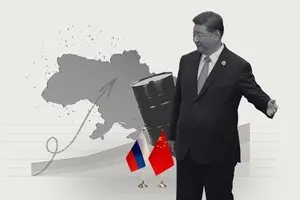

Every war is also a business. The redistribution of resources, the stimulation of the defense industry, the creation of new logistics chains, the relocation of strategic production onshore—all this is merely the visible side of the economics of war. For some, it means profits from defense orders; for others, survival and adaptation. Those who reap the profits do not die on the battlefield, and that gives rise to “conspiracy theories” claiming that it is economic rather than political interests that drive those who initiate wars. This applies both to individuals and to entire countries.
Much has been written about the geopolitical benefits China derives from Russia’s war against Ukraine. Beijing is solving a whole array of its own strategic problems while watching Russia kill civilians, destroy Ukrainian cities and infrastructure, while the Armed Forces of Ukraine, for their part, grind down Russian infantry, weapons, equipment and strategic oil-and-gas facilities. Turning Russia into an economic ruin is in China’s interest; exploiting Siberian resources has long been part of Beijing’s plans. It is extremely convenient and profitable to keep one’s uniform white and gleaming, to stir the air with empty phrases about facilitating a swift peace, while at the same time supplying both sides with everything they need both to survive and to continue the war.
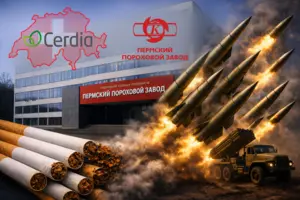
It has long been known that China is readily supporting Russia’s aggression by buying record volumes of oil and gas, supplying critical equipment needed by the defense industry, microelectronics, and drone components. But it was precisely this winter that it became unmistakably clear that the Chinese are profiting even from the paranoid attempts of Moscow to freeze Ukrainians into submission. EcoFlow and other portable power stations, generators, communications equipment, power banks and solar panels—all the goods that have been in greatest demand on the Ukrainian market—are made in China. Last year, imports from the PRC to Ukraine reached $19.2 billion, a quarter of total imports, twice as much as imports from Poland and three times as much as from Germany, which rank second and third among our country’s largest suppliers. Some Chinese businesspeople do not even hide their satisfaction at the prosperity of their business, and some have opened offices in Ukraine despite the threat to life posed by Russian missiles and drones made with Chinese parts.
In fact, the practice of profiting from both sides of a conflict is not new even in modern history. Such cases were quite common during both the First and Second World Wars. But they involved “neutral countries.” This time, the difference is that China openly supports Russia in its “crusade” against the West and, without being a physical participant in the war, is in effect creating the political preconditions for a new world order favorable to the PRC—while also earning tens of billions of dollars from it.
Figures are a very stubborn thing. Even by fairly moderate estimates, since 2022 China has saved up to $20 billion on purchases of Russian oil. In 2025, Russia was selling oil to China at an 8.3 percent discount, while over the course of the war the average discount was as much as $10 per barrel. Russia is China’s largest oil supplier, accounting for 20 percent of the PRC’s total oil imports, around 2 million barrels per day. Russia reached record oil supplies to China as early as June 2022, when the first sanctions against the aggressor began to take effect. Last year, supply volumes fell by about 7 percent, but in monetary terms, taking the discounts into account, Russia’s profits fell by 20 percent.
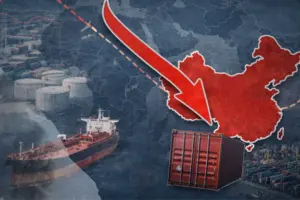
The same applies to natural gas. The portion supplied via the Power of Siberia 1 pipeline is sold to the PRC at discounts of up to 30 percent, which means Gazprom’s annual losses are around $3 billion, based on last year’s data and current estimates. According to Reuters, liquefied natural gas supplied in defiance of sanctions is bought by Beijing at a 40 percent discount. The volume of these purchases is not merely holding steady but actually increasing, amounting to around $5 billion a year, especially in light of the war in the Persian Gulf. According to trade statistics, China is also the largest buyer of Russian coal—44 percent of Russian coal exports in 2022–2025, and about $900 million a month last year. And although supply volumes are somewhat declining, coal is likewise reaching China at substantial discounts. China’s gain from the coal component of energy trade is estimated at $2–4 billion, depending on price fluctuations in the market.
One of the most important Chinese goods playing a key role in modern warfare is drones and the components from which they are assembled. In 2023, then prime minister of Ukraine Denys Shmyhal stated that Ukraine was buying 60 percent of the global production of drones made by the Chinese company DJI, which specializes in Mavics. According to him, UAH 40 billion was allocated that year for drone procurement, possibly not only Chinese ones. According to available data, in the first half of 2025 Ukraine purchased Chinese drones worth $725 million, although as early as May President Zelenskyy said that DJI had stopped supplies to Ukraine and had switched entirely to Russia.
According to The Japan Times, Thailand became one of the key intermediaries for supplying drones to Russia in circumvention of sanctions. Last year, Russia purchased more than $125 million worth of Chinese drones labeled as “Thai”—an eightfold increase over 2024. By way of comparison, Thailand exported just $1 million worth of drones in 2022, and not a single one was sold to Russia. Along the same route, drone components—engines, cameras, fiber-optic cable—worth $63 million were shipped to Russia in 2023–2024. Other sources report that Chinese drone engines, including those for the Garpiya-A1 combat drone, are being delivered to Russian military plants in circumvention of sanctions under the label of “industrial refrigeration equipment.” In 2025, around 6,000 such drones were produced at the Russian Kupol plant. Needless to say, the Chinese government denies any such supplies, even though Chinese trade statistics confirm those estimates. Overall, the value of annual supplies of drones and their components is estimated at around $2 billion.

Russia’s defense industry is almost entirely dependent on supplies of Chinese machine tools and equipment, without which the production of missiles, drones and artillery shells would be impossible. These are brought in through various sanctions-busting routes, including re-export via Central and Southeast Asian countries. American experts estimate the scale of such supplies—both direct and via third countries—at up to $3 billion in 2023–2024. It is precisely the covert nature of these deliveries, which in many cases involve transit through several countries, that makes their full volume impossible to assess accurately. Indirect indicators include trade volumes between Russia and intermediary countries, which have risen sharply since the start of the aggression and are difficult to explain by any other factors. That is why the formal decline in trade between Russia and China last year is not an indicator of any change in trade policy or any reduction in bilateral cooperation. In some cases this is indeed the result of sanctions, in others of a market downturn. But in most cases it is simply a rerouting of goods flows through third countries.
The sanctions imposed on Russia over its war against Ukraine have enabled China to seize leading positions in Russia’s markets for microelectronics, complex machinery, household appliances and automobiles. Only some of these goods are supplied directly under open contracts, since China’s state companies and banks avoid sanctioned transactions that could jeopardize far more important projects. According to Japanese experts, that is precisely why a substantial share of such trade is carried out through “gray” schemes involving both export controls and payment mechanisms, since settlement is made in yuan and rubles while Russia needs dollars. Financial intelligence data from various countries point to lengthy chains for converting non-convertible currencies into convertible ones through banks in European, Asian and Arab states, making it possible to conceal the true volumes and nomenclature of the goods supplied. Of course, in some cases prices are influenced by purely market factors, which are still taken into account despite the significant role of political expediency.
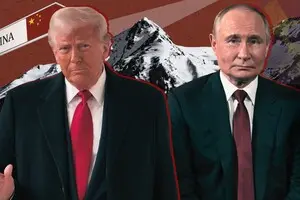
The fact that the Russian economy has become overwhelmingly dependent on Chinese goods—whether in household appliances or in the defense industry—strengthens China’s position as the dominant partner in its “tango” with Russia. At the same time, while the Chinese and Indian markets are an unquestionable priority for Moscow, for Beijing Russia is merely one trading partner among many, while the markets of the EU and the United States remain far more important. As specialists rightly note, China not only profits from Russia’s war against Ukraine, but also loses certain opportunities because of sanctions, which China’s state companies and banks try to circumvent.
Over the years of Russia’s full-scale war against Ukraine, China has earned an additional $40 billion to $50 billion, and that figure is probably understated, since it does not include the profits made through gray supply schemes involving large numbers of intermediaries to circumvent sanctions. Yet even the overall benefit from Russia’s war against Ukraine is not the decisive factor, except perhaps as one component of strategic stability through access to cheap natural resources and energy, which increases China’s room for maneuver in a new Trump-style world.
Please select it with the mouse and press Ctrl+Enter or Submit a bug
 Follow on Telegram
 Login with Facebook
 Login with Twitter
 Login with Google