
 Support ZN.ua








US Strikes Iran — But Hit China
 Reader Survey
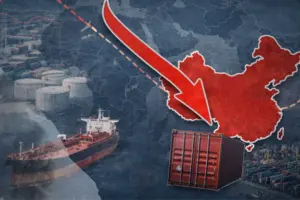

For China, the US–Israeli military operation against Iran has proved, in both scale and consequences, to be, first, an unexpected development and, second, a strategic defeat.
The quality of Beijing’s assessment of the unfolding situation around Iran over recent months can be gauged from a remark by the prominent Chinese military analyst Li Li, a professor at China’s National Defense University. In a television interview she suggested that if the United States dared to attack Iran, Tehran would destroy Israel within half an hour.
Events have unfolded in precisely the opposite way. Thanks to meticulous intelligence and careful operational planning, Israeli and American precision strikes eliminated within hours Iran’s entire leadership, a large share of its underground ballistic-missile launch facilities as well as missile and air defense systems. Iran’s response—attacks against Israel, Gulf states, US military bases and even British facilities in Cyprus—was chaotic and only worsened the situation for Tehran. Since then, the United States and Israel have been systematically dismantling what remains of the Islamic Revolutionary Guard Corps’ command structures and other military facilities.
China’s response to these developments came from foreign minister Wang Yi rather than from Xi Jinping himself. The minister stated that China supports Iran’s sovereignty and territorial integrity and that military action against the Iranian regime “without authorization from the UN Security Council undermines the foundations of the post-World War II international order.” He telephoned his Iranian counterpart, condemned Israel’s actions and affirmed Iran’s right to self-defense. That was about the extent of Beijing’s support for its strategic partner.
Meanwhile, for China, the operation against Iran amounts to nothing less than a geopolitical earthquake. For decades Beijing cultivated relations with Tehran based on shared political and economic interests and on long-term plans to establish a Chinese presence in the heart of the Middle East, a region that has always been central to US strategic interests. Iran became not only a member of BRICS and the Shanghai Cooperation Organization but also a source of discounted oil delivered despite sanctions, a customer for Chinese weapons, and an important transit node along one of the Belt and Road Initiative’s routes.

Iran’s support for terrorist anti-Israeli groups, confrontation with the United States and threats toward Gulf states forced Washington to devote considerable resources to the region. That, in turn, created space for China to expand its influence. Together with Russia’s war against Ukraine—which diverted American attention and resources to Europe—the situation gave Beijing an opportunity to advance its ambitions in East Asia by weakening US presence and solidifying its own dominance. The elimination of Iran’s leadership and the likely transformation of the regime now free American resources in the Middle East. In Europe, Washington has already shifted much of the responsibility for security onto its European allies. As a result, the United States may now be better positioned to counter China’s strategic ambitions in Asia.
Russia’s passivity during crises in Venezuela and Iran had already led many countries in the Global South to question the reliability of partnership with Moscow. China’s inactivity response now adds to those doubts, raising questions about Beijing’s ability to provide a genuine “security umbrella.” It is one thing to send advisers to Tehran, supply equipment for suppressing protests and sign arms contracts. It is quite another when the weapons already delivered by China—like Russian systems—prove, to put it mildly, ineffective. Chinese arms exports have grown steadily in recent years, serving not only as a major source of revenue but also as a way of spreading Chinese technological standards and political influence across the developing world. The fall of the Tehran regime would immediately cancel planned contracts worth tens of billions of dollars, including purchases of J-10C fighter jets and CM-302 supersonic anti-ship missiles. And the implications extend well beyond Iran.
Financial losses, however, may ultimately matter less than the devastating reputational damage. Current and potential buyers are confronted with an uncomfortable reality: Chinese weapons appear unable to compete effectively with Western systems. Only weeks ago Chinese JY-27 radar systems failed to prevent a rapid American operation that captured Nicolás Maduro in Venezuela. Now integrated air-defense systems in Iran, based on modified HQ-9 technology, have also failed, unable to protect Ayatollah Khamenei during the joint Israeli-American operation. Such failures inevitably raise doubts among potential buyers about the reliability of Chinese military technology. Combined with corruption scandals inside China’s defense sector, they threaten Beijing’s ambition to become one of the world’s leading arms exporters.
These developments coincide with growing turmoil within China’s military establishment, which has been paralyzed by an extensive anti-corruption campaign. Ahead of the latest session of the National People’s Congress, 19 delegates were removed, including nine military officers, three of them generals. No official explanation was provided, but the decision clearly forms part of the sweeping purge that Xi Jinping has been carrying out in the armed forces over the past six months—a campaign that has effectively left the Chinese military without stable leadership. At the same time Beijing has launched strict inspections aimed at identifying technical defects in weapons systems. The campaign reportedly follows intelligence indicating problems with missile fuel and defects in silo-based launch systems, suggesting that further dismissals are likely.

The attack on Iran has also dealt a serious blow to one of China’s most vital interests: access to cheap energy. Venezuelan oil is now effectively under Washington’s control, Russian production has been constrained by Ukrainian strikes, and Iranian supplies have been disrupted by US and Israeli actions. China had been purchasing roughly 90 percent of Iran’s oil despite sanctions, so the loss of these supplies significantly reduces Beijing’s access to discounted crude. Yet the real problem is not simply rising oil prices. The collapse of Iran’s regime also destroys an exceptionally advantageous macroeconomic arrangement. Trade between China and Iran relied on transactions outside the dollar system and on complex barter mechanisms designed to bypass US sanctions. Beijing used a covert financial channel known as Chuxin, through which Iranian oil deliveries were financed via Chinese state infrastructure projects rather than through direct financial transfers. Alongside this system operated an extensive industrial barter network that allowed Chinese manufacturers to circumvent dollar-based sanctions. Independent Chinese refineries paid for additional oil deliveries in yuan, further bypassing the US-dominated financial system.
With the fall of Iran’s government, this entire scheme has collapsed. Beijing will now have to return to global spot markets, paying higher prices and settling transactions in US dollars. This forced return to dollar-denominated trade under Washington’s close supervision will gradually erode China’s strategic currency reserves, which have already declined in recent months. The destruction of the oil-settlement network—previously built around the sanctioned trio of Iran, Venezuela and Russia—deals a major blow to China’s strategy of yuan internationalization and undermines Beijing’s ambition to challenge the dominance of the US dollar.
For more than a decade the Belt and Road Initiative has been the central pillar of Xi Jinping’s foreign policy, with the Middle East serving as one of its key geo-economic hubs. Iran, which signed a twenty-five-year strategic partnership agreement with China in 2021, was viewed as an indispensable land bridge for the China–Central Asia–West Asia economic corridor. The sudden paralysis of the Iranian state cuts this critical artery, destabilizing China’s main westward route and turning what had been a strategic asset into a massive investment black hole. The 2021 agreement, worth about $400 billion, was intended to finance Iranian energy and infrastructure development for a quarter century. With Iran’s leadership now destroyed, billions of dollars in Chinese investments, from telecommunications to transport infrastructure, risk becoming toxic assets.

The geopolitical consequences of these developments are even more profound. The Belt and Road Initiative was never simply a logistics project. It was designed as a strategic instrument for projecting Chinese influence across Eurasia—from East Asia to Europe. This ambition depended on two main overland routes: the northern corridor through Russia and Belarus and the central corridor through Iran. With Russia constrained by sanctions and war in Ukraine, and the Iranian corridor now effectively destroyed, China’s westward expansion has been blocked. Beijing’s strategy of continental advancement deep into Eurasia has failed.
It increasingly appears that the United States and Israel deliberately employed the classic tactic of fighting fire with fire. Their operation pursued several goals simultaneously: eliminating Israel’s principal adversary and halting support for militant groups; stopping uranium enrichment and large-scale programs to produce drones and ballistic missiles that threatened US allies in the Middle East; and delivering a strategic blow to the interests of both China and Russia across the region and the Global south. The coalition of authoritarian challengers has lost its member. The question now is who might be next: Cuba or Russia?
Please select it with the mouse and press Ctrl+Enter or Submit a bug
 Follow on Telegram
 Login with Facebook
 Login with Twitter
 Login with Google