
 Support ZN.ua








France and Britain Instead of the US? Five Scenarios of Nuclear Autonomy for Europe
 Reader Survey
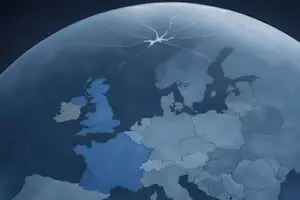

The debate over Europe’s autonomous nuclear potential emerged almost simultaneously with the advent of nuclear warheads themselves. In the early atomic era—before the Treaty on the Non-Proliferation of Nuclear Weapons (NPT) was concluded—the number of European states possessing nuclear arms was limited to two: the United Kingdom and France. This was partly due to the creation of NATO’s system of extended deterrence, based on the deployment of American delivery systems in Europe. In the 1950s and 1960s, this mechanism functioned as a kind of American “inoculation” against nuclear proliferation on the continent amid the growing Soviet threat.
In more recent times, NATO has wavered, and the American nuclear “inoculation” has begun to lose its effectiveness.
The first significant shift came after Donald Trump’s victory in 2016, when European capitals began, for the first time in a systematic way, to question the unconditional nature of US security guarantees. Initially confined to expert circles, the discussion gradually moved into the public domain, likely reflecting changing attitudes within European governments. In 2020, it gained institutional form when France proposed a strategic dialogue on the role of its nuclear forces in Europe’s collective defense.
A second, even more profound shift followed Trump’s return to office. What had once been a theoretical discussion about alternatives or supplements to American extended deterrence has now reached the level of heads of state. The chancellor of Germany speaks publicly about the potential involvement of German delivery systems in a broader European framework. The president of Poland openly discusses nuclear options. France and the United Kingdom are increasingly mentioned not as abstract nuclear powers but as a potential core of European deterrence. At the same time, both avoid concrete public commitments to non-nuclear allies, while confirming that discussions are ongoing, including within the framework of bilateral security agreements among European states.
The issue of Europe’s nuclear autonomy has now shifted from abstract debate to questions of implementation, cost and risk.
America’s nuclear inoculation for Europe
Europe’s contemporary system of extended nuclear deterrence within NATO rests on the United States, with a limited participation of the United Kingdom and full autonomy on the part of France, which does not belong to NATO’s Nuclear Planning Group.
The system works as follows. Around 100 US B61 gravity bombs are deployed at six air bases in five European countries. They are stored under American control in specialized facilities in Germany, Belgium, the Netherlands, Italy and Türkiye—and soon again in the United Kingdom. (After the end of the Cold War, US nuclear deployments in several European countries were discontinued, but Russia has taken steps that effectively restore the rationale for their presence.) The bombs are housed in protected vaults at bases that host both US and allied aircraft. Typically, the nuclear weapons stationed in a given country are intended for delivery by that country’s air force, though they can be relocated depending on mission requirements.
Allied air forces participate to varying degrees. Türkiye, following political decisions in the past decade linked to its purchase of Russian air defense systems, has been removed from nuclear strike missions. Its air force now only escorts US missions on Turkish territory using American warheads. This model—participation by the UK and non-nuclear allies in the shared use of the US arsenal—is known as “nuclear sharing” within NATO.
Other NATO members, apart from nuclear-autonomous France, are involved in extended deterrence through the Nuclear Planning Group, one of the alliance’s principal bodies alongside the North Atlantic Council and the Military Committee. Even states that do not host nuclear weapons or prepare aircraft for nuclear delivery participate in planning and rehearse their roles. NATO’s annual Steadfast Noon exercise illustrates this structure: fewer than a dozen allied aircraft may carry nuclear weapons, but dozens more support the missions—from air defense and reconnaissance to aerial refuelling. These tasks fall under procedures known in NATO by the acronym SNOWCAT (Support of Nuclear Operations With Conventional Air Tactics).
Several variants of the B61 remain in Europe, though they are gradually being replaced by the B61-12, which has variable yield. Aircraft fleets are increasingly standardized around the F-35, a pillar of transatlantic military integration. The exclusion of Türkiye from the F-35 program following its purchase of Russian air defense systems has reduced its role in nuclear sharing. Without F-35s, it cannot employ the B61-12. At the same time, possessing F-35s does not guarantee the deployment of nuclear weapons, but it lowers the political and technical barriers, as Poland’s case illustrates.
Delivery systems include dual-capable aircraft operated by Germany, Belgium, the Netherlands, Italy and Türkiye. The B61-12 offers yields ranging from 0.3 to 50 kilotons, allowing strikes of calibrated scale. Deployment is governed by Permissive Action Links, electronic authorization systems designed to prevent unauthorized use within NATO’s multinational framework.
The NATO Nuclear Planning Group does not control US strategic forces, which could be employed at higher levels of escalation in Europe. Nonetheless, all NATO planning rests on their potential involvement. Most of these strategic systems—except for B-2 bombers carrying B61-12s—are not well suited to flexible use in conventional war scenarios. They are high-yield weapons intended for hardened, strategic targets. Since 2019, however, the US has deployed lower-yield warheads on some submarine-launched ballistic missiles, intended for limited-use scenarios. Public estimates suggest they are deployed on two of the 14 Ohio-class submarines. Their introduction provoked a sharp reaction from Russia.
Britain’s nuclear forces, integrated into NATO planning, consist solely of a maritime component: four submarines armed with Trident II missiles. The total arsenal is estimated at roughly 225 warheads. These reinforce the US strategic maritime component but are not designed for lower levels of escalation in a conventional European war.

France maintains a fully autonomous strategic triad’s maritime leg—four ballistic missile submarines carrying approximately 240 warheads—and an airborne component: Rafale aircraft operating from land bases and the aircraft carrier Charles de Gaulle, equipped with the ASMP-A nuclear cruise missile with a range of several hundred kilometres. Around 50 such warheads are believed to exist. With yields exceeding 100 kilotons, they are strategic weapons, not intended for lower-level escalation akin to the US B61-12.
Under certain arrangements, French naval aviation can operate from British carriers, but this does not constitute nuclear sharing in the sense of the American model. France retains full control of its arsenal and has no plans to join NATO’s Nuclear Planning Group. It is prepared for coordination and potentially broader deployment, but strictly under national authority.
Sacred non-proliferation
Despite persistent Russian rhetoric, this system does not violate the NPT, which entered into force after NATO’s nuclear-sharing arrangements had already been established. During ratification, the United States and the Soviet Union exchanged diplomatic letters acknowledging their disagreement over nuclear sharing while affirming the treaty’s validity and their commitment to it. For Russia, which claims succession from the Soviet Union, the formal position has not changed.
However, some additional explanation is in order. Right of ownership of nuclear weapons is not transferred within NATO. Specifically for deployments on the territory of US allies, Washington built a system of safeguards against the unauthorized use of its nuclear warheads—often portrayed in popular culture as codes and buttons triggered by a special procedure. The real system does not necessarily look like that, but in essence US nuclear weapons cannot be used without authorisation from the highest levels of American leadership.
The system began to be developed in the 1950s for deployment in Europe. It has since been refined to a high technological standard and now covers the entire US nuclear arsenal, including weapons stationed on US territory, and in various forms has been replicated by other nuclear-armed states.
Would the physical use of American nuclear weapons by the air force of a non-nuclear NATO country, with US authorisation, violate the NPT? The answer is no. The NPT, which is of indefinite duration, has two equal objectives: achieving general and complete nuclear disarmament when conditions permit, and preventing world war. If the air forces of NATO’s non-nuclear allies were to use US nuclear weapons, this would mean that world war had already begun, and the NPT regime would, in effect, cease to operate.

At the same time, if, for example, Germany, Poland or Ukraine were to create their own nuclear weapons, this would constitute a direct violation of the NPT.
We are therefore faced with a situation that largely shapes the prospects of European nuclear autonomy. Despite the erosion of the global order and, perhaps for the first time, absence of any reference to nuclear non-proliferation in the new US National Security Strategy, the NPT remains a “sacred cow” of international relations. There may be those willing to sacrifice it, but for now no one is doing so.
Europe’s options
Europe’s current discussion of nuclear autonomy is driven not by ambition but by recognition of a strategic necessity in light of changing US policy—and by a sober understanding of constraints. A 2025 report by the European Nuclear Strategy Group (ENSG), presented at the Munich Security Conference, states plainly that there is no simple path to nuclear autonomy. No quick solution can by itself compensate for uncertainty about US nuclear guarantees.
In the short term, continued reliance on American extended deterrence remains the most dependable option, despite its gradual erosion. In this logic, the concept of a “deterrence gap” emerges—a situation in which the security architecture formally remains in place, but the guarantor’s political reliability is no longer perceived as unconditional. According to ENSG, the key shift concerns not technology but responsibility. European states no longer view nuclear policy as something “outsourced” to the United States.
The European Nuclear Strategy Group has systematized the scope of possible solutions into five basic options. They differ in terms of who assumes the risk, who pays and who controls the decision.
Option A—continued reliance on the US. This preserves the existing model: American weapons in Europe, European delivery systems, NATO’s Nuclear Planning Group and the US strategic umbrella. In the short term, this is the most realistic scenario. It does not require the creation of new structures, does not undermine the non-proliferation regime, and preserves maximum integration within NATO. The problem is that part of the trust in American political will has been lost among European states, and its credibility vis-à-vis Russia has also diminished. Extended nuclear deterrence is becoming dependent on domestic political dynamics in the United States.
Option B—greater roles for France and the UK. This evolutionary scenario would gradually increase Europe’s nuclear contribution without replacing the US. Together, the two countries possess roughly 500–520 warheads. Yet Britain’s forces remain technologically and operationally linked to the US, while France maintains full autonomy outside NATO’s Nuclear Planning Group. Strengthening their role would thus require deeper coordination—or growing political tension.
Option C—institutionalized European deterrence. This is an attempt to consolidate a Franco-British core with the participation of other states—through joint financing, joint planning and doctrinal convergence. Such a scenario would envisage the creation of a European consultation procedure regarding the use of nuclear weapons, but without a full transfer of control. The central question is whether Paris and London would agree to “share” decision-making over their nuclear arsenals in the way the United States has done until recently. A second problem is that their forces lack the escalation flexibility provided by the American model, with its variable-use scenarios.

However, even taking these limitations into account, the deployment of British and French forces on Ukrainian territory as part of post-war security guarantees could enhance the credibility of those guarantees.
Option D—new national nuclear programs. Theoretically, Germany, Poland or other states could launch their own programs. In practice, this would mean violating or withdrawing from the Treaty on the Non-Proliferation of Nuclear Weapons, triggering a serious political crisis in Europe and risking external preventive pressure. It cannot be ruled out that new nuclear states in the center of Europe would make the region less stable rather than more secure. For this reason, analytical assessments describe this option as the most destabilizing.
Option E—exclusive reliance on conventional deterrence. The idea is to offset the nuclear factor through a sharp increase in conventional military capabilities—precision weapons, missile defense and the development of the industrial base. Politically, this appears attractive, as it does not stir the “nuclear sensitivities” of European societies. Strategically, however, it amounts to abandoning a symmetrical response to Russian pressure. Given Russia’s substantial nuclear arsenals—even taking into account the degradation of some delivery systems—an asymmetry may emerge that would not favor Europe.
If one looks at the statements of European political leaders regarding the region’s nuclear autonomy, it becomes clear that the imperative of Option A in the near term is not being questioned. At the same time, most speakers support either a gradual or a more accelerated movement toward other options. The most resolute people are prepared to speak about acquiring national nuclear weapons, though this is unlikely to reflect their actual intention. More probably, it is an attempt to accelerate the search for a collective solution that would be more autonomous from the United States. The other side of the coin may be that such forceful statements about nuclear weapons are intended to signal to Washington the consequences of a possible degradation of its guarantees—and thereby to encourage their preservation.
Europe’s real nuclear weapon
The debate about nuclear weapons on the continent ultimately comes down to one question: at what price is Europe prepared to guarantee its own security against Russian nuclear pressure—and is it ready to do so not only with Ukrainian hands? Today, this weapon, predominantly American, serves primarily as a deterrent for the states of the region, reducing the need for mass mobilization in the event of a great war. The reasons for its use and for a sweeping conscription that would undermine the economy are the same: a threat to the very existence of European states.
For Ukraine, which is defending itself against full-blown Russian aggression, this logic works differently. Lacking its own nuclear arsenal, the country has been compelled to resort to mass mobilization for survival. And it has turned out that once mobilization has already been carried out, nuclear weapons may not be the most effective instrument in a war that demands precision rather than sheer destructive force. A kiloton of nuclear yield may produce less effect than the same quantity of explosive material distributed in kilogram charges across a million drones delivering their payloads accurately to a million targets.
For Europe, however, undertaking mass mobilization may be less realistic than pursuing one of the riskier variants of nuclear autonomy from the United States, whose political reliability is increasingly perceived as uncertain. Europe has time to search for such an option while Ukraine itself remains the factor of deterrence that prevents Russia from launching large-scale aggression against other European states.
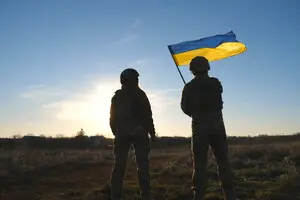
Europe’s current security model relies more heavily on Ukrainian human resources than on its own readiness to assume risk. If Europe strengthens nuclear deterrence, this could impose additional constraints on Russia. The Kremlin would more quickly realize that “waging a forever war” is futile and that the objectives of aggression against Ukraine are unattainable. At that point, Russia could begin genuine negotiations on peace. But if the nuclear factor is used as an argument for economizing on armed forces and the defense industry, it will only increase Russia’s temptation to act below the nuclear threshold.
European nuclear weapons may indeed appear politically more realistic than mass mobilization in the event of large-scale Russian aggression. But they cannot replace the conventional strength of continental states, much of which is today effectively represented by Ukraine’s armed forces. If the time has come to seek a way—without violating the NPT—to combine stronger European conventional capabilities with a system of collective nuclear deterrence, Ukraine should be part of that process.
Please select it with the mouse and press Ctrl+Enter or Submit a bug
 Follow on Telegram
 Login with Facebook
 Login with Twitter
 Login with Google