
 Support ZN.ua








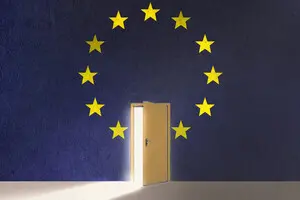
At the first metres of the marathon: How not to get stuck halfway to the european union
Five Steps Towards the EU: Why Heroism Alone Is Not Enough for Ukraine’s Accession to the European Union

06 august, 2026, 16:01
Share


For Ukraine the full-fledged membership in the European Union is not merely a foreign policy objective, but it is one of the most reliable guarantees of independence, territorial integrity, democracy, security and prosperity.
That is why today, in wartime, we have no right to lose time, opportunities or the trust of our partners.
The reshuffle of the Government may provide an impetus for accelerating real European integration. Or, once again, those in power may get stuck in the swamp of producing new “turbo-programmes”, institutions, positions, plans and conferences. This risk does exist, because instead of accelerating the implementation of the National Programme for the Adaptation of Ukrainian Legislation to EU Law - a document of more than a thousand pages, approved by the Government on 1 April this year - the new Government is being encouraged to draft yet another programme for accelerated accession. This looks more like European integration populism and imitation than real integration and implementation of the Copenhagen criteria.
EU accession is not only about diplomacy. It is a long and demanding path of transforming the state, the economy, society and institutions. And by the end of 2026, Ukraine must prove that it is capable of moving from declarations to implementation.
I would identify five immediate priorities in Ukraine–EU relations for this period.
The first and main priority is the real implementation of commitments under the negotiating cluster “Fundamentals”.
This is the foundation of the entire accession process. It concerns the rule of law, democracy, judicial independence, the fight against corruption, public administration, financial control, public procurement and statistics. This is the cluster that is opened first and closed last. In other words, the European Union will assess Ukraine not once, but throughout the entire negotiation process.
ВАС ЗАИНТЕРЕСУЕТ
The questions will be very specific. Do democratic institutions really function? Is the judiciary independent? Are anti-corruption bodies protected? Is there parliamentary oversight? Are freedom of speech and political pluralism ensured? What rights does the opposition have? Is there any politically motivated pressure on opponents and civil society?
On 11 December 2025 the Kachka–Kos Declaration was signed, setting out ten priority steps in the areas of democracy, the rule of law, judicial independence and the fight against corruption. The Ukrainian authorities committed to implementing them by the end of 2026. As of today, according to expert assessments, less than 20% has been implemented, and the prospects remain questionable. This raises a simple question: what kind of “turbo mode” of European integration can we talk about if even ten steps are being implemented with such enormous delay?
And we must understand that fulfilling the membership criteria is not about ten, or even one hundred, decisions. It is about thousands of laws, government resolutions, decisions by ministries, changes in the work of institutions and the daily practice of implementation. The EU assesses not only whether we have adopted the right law. It assesses whether that law works.
The second priority is to secure the opening of the remaining negotiating clusters. At present, two out of six clusters have been opened. Ukraine must work actively with the European Commission, the Council of the EU and the Member States to ensure the swift opening of the clusters on the internal market, competitiveness, green transformation, resources and agriculture.
At the same time, we must abandon the policy of artificial dates. Populist slogans about Ukraine’s EU membership from 1 January 2027 have failed spectacularly. The European Union assesses not wishes or political deadlines, but the fulfilment of the Copenhagen criteria.
The speed of our movement towards the EU depends first and foremost on the quality and pace of reforms. Not on the loudness of statements. Not on emotional pressure on partners. Not on the argument that Ukraine is heroically fighting, although this heroism is truly unprecedented.
The heroism of Ukrainians has opened the door to Europe for us. But it is reforms, institutional capacity and trust that will lead us through that door.
That is why the task by the end of 2026 is not to invent new political formulas, but to fulfil the already agreed criteria, demonstrate real progress and create the basis for political decisions in the EU.
The third priority is inclusiveness.
European integration cannot be the business of the Government alone, of one office or of one political force. It must be a nationwide platform for Ukraine’s transformation. Parliament, the authorities and the opposition, local self-government, business, civil society, experts, universities and young people must all be involved in this process.
Why is this so important?
Because EU accession will change the rules of life for everyone: entrepreneurs, students, farmers, judges, civil servants, communities, universities, hospitals and civil society organisations. This is not abstract diplomacy. It means new standards of competition, new requirements for the state, new opportunities and new challenges.
If society does not understand what exactly is changing and why, even the right reforms may cause fatigue, resistance or distrust.
That is why European integration must become an honest conversation with society. Not propaganda of success, not a set of beautiful reports and presentations, but an open explanation: what we are changing, how much it will cost, who will benefit, who will need support, and how Ukraine is preparing for life inside the EU.
The fourth priority is the integrity of reforms.
If decisions that in reality contradict European principles are adopted under European slogans, trust will be destroyed very quickly. Trust is the main currency of the negotiation process.
If we speak about judicial reform, it must genuinely strengthen the independence of the courts. If we speak about anti-corruption, then NABU, SAPO and other institutions must be independent, and the State Bureau of Investigation must be reformed. If we speak about Parliament, then it must be a place of real debate, oversight and quality law-making, not formal voting.
The EU will look not only at the text of laws, but also at the political context, procedures, inclusiveness, transparency and the real impact of reforms on institutions.
Therefore, European integration legislation must be protected as much as possible from political manipulation. It cannot be turned into an instrument of domestic political struggle. And it certainly cannot be used as a cover for decisions that contradict the spirit of European standards.
By the end of 2026, Ukraine must demonstrate not only its ability to adopt European laws, but also its political will to live by European rules.
The European Commission will provide an objective assessment of the Ukrainian authorities’ achievements on the EU track in its regular annual 2026 progress report on Ukraine at the end of this year. And for now, judging by the first signals from EU institutions and Member States, the Ukrainian authorities can face serious problems.
The fifth priority is diplomacy with EU Member States.
ВАС ЗАИНТЕРЕСУЕТ
Even if Ukraine implements reforms properly, the accession process will still depend on the political decisions of all Member States. And there will be difficult issues: agricultural competition, the EU budget, cohesion funds, historical memory, national minorities and the economic interests of neighbouring countries. That is why Ukraine must work not only with Brussels. It must work systematically with Warsaw, Budapest, Bratislava, Bucharest, Berlin, Paris and other capitals.
We need not wait for the next veto, but prevent it. We need not merely react to crises, but work with risks in advance. We must not create additional fronts with our neighbours, but build difficult yet necessary compromises.
Separately, it is important to ensure that interim integration formats do not become a substitute for full-fledged membership. Pre-accession integration - yes. Participation in EU programmes, policies and sectors - yes. But “associated membership” as a political ceiling for Ukraine - no. Ukraine’s position must be clear: any interim format must bring us closer to full membership, not replace it.
Thus, by the end of 2026, Ukraine must focus on five practical things: strong democratic institutions, real reforms instead of declarations, the opening of all negotiating clusters, the inclusiveness of the European integration process, and professional diplomacy with every EU Member State.
This is what can create a new quality of trust between Ukraine and the European Union. And this is what can bring us closer to our main goal — full-fledged membership of Ukraine in the EU.
If we go through this path honestly, professionally and together, Ukraine’s membership in the European Union will become not merely a diplomatic decision, but a genuine historical transformation of the country.
Noticed an error?
Please select it with the mouse and press Ctrl+Enter or Submit a bug
Stay up to date with the latest developments!
Subscribe to our channel in Telegram
 Follow on Telegram
Пожалуйста выберите один или несколько пунктов (до 3 шт.) которые по Вашему мнению определяет этот комментарий.
Пожалуйста выберите один или больше пунктов
Нецензурная лексика, ругань
Флуд
Нарушение действующего законодательства Украины
Оскорбление участников дискуссии
Реклама
Разжигание розни
Признаки троллинга и провокации
Другая причина
Отмена
Отправить жалобу
ОК
 Login with Facebook
 Login with Twitter
 Login with Google