
 Support ZN.ua








The EU's Diagnosis: What the Brussels X-ray of Ukraine Revealed

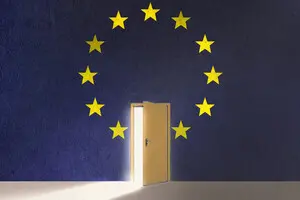

This week the European Parliament adopted its Resolution on Ukraine’s progress toward EU membership for 2025. In the Ukrainian media the event went almost unnoticed, with the possible exception of one episode touching on Polish-Ukrainian matters—the honoring of heroes of the UPA (the Ukrainian Insurgent Army).
In reality, the political significance of this 27-page resolution is considerable, for it is a kind of cross-section—even an X-ray of Ukraine’s present condition (the condition as seen from the EU capital): of the front, of diplomacy, of European integration, of domestic democracy and of the mistakes that could cost our state dearly.
The keen interest in the resolution on Ukraine is evident from the intensity and length of the debates beforehand (two hours devoted to our country). There were many amendments. Many sensitive formulations. Many internal discussions and disputes, in which support for Ukraine remained strong but is no longer automatic. Yes, the European Parliament still stands on our side. But it is looking ever more closely not only at how Ukraine fights, but also at how it is governed, how it reforms, how it treats the opposition, the courts, parliament, the anti-corruption bodies, the media and its neighbors. The closer membership comes, the more scrutiny falls on every decision and on the quality of reforms.
Let me begin with what drew the attention of Ukraine’s information space—the Polish-Ukrainian historical-political confrontation.
The debates in the European Parliament showed that the scandal around the UPA and questions of historical memory has become strategically harmful. Not merely an unpleasant episode or a subject of historical debate, but a factor that has begun to work against the strategic interests of both Ukraine and Poland.
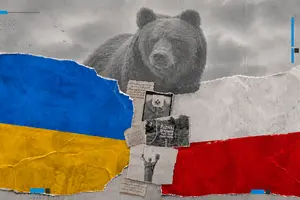
Anyone following the debates will surely have found it galling that 90 percent of discussions about Ukraine’s progress toward EU membership have turned, in effect, into a debate about how to judge the UPA’s actions during the Second World War. Instead of a conversation about accession prospects and new approaches to enlargement for a country at war, the chamber overflowed with emotional accusations and hysterical, theatrical performances. And this is very dangerous.
Poland has been and remains one of Ukraine’s key partners. We can and must hold a difficult, honest, at times painful historical dialogue. But we have no right to turn historical questions into a political landmine beneath our European integration and our alliance with Poland as a member of the EU and NATO.
When the theme of historical memory begins to erode support for Ukraine in the European Parliament, it is no longer a problem for historians alone. It is a problem of arms supplies, of tougher sanctions, of increased funding, of the opening of negotiating clusters and of future membership in the EU and NATO.
Ukraine cannot afford the luxury of opening additional fronts where we need allies. A mature state does not flee from difficult subjects; it resolves them in a way that denies Moscow new fault lines between Kyiv and Warsaw.
That is why it is a good thing that Ankara hosted a meeting between Ukrainian President Volodymyr Zelenskyy and Polish President Karol Nawrocki. One should not expect it to bring an instant breakthrough or quick decisions. But the very fact of direct dialogue matters after the emotional flare-up we have witnessed in recent weeks. One would like to believe that this conversation will mark the beginning of a gradual lowering of the temperature in Polish-Ukrainian relations. For today both states need not new pretexts for mutual quarrels, but the political wisdom and strategic vision that will allow us to preserve the main thing that unites us.
Next, I would like to draw readers’ attention to several key elements of the European Parliament’s resolution that are worth bearing in mind.
First, it is the crystallization of a clear vision of the path to a just and lasting peace: first—a full and durable ceasefire, and only then—negotiations on a just peace. This is the fundamental line between a real peace process and the coercion of Ukraine into concessions. For there can be no genuine peace talks while Russia is simultaneously shelling Ukrainian cities, striking energy infrastructure, killing civilians, deporting children, and torturing prisoners. In such a situation, “negotiations” easily turn into an instrument of pressure not on the aggressor, but on the victim of aggression.
And it is good that this vision of the peace process held by members of the European Parliament fully coincides with Ukraine’s own understanding and interests—interests that Ukrainian diplomats, together with representatives of both the government and the opposition, have spent recent months advancing within the walls of the EP. Such an outcome attests to the enormous potential of our joint work in unity and close coordination.
Importantly, the European Parliament has also set out its own vision of the principles of a lasting and just peace—one that: must respect the sovereignty and territorial integrity of Ukraine; cannot restrict its right to self-defense under Article 51 of the UN Charter; cannot grant Russia a veto over our security or political alliances; cannot harm the strategic interests of Ukraine and Europe; provides for punishment for the crime of aggression, war crimes, crimes against humanity, and Russia’s genocidal practices; ensures reparations; and guarantees the return of abducted Ukrainian children, the release of civilian hostages and prisoners of war, and the return of the bodies of the fallen.
And, of course, in the European Parliament’s view, Ukraine needs not another round of political assurances but reliable, legally binding security guarantees on the level of Article 5 of NATO’s Washington Treaty and Article 42.7 of the Treaty on European Union.
This is precisely peace through strength. Peace through a strong Ukraine, a strong army, strong sanctions, a strong international coalition, and a strong democracy inside the country.
And it is precisely here that the second part of our task begins. For a strong Ukraine is not only an army, drones, air defense, long-range weapons, and a defense industry. All of this is critically necessary. But a strong Ukraine is also an independent judiciary, a capable parliament, free media, local self-government, civil society, fair political competition, and respect for the rights of the opposition.
It is democracy that is the guarantee of our independence and our European future. Russia is waging war not only against our territory. It is waging war against the very idea of a free, democratic and European Ukraine. That is why our answer must be not only military. It must be institutional and value-based.
In Ukraine there are sometimes attempts to impose a dangerous logic: that heroism in repelling Russian aggression is a sufficient argument on the path to the EU, while democracy can wait. War, so the reasoning goes, justifies everything.
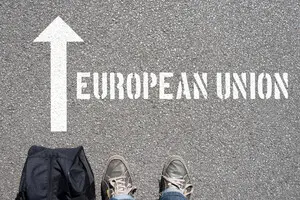
The courage of Ukrainian resistance, beyond any doubt, needs no proof. But the European Union does not admit new members on the criteria of heroism or self-sacrifice. The criteria for membership were defined long ago: democracy, the rule of law, independent institutions, human rights and freedoms, the fight against corruption and commitment to European values. That is precisely why Ukraine’s strength at the front must be matched by no lesser strength in reforms. It is the combination of these two components that can bring our country to EU membership.
War may demand restrictions. But those restrictions must be necessary, proportionate and temporary. War cannot be an indulgence for manually controlled courts, pressure on the opposition, the rollback of parliamentary oversight, curbs on media pluralism or the political use of law enforcement agencies.
Democracy is not a weakness of Ukraine. It is one of the reasons the world supports us. We have no right to win the war against Russian dictatorship and lose our own democracy.
Ukraine’s European integration is not only geopolitics. It is rules, the rule of law, an independent judiciary, the fight against corruption, parliamentary oversight, the independence of NABU and SAPO, media freedom, multiparty pluralism and respect for civil society and human rights. These are not “secondary trifles” that can be put off until victory. These are the criteria for membership. And it is these very indicators that determine the pace of our movement toward EU membership. The Fundamentals negotiating cluster is the first to open and the last to close. It shapes the entire negotiating process. The European Union will look not at fine statements, but at real deeds.
One of the most sensitive signals in the resolution concerns politically motivated pressure. And above all—personal sanctions against representatives of the opposition and civil society. The sanctions mechanism was created to protect the state from its enemies. When it is used against political competitors, it is no longer a matter of political struggle. It is a matter of the rule of law, and the resolution states plainly that such practices undermine trust in the state and hand arguments to those in Europe who are skeptical about Ukraine’s accession to the EU. Democracy begins where those in power respect the rights not only of their supporters, but also of their opponents.
A separate emphasis by members of the European Parliament falls on the question of the independence of the anti-corruption infrastructure. NABU and SAPO—Ukraine’s anti-corruption bureau and specialized prosecutor’s office—must be protected from political pressure, interference, intimidation, and attempts to discredit them. When anti-corruption bodies expose high-level corruption, that is no reason to attack them. It is proof that they are working. In the EU they understand that Ukraine is receiving, and will continue to receive, enormous international assistance—for the budget, defense, energy resilience, and reconstruction. Without independent anti-corruption bodies there will be no trust that these funds—the money of European taxpayers—are being used properly. And without trust there will be no EU accession.
The third key element of the resolution is a call for internal unity in Ukraine—for the readiness of all pro-Ukrainian and pro-European forces to work together on matters of defense, the EU, NATO, sanctions, recovery and the strengthening of democracy. For unity, by European standards, is not a monopoly on power, not a rigid vertical, not a ban on criticism and the right to hold only the authorities’ opinion. Unity is the state’s capacity to enlist all pro-Ukrainian and pro-European forces in the decisions that shape the country’s future. It is respect for parliament. It is dialogue between the government and the opposition. It is the participation of local self-government, civil society, business, experts, volunteers and veterans in the processes of state building.
True unity does not abolish democracy. It requires it. For without democracy, unity quickly turns into authoritarianism.
That is why the formula for our success—the one the European Parliament, among others, proposes—is simple: a lasting peace—through strength and unity; the EU—through successful reforms and resilient democratic institutions.
This is exactly what our path to membership in the European Union must be—through a lasting peace and a strong democracy.
And this is exactly the path we must take.
Please select it with the mouse and press Ctrl+Enter or Submit a bug
 Follow on Telegram
 Login with Facebook
 Login with Twitter
 Login with Google