
 Support ZN.ua








Ukraine and Poland: When the Important Begins to Overshadow the Essential

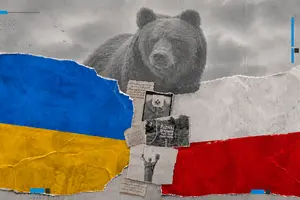

There is a well-known truth in diplomacy: coalitions created to confront a major threat rarely fall apart because of that threat itself. On the contrary, a common enemy usually unites. What tends to weaken and ultimately undermine coalitions are disputes that gradually begin to dominate the agenda, pushing aside the very issue that brought the coalition together in the first place. This is precisely the risk that Ukrainian-Polish relations seem to be facing today.
The recent debates over historical memory, symbols, names, decorations, or individual political decisions are undoubtedly important. History matters. Memory matters. Respect for the sensitivities of societies matters as well. But none of these issues represents an existential challenge today.
The main challenge remains Russian aggression. Period.
It is this threat that defines the strategic meaning of Ukrainian-Polish relations, just as it shapes our relations with many other countries. It is this threat that has made our two nations natural allies and has given new momentum to our strategic partnership. Most importantly, it has created conditions in which even difficult issues of historical memory can eventually be addressed and resolved. It is also this threat that explains the unprecedented support Poland has provided to Ukraine since the first days of the full-scale invasion. And it remains the reason why Ukraine’s success is not only a matter of security for Kyiv, but also for Warsaw.
During wartime, other important issues do not disappear. They will remain relevant long after the major threat is gone. Historical debates do not automatically stop simply because an external enemy exists. However, responsible statecraft is not about ignoring difficult issues. It is about setting the right priorities.
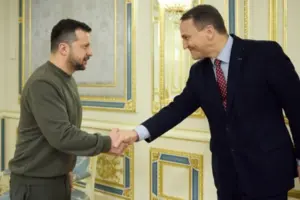
European history offers many examples of nations burdened by painful historical legacies that nevertheless found the wisdom and restraint not to allow the past to destroy the future. They did not abandon their historical memory. They did not renounce their heroes or their interpretation of history. But they understood that there are moments when security, stability, and a shared future require a greater degree of political responsibility than historical disputes.
This is why the current escalation surrounding decorations, honors, and symbolic gestures should be approached with great care. What is needed today is not escalation, but de-escalation. Not the search for new reasons to offend one another, but a return to strategic priorities. Not the expansion of the conflict agenda, but its narrowing. Because the greater the political significance attached to such episodes today, the greater the risk that they will become a permanent feature of Ukrainian-Polish relations tomorrow and in the years ahead.
It increasingly appears that, at some point, emotions got the better of both Kyiv and Warsaw. This happens in politics, and there is nothing unique about it. The problem begins when emotions start shaping not only newspaper headlines but also state policy. Ukraine and Poland have far more reasons to cooperate than to confront one another. We are united by security interests, economic ties, a common European and Euro-Atlantic future, a shared border, millions of human connections, and a shared responsibility for the future of our region.
That is why the main task today is to ensure that neither the ghosts of the past nor the emotions of the present are allowed to destabilize the coalition of friendship, support, and solidarity that emerged between our countries during the most difficult years. Our nations share too many common interests and face too many common challenges to allow secondary issues to overshadow what truly matters. Historical debates will continue. They are not going away. But the future of Ukrainian-Polish relations should be shaped not by disputes over the past, but by a shared responsibility for the future.
At the same time, it would be a mistake to view the current crisis as merely an emotional episode that will resolve itself. On the contrary, it has already created several serious challenges that both Kyiv and Warsaw will need to address.
The first challenge concerns Ukraine’s friends in Poland. There are still many of them. However, today many find themselves in an extremely uncomfortable position. Overnight, they have been placed in a politically toxic environment. Even if they wish to help Ukraine, they are now constrained by an atmosphere increasingly divided between “us” and “them.” For many of these supporters of Ukraine, it has become politically safer to remain accepted within their own circles than to risk accusations of neglecting Polish interests. This is a serious problem that should not be ignored.
The second challenge is the Russian factor. Moscow has always been skilled at exploiting divisions among its opponents. Any deterioration in relations between Ukraine and Poland is viewed there as a strategic gift. For years, the Kremlin has searched for weak points in the Ukrainian-Polish partnership. The current situation creates opportunities that, until recently, Moscow could only have hoped for. To generate such a loud and emotionally charged dispute between two of the strongest opponents of Russian aggression is exactly the kind of outcome the Kremlin will seek to exploit.
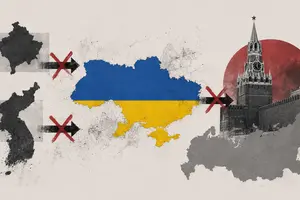
The third challenge is Poland’s domestic politics. It would be naive to believe that the current wave of emotions will quickly disappear. On the contrary, Ukrainian-Polish relations are becoming increasingly integrated into Poland’s domestic political debate. This is particularly true in light of the parliamentary elections scheduled for 2027, which are already beginning to influence the behavior of the country’s main political forces. For President Nawrocki and the political camp supporting him, Ukraine is gradually becoming part of a broader discussion about historical memory, national identity, and Poland’s role in the region. This means that Ukrainian-Polish relations are unlikely to disappear from Poland’s domestic political agenda. And if anyone believes that the current emotional peak will soon be behind us, that may prove to be a miscalculation. The closer Poland moves toward the 2027 elections, the stronger the temptation may become for politicians to mobilize voters through issues related to historical memory and relations with Ukraine.
The fourth challenge is communication. The current situation has created a problem that is still not being discussed enough. Ukraine is rapidly losing the circle of people who are able to explain the Ukrainian position effectively in Poland while at the same time maintaining trust within Polish political, expert, and public circles. Many of those who have been sincere friends of Ukraine for years now find themselves in a politically toxic environment, where any support for Kyiv can be used by their opponents against them. As a result, the number of natural communicators and bridge-builders between our countries is not growing, it is shrinking. This is a dangerous trend. Relations between states are not sustained by official diplomacy alone. Crises are overcome through networks of personal contacts, mutual trust, and people who are able to keep talking to one another even when official positions diverge. That is why Ukraine should already be thinking about restoring and expanding this network of contacts. We need to identify new interlocutors, create new formats for dialogue, and perhaps even consider appointing a special envoy tasked with maintaining Ukrainian-Polish communication during this difficult period.
The fifth challenge is Ukraine’s European and Euro-Atlantic integration. It is difficult to imagine a worse moment for political tensions with Poland. Ukraine is currently engaged in accession negotiations with the European Union and continues its path toward NATO, however little that may be discussed publicly today. Until recently, the opening of new negotiation clusters appeared realistic and almost certain. Today, the situation no longer seems so straightforward. There is a risk that new ad hoc coalitions aimed at slowing Ukraine’s progress could emerge. Different capitals across Central Europe may find common ground in such efforts - from Budapest to Bratislava, from Warsaw to Prague. It is not particularly important who becomes the formal leader of such a coalition. What matters is the outcome.
That is why what Ukraine and Poland need today is not another round of escalation, but a new phase of responsibility. Because, in the end, history judges statesmen not by how skillfully they escalated disputes, but by whether they managed to preserve alliances when they were needed most.
Please select it with the mouse and press Ctrl+Enter or Submit a bug
 Follow on Telegram
 Login with Facebook
 Login with Twitter
 Login with Google