
 Support ZN.ua








How Ukraine Can Build Europe’s Most Resilient Energy System
 Infographics
As distributed energy resources (DER) proliferate, the greatest challenge for Ukraine’s Integrated Energy System (IES) over the coming decade may be not the amount of generation but the ability to control it.
Postwar reconstruction gives Ukraine a unique chance. For the first time in many decades, we can not only restore what was lost but also define the architecture of the future energy system.
These days, the main debate revolves around the number of megawatts needed and the billions of dollars of investment required. But another question is no less important: will we create a system capable of effectively coordinating the vast capacity of distributed energy resources?
It is the answer to this question that will determine the competitiveness, resilience and security of Ukraine’s energy sector in the decades to come.
The consequences of this challenge are already becoming apparent.
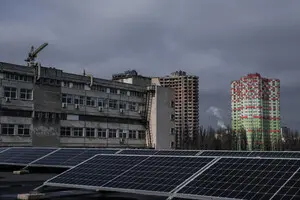
Ukraine is seeing a genuine surge in distributed energy resources. Solar power stations are appearing on the roofs of buildings, businesses and households are installing energy storage, communities and companies are building local power sources, and electric vehicles are gradually being transformed from means of transport into elements of the energy system (V2G).
Just ten years ago, the dispatcher saw a few dozen large power stations. Within a few years, they will have to interact with hundreds of thousands of energy resources of various kinds, and the problem is not that centralized control is no longer needed. The problem is that centralized control alone is no longer enough.
Let me give an example. In 2022–2023, after the first wave of destruction, measures were developed and approved by Ukraine’s National Security and Defense Council for the simultaneous rollout of distributed generation and smart grids. When the effectiveness of the distributed generation brought into operation was analyzed for one cold day in February this year—with the nationwide air temperature averaging -15°C and consumers cut off for 12–16 hours at a time—it turned out that the average capacity utilization factor of DER that day was only 28 percent! One of the main reasons was the lag in rolling out smart grids and telemetry at the substations to which the DER are connected. And it is obvious that as the volume of DER grows, this problem will only deepen. An even bigger problem arises with the efficiency of solar and wind power plants, whose unpredictable operation is causing ever greater economic losses, while the rapid build-up of “household” and office storage is putting internal and distribution networks out of action.
One can conclude that for Ukraine the problem of rebuilding the energy sector lies not only in a shortage of generation but also in a shortage of grid controllability. Every hryvnia invested in the digitalization and automation of networks can yield a greater return from the use of existing distributed generation than a hryvnia invested in building additional generation.
A simple example: if the utilization factor of distributed generation stood at 60 percent, that would effectively equal €250–300 million in savings on the construction of each gigawatt of capacity. If one adds the other components of the cumulative effect of grid modernization—those cited, for instance, by the International Council on Large Electric Systems (CIGRE) in its studies—it becomes the only option not only technically but also economically. Let me cite a few figures: a reduction in grid losses of up to 20 percent while simultaneously increasing their throughput by 25–40 percent without large-scale construction; a reduction in the duration of outages of up to 40 percent; and the main effect—100 percent integration of DER.
Ukraine is already investing billions in distributed energy resources. The key question for the next stage is whether the energy system will be able to use them effectively.
Ukraine stands at a strategic crossroads. The reconstruction and rebuilding of the energy system must not be a return to 2021—it must become a leap into 2031.
I am convinced that we have a chance to use postwar reconstruction not to restore the old energy sector but to create the most resilient and adaptive large-scale decentralized energy system in Europe—one that will become a powerful infrastructure capable of underpinning the state’s new economy.
The Integrated Energy System that Ukraine inherited from the USSR was created for large centralized generation and passive consumers. Its logic lay in the reliable transmission and distribution of electricity from a few large power stations to millions of users.
Now let us imagine Ukraine in 2031:
- hundreds of thousands of rooftop solar plants;
- tens of thousands of commercial storage units;
- thousands of industrial microgrids;
- hundreds of thousands of electric vehicles with V2G;
- thousands of cogeneration units;
- flexibility aggregators;
- energy communities;
- local energy hubs.
In such a system, the dispatcher cannot manage each resource individually because this is already a different class of system.
Ukraine’s IES will require—already now, and all the more so by 2031—the following elements:
- a system operator with an advanced (Converged) SCADA control system;
- system-wide balancing at several levels;
- flow management;
- frequency reserves;
- coordination with ENTSO-E;
- system-wide cybersecurity;
- centralized emergency control.
In other words, the Transmission System Operator (TSO) is not going anywhere. But what it actually manages is changing.
The energy sector is following the same path that the internet took 30 years ago: from a centralized system to a network in which local solutions are combined through global, multi-level coordination.
The war has changed the very notion of energy-system reliability. After 2022, a further criterion appeared for Ukraine, one that was practically absent from energy planning before the war: system survivability (resilience).
In Soviet and post-Soviet logic, the main indicator was reliability. In the new reality, an additional question arises: what happens after part of the system is lost? This is the point at which the following move from buzzword to building block of a defensible critical infrastructure:microgrids;
- distributed intelligence;
- local balancing;
- islanding capability;
- intelligent, automated management of thousands of decentralised assets (DER orchestration);
- rapid automatic restoration (FLISR);
That is why the architecture of Ukraine’s future IES must remain a single synchronous system under the coordination of the Transmission System Operator, but control within it must become multi-level, distributed and digital. Decisions must be taken as close as possible to the point at which an event occurs, and the central level must coordinate the system rather than try to directly manage every resource.
This is precisely the key difference between “rebuilding what existed before” and “building a next-generation energy system.” The debate must not be artificially reduced to a choice between two extremes:
- a rigidly centralized, Soviet-type system;
- a set of autonomous islands with no unified control.

What actually changes?
In the classic model, the TSO performed almost all balancing through a relatively small number of large power stations. In the new architecture, several new levels of control emerge. And each level acquires its own area of responsibility.
The new role of the Distribution System Operator
Historically, Ukrainian distribution system operators (DSOs) were primarily owners and operators of network assets: lines, transformers, substations. In effect, they managed infrastructure. But with a large number of distributed energy resources, this is no longer enough. It is here that the greatest transformation will take place—the evolution of DSOs from managers of cables and transformers into active system operators.
In normal mode, microgrids remain part of the IES. There is no fragmentation; on the contrary, there is coordinated integration.
Ukraine’s future IES must not turn into a set of isolated microgrids, but neither can it remain a system in which all decisions are taken exclusively by a central dispatcher. It must evolve towards a multi-level architecture in which the TSO provides system coordination, DSOs manage active distribution networks, and microgrids and DER platforms carry out local balancing and resource management in real time.
The logic of the new energy system architecture
Ukraine’s IES in 2031 will be a single energy system in which electricity networks and digital technologies operate as a unified whole—and it is precisely this that allows us to understand the modern architecture.

Simply put, the 2031 model looks (see figure) more like this:
Level 1. The Transmission System Operator remains the system integrator.
Level 2. Distribution System Operators become active network operators (smart grid).
Level 3. Microgrids as a new functional element (microgrid).
Level 4. Aggregators as a new market institution.
Level 5. The prosumer, or active consumer, becomes a full participant in the system.
Level 6. A new telecommunications foundation and cybersecurity.
The IES of 2031 is no longer merely an energy system. It is an energy information system with a multi-channel—both wired and wireless—isolated, protected communications infrastructure that becomes just as important as power lines and substations.

Level 7. A new control logic.
This is the main difference from the 2021 architecture. Before: centralized decision-making for most decisions. Now: hierarchical, distributed decision-making. For example:
- the inverter regulates reactive power locally;
- the BESS stabilizes the local node;
- the microgrid performs its own balancing;
- the DSO eliminates local overloads;
- the TSO maintains system frequency.
Each level solves its own task. The future system does not centralise all decisions but distributes them across levels.
To describe the concept briefly, it might look like this.
Ukraine’s IES in 2031 is a single, integrated cyber-physical energy system built on a smart-grid platform, in which the TSO ensures system coordination and reliability, DSOs manage active distribution networks, microgrids carry out local balancing, aggregators integrate distributed resources, and prosumers become full participants in the energy market.
***
Ukraine has been given a unique chance to rethink its own energy sector. We can restore the system of the past. Or we can build the system of the future. The question is no longer how many megawatts will be brought into operation. The question is whether a system will be created that is capable of coordinating millions of distributed energy resources and becoming the foundation of a new digital economy.
To be frank, the question of rebuilding and transforming the Integrated Energy System, as set out here, goes far beyond technology and resources. It is already about the institutional capacity of the state. The state level—that is, the country’s top leadership: the president, the Verkhovna Rada, the government—no longer has either the time or the choice of whether or not to undertake this program. The reconstruction of Ukraine’s energy sector is not merely an infrastructure project. It is a project to create a new economic architecture for a future advanced European state.
If everything is done as the times demand, then in ten years’ time Ukrainians will hardly stop to think about how the energy system works—just as today we do not think about how the internet works. But it is the decisions taken today that will determine whether Ukraine’s energy sector becomes the foundation of a new economy or remains a modernized version of the system of the past, with all its problems and shortcomings.
The future of Ukraine’s energy sector will be determined not by the number of new power stations but by the system’s ability to manage complexity.
Please select it with the mouse and press Ctrl+Enter or Submit a bug
 Follow on Telegram
 Login with Facebook
 Login with Twitter
 Login with Google