
 Support ZN.ua








Ukraine in 2026: A Military-Political Forecast



In the mid-2020s, the world has reached a point of strategic reckoning that will determine the trajectory of events on the global stage for many years to come. Today, there is an equal likelihood that this year’s developments will go down in history either as several local but interconnected military conflicts or as the prelude to a new world war fought across different, far-flung theaters of war—Central Europe, the Middle East, the Baltic region and South Asia.
The war in Ukraine has definitively ceased to be a purely European military conflict and has been transformed into a geopolitical knot in which the interests of the world’s principal players—the United States, Russia, China, India, the countries of Europe and the Middle East—have become entangled.
This analysis of Ukraine’s military-political scenarios for 2026 is based on current geopolitical trends, expert assessments and the dynamics of global markets. The key factor this year, which will largely determine the likelihood of the scenarios proposed, will be the depletion of resources: military, security, financial, material and psychological.
The dynamics of hostilities and the course of events in Ukraine will depend directly on the trajectory of the war in the Middle East, the ability of global markets to adapt to the oil-and-energy shock, the stability of Russia’s resource capacity, Ukraine’s defense capacity and the psychological resilience of Ukrainian society.
|
Key financial indicators defining the limits of the scenarios |
|
Ukraine’s state budget, approved with a deficit of about 19% of gross domestic product (GDP)—around UAH 1.94 trillion (approximately $44 billion) Defense spending by the parties to the war: Ukraine—around UAH 2.8 trillion (approximately $65 billion) Russia—around RUB 14.9 trillion (approximately $177 billion) External assistance from the European Union to Ukraine in the amount of €90 billion over two years to cover the budget deficit and provide additional financing for defense spending |
Models of Ukraine’s and the world’s future
The proposed scenarios are unlikely to be realized in pure form. Each option may combine trends and factors from different scenarios. For example, one scenario may combine low oil prices with the EU’s failure to provide Ukraine with a €90 billion loan.
- Optimistic scenario: “Ukraine gains the upper hand and Russia is exhausted”
Probability: low–15–20%
This scenario is based on the assumption that Ukraine will make a further successful transition to a “drone war” and achieve both a qualitative and quantitative technological advantage in it. The domestic defense-industrial complex will scale up to mass production of long-range missiles and as many as 7 million drones of various types a year, making it possible to almost completely offset Russia’s advantage in manpower. (Statements by certain officials about producing up to 20 million drones of various types a year look highly unrealistic even under an optimistic scenario.)
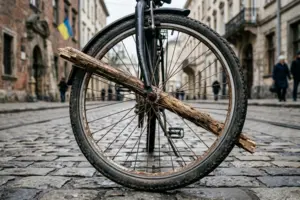
Ukraine will receive an EU loan of €90 billion, making it possible to strengthen the domestic defense industry. At the same time, a US-Israeli coalition will carry out a successful military campaign against Iran, driving oil prices back down to prewar levels and increasing supplies of Western weapons to Ukraine.
The Middle East Factor
The US-Israeli military campaign against Iran will lead to the destruction of Iran’s military potential, its ballistic-missile production plants and its infrastructure for producing nuclear weapons. Russia will lose yet another ally. The United States will reopen the Strait of Hormuz to free navigation, bringing energy prices down. The price of Brent crude will return to $55–60 a barrel.
The economic conditions in Ukraine and Russia
Ukraine’s GDP will grow by 4.5–5 percent thanks to increased output from domestic defense enterprises, the unblocking of logistics and the return of some refugees. The hryvnia exchange rate will stabilize in the range of UAH 43–44 to the dollar.
The Russian economy will begin to show signs of stagflation: high inflation (more than 15%) would combine with an end to GDP growth. A fall in world oil prices to $60–65 a barrel (and Russian Urals crude to $40) would create a hole in the Russian budget that will be impossible to cover by internal reserves.
Russia’s internal economic crisis will deepen because of falling real incomes and the mounting strain in its defense industry. Representatives of the Russian elite would begin covert capital flight.
Ukraine’s military needs
Modern weaponry will be delivered to Ukraine on a large scale, including aircraft, long-range missiles, air-defense systems and missiles for them.
Alongside the mass production of various types of drones (up to 7 million units a year, according to the plans of Ukraine’s Defense Ministry), Ukrainian defense enterprises will produce sufficient numbers of long-range cruise and ballistic missiles, shells and other munitions.
The psychological state of the population and elites in the warring countries
Ukraine will experience a social upsurge thanks to the liberation of certain territories—for example, through the creation of a land corridor to Crimea or the de-occupation of part of the south.
The Russian elites, recognizing the futility of continuing the war against Ukraine, will begin quietly sabotaging Kremlin decisions. Preparations will begin for a “soft” transition of power.
Conclusions
Russia will be forced to look for a way out of the war and agree to a “ceasefire” because of the internal threat of economic and political collapse.
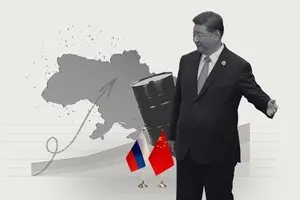
A process of de-occupation will begin, backed either by security guarantees from NATO or by strong bilateral agreements.
- Baseline Scenario: “A frozen conflict”
Probability: above average—55–60%
This is the most likely scenario, under which the war continues throughout 2026 in a trench mode, while military operations move into a phase of high technological complexity.
Neither side will hold a decisive advantage. The front will stabilize along the contact line, with local successes for both sides.
The Middle East factor
The US-Israeli war against Iran will become protracted, lasting several months. Shipping through the Strait of Hormuz will be restricted and unstable. Global markets will react nervously to such a development, keeping oil prices in the $75–85 range. While allowing Russia to balance its budget, this will not give it the resources for large-scale formation of new military units or for gaining a technological edge over Ukraine.
The economic conditions in Ukraine and Russia
Ukraine will remain stable thanks to internal reforms and EU financial assistance, but economic growth will be held back by continued attacks on the energy system and ongoing hostilities. Ukraine’s GDP will grow by up to 2.5 percent, the average dollar exchange rate will stand at UAH 45.7 to the dollar, and inflation will slow to 7.5 percent.
Russia will shift onto the rails of “war capitalism”: GDP growth of no more than 1 percent will be sustained by weapons production, while the civilian sector of the economy will gradually degrade, not least because of the total labor shortage caused by mobilization.
Ukraine’s military needs
Western elites will incline toward a policy of “controlled conflict.” They will provide enough weapons for Ukraine’s defense, but not enough for victory over Russia, fearing its uncontrolled collapse.
Supplies of US weapons to Ukraine through the PURL mechanism will be limited because of the war against Iran. There will be an urgent need for a stable supply of anti-aircraft missiles for Patriot air-defense systems.
Ukraine will be forced to focus on its own production of weapons and equipment, above all drones—up to 5 million a year.
The psychological state of the population and elites in the warring countries
Psychological fatigue will prevail in both countries.
In Ukraine, this will manifest itself in declining trust in the president and the authorities as a whole, reduced volunteer activity and growing demand for so-called fair mobilization.
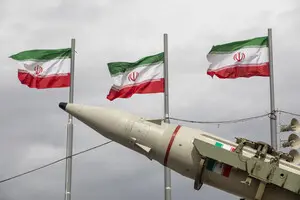
In Russia, it will take the form of total apathy. The Russian population will not actively support the war, but neither will it come out in mass protest, perceiving the “special military operation” as an inevitable natural disaster.
Conclusions
The front will remain stable, and neither side will have the resources for a decisive offensive. The parties will limit the negotiation process to ceasefire arrangements and troop disengagement, without any further political settlement of the conflict or the formal conclusion of a peace agreement.
The Russian-Ukrainian war will turn into a “frozen” conflict along the lines of Cyprus or Korea: the territories temporarily occupied by Russia will remain legally Ukrainian, while the line of the front will in practice become the new border between Russia and Ukraine.
- Pessimistic Scenario: “Ukraine is forced into peace on Russia’s terms”
Probability: low—20–25%
This scenario could materialize if Western aid falls critically, if the Ukrainian leadership makes strategic mistakes against the backdrop of a global economic crisis, and if Russia succeeds in carrying out its mobilization. That would allow the aggressor’s armed forces to build up strategic reserves for a new large-scale strike against Ukraine.
The Middle East factor
The fighting in Iran will drag on, leading to a sustained blockade of the Strait of Hormuz. Oil prices will remain steadily in the $120–150 per barrel range. Russia will reap windfall oil profits and convert them into the resources needed to sustain combat operations on the Russian-Ukrainian front.
The war in Iran will absorb 70 percent of US attention and resources. The EU, because of its internal contradictions, will be unable to provide Ukraine with financial assistance.
The economic conditions in Ukraine and Russia
Ukraine will face a critical budget deficit because of reduced external support, GDP will contract sharply, and the hryvnia will undergo steep devaluation. Continued attacks on the energy system will lead to the gradual deindustrialization of the country.

Russia, by contrast, will be able to stabilize the ruble with “oil money” and carry out a new wave of mobilization. Under such conditions, it will be capable of financing military operations for another two to three years without systemic risks or losses for Putin’s regime.
Ukraine’s military needs
Ukraine will face a critical shortage of ammunition and equipment, including drones. The army will shift to a “defensive crouch,” losing certain settlements and territories because it will be unable to wage effective counter-drone and counter-battery warfare.
Russia’s air force will gain air superiority over Ukraine. Because of the total shortage of anti-aircraft missiles, critical infrastructure and civilian targets in Ukraine will be destroyed systematically.
The psychological state of the population and elites
In Ukraine, the population will lose faith in the possibility of continuing the fighting. An internal national split will come to the surface and deepen. “Peace at any cost and on any terms” will be the dominant mood. The conflict between opposition forces, the military elite and the political leadership over the strategy for what to do next will become public.
In Russia, the elite and the population will consolidate around the idea of an “ultimate victory” over Ukraine.
Conclusions
This scenario points to a high risk that Ukraine could be forced into peace on Russia’s terms because of the exhaustion of internal resources and a critical reduction in Western aid. If realized, it will lead to highly unfavorable terms of an armistice or peace agreement: renunciation of the NATO bid, or neutrality, recognition of territorial losses, limits on the size of the armed forces and humanitarian concessions on issues such as the church and the language.
This would create the risk of internal civil instability in Ukraine after the fighting ends.

Key takeaways
- For Ukraine, 2026 will be a year in which resources—military, technological, financial and psychological—become a front of their own.
- To realize even the baseline scenario, Ukraine will need not only to hold the line of contact, but also to secure the flow of international aid and focus on developing its own defense industry, especially the production of drones and long-range missiles. One of the main threats to Ukraine is the potential loss of internal unity and a slide into social depression.
- The US-Israeli war against Iran is a “black swan” that could damage Ukraine’s defense capacity. For now, this military conflict has led to oil shortages and rising energy prices.
- Oil and gas remain Russia’s main financial and economic weapon. If oil prices on the world market return to their pre-Middle East war levels, and if the United States restores anti-Russian sanctions, then Russia will sooner or later lose the economic arms race.
- In 2026, Ukraine in 2026 must focus on expanding its domestic defense industry as much as possible, producing modern weapons, and preparing for a prolonged positional confrontation, in which victory is won not only on the battlefield, but through the exhaustion of the aggressor’s economy.Конец формы
Please select it with the mouse and press Ctrl+Enter or Submit a bug
 Follow on Telegram
 Login with Facebook
 Login with Twitter
 Login with Google