
 Support ZN.ua








Sanctions and Russian Science: How World’s Major Scientific Publisher Helps Circumvent Them
 Document
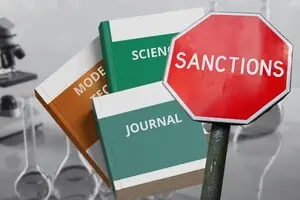


Springer Nature is one of the world’s largest and most influential academic publishers, with thousands of employees in more than 50 countries and headquarters in Berlin and London. Each year, it publishes more than 13,000 books and around 3,000 journals. Among them are Nature and Scientific American, whose pages have featured Albert Einstein as well as 150 other Nobel laureates. Work appearing under the Springer Nature imprint is, a priori, regarded as benchmark and authoritative in the world of science.
After the start of Russia’s full-scale invasion, Springer Nature condemned Russian aggression and declared its support for Ukraine. It also announced a halt to new sales of products and services to research institutions in Russia and Belarus, and granted Ukrainian scholars free access to its resources as part of the international Research4Life initiative.
At first glance, this appears to be a consistent and principled position. But there is a substantial gap between Springer Nature’s statements and its actions: as the data we have gathered show, it still publishes around 200 Russian journals.
How is this possible? And what does it mean not only for Ukraine, but for the global scientific community?
The sanctions workaround
Russian journals reach Springer Nature not directly, but through an intermediary—Pleiades, a company that presents itself as American even though its content is overwhelmingly Russian in origin. Of Pleiades’ 177 journals, only nine are unconnected to Russian scientific institutions.
That this was no coincidence is made clear by an interview with Pleiades chief Aleksandr Shustorovich, published on the Russian Academy of Sciences website at the very start of the full-scale war: “Our scientific products, perceived as American, have been preserved with the understanding that they represent precisely the Russian scientific environment... We created a very important precedent and secured the support of all the largest global publishers for this practice in the form of a joint statement. When I say ‘we’, I of course mean Springer Nature as well, along with other respected colleagues who helped us... In science, individual researchers now have the same access to Western readers as before.”
To minimize sanctions-related risks, Pleiades re-registered to itself the founder’s rights to more than 100 journals of the Russian Academy of Sciences. Payments to Russian authors do not go directly to them either: they are processed as “salary” through a separate structure—the Cypriot firm Gertal Holding. As a result, royalty payments to Russian scholars are disguised as routine salary payments. This helps them bypass the strict anti-money-laundering filters and compliance checks applied to cross-border commercial payments.

The link between Gertal Holding Limited and Russian business is also evident from corporate data. The company’s director, Aleksandr Petrakov, is also the head of the Russian company Megapolis LLC, which is in turn owned by the American company Pleiades Publishing, Inc.
Thanks to this scheme, Western publishers are effectively supporting the infrastructure of Russian scientific editorial offices. As early as June 2023, Andrey Zabrodskii, a member of the Russian Academy of Sciences, said in an interview that the funds Russian journals were receiving from Pleiades / Springer were six times higher than their state funding.
Consequences
The Pleiades / Springer partnership, beyond the very fact of circumventing the sanctions regime, has a whole range of negative systemic effects.
First, anti-Ukrainian propaganda narratives are being disseminated under the guise of scholarly articles. For example, in the journal Herald of the Russian Academy of Sciences, the article titled Zigzags of the Post-Imperial Syndrome explains the causes of the war as follows (p. 494): “First of all, it is the irresponsible, short-sighted and openly provocative policy of the nationalist, European-integration-driven Ukrainian political elite, which over the past 17 years, with the support of extremist groups and Western countries, supplied it with weapons, has pursued an openly anti-Russian course, building a new Ukrainian identity and statehood based on it.”
And of course, “bandera”, “nazis”, discrimination of the Russian language” and all other stains of Russian propaganda you supposed to find on Russian television, but not in academic paper published by respectful international publisher (p.495):
“The glorification of Bandera, discrimination against the Russian language, and calls for reprisals against the hated Muscovites became the norm of public consciousness and behavior supported by the Ukrainian authorities, forming the idea of Ukraine as a neo-Nazi state, which was used by the Kremlin as a justification for the subsequent military special operation.”
The publication of articles containing hate speech and wartime propaganda points to a complete collapse of peer review at a major international publisher. No reputable editor would have allowed such a text through. It appears that Springer exercises no editorial control over content supplied by Pleiades, effectively selling its seal of legitimacy to Russian propagandists.
Second, Russia’s annexation of Ukrainian territories is being legitimized. Based on Scopus data, we have identified nearly 400 cases in which Springer classified Ukrainian territories, universities or scientific institutions claimed by the aggressor state as Russian.
For example, on Springer’s official website, Kherson is designated as a Russian city, despite remaining under Ukrainian control.

Similar cases also concern Crimea and Donbas. For example, in the publisher’s materials, Simferopol appears as Russian territory.

Springer Nature’s standard explanation and stated position on this is as follows: “Springer Nature remains neutral with regard to jurisdictional claims in published maps and institutional affiliations.”
Third, academic standards are being violated. As our research shows, Russian journals often falsify the composition of their editorial boards. Roughly 70 percent of foreign members of such boards either were unaware of their “appointment” or played no real part in the boards’ work. This points to the merely formal nature of these bodies and undermines trust in the peer-review process.
We also uncovered this systemic falsification in journals published by Springer / Pleiades, including Solid Fuel Chemistry, Russian Journal of Plant Physiology, Geotectonics, Steel in Translation, Russian Journal of Coordination Chemistry, Lobachevskii Journal of Mathematics, Physics of Metals and Metallography, Inorganic Materials: Applied Research, as well as dozens of others.

Fourth, there are documented cases in which Pleiades Publishing has violated intellectual property rights and effectively “stolen” journals. A striking example is the five journals belonging to the Ioffe Physical-Technical Institute, namely Optics and Spectroscopy, Physics of the Solid State, Semiconductors, Technical Physics and Technical Physics Letters.
In July 2022, the Ioffe Institute officially and unilaterally terminated all licensing agreements with Pleiades, thereby legally withdrawing the publisher’s right to use the institute’s trademarks and content. Yet instead of ceasing publication of these journals, Pleiades Publishing continued issuing versions of them, preserving their historical titles and ISSNs but without the participation of their lawful editorial teams. In effect, it created “clones.” To conceal this fact, both Springer Nature and Pleiades removed the editorial-board lists from their websites, replacing them with a vague disclaimer stating that “information on the editorial board is under development.”

The illegitimacy of this scheme was confirmed by the ISSN International Center under UNESCO, which recognized the Ioffe Institute as the sole lawful publisher of the journals bearing those titles. Moreover, in January 2026, even a Russian intellectual property court ruled that Pleiades had illegally used those trademarks and ordered it to pay more than 460 million rubles in damages.
The content Springer Nature is now selling under the titles of these journals is therefore, in effect, counterfeit.
Fifth, information about cooperation with sanctioned persons is being concealed. In the English-language versions of journals on Springer’s website, the names of their real heads “disappear” if they are under sanctions. Or their status is downgraded—for example, editors-in-chief are listed merely as ordinary members of the editorial board.
A telling example is the journal Doklady Physics—the translated version of Doklady Rossiiskoi Akademii Nauk. Fizika, Tekhnicheskie Nauki. On Springer’s website, instead of an editorial-board list, there appears the now-familiar message: “information is under development.” Given that the publisher has been distributing this journal for decades, such a claim is highly suspicious and legally untenable. Meanwhile, in the Russian version of the journal, Sergei Garnov is named as editor-in-chief. He is director of the Prokhorov General Physics Institute of the Russian Academy of Sciences and is under US sanctions.
Springer’s partnership with Pleiades results in this authoritative publisher indirectly cooperating with sanctioned organizations. For example, Springer publishes Bulletin of the Lebedev Physics Institute—the translated version of Kratkie Soobshcheniya po Fizike. That journal belongs to the Lebedev Physical Institute, which is also on the US SDN list and under EU sanctions.

The Springer Nature platform is also being used to publish research carried out under “state assignments” commissioned by sanctioned Russian institutions. For instance, in recent publications from 2025 in Acoustical Physics and Bulletin of the Russian Academy of Sciences: Physics, it is explicitly stated that the research was conducted for the Khristianovich Institute of Theoretical and Applied Mechanics of the Siberian Branch of the Russian Academy of Sciences, which is under US and UK sanctions; the Institute of Applied Physics of the Russian Academy of Sciences, which is under US, EU, Swiss, Canadian and Japanese sanctions; and the Kazan Scientific Center of the Russian Academy of Sciences, which is subject to US sanctions.
A test of responsibility
As we can see, the consequences of cooperation with Russian structures extend far beyond academic ethics; they involve the circumvention of international sanctions, financial manipulation and the erosion of the infrastructure of global databases. To move this issue into the legal sphere, Ukraine’s Ministry of Education and Science sent Springer Nature’s management an official inquiry and a detailed analytical memorandum, the materials of which formed the basis of this article. One of the article’s authors took part in preparing those documents as a member of a working group under the aegis of the ministry. On 28 February 2026, the ministry received confirmation from the publisher that the documents had been received.
A month has passed. Did Springer Nature provide an official response to the Ukrainian ministry’s legal inquiry? No. Instead, the text of the confidential letter from the Ministry to a respected European publisher appeared in the hands of propagandist Aleksandr Yunashev and the Kremlin mouthpiece RIA Novosti. When a European publisher turns a blind eye to manipulation involving databases and ties to sanctioned institutes, this can still be cynically written off as business interest. But when official legal correspondence ends up in the hands of Putin’s propagandists, the myth of “academic neutrality” begins to crumble.
In its official investor documents—in the IPO prospectus of October 2024—Springer Nature stated that its distribution agreements with Pleiades run until December 2026. Springer Nature therefore has every reason not to extend its cooperation with Pleiades Publishing.

The decision on whether to extend that contract will be a test: is this respectable European publishing giant prepared to act in accordance with international law and its own standards, and to remain a leader of global science? Or will it be drawn into illegal schemes and serve as a convenient instrument for spreading Russian propaganda and circumventing sanctions? Its choice will be telling not only for Ukraine, but for the entire international scientific community.
Please select it with the mouse and press Ctrl+Enter or Submit a bug
 Follow on Telegram
 Login with Facebook
 Login with Twitter
 Login with Google