
 Support ZN.ua








Ukrainian crystals for the Large Hadron Collider: when science is stronger than war


From the editor:
ZN.UA regularly reports on the achievements of Ukrainian scientists. But the article you are about to read is special. We simply could not help but tell you its backstory. Because the author and his colleagues will not say this about themselves out of modesty. And we cannot remain silent about it.
Imagine: March 2022, the beginning of a full-scale invasion. Fierce battles are raging for Kharkiv. The city is under heavy shelling. And at this time, in the basement of the Kharkiv Institute of Scintillation Materials, crystals are being grown for the hadron collider at CERN. Not in Geneva or Lyon, but near the front line.
This research is extremely important for fundamental science. Ukrainian scientists have received a grant for it from the European Horizon Europe programme. Their international partners are CERN and the French Institute of Light and Matter (CNRS). This is not the first time Ukrainians have received EU grants, but it is the first grant in the history of the Horizon Europe programme to be coordinated by a Ukrainian scientific institution.
This project was conceived before the full-scale invasion, and the news of the grant reached our scientists when rockets were tearing through the sky over Kharkiv and enemy tanks and artillery were stationed in the surrounding areas. Some of the researchers had already left the city at that point, but those who remained did not abandon the project.
They did it in the basement of the institute and prayed for the generator, because high temperatures are needed to grow crystals. And in the first months after the invasion, this same basement provided shelter for the scientists' families during the shelling. Probably never before in the world have fundamental science experiments, important for its breakthrough, been conducted in such conditions. And never before have newborn crystals been warmed by such heat and such faith in science and Ukraine.
Now about the scientific component. The project in question is called TWISMA. It is headed by Prof. Oleg Sidletskiy, Doctor of Technical Sciences, Head of the Crystal Growth Technology Department at the Institute of Scintillation Materials of the National Academy of Sciences of Ukraine. The institute itself, under whose wing the project was implemented, is headed by Academician Borys Grynyov, one of the researchers who received the scientific Oscar — the international Breakthrough Prize for research in fundamental physics.
Why is the Ukrainian TWISMA project so important for the development of science? The Large Hadron Collider (LHC) is a place where particles are accelerated to almost the speed of light and collide 40 million times per second. Each collision is like a micro-explosion, which is monitored by scientists. To ‘see’ these events, detectors are placed along the collider tunnel — giant devices that record the traces left by particles after collisions.
Down there, underground, everything happens at the limits of what is possible: enormous energies, powerful radiation, speeds that are difficult to imagine. Therefore, detectors must not only be accurate, but also able to survive in conditions that would destroy any other equipment. The Institute of Scintillation Materials of the National Academy of Sciences of Ukraine is engaged in the development of such detectors, or more precisely, the crystals inside them.
Scintillation is a short flash of light that occurs in a substance when a particle passes through it. This property is very valuable for experiments in elementary particle physics. But for this flash to be bright, stable, and accurate, the substance must be crystalline. It is precisely a crystal with a clear internal structure that allows the ‘light traces’ of elementary particles to be recorded, and the better its quality, the clearer the picture of what happened at the moment of collision.
The TWISMA project team worked on creating a new generation of such crystals. And our scientists succeeded. They did it. They persevered. The experiment was successful, and its results were discussed at prestigious international scientific conferences in Italy and the United States. This is a story that Ukraine should be proud of. This is true heroism.
Oleg Sidletskiy tells us more about how the project was implemented.
Crystals are not grown online
As TWISMA is the first Horizon Europe project coordinated by a Ukrainian organisation, its participants had to face serious scientific and organisational challenges. Being pioneers is always difficult, especially in a frontline region during wartime.
The application for the project was submitted before the full-scale invasion began. But the news that we had won the competition and received a grant came in May 2022. At that point, the enemy was on the outskirts of the city, and most of the institute's staff were forced to leave Kharkiv.
Unfortunately, crystal growing is not an activity that can be carried out remotely and requires a solid material base. Naturally, at that moment, the project team and ISMA management had doubts about their ability to carry out the project at a high level. There was little time to think, because otherwise the European Commission would have transferred the funding to another project that ranked lower in the evaluation.
Fortunately, in the summer of 2022, the military situation around Kharkiv stabilised somewhat, and the decision was made to start the project. The saving grace was that the crystal growth facility was located in a deep basement. So the basement became a refuge for dozens of scientists and their families during the first weeks of the full-scale invasion — the first ‘point of resilience’ when they were not yet being created centrally.
However, the main vulnerability for experiments remains the stability of the power supply. The crystal growth process takes place at temperatures of up to 2000 °C, when even a few seconds of interruption in the power supply leads to irreparable deterioration in the quality of the crystals grown.
In addition to technical complications, there were also bureaucratic ones, because no one in Ukraine knew how, for example, to transfer project funds from the coordinator, ISMA, to foreign scientific partners under the conditions of currency transaction restrictions imposed by the National Bank of Ukraine. It took a considerable amount of time to register the project with the Ministry of Education and Science. A separate challenge was finding common ground with the Ukrainian bank, which sometimes demanded absurd documents from our partners, such as confirmation that the CNRS (the French equivalent of the Ukrainian Academy of Sciences) is not funded by and is not owned by Russia or Belarus or their citizens. The issue of short-term trips abroad for scientists of draft age was also not sufficiently regulated for a long time.
What we managed to create: scientific results
The aim of the experiment was to create a new generation of crystals that would not only be highly sensitive but also withstand extreme loads, in particular radiation. In conditions that can be described as extreme without exaggeration, the team managed to create a series of scintillation crystals with improved properties. Some of them, along with single-crystal fibres, were manufactured at ISMA, while others were manufactured at ILM in France. All samples are tested on prototype detectors at CERN. The project was successful thanks to the fantastic support of the team leaders from international partners in the project — Dr. Kheirreddine Lebbou at ILM and Dr. Etiennette Auffray at CERN. But above all, the basis for success was the dedicated work of the staff of the Single Crystal Growth Technology Department, led by Deputy Head Dr. Iaroslav Gerasymov, and other ISMA departments.
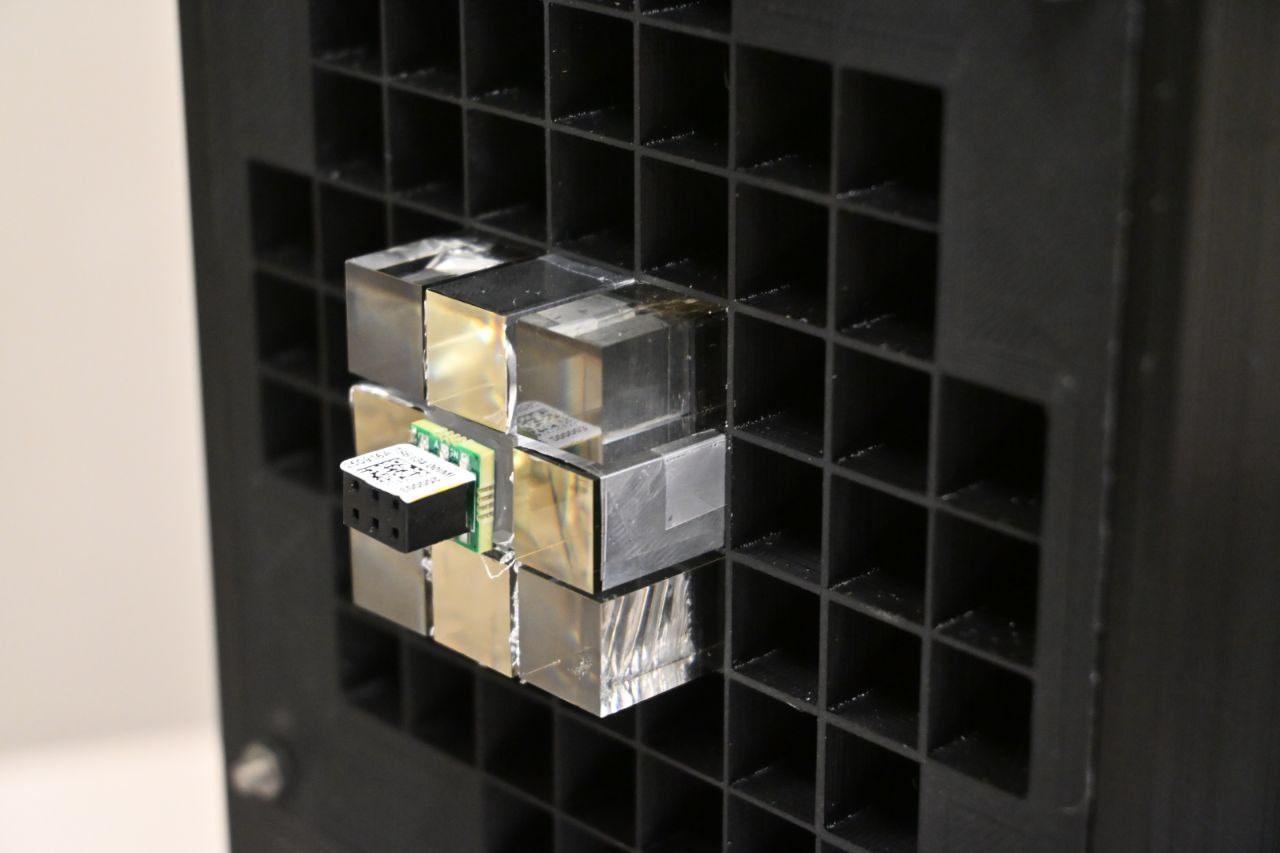
What has been achieved? Several types of new scintillation crystals with improved parameters have been grown and tested. These are crystals based on rare-earth garnet crystals, which actively ‘flash’ when particles hit them. They are promising for one of the most difficult places to operate in the hadron collider. This is the LHCb detector area, which is located closer to the particle collision point and therefore receives the highest radiation load.
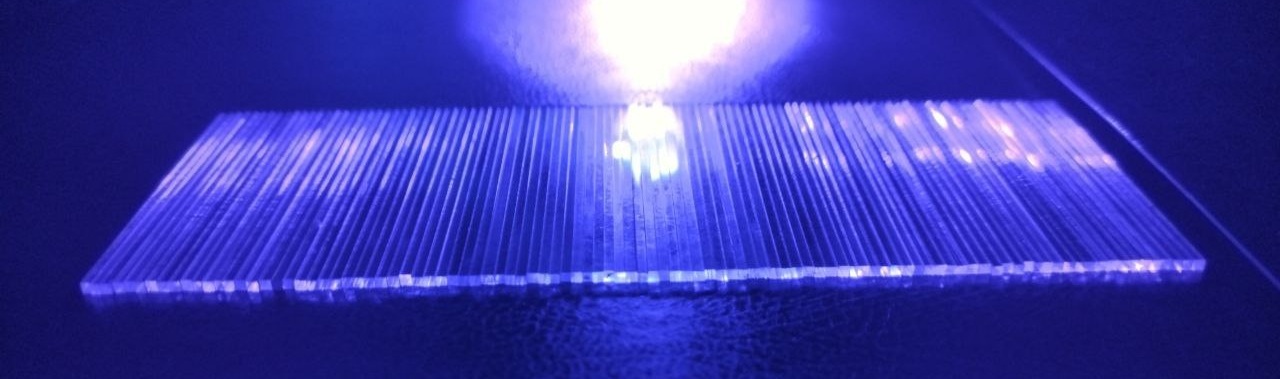
Another group of samples, BSO crystals, have shown potential for use in another type of new calorimeter. These crystals can measure the energy of particles passing through the crystal when two types of glow are registered simultaneously: scintillation and Cherenkov, which arise from different mechanisms. The combination of these signals allows for more accurate identification of particles passing through the detector.
Cherenkov radiation is a type of glow that occurs when a charged particle (such as an electron) passes through a transparent medium (water, glass, crystal) faster than light propagates in that medium. This radiation is similar to an optical shock, like a sound barrier in air. When an aeroplane flies faster than sound, we hear a loud ‘boom’. When a particle moves faster than light in a substance, a bluish glow appears, which physicists record in special detectors.
When science goes beyond the laboratory
Projects such as TWISMA are not only scientifically significant, but also have a social and educational value. After all, young researchers also took part in it. They gained invaluable experience researching the properties of crystals at CERN and the Institute of Light and Matter in Lyon. Three scientific schools were also held as part of the project — two in Kharkiv and Lviv (in a mixed format) and one in Geneva. At these schools, specialists from partner organisations gave presentations not only on the development of scintillators for particle physics, but also on the protection of copyright for scientific results, the preparation of scientific projects, and the commercialisation of scientific developments. These are extremely useful topics for scientists.
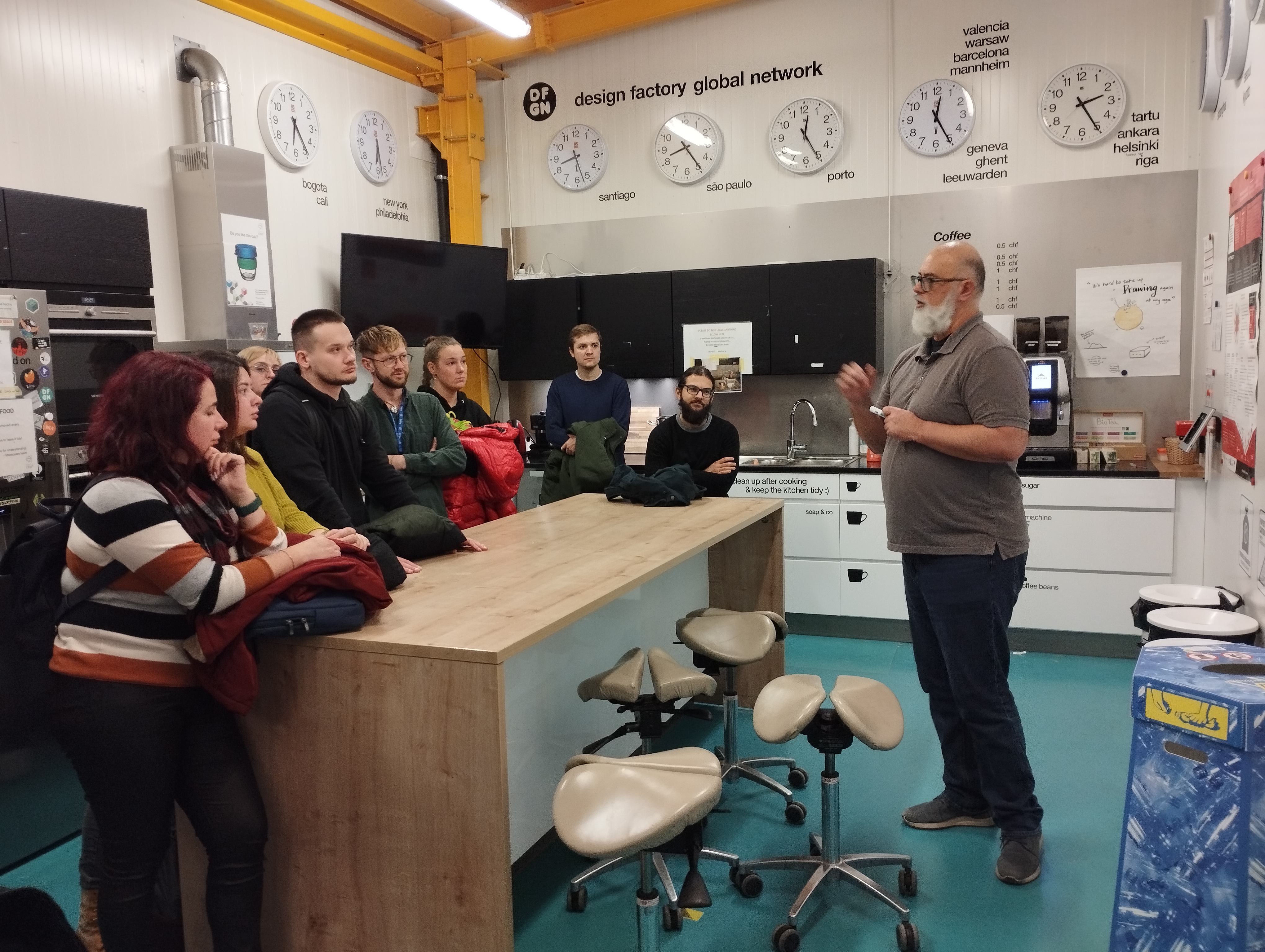
In 2024, TWISMA was presented at the leading global SCINT conference in Milan. This is the world's most prestigious event in the field of scintillators. Eight scientists from ISMA participated there. This is not only recognition from the international community, but also an example of how Ukrainian science maintains its subjectivity and participates in setting the global agenda.
The TWISMA project is a good example of Ukrainian scientists collaborating with leading laboratories around the world with the support of European programmes. This undoubtedly increases the competitiveness of Ukrainian science on the international stage and is particularly relevant in the context of underfunding of science during the war.
Please select it with the mouse and press Ctrl+Enter or Submit a bug
 Follow on Telegram
 Login with Facebook
 Login with Twitter
 Login with Google