
 Support ZN.ua








Energy Independence for Communities. A Step-by-Step Algorithm for Escaping the Blackout Trap

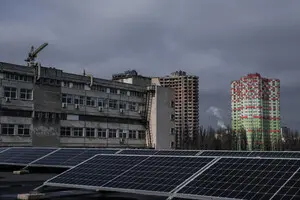



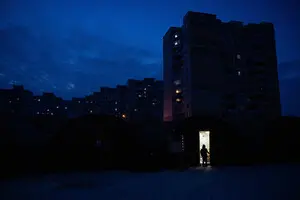
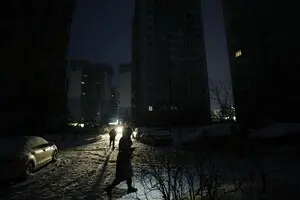
After nearly four years of systematic strikes on critical infrastructure, Ukraine lives in a new energy reality—one where electricity is a daily battleground. We live between air-raid sirens and outage schedules, between the rumble of diesel generators and reports of yet another damaged substation.
Each strike on a transformer substation is a direct blow to our stability, a threat to our lives. Every destroyed thermal power plant means cold homes, stalled hospitals and frozen factories. Every few hours without electricity is a reminder that a centralized system is acutely vulnerable in wartime.
But do we have the right to remain so dependent on infrastructure that a single missile can destroy? The longer we leave energy strictly centralized, the higher the cost of each strike on the grid: the state patches up the damage, businesses lose customers, communities slip into “survival mode.” It is a trap: we rebuild what can be destroyed again. The way out is to ensure that even under attack the country does not go dark entirely. Critical infrastructure, vital services, small manufacturers and social facilities must secure local energy supply—their own generation, storage and micro-grid solutions. Energy cooperatives can become the mechanism for launching such solutions at scale.
Europe, meanwhile, offers unique experience of deep energy transformation. Millions of people there stopped waiting for governments or major corporations to solve their energy problems long ago. Instead, they took part of the sector into their own hands, forming energy cooperatives to secure self-sufficiency in electricity.
Of course, for many Ukrainians the word “cooperative” still carries negative associations—even though what was once labelled a cooperative in Ukraine did not align with internationally recognized principles. In short, a classic cooperative could be defined as an association of people who join forces to provide themselves with necessary goods or services at cost price, i.e., on terms more favorable than the market offers.
European formula: people and communities as successful energy market players
Germany is the undisputed leader of Europe’s cooperative energy movement. There are 998 energy cooperatives, 220,000 members, €3.6bn in investments and 8TWh of “green” electricity generated in 2025. The vast majority are located in rural areas. This is not urban romanticism, but pragmatic development models that help regions avoid energy dependence. Eighty percent of cooperatives work with solar power, 25 with wind energy, 28 with district heating networks and 20 percent successfully store energy. This is no longer simple generation, but micro-energy systems with high levels of autonomy.
Here are just a few examples of successful energy cooperatives in Germany:
- BürgerEnergieGenossenschaft-58 operates 139 photovoltaic systems with a combined capacity of 7MW, supplying electricity to around 1,500 homes. Members are actively involved in voluntary work within the cooperative, significantly reducing labor costs;
- BürgerEnergie Berlin has implemented more than 40 rooftop solar systems totalling 2MW. It actively develops storage products and secures 100 percent of its investment from local residents;
- WeilerWärme eG exemplifies a local initiative creating a sustainable heat supply system based on biomass and renewable energy. It operates a heat network over 42km long, serving more than 722 households. Beyond its biomass boiler plant, the cooperative develops photovoltaic systems and introduces electric car-sharing, building an integrated local energy infrastructure. Working in partnership with local authorities, WeilerWärme eG models an integrated energy system for small communities, combining cooperative democracy, energy independence and environmental responsibility. In Germany, the interests of the cooperative sector are represented by the DGRV, which hosts a federal office for energy cooperatives. Separately, there is the BBEn network, which brings together participants in community energy, with cooperatives as one of the main categories of members.
France. Enercoop is unique in Europe. Its network of regional structures covers the entire country. It has more than 64,000 members and 112,000 customers. The SCIC model ensures participation not only of consumers but also employees, municipalities and civic organizations. One figure speaks volumes: 402 of Enercoop’s 524 production sites are community or municipal projects. In France, cooperatives are not merely electricity suppliers; they also promote local green initiatives and propose energy-efficiency strategies to municipalities.
The Netherlands and Denmark. The Netherlands is home to 714 energy cooperatives, covering nearly all municipalities. Denmark has 633 cooperative energy communities controlling a significant share of wind generation. In both countries, cooperatives are a means of reducing the dominance of major energy corporations and keeping money within communities. Dutch initiatives are particularly striking: cooperative wind turbines provide nearly 10 percent of national generating capacity. Denmark’s Middelgrunden project, with 8,650 citizen investors and a €23m budget, is one of the best examples of communities acting not as observers but as shareholders in their own energy.
Italy and Belgium are centers of what might be called “energy optimism.” Italy shows a different trend: 212 successful energy communities already operating and more than 4,000 new applications. An energy boom is under way, fuelled by the PNRR fund and programmes for small municipalities. Belgium has become a global record-holder for citizen participation: more than 100,000 participants, 67,000 of them in a single cooperative, Ecopower. Uniquely, municipalities invest directly in cooperative projects, creating more transparent and democratic energy markets.
Energy communities as the foundation of resilience
It is important not only to highlight EU success stories but also to formulate a practical proposal for Ukraine. It is simple: energy cooperation must become a mass technology of resilience, supported by the state—as recognizable and replicable as bomb shelters or the state-run “points of invincibility” set up during blackouts to provide heat, light and connectivity. This is not about one or two showcase projects, but the systematic launch of hundreds of solutions across the country, from rooftop solar on schools and hospitals to cooperative micro-grids in local communities. For this to happen, three things must be stated clearly:
- the rules of the game (what rights communities and cooperatives have, how they connect, how they sell or distribute electricity);
- the economic logic (how quickly projects pay back and what communities gain instead of “eternal diesel”);
- a one-year action plan (who does what to deliver the first hundreds of working models).
To prevent Ukrainians seeing energy cooperatives as romanticism or another scheme, a clear framework is needed. A cooperative is not merely a legal form; it is a set of time-tested principles that ensure resilience:
- one member — one vote. Governance is democratic and collegiate, not based on capital weight;
- financial transparency. Open budgets, reporting, clear benefit-sharing formulas;
- local benefit as the core objective. Electricity, heat and resilience for the community, not speculative profit;
- clear accountability and professional operation. Democratic governance combined with professional management;
- storage as well as generation. In wartime, generation without storage is only half of resilience;
- transparent grid access. Connection cannot depend on informal arrangements but must follow clear procedures;
- built-in safeguards against conflicts and abuse. Statutes, mandatory audits and conflict-of-interest policies embedded in law;
- Each successful model packaged for others to repeat.
For a community, launching an energy cooperative should not feel heroic but procedural. A minimum launch package includes:
- an anchor facility: an apartment block, school, hospital or water utility as the first consumer and “heart” of the micro-grid;
- statutes and participation model: shares, voting rights, exit rules, benefit distribution;
- financial structure: member shares plus grant/loan plus municipal fund plus service contract;
- technical solution: generation plus storage plus automation (not panels alone);
- professional operation: operator or ESCO partner, service agreements, guarantees, backup plan;
- transparency and trust: open procurement, reporting, regular member meetings.
This is the path from isolated success stories to systemic impact.
Good intentions are insufficient without clear rules. If the state seeks partnership with communities, several fundamentals must be embedded in legislation:
- a legal status for energy communities/cooperatives with simple entry and transparent requirements;
- collective self-consumption, enabling members to share produced energy rather than only sell to the grid;
- clear settlement mechanisms: net billing or compensation for surpluses, transparent grid tariffs;
- threshold licensing regimes so small projects do not face the same burdens as large companies;
- standardised grid connection with defined timelines and operator accountability;
- rules for storage and micro-grids to prevent regulatory grey zones;
- access to finance: municipal funds, guarantees, concessional loans, co-financing with grants;
- transparency safeguards: audits, conflict-of-interest standards, public reporting;
- training and technical support systems: model documents, advisory services, educational programmes.
Without this, cooperatives remain stories of enthusiasts. With it, they become a state technology of energy resilience.
Time matters
If Ukraine is serious about moving from discussion to results in decentralized energy, it needs a plan not for “someday” but for the next 12 months, with accountable and measurable steps.
Within the first three months, a starter package must be adopted. The government and relevant ministries should approve an “energy community” framework and model rules for cooperative projects, so communities do not reinvent the wheel. The regulator and grid operators must introduce a public, standardised procedure for connecting small-scale generation and storage at public and cooperative sites. Communities must compile portfolios of critical facilities, 10 to 30 priorities each.
Within the next three to six months, the following should be launched:
• the first pilot projects—50–100 pilot energy communities in both large cities and small municipalities;
• model financial structures (member shares plus credit/grant plus operation contract);
• public transparency standards (open project budgets, reporting, independent audit or supervisory commission).
Within six to twelve months, scaling should follow through municipal energy funds in every region to co-finance community projects; mandatory local equity participation in large renewable projects so communities receive part of the benefit and build resilience; and network and technical solutions—storage, micro-grids, load management for critical facilities. The key success criterion: within a year, not two showcase examples but hundreds of working models, replicable like a constructor set.
Europe’s model is important, but it should not be copied mechanically. For Ukraine, crucial steps include establishing a legal category of “energy community” with simple launch procedures; enabling access to EU grant programmes such as LIFE and Horizon; and mandatory community participation in large renewable projects. Municipal energy funds and simplified models of “small-scale generation plus storage plus micro-grid” in villages, towns and cities will also be vital.
The question is no longer whether energy cooperatives are needed. The question is whether the state is ready to recognise cooperative communities as full participants in energy security. If civic energy initiatives are left alone with regulatory barriers, decentralisation will remain a slogan. If cooperation becomes part of national strategy, the country gains a distributed network of resilience—thousands of nodes that cannot be switched off with a single missile.
Ukraine stands to gain not just another instrument: the energy cooperative. It can build a new decentralized model of energy independence.
Ukraine should not merely seek to replicate Europe’s energy experience but to develop its own model of independence based on decentralization, transparency and citizen participation in managing their communities’ energy. It is time to move beyond monopolized, oligarchic centralized systems damaged by war. It is time to become an active part of Europe’s energy democracy. The best way to begin is to unite with neighbours, find like-minded partners, create your own energy cooperative and build together the future we all deserve.
This publication was prepared with the support of the Gesellschaft zur Förderung der Genossenschafts- und Kooperationsforschung Halle-Wittenberg e.V. (GFGK) as a result of joint research in partnership with the Leibniz Institute of Agricultural Development in Transition Economies (IAMO).
Please select it with the mouse and press Ctrl+Enter or Submit a bug
 Follow on Telegram
 Login with Facebook
 Login with Twitter
 Login with Google