
 Support ZN.ua








A Quiet Rehabilitation: How Russia’s Missile-designing Scientists Return to the World’s Scientific Stage

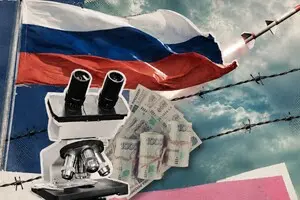

In early July, Brazil will host the International Conference on High Energy Physics, ICHEP 2026—an event often likened, within the domain of particle physics, to what the Venice Biennale is to the art world.
This week it emerged that the Russian Joint Institute for Nuclear Research (JINR) will be its “platinum sponsor and exhibitor.” What is more, a representative of the institute has been formally appointed to the event’s international organizing committee.
This is an alarming fact because JINR is not merely a scientific institution. It cooperates with the FSB and takes part in Russian military projects. In a comparable case, the decision to reopen the Russian pavilion at the 2026 Venice Biennale provoked protests, calls for exclusion, the threat of losing EU funding and public demonstrations during the exhibition.
For ICHEP 2026, there has been no such discussion, despite JINR’s direct cooperation with organizations embedded in Russia’s military ecosystem. No one noticed. Some fellow scientists on the international scientific committee were not even aware of this development.
Dubna and the Raduga missiles: a direct link to terror
For those who have never heard of JINR, it is a scientific organization in the town of Dubna, 110 km north of Moscow. It is worth noting that it was created by the state security structures of the Soviet Union. Today it is part of a single organism of Russia’s military-industrial complex, alongside the missile-building plants whose products are used to bombard Ukraine.
JINR also helps train specialists for Russian military enterprises, such as the Raduga missile design bureau and its production plant in Dubna, which manufacture the Kh-101 missiles that terrorize Ukraine’s civilian population and have on several occasions even strayed into NATO airspace.
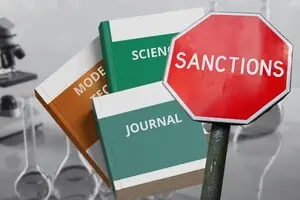
In August 2025, President Volodymyr Zelenskyy imposed sanctions on JINR. Yet Ukraine’s sanctions were not matched by our partners, and the very fact of sanctions against JINR and its military activity drew no wider public attention either in Ukraine or abroad. This has allowed JINR’s scientists to go on taking part in international research projects, publishing in international journals and travelling the world to study and gather information about new technologies, which they then share with colleagues at the Raduga design bureau, which specializes in developing and manufacturing cruise missiles. This is a textbook Russian sanctions-evasion scheme.
Half-measures and the wider context of isolation
It must be acknowledged that things are not entirely rosy for JINR’s Russian scientists. Their access to laboratories in France, Germany and the United States is somewhat restricted. At the same time, they retain a presence at the European Organization for Nuclear Research (CERN), which allows them and their families to obtain European visas, even though references to JINR have been removed from the scientific publications of the Large Hadron Collider experiments at CERN. Since 2022, they have been barred from the important role of sitting on the organizing committees of most major international conferences in particle physics.
Taking part in ICHEP 2026—not as a rank-and-file participant but as a sponsor and member of the organizing committee—allows JINR to launder its reputation and, through it, lends the Russian state a measure of scientific legitimacy, or “soft power,” despite the war.
Similar decisions in sport and culture have recently drawn wide attention: the International Fencing Federation’s decision to lift the disqualification of Russian and Belarusian athletes, the reintegration of these countries into gymnastics, and the aforementioned reopening of the Russian pavilion in Venice. Such steps have prompted entirely justified concerns: sport and art are never wholly separate from geopolitics. They are instruments of influence, and the return of Russians to international venues helps to normalize aggression. That is why we need to take a critical view of these decisions.
Yet while sport and art may be mobilized in wartime, their bearing on the success of a war effort remains indirect. Science, by contrast, operates on an altogether different level—one less visible in public debate, yet one that directly shapes the effectiveness, precision and strategic reach of modern armed forces.
Scientific research determines technological capability, economic strength, cybersecurity, military development and even the narratives of progress and legitimacy. Despite this, science is too often absent from public conversations about conflict and influence. For that reason, it is now vital to turn some of our attention to science itself.
What should Ukraine do?
It is important to speak about this hidden collaboration so that such actions do not remain in the shadows—and so that it does not become routine to invite to international scientific events scientists who take part in Russia’s weapons-development programs. Especially in particle physics, where Ukrainian scientists have for many years played a prominent role and where our voices carry weight. Kyiv is one of the few places in the world to have hosted this vast international ICHEP conference twice—in 1959 and 1970.
Perhaps we should remind our Brazilian colleagues that it was a Ukrainian-born scientist, Gleb Wataghin, who founded work in this field in Brazil—even though the Russians like to claim him as their own and seek to appropriate his name.
It is crucial that not only Ukraine but also its partners finally grasp that continued international scientific cooperation with JINR directly benefits the Russian military—as can be seen in the numerous upgrades to the Kh-101 missiles and the increase in their production, widely reported in the Ukrainian and international press. Understanding how scientific cooperation, competition and control operate on the world stage can offer a deeper insight into the real balance of power in today’s world, far beyond what is directly visible in stadiums or exhibition halls.
And those scientists planning to travel to Natal, Brazil, in July should be in no doubt: this event has an uninvited elephant in the room—Russia’s military ecosystem, represented by a Russian institute.
Please select it with the mouse and press Ctrl+Enter or Submit a bug
 Follow on Telegram
 Login with Facebook
 Login with Twitter
 Login with Google