
 Support ZN.ua








Blackouts Forever. Can Ukraine Escape Energy Crisis?
 Reader Survey
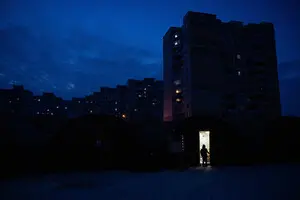

While Ukraine was spending time preparing for moderate or even positive winter scenarios, Russia was refining its tactics of strikes against Ukrainian energy infrastructure. As a result, the capacity currently missing from the power system to meet Ukrainians’ electricity needs during frost equals the consumption of a small European country.
No one should take comfort in a possible “energy ceasefire”—the problems already in place are sufficient to burden Ukrainians’ lives for years to come. The consequences of Russian attacks are being amplified and multiplied by managerial mistakes on the part of the authorities. Without an honest effort to correct them in the near term, Ukraine risks failing to break out of the vicious cycle of rolling blackouts—and later losing the “energy war” altogether.
The fourth winter of the full-scale war has clearly demonstrated who has done their “homework”—Ukraine, whose energy sector should by now have become a model of resilience and resistance to Russian terror, or the Russians, who are successfully exploiting Ukraine’s preparedness gaps as military advantages.
The truth is that this winter the score is not in Ukraine’s favor. What does this mean in figures? Ukrainian power plants are currently capable of producing only 11 GW, against demand of at least 18 GW, as confirmed by President Zelenskyy in January. Even taking into account the technical capacity to import electricity from the EU, the energy deficit in the system at peak consumption may reach around 4–5 GW.
In other words, the capacity Ukraine currently lacks is equivalent to the peak electricity consumption of countries such as Denmark and Ireland, and slightly more than that of the Baltic states combined. At the same time, this winter’s energy deficit resulting from Russian shelling is half again as large as during Russia’s energy terror campaign of winter 2022–2023.

We have still failed to force the Russians to abandon their strategic goal—plunging our country into darkness and cold for the long term. On the contrary, the very first attacks on our energy system in the autumn only reinforced the enemy’s confidence in the correctness of its chosen tactic. This tactic, which Ukrainian energy workers call “scorched earth,” began to be tested by the Russians back in spring 2023—when they managed to knock Odesa region out of the power system for an extended period—and was continued in summer 2024.
Experts at the Ukraine Facility Platform described Russia’s possible actions in detail as early as autumn. Simplified, the enemy’s logic is as follows: if it is not possible to achieve a long-term collapse of Ukraine’s energy system through massive “carpet bombing” of all major energy facilities, then a significant part of the system must be “torn off” by concentrating on infrastructure and power plants in specific regions. The operational goal is to turn left-bank Ukraine, including Kyiv, into a deficit zone and significantly weaken the technical ability to supply electricity there, including from nuclear power plants.
This Russian tactic is the result of a calculated assessment based on Ukraine’s “weak spots.” It takes into account the absence of the Zaporizhzhia Nuclear Power Plant from the system, the deficit status of Kyiv’s energy hub and power stations that were occupied, destroyed or damaged in previous periods. The strategy now hinges on drones, with a single strike involving more of them than were used throughout the entire first winter of the full-scale war. The target map has also expanded: not only thermal and hydroelectric power plants and high-voltage substations are under attack, but also regional gas and electricity infrastructure, as well as heating systems.
What did we assume?
Government officials, local authorities and, accordingly, the energy sector were preparing for moderate, if not positive, scenarios. The authorities reported successful preparations for the heating season and the appearance of new gigawatts of generation in the system. The outcome is well known: local governments are unprepared for crisis conditions and have neither generators nor developed response scenarios; physical protection of autotransformers against drones has remained in place only at Ukrenergo substations; and the gigawatts of new generation that supposedly already exist in the system somehow fail to save Kyiv and other cities from power cuts and heating outages.
What underlies these failures of state management in the sector? Ukraine is still preparing for the heating season according to peacetime algorithms. And in peacetime, Ukraine spent decades reducing consumption of natural gas and electricity. These trends are still taken into account when forming reserves of fuel, energy resources and equipment ahead of the heating period: warehouses are stocked just to meet projected needs, without any attempt to calculate requirements under constant and massive Russian attacks.
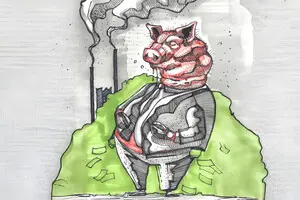
Put simply, officials still solve a short-term task each year—how to get through the coming winter—rather than preparing the country for all future winters under a permanent Russian threat. When combined with expectations of moderate shelling, the development of physical protection at energy facilities and new generation gives way to far more “interesting” priorities such as how to preserve manual control over state energy enterprises and their cash flows, how to place confidants on supervisory boards, and how to erect “barriers” for businesses working with state companies.
These managerial miscalculations only multiply the consequences of Russian strikes. Private business receives no clear signals from the government about where to invest. As a result, it has little incentive to build new power plants and connect them to the grid. When the country declares the decentralization of electricity generation as its current strategy, apparently building small power plants across the country, and then attempts to spend $600 million on purchasing old Russian nuclear reactors in Bulgaria for large-scale expansion of the Khmelnytskyi Nuclear Power Plant, business receives just one message: this system cannot be trusted. And here’s the result: according to the Ministry of Energy, in the fifth year of the war there are only 800 MW of “fast” flexible generation connected to the backbone grid. The need merely to balance peak loads stands at 3 GW, Ukrenergo says.
Regions that based their winter preparations on positive or moderately crisis scenarios have found themselves unready for a rapid shift into survival mode. Local authorities still await decisions and resources from the center, lack sustainable mechanisms for working with business, do not understand how to structure financing and have no experience preparing investment-ready projects. Public investments, effectively concentrated within the DREAM system, remain just that—“dreams”: more than 600 community applications for energy projects are registered there, yet only four are under implementation.
The notorious Obukhiv turbines—cogeneration units transferred to the local authorities of Obukhiv by international partners with full equipment sets, which remain unconnected to the grid—are a verdict on the entire system of state governance, decentralization and regional development policy.
What prospects do we have if our strategy of relying on an energy system capacity framework inherited from Soviet times does not change?
We no longer have the ability to balance it. System integrity and controllability are maintained mainly through cutting off consumers. All major thermal and hydroelectric power plants and key high-voltage substations have at least been damaged by Russian strikes. If their intensity persists, blackout schedules will remain in place throughout this spring—and will certainly continue if Ukraine faces a hot summer.
At the same time, Russia continues its war-of-attrition strategy, in which it is well versed. It therefore employs tools to lull public attention, such as the so-called week-long energy ceasefire. The aim is to create an illusion of stabilization while simultaneously slowing already sluggish decision-making in Ukraine on genuinely strengthening the protection and resilience of the energy system.
How to break out of the vicious circle?
The first step: at the strategic level, the government must acknowledge that today only private business, in partnership with communities, is capable of rapidly and at scale building new distributed generation able to support regions during peak demand hours. Attempts to launch new megawatts through directives to state energy companies have not produced systemic results. To this end, the government must define the system’s real needs: how much new generation is required to pass consumption peaks, how much is needed to supply critical infrastructure, where it should appear, and what technological mix is optimal.
The second step: finally start noticing the “elephant in the room.” Simplifying permitting procedures or organizing yet another coordination headquarters will not give investors confidence that the electricity they produce will be paid for, or that the rules of the game will not change with the next political decision. The government will therefore have to seek unpopular solutions to complex problems that those at the top are accustomed to ignoring—namely, to halt the accumulation of debts in the energy market, abandon selective administrative price-setting, and, together with donors, launch mechanisms to insure investment risks.
The third step: working with communities. Mayors wield resources of interest to business; they can offer land for new power installations, technical infrastructure, fast permitting procedures and guaranteed demand of heat and electricity. Donors and international partners can channel financial assistance into concrete projects prepared locally.
The key is to recognize that Russia will remain on Ukraine’s borders indefinitely. We need a realistic medium-term strategy for outplaying the enemy in the energy war. This requires answers to fundamental questions: how to ensure recovery outpaces destruction; how to synchronize the build-up of protection for energy facilities with the development of new distributed generation capable of supporting regions. Without these answers, we risk handing the Russians without resistance their most coveted prize: a powerless rear and a weakened front.
Please select it with the mouse and press Ctrl+Enter or Submit a bug
 Follow on Telegram
 Login with Facebook
 Login with Twitter
 Login with Google