

 Support ZN.ua








The Makers of Nuclear Blackmail. Who Builds Sarmat Missiles for Putin
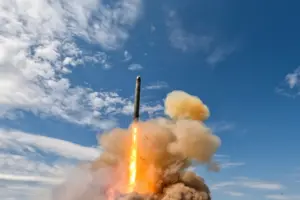




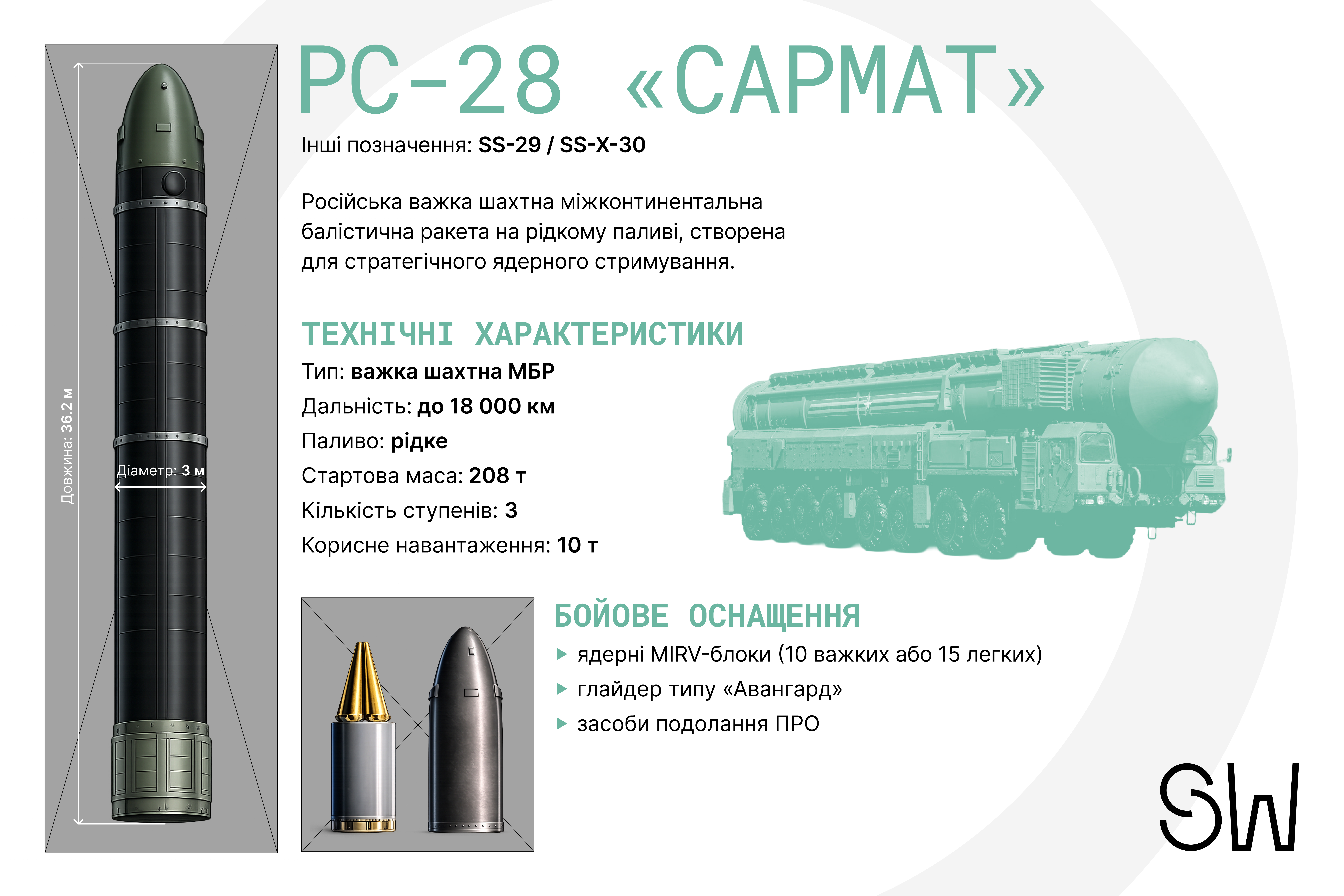
Despite more than four years of full-scale war and unprecedented international sanctions, Russia continues to develop its strategic weapons programs. One of these remains the RS-28 Sarmat intercontinental ballistic missile—a project the Kremlin has used for years as a symbol of military might and an instrument of nuclear blackmail. In May 2026, Vladimir Putin once again promised to put the Sarmat on combat duty by the end of the year.
Work on the system has been under way for more than 15 years. In 2024, the missile exploded right in its launch silo at the Plesetsk Cosmodrome.
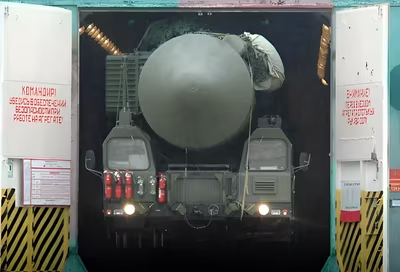
But documents obtained by StateWatch and UNITED24 Media lays bare something more—the production network behind one of Russia’s most ambitious missile programmes.
A missile manufacturer (almost) free of sanctions
Open sources usually link production of the Sarmat to three enterprises: the Makeyev State Missile Center, the Krasnoyarsk Machine-Building Plant (Krasmash) and the Perm-based company Proton-Perm Motors JSC. All of them are part of the state corporation Roscosmos.
Yet it is Krasmash that draws attention. Although the plant produces one of Russia’s key intercontinental ballistic missiles, it still remains free of sanctions from the United States, the EU and the United Kingdom.
At the same time, the plant’s largest customers are sanctioned entities—the federal state unitary enterprise (FSUE) Mining and Chemical Combine and the Roscosmos state corporation. Materials from Russian arbitration courts show that, after the start of the full-scale invasion, Krasmash continued to cooperate with enterprises involved in fulfilling Russia’s state defence order.
Krasmash’s counterparties include manufacturers of components for combat aircraft and missile weaponry, as well as enterprises in the rocket and space industry, among them the Ground Space Infrastructure Operation Center (TsENKI) JSC, the Korolev Rocket and Space Corporation Energia PJSC and the Khrunichev State Space Research and Production Center JSC.
The manufacturer of the Sarmat is thus integrated into a broad network of enterprises within Russia’s military-industrial complex that work on missile weaponry, combat aircraft and space systems.
Not one plant but a whole production network
Documents from the Perm Gunpowder Plant show that dozens of enterprises from various Russian regions are involved in producing components for the RS-28 Sarmat. In internal documentation, the missile appears under the index 15A28, while work on individual components is carried out under the Tema 001 and Tema 002 programs.
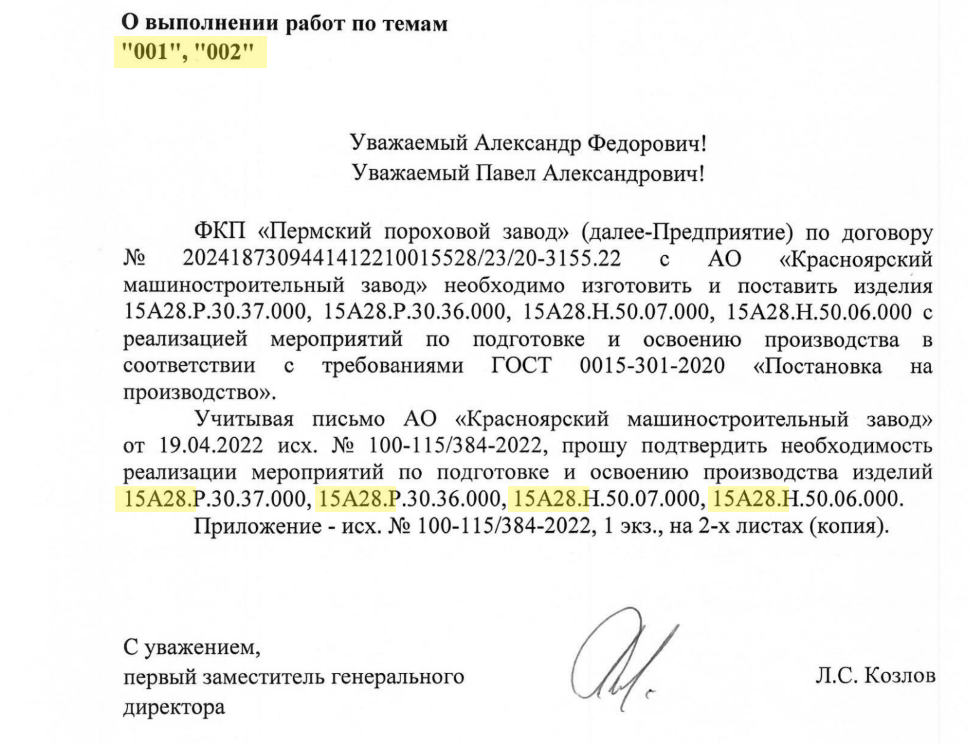

Correspondence between Krasmash and the Perm Gunpowder Plant confirms the latter’s involvement in producing certain items for the system. Journalists were also able to establish the details of the contract between the two enterprises. In 2025 alone, the plant was due to manufacture components for the Sarmat worth more than 956 million roubles, or about $12.7 million.
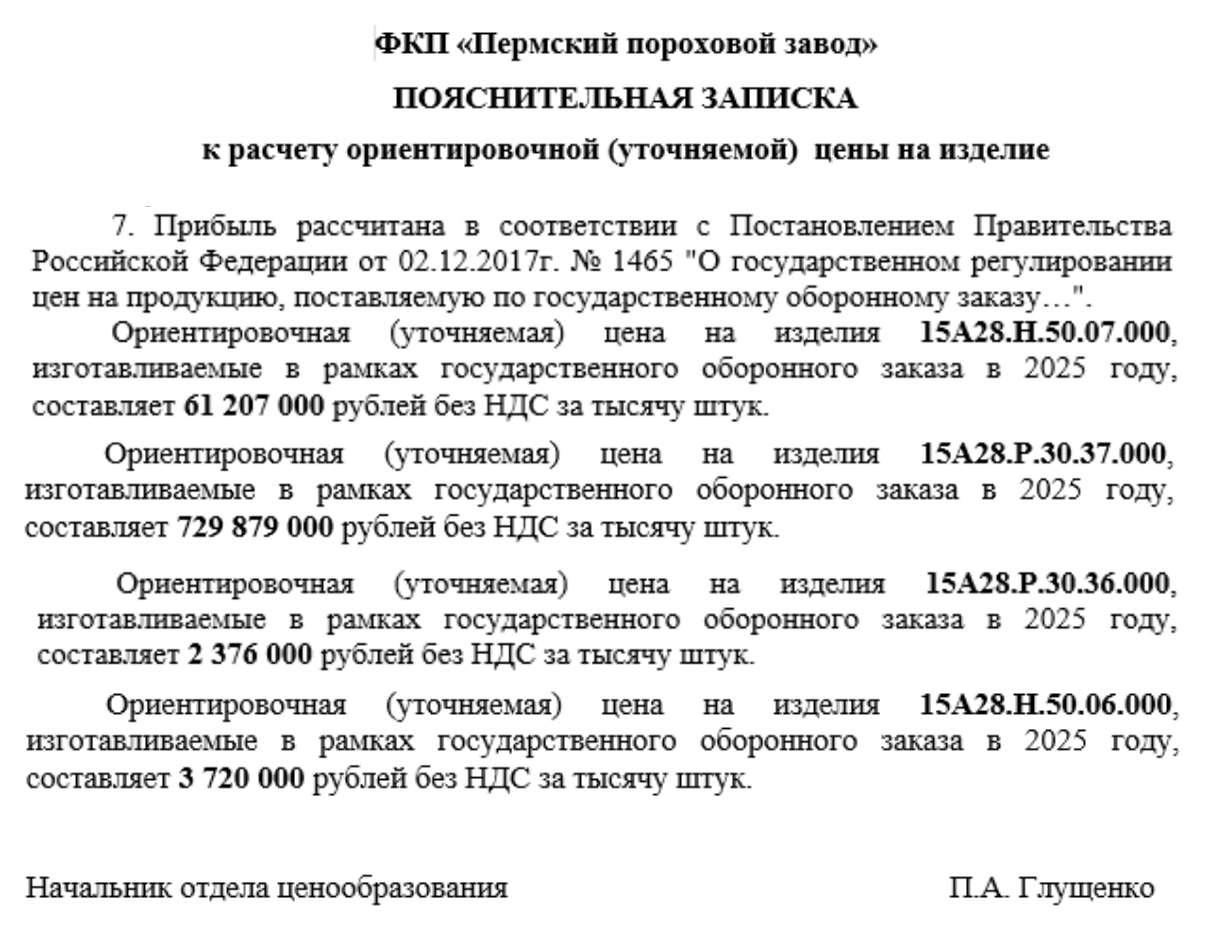
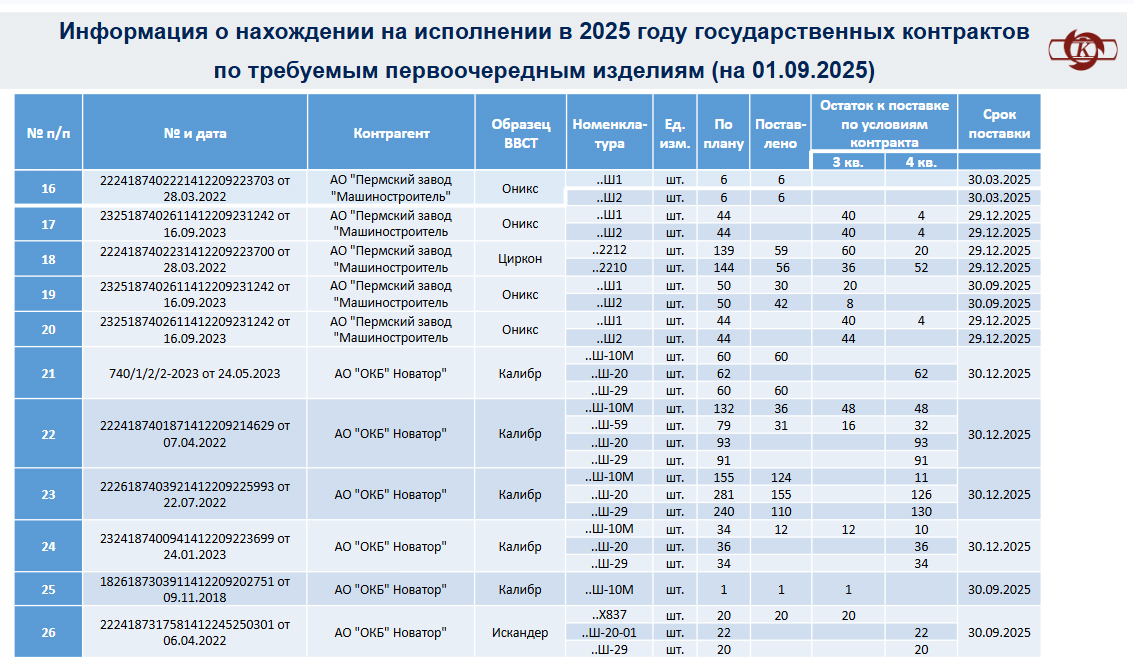
The plant’s internal documents also reveal the scale of the growth in Russian military production since the start of the war against Ukraine. Whereas in 2022 the Perm Gunpowder Plant’s revenue stood at 7.7 billion roubles, by 2024 it had risen to 22.6 billion roubles. The share of military output exceeded 95 percent.

Documents from 2020–2021 point to the involvement in Sarmat production of a number of enterprises in the missile, space, chemical and nuclear industries. Among them are Perm Plant Mashinostroitel JSC, Avangard JSC, Scientific-Research Institute of Polymer Materials (NIIPM) JSC, Scientific and Production Association of automatics (NPO Avtomatiki) JSC, State Research Institute of Graphite-Based Structural Materials (NII Grafit) JSC, Polyot Production Association and All-Russian Scientific Research Institute of Technical Physics (VNIITF)—one of Russia’s main centers for developing nuclear munitions.
According to the documents obtained, production of the Sarmat rests not on a single plant, nor even on a single state corporation. It involves broad cooperation among enterprises in the missile, space, chemical and nuclear industries, spanning a significant part of Russia’s defense-industrial complex.
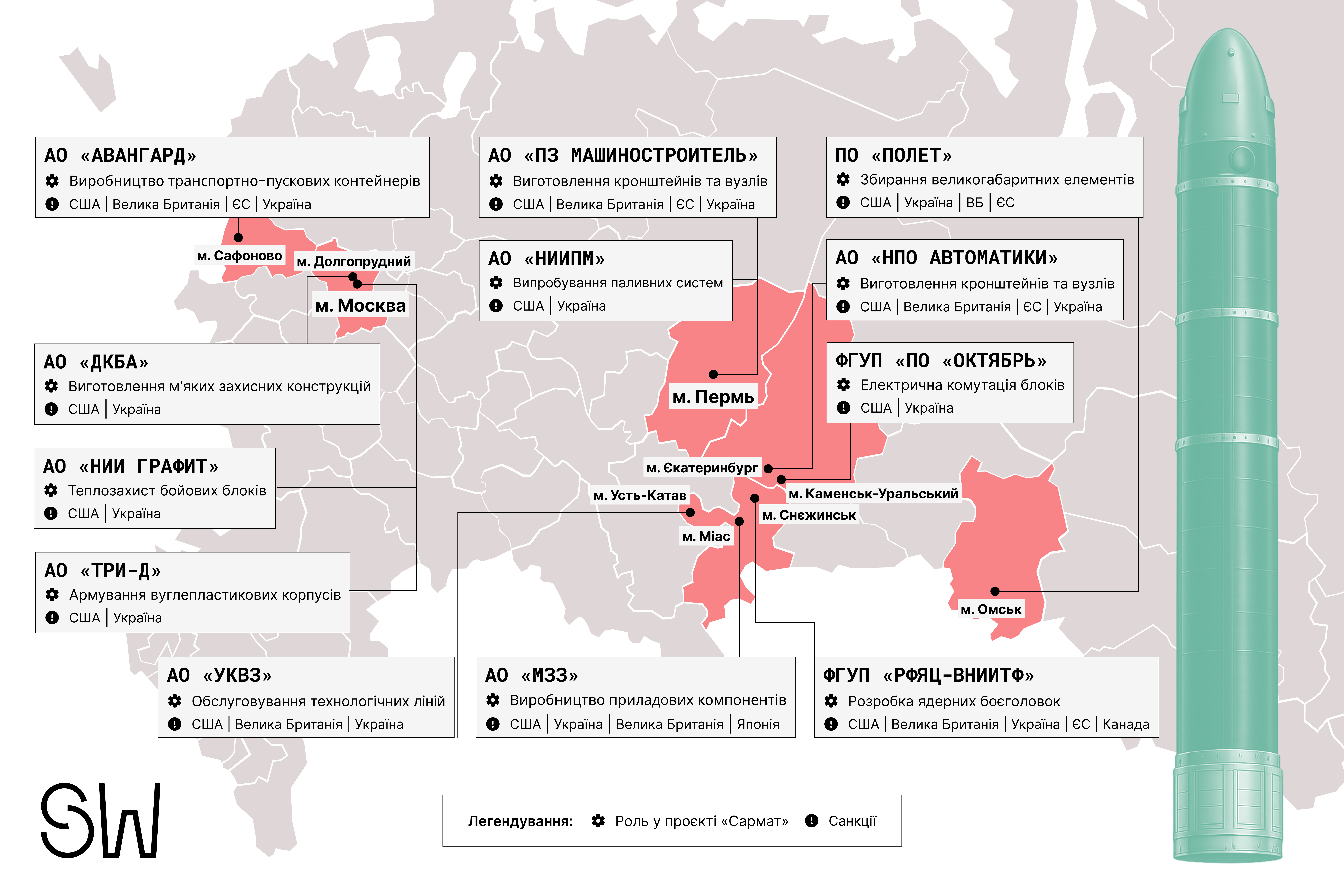
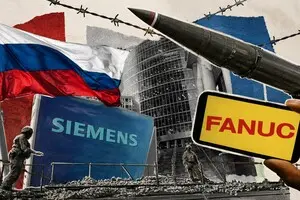
Most of the enterprises identified are already under international sanctions. At the same time, certain companies involved in producing components for the Sarmat still remain outside some sanctions regimes.
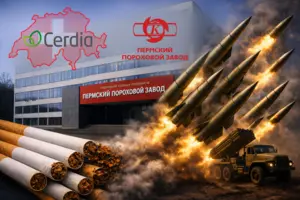
In particular, TRI-D JSC, which is also involved in producing Iskander-M ballistic missiles, still remains free of US sanctions. European Union sanctions, meanwhile, do not extend to Perm Plant Mashinostroitel JSC, NIIPM JSC, NII Grafit JSC and FSUE Oktyabr Production Association, which are likewise part of the cooperation of enterprises involved in producing components for the RS-28 Sarmat.
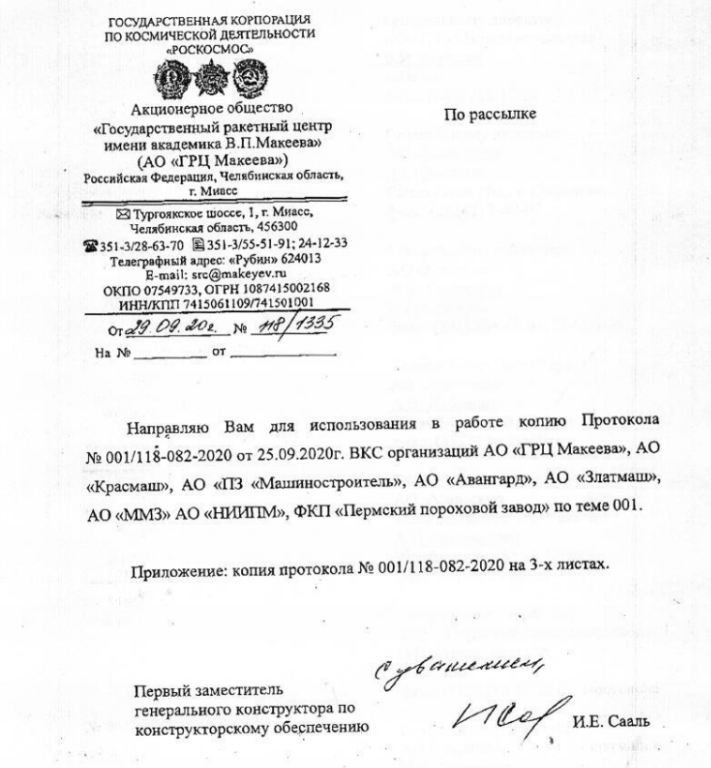
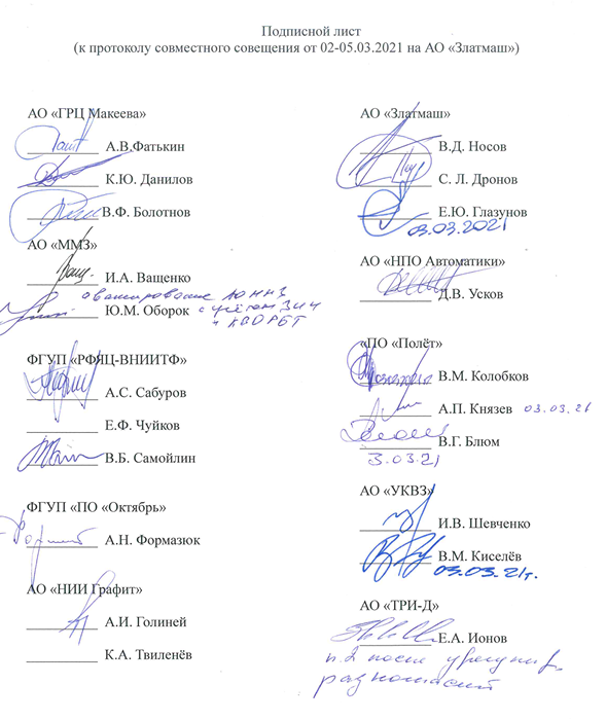
It is this cooperation that makes possible the production of one of the key elements of Russia’s nuclear arsenal.
The documents show that even more than four years into the full-scale war, some participants in this program still remain outside certain sanctions. And that means the continued ability to purchase equipment, work with foreign counterparties and raise financing for enterprises that take part in producing one of the key elements of Russia’s nuclear arsenal.
This material was prepared as part of a collaboration between the StateWatch think tank and UNITED24 Media.
Please select it with the mouse and press Ctrl+Enter or Submit a bug
 Follow on Telegram
 Login with Facebook
 Login with Twitter
 Login with Google