
 Support ZN.ua








Cold Winter 2026. Can Ukraine Withstand New Attacks on Energy System?

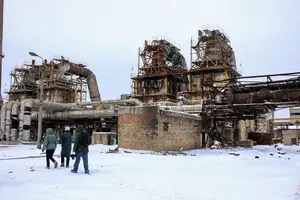

The final weeks of winter will probably be the hardest. Because after nearly 15 massive combined attacks during the heating season (excluding the constant pinpoint strikes and the consequences of earlier attacks beginning on 10 October 2022), restoring our energy system is becoming increasingly difficult. Repairs take longer, and they must be carried out in unfavourable conditions—because of the harsh winter, the danger of new shellings, people’s exhaustion and shortages of certain components and units.
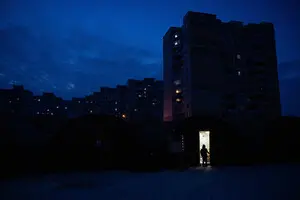
Because it is becoming ever harder for Ukrainians—hardened by four years of full-scale war—to hold on. If over these years we have at least minimally adapted to the trials of living without electricity, cold, as it turns out, is a far more insidious adversary. And there are fewer ways to withstand it: even the most capacious power bank will not help here.
The enemy understands this: in the next month to month and a half, severe frosts are still possible—and after that, until next autumn, it will no longer have such an “ideal” opportunity to terrorize our civilian population. It is no coincidence that Russia actively stockpiled missiles during the fleeting “energy ceasefire” and was in such a hurry to hit pressure points—above all, heating plants and major electrical substations—on the night of 3 February, as soon as temperatures in Ukraine began to plunge again.
The weather, which this winter can hardly be called kind to Ukrainians, will become our temporary ally for the next few days. The cold will relent. But, unfortunately, not for long. Next week, significantly low temperatures will return. That is why the President, our military, experts and international partners are warning: between 7 and 10 February, new sadistic combined attacks are possible. Let us be careful. And let us hope for effective work by Ukraine’s air defense and the extraordinary efforts of utility crews and energy workers.
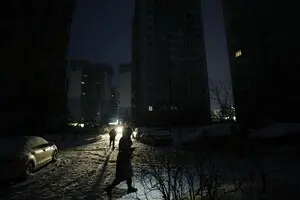
The situation is improving, but not everywhere and not for everyone
A few days after the attack that took place on the night of 3 February, the situation in Kyiv remains very difficult, especially with heat supply. More than 1,000 high-rise buildings are without heating. The lion’s share of them are those whose residents spent several weeks without heat as a result of earlier attacks. In some places, heat began to be provided only on 31 January–1 February. In literally a day or two, the enemy nullified all previous efforts of repair crews.
The Darnytsia combined heat and power plant (CHPP) has suffered unprecedented destruction; even partial restoration, by preliminary estimates, will require at least two months. Recently, there were strikes on CHPP-5; due to shelling, CHPP-6 went into emergency repair. So, unfortunately, this winter district heating will no longer return to many of the capital’s high-rise buildings.
And although the authorities and energy workers speak of a decision to prioritize electricity supply to buildings that, due to attacks, have been left without heat (for at least 18 hours per day), the outage schedules do not inspire optimism so far: in some homes in the most troubled Dniprovskyi and Darnytskyi districts, electricity is available for only 6–8 hours; and due to local accidents, at dozens of addresses people have been without power for several days.
Experts explain: because of enemy strikes on key substations on the high-voltage lines linking the capital with nuclear power plants in the west of the country, it remains difficult to transmit electricity generated by the NPPs to the east. And at the regional level, difficulties persist in distributing the resource among consumers—due to accidents, damage to regional distribution company substations, low-voltage lines and other disruptions in the power system.
The same applies to a number of other regions on the left bank of the Dnipro. Hence the imbalance: in some oblasts electricity is catastrophically scarce, while elsewhere—such as in Khmelnytskyi region, Lviv region, Ivano-Frankivsk region, Zakarpattia, part of Rivne region—outage schedules are kept to a minimum. We must understand: this is not because the authorities or electricity suppliers “love” residents there more…
The situation is also difficult in Kharkiv, where Russia once again attacked the largest CHPP-5 with ballistic missiles. As a result, almost 100,000 families have been left without district heating.
There are also significant electricity supply issues in Dnipro, Odesa, Kyiv region, Chernihiv region and a number of other cities and regions.
Overall, more than 50,000 energy and heating workers have been involved in repairs and restoration. Ukraine is increasing electricity imports, reaching record volumes of supply from Europe (almost 900,000 MWh in January). But transporting electricity to the east is hindered by the already mentioned problems with transmission capacity.
Energy equipment from international partners continues to arrive in the country as well.
All of this helps make it easier to get through the winter. But it does not compensate for the losses resulting from the enemy’s destruction of nearly half of Ukraine’s generation capacity—the capacity we were counting on for the 2025/2026 heating season.
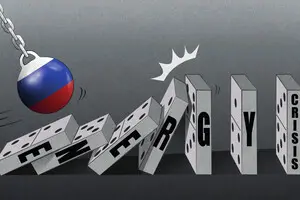
Task No. 1 — minimize the consequences of likely new strikes
There is no point repeating the mistakes made in preparing for the heating season by those who should have built protective structures around energy facilities, those who should have accelerated the build-out of distributed generation, and those who should have taken care in advance of autonomous power supply for critical infrastructure. For example, you can read about this here or here. We will have to sort out what prevented this—and who is to blame—after this most difficult heating period for Ukraine ends. And to sort it out in such a way that no one is tempted to wiggle their way out of trouble again when preparing for next winter.
Everyone understands perfectly well: we will not have time to build protection for energy facilities in the coming weeks or even months. That is why we also understand that there is no alternative to properly equipping Ukraine’s Defence Forces with means of countering Russian missiles and drones. Hence Kyiv’s constant appeals to international partners to accelerate deliveries of such weapons.
Put simply, a few hundred interceptor missiles now may be far more useful than a promised thousand at an undefined point in the future.
In this context, energy expert Hennadii Riabtsev, in a comment to ZN.UA, recalls the devastating attack on Ukraine’s energy system that took place on 9 January. One of the reasons for its effectiveness for the enemy was the lack at the time of a sufficient number of interceptor missiles for our sky defenders.
“As a result, of the 18 missiles launched by Russia, only two were shot down. But on the 20th, when the missiles appeared, it was possible to shoot down 14 of 18 such targets. So why were there no interceptors a week to a week and a half before that? And who will be held responsible for the lack of means of destruction in Ukraine’s Defense Forces?” the expert asks.
If partners provided us with air defense means more actively, there would have been less destruction. Accordingly, Ukrainians would have suffered less, restoring damaged networks would have been easier, and Europeans would now have had to supply us with less energy equipment.
That is why the expert names the proper quantity of means to counter enemy missiles and UAVs as the very first condition that will help us get through the upcoming cold weeks.
“The second condition is as much new generation connected to the energy system as possible—distributed, guaranteed generation that does not depend on the weather. At the same time, most of the equipment provided to us by partners not only in 2025 but also in previous years still has not been put into operation. Some 80 percent of what should be providing people with electricity and heat right now is freezing in communities and at enterprises in boxes and containers,” says Riabtsev.
Unfortunately, the authorities turned their attention to this problem too late—as often happens, only once the situation became critical.
“In Ukraine, more than 1 GW of cogeneration capacity has been connected to the overall grid. At the same time, installations that have already been built and are technically ready for launch are standing idle in communities. This is heat and electricity the country could be receiving already, in the midst of constant enemy attacks on the energy system,” Prime Minister Yuliia Svyrydenko stated recently.
Therefore, the government adopted decisions necessary to connect as quickly as possible all cogeneration installations that businesses have and that communities are buying and receiving from international partners. Officials promise punishment for failure to comply with the order and for abuses by officials.
“Work on installing and launching cogeneration gas units is proceeding strictly according to schedule. In the very near future, the launch of units with capacities of 9 MW and 18 MW is expected. Alongside the launch, ensuring the physical protection of these facilities remains a critically important issue,” as emphasised at a meeting of the Emergency Response Headquarters in Kyiv and the region.
The government has also allocated more than UAH 2.5 billion for the purchase of high-capacity generators. This is, above all, equipment for frontline communities.
Powering problematic buildings—those without heat and stable electricity supply—with high-capacity generators (container-type or mounted on vehicle chassis) is an urgent task under current conditions, especially in view of the expected intensification of frosts.
“Such work is being carried out, but in most cases, unfortunately, it is not a centralized approach but initiatives by homeowners’ associations. For instance, a friend of mine who heads such an association reached an agreement with a Polish foundation that provided a 50 kW generator. It proved sufficient to power a 16-storey building that had neither electricity nor heat or water. But these are isolated examples,” Hennadii Riabtsev comments.

Outlook: difficulties, but without blackouts
So, no one (except perhaps Donald Trump) doubts that the risk of new enemy strikes on Ukraine’s energy infrastructure is quite high.
However, energy expert Stanislav Ihnatiev predicts that even as a result of new shelling, the situation for energy-strapped regions will not deteriorate significantly. Yes, longer outages are likely, especially immediately after hits. But gradually communities will return to more or less predictable electricity cut-off schedules, as has happened more than once after previous attacks.
“That is, even if we find ourselves in a situation like, for example, Odesa—where there was no electricity for more than a day—or the left bank of Kyiv, which spent almost the entire day without stable power supply, technologically it is possible under an emergency scheme to energize facilities that distribute electric power to household consumers,” the expert explains in a comment to ZN.UA.
At the same time, cascading outages like the one that happened last Saturday cannot be ruled out due to weather conditions or technological failures.
“Our energy system is seriously ‘wounded’, so any external factor—including system overload, snow sticking, the formation of an ice crust on wires—can lead to a loss of power supply. In Kyiv region, there was a situation where even several transmission line pylons broke under the weight of ice-covered wires. Often, low-voltage networks—10 and 35 kV—which transport electricity directly to consumers, suffer because of wet snow sticking,” the energy expert says.
On the other hand, a snowy winter, according to the expert, will contribute to better energy provision for Ukraine in spring and summer. Because abundant precipitation will help accumulate sufficient volumes of water in reservoirs, primarily in the Dnipro reservoir cascade.
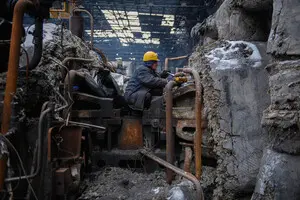
“That means we will get through spring and summer more easily because there will be more electricity generated by hydropower plants. This is especially important in summer, when our nuclear power units will traditionally be taken out for maintenance. Of course, solar energy will also help, but the resource deficit on a national scale will still be significant,” Stanislav Ihnatiev adds.
However, we cannot rely only on the mercy of nature, which will delight us with full rivers in spring and sunny days in summer. According to experts, we must already begin to ensure that, despite the enemy’s efforts, the next winter will be easier—or at least more predictable—for the energy and municipal sectors.
And for that, it is important to learn this year’s lessons. And perhaps to demonstrably hold accountable those whose actions meant the country was only partially prepared for the current heating season—and largely on paper.
Read this article in Ukrainian and russian.
Please select it with the mouse and press Ctrl+Enter or Submit a bug
 Follow on Telegram
 Login with Facebook
 Login with Twitter
 Login with Google