
 Support ZN.ua








Ukraine Is Unprepared for a New Crisis—and It Is Already Here
 Infographics


For the second time since the war began, Ukraine’s economic system faces the systemic challenge of structural transformation.
The first such challenge arose at the outset of the war in 2022. It cost us a 29 percent drop in GDP and a fall of more than 30 percent in industrial output, compounded by the devaluation of the hryvnia and inflation of 26 percent.
After 2022, our economic model was due for a reboot. Well, I have two pieces of news: one bad, one relatively good.
The relatively good news—the economy found a foothold in external aid, the services sector, and commodity exports. Building up resilience to the shocks of war in this way allowed it to push off from the bottom in 2023 (5% GDP growth, albeit from a low statistical base) and to grow by 2–3 percent a year over the following two years (2024–2025).
The bad news—the economy never actually embarked on structural transformation or built up resilience to the toxic challenges of war. It simply lacked the domestic credit to do so, thanks to the NBU’s ultra-tight monetary policy, designed to create hothouse conditions for a coterie of the banking lobby.

An economy that has failed to adapt to wartime and has merely “bought” itself a few years of relatively steady growth with foreign aid is doomed to be plunged back into the icy waters of structural crisis every time the underlying terms of external financing, or the pattern of physical destruction wrought by the war, shift.
Put simply, the current crisis is the unfinished “homework” of all the previous governments of Denys Shmyhal and Yuliia Svyrydenko.
In reality, these were never governments of structural change bent on adapting the economy to war; they were merely a closed “lodge” of officials practicing financial dirigisme.
Just how ready the economy is for new challenges can be gauged from the bill on the 2027 state budget.
In its explanatory note to the draft law, the government already acknowledges the threat of recession, noting that in early 2026 economic momentum turned negative for the first time since the first quarter of 2023. In particular, “in July–August 2026, operating conditions for businesses deteriorated once again. Intensified strikes on production, warehousing, postal, and transportation infrastructure disrupted certain supply chains, while severe restrictions on the operation of Black Sea ports narrowed the scope for selling products on foreign markets for an indefinite period.”
The deepest crisis, amid a flood of imports, is unfolding in industry: in January–July 2026, industrial output fell by 0.3 percent compared with the same period a year earlier.
Meanwhile, to maintain the state’s material reserve, the draft 2027 state budget allocates UAH 69.4 million, including UAH 26.6 million from the general fund and UAH 42.8 million from the special fund for “settlements with business entities for maintaining state material reserve stocks, financed through the sale of material assets in the course of stock rotation.”

Spending on mobilization preparedness measures for sectors of the national economy is set in the general fund at UAH 144.4 million.
By comparison, the budget program “Implementation of the Agreement between the Government of Ukraine and the Government of the United States of America on the Establishment of a United States–Ukraine Reconstruction Investment Fund” is allocated UAH 960.3 million. That is twice what the state is spending on building up the material reserve and on the mobilization preparedness of the national economy combined.
In other words, at a time when the state ought to be stockpiling reserves to the utmost ahead of a brutally hard winter (fuel, food, medicines, and so on), the government plans to spend a mere… UAH 69 million on replenishing the strategic reserve, or no more than $1.5 million. That would not be enough to restock even an average regional capital. And only UAH 144 million will be spent on mobilizing the economy in the fifth year of the war, a purely symbolic sum.
The NBU adds further strokes to the picture in its Macroeconomic and Monetary Review for September 2026.
On inflation: “In July, producer price inflation accelerated to 42.5 percent year on year (yoy). The decisive factor remained further price growth in electricity, gas, and steam supply (to 83.7% yoy) due to a higher wholesale electricity price than last year, driven in part by higher price caps and imports from the EU.”

The NBU also notes that price growth in manufacturing accelerated to 14.2 percent yoy on the back of businesses’ high production costs for energy, logistics and labor. On top of that, massive Russian attacks on businesses’ warehousing, logistics and production infrastructure weighed on the economy in July.
On business expectations, the NBU notes that they deteriorated in most types of activity amid large-scale destruction of logistics and business facilities and the blockade of the maritime corridor. Business sentiment weakened in industry, trade, and construction. Registrations of companies and sole proprietors also declined, further evidence of flagging economic activity.
On exports: “[…] agricultural exports fell to 1.5 million tons in August (down 60% yoy and 49% month on month).” This was driven primarily by a 95 percent yoy collapse in seaborne exports through the ports of Greater Odesa, while “export shipments through the Danube ports rose 6.5-fold, rail shipments 2.9-fold, and road shipments by 10 percent.”
On industrial production, the NBU reports an overall decline of 1.7 percent yoy. Growth in mining and quarrying slowed to 0.3 percent yoy, while manufacturing contracted by 0.2 percent yoy as the downturn in food processing and metallurgy resumed amid the port blockade. Only machine building picked up pace, buoyed by defense orders.
Although the NBU records growth in retail trade of 8.7 percent yoy in July, according to the State Statistics Service, “in August, high-frequency indicators pointed to a slowdown in its growth (+10.8% yoy in August vs. 17.7% yoy in July, according to State Tax Service data on cash register transactions) amid the destruction of retail logistics facilities and the shelling of shopping malls.”

On vacancies, it is worth noting that the number of new job openings fell below last year’s level for the first time since the start of the year. According to Work.ua, the number of résumés rose by 24 percent yoy in August, while the number of vacancies dipped slightly (−0.3% yoy). By the last week of August, however, new vacancies were already down 6 percent yoy. “The decline in labor demand was driven by the massive attacks on infrastructure in August and growing uncertainty about economic activity. Retail chains suffered heavily from the attacks, so vacancies fell most sharply in retail trade (−17% yoy in August) and services (−4%).”
Data from Opendatabot shed light on other facets of the crisis now gathering on the horizon.
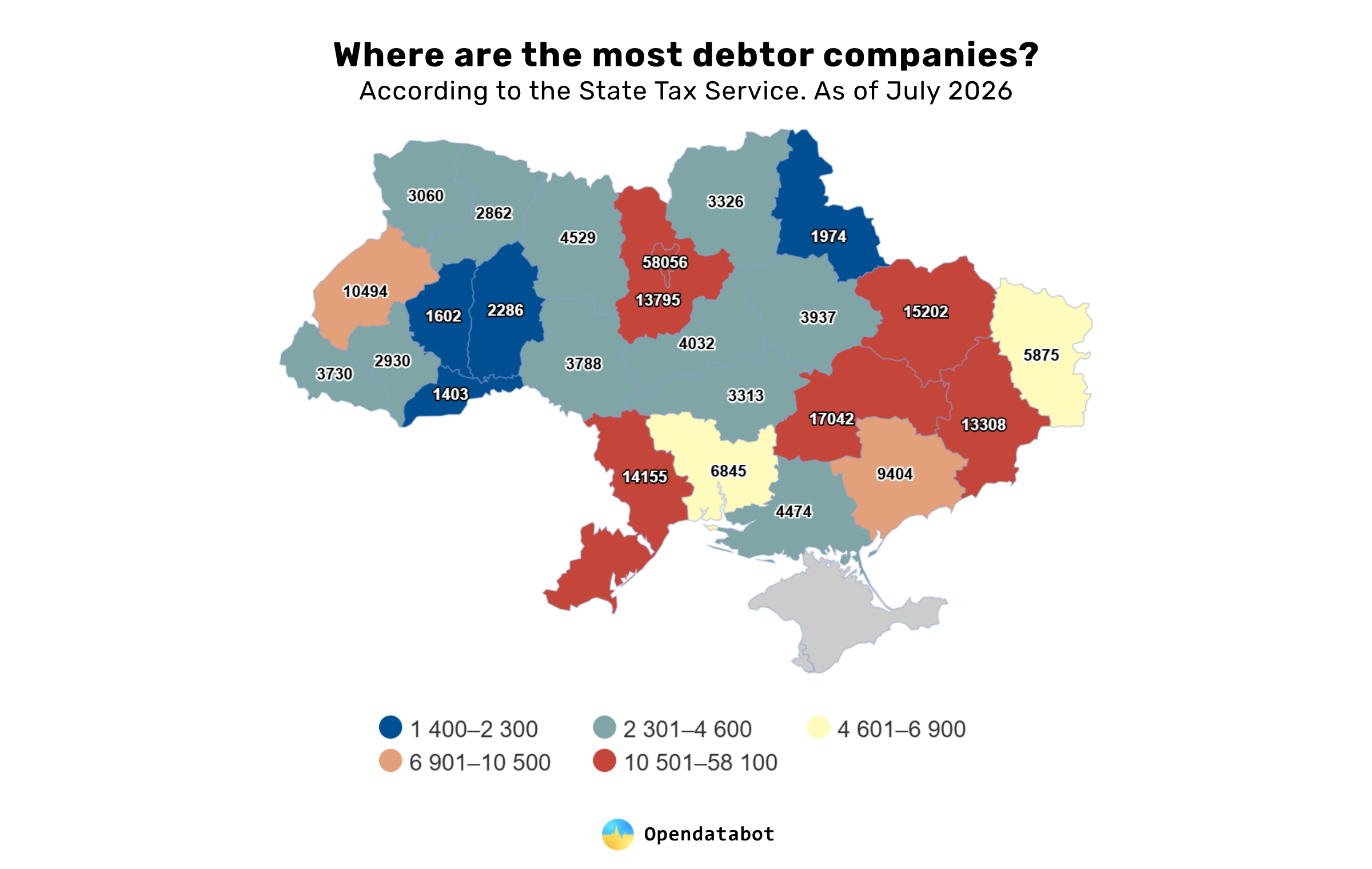
Since July 2024, the tax arrears of Ukrainian companies have doubled, from UAH 132 billion to UAH 263 billion. Small and medium-sized businesses account for 92 percent of the debtors.

The epicenter of the crisis lies in the mining and metals sector. According to Opendatabot, ferrous metal exports brought Ukraine a mere $1.7 billion in January–May 2026, “almost as much as Ukraine earned in the peak month of metal exports in 2021.” For perspective: in 2021, ferrous metal exports brought in $15.7 billion; in 2025, just $4.7 billion. The slump has three causes: strikes on steel plants, the port crisis and the EU’s introduction of CBAM, a special levy on the carbon footprint.
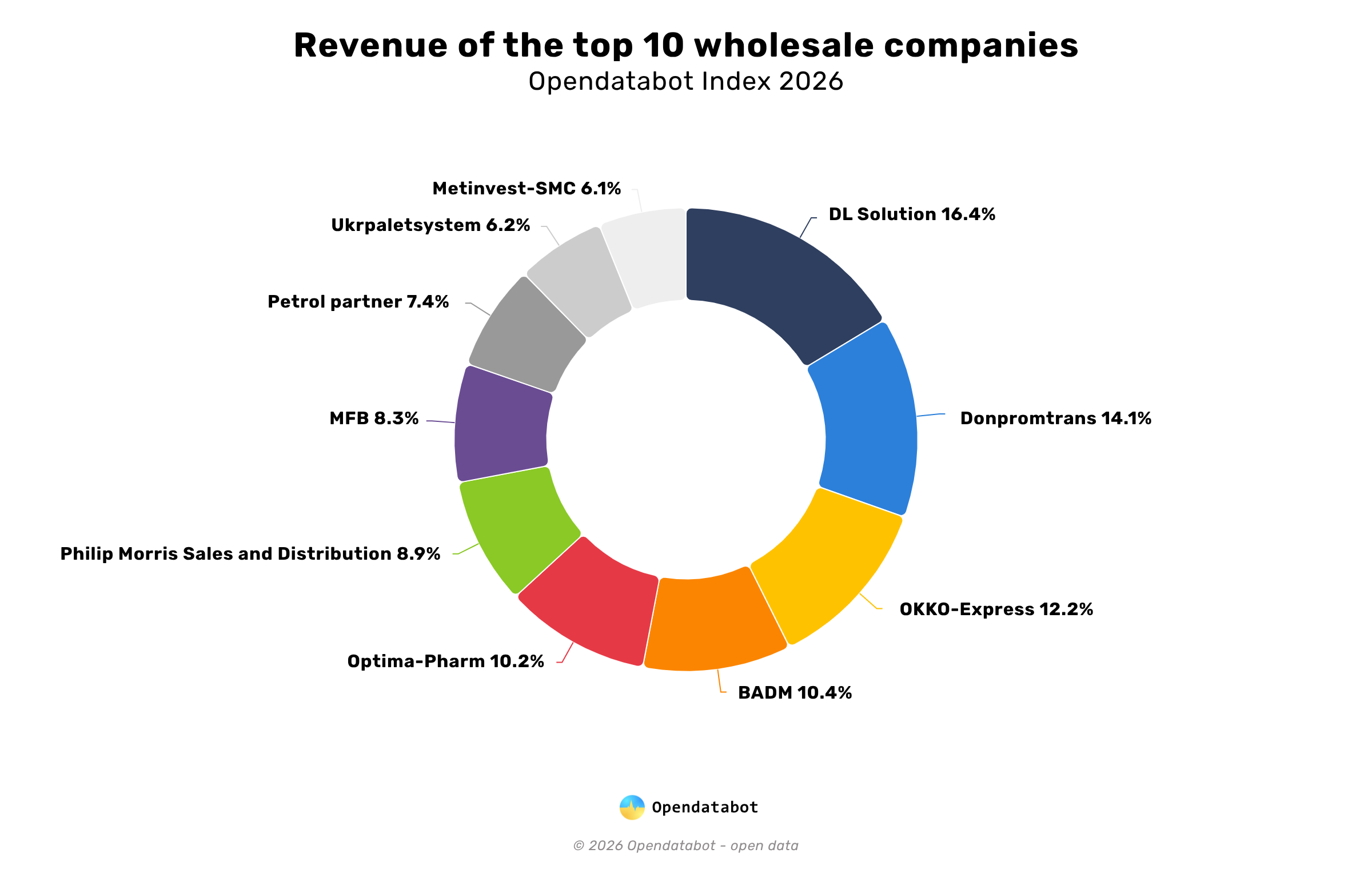
Now the crisis is spreading to the services sector as Russia strikes logistics warehouses and shopping malls. To grasp what is at stake, let us turn once more to Opendatabot: “The combined revenue of the top ten wholesale trade companies reached UAH 697.27 billion, according to the Opendatabot Index 2026. That is 23 percent more than the combined revenue of the leaders in the 2025 Index. Every company managed to grow its revenue over the year, but not its profit. The top ten includes three fuel traders, two companies each from tobacco, pharmaceuticals and metallurgy, and one food company. This year’s ‘price of admission’ to the ranking was UAH 43 billion in revenue.”
To sum up, the economy is entering a period of systemic cooling. A recession in the near term is more than a real prospect. The epicenter of the crisis is in logistics, transport, agricultural commodity exports, mining and metals, and trade and services. The crisis will bring fewer vacancies, lower tax revenues and weaker business activity across the board. The economy must either change structurally, that is, become less concentrated and adopt other ways of doing business, or pin its hopes on the war ending in 2027. Failing that, crisis is inevitable.
Please select it with the mouse and press Ctrl+Enter or Submit a bug
 Follow on Telegram
 Login with Facebook
 Login with Twitter
 Login with Google