
 Support ZN.ua








Behind Glass: Negotiations Without a Finale, Elections Without Peace?


The negotiation process aimed at ending the Russia–Ukraine war has taken on a life of its own, serving the strategic interests of political actors directly or indirectly involved in the conflict. While Ukraine is being stretched to the limit, Putin is playing for time, Trump for money and Europe for procedural delay.
Just as it is impossible to count fish darting around an aquarium until you take a photograph, it is impossible at present to pin down the final outcome of the negotiations: the picture can change from one day to the next. That is why we have chosen to take a “snapshot of the fish in the aquarium” as things stand today, without pretending to know which “shoal” an irrational, greedy, selfish or lethargic “fish” may drift into tomorrow. What we can do is outline the possible scenarios.
At any moment, the “negotiations for the sake of negotiations” could be abandoned and a provisional exit from the war fixed. This will depend less on Trump’s desire to close the Ukrainian file ahead of the US congressional elections than on a decision taken in the Kremlin.
Ukraine, meanwhile, is entering a phase in which domestic political logic is beginning to move faster—and more brutally—than the diplomatic process. Whenever the war ends, elections will inevitably follow. Or they may take place during the war itself, if Putin and Trump happen to converge in that wish. And Zelensky, too. Having barely leapt out of the boiling pot after a high-profile corruption scandal—in which the president’s close associate Mindich, ex-chief of presidential staff Yermak, former deputy prime minister Chernyshov, ex-deputy chief of presidential staff Shurma and others were left to keep simmering—the sitting president has now turned his attention to implementing a “second term” scenario.
What is Zelenskyy betting on today? How might a presidential election unfold? Why does he need a parallel referendum if Trump is not demanding one? Why is peace disadvantageous for Putin right now, and why does he continue to bargain with Trump? And, ultimately, what could prompt the dictator to halt the war in the near term?
It has become increasingly clear that Donald Trump and his entire negotiating team want to see presidential elections held in Ukraine. Vladimir Putin, meanwhile, has repeatedly insisted that he will not deal with what he calls Ukraine’s “illegitimate” leadership. President Zelenskyy may not urgently need elections himself, but the timing is exceptionally convenient. He is therefore trying to fold elections into the negotiations, presenting the move as a concession to Trump.
The government’s electoral playbook
On 7 February, Reuters reported that during the latest round of talks in Abu Dhabi the US and Ukrainian delegations had reached a tentative understanding on a sequence of steps: a possible peace agreement in March, followed by presidential elections and a referendum in May. On the same day, Volodymyr Zelenskyy confirmed that such a scenario was possible. The Financial Times reported the same information.
(In fact, even before the New Year, a draft timetable had already been circulated within Ukraine’s negotiating team: February would be devoted to introducing the necessary amendments to electoral and referendum legislation; elections would then be announced, with 30 days allocated for campaigning; the second round would take place on 15 May, followed by a meeting of the leaders of the United States, Ukraine and Russia at which a ceasefire document would be signed.)
But the “fish” do not stay still. Thanks to information from sources inside the negotiating team, we have been able to clarify key details that shed light on the broader backdrop to the talks and on the essence of the electoral playbook Zelenskyy is shaping.
The central point is this: the focus is now on concluding an agreement based on the 20-points peace plan, with spring as the deadline. The first round of the presidential election and a referendum on support for Zelenskyy’s peace plan could take place in the first week of June. At the same time, even if a ceasefire with Putin is agreed—and the president said recently that there will be no elections without one—martial law in Ukraine will not be lifted for the duration of the elections and the referendum. This, in effect, may become the central move in the government’s electoral playbook. Officially, the Presidential Office will present this as a matter of prudence: “Can we really trust Putin and lift martial law before all promised security guarantees have been ratified?” In principle, the argument is logical. In practice, however, it means an election conducted under conditions of tight control: a media space dominated by the authorities, an extremely compressed campaign, curfews and closed borders. Elections run on a North Korean model are far more predictable than those following South Korea’s.
So let’s walk through the plan — and the ways it could still go off track.
First, it was the Americans who initially pushed for elections. This is indirectly confirmed by the fact that both dates reported in the media—15 May and 3 June—fall on business days. In Ukraine, elections are traditionally held on Sundays, a detail the Americans setting deadlines may not have taken into account. Putin, too, has an indirect interest in elections, repeatedly invoking the “illegitimacy” of Ukraine’s current leadership. But if one follows this logic, Putin is unlikely to sign a comprehensive peace agreement with an “illegitimate president.” In other words, there is no clarity about what, exactly, would be signed in the spring. Most likely, it would be a ceasefire agreement concluded by the military, while a full peace treaty would only be signed with a legitimate authority after elections.
It is also important to understand how readily President Zelenskyy agreed to elections. Under current conditions, he is better prepared for them than any potential rival—in media terms, technologically, administratively and financially. According to our sources, Zelenskyy had hoped to offer voters two “gifts”: Ukraine’s accession to the EU in 2027 and, more importantly, security guarantees formulated more clearly and concretely than NATO’s article 5. At present, both face obstacles. No firm accession date has been promised, and the timing of security guarantees remains uncertain. Public debate has centred on a three-tiered response mechanism to any renewed aggression—the Ukrainian armed forces, a “coalition of the willing” and the United States. Yet according to the latest information, Washington is prepared to offer guarantees to a peaceful Ukraine, not a country still at war, suggesting that Kyiv must first reach an agreement with Moscow to end it. This, in turn, reinforces the view that a comprehensive peace treaty would only follow elections.
Zelenskyy is attempting to trade his consent to elections for security guarantees, sources say. Whether he will succeed is far from clear, but he appears ready to push the matter as far as possible. He needs these elections.
Second, the president’s team formula is unambiguous: the overriding objective is a first-round victory. Everything else is subordinate to that aim. The reasoning is straightforward. According to all previous polling, Zelenskyy would lose in a second round to both Valerii Zaluzhnyi and Kyrylo Budanov. To avoid that risk, he needs to win outright in the first round.
Recent closed-door polling conducted by one campaign team between 1 and 3 February illustrates the point. Among respondents who had already chosen a candidate and said they would vote, 34 percent backed Zelenskyy in the first round, up from 30 percent in January. Zaluzhnyi stood at 19.2 percent (down from 22%), Petro Poroshenko at 10.6 percent and Budanov at 9.1 percent (down from 13%). Others trailed well behind: Dmytro Razumkov on 5.5 percent, Yuliia Tymoshenko on 4 percent, Andrii Biletskyi on 3.4 percent, Oleksandr Usyk on 2.4 percent and Serhii Prytula on 2.3 percent. In a second round, despite Zelenskyy’s rising approval, the picture remains unfavourable. Among all those polled, would secure 30 percent against Zaluzhnyi’s 35 percent. In a run-off against Budanov, the figures would be 31% to 27%. Only weeks earlier, Budanov beat Zelenskyy 42 to 40 among decided voters.
Zelenskyy’s task, then, is to turn his one-third of the vote in the first round into a majority. This explains the effort to sideline any candidate capable of becoming a rallying point for the protest electorate—roughly two-thirds of the country. The maximum aim is to ensure that none of these figures runs at all; the minimum is to construct an electoral system and vote-counting process capable of compensating for the gap on the polling day. This is why, third, the plan hinges on maintaining martial law. At that point, it matters little whether Russia fully observes a ceasefire or how much time it allows for voting. In fact, sporadic shelling could even be advantageous. Martial law enables a lightning-fast campaign in which no rival has time to mount a campaign, while the United News television marathon operates at the behest of the Presidential Office, the involvement of the Security Service (SSU), maximum use of administrative resources and a legal pretext for the SSU to intervene in the electoral process under the banner of countering terrorist threats. This approach was tested during the parliamentary by-election in constituency No. 87 in Nadvirna, Prykarpattia region. There, the SSU entered the district commission to “prevent destabilization” and effectively escorted the Servant of the People candidate, Vasyl Virastiuk, into the parliament, ballot boxes in tow.
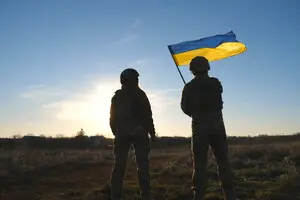
Besides, by sustaining a sense of permanent wartime, the authorities also intensify the public’s longing for peace, particularly among people worn down by years of fighting and a punishing winter. This is where the fourth element comes into play: the referendum. This, too, is an element of the playbook—and an initiative originating solely from the Ukrainian side. Trump never insisted on it. Nevertheless, the idea of a referendum had begun to circulate in the Presidential Office even before the New Year. Kyiv even suggested that Trump come to Ukraine to address the parliament in support of the peace plan and the referendum. He is unlikely to do so, however, as he appears content with a straightforward parliamentary ratification of a ceasefire agreement.
The main bet, therefore, is on a nationwide referendum, nominally initiated “by the people.” For now, it cannot be held simultaneously with elections, though this is not the most serious legal obstacle. The tight linkage between the referendum and the promise of peace is designed to steer voters towards the one figure presented as capable of delivering it.
What about the laws?
The constitution prohibits parliamentary elections during a state of war or martial law. Presidential elections, however, are not explicitly banned by the basic law: they are regulated by the law on martial law—a statute that can be amended. The problem is that at present, the president can count on exactly 169 reliable votes in the parliament. The rest complain about a lack of funding. Even the recent increase in allowances—which has raised monthly payments for Servant of the People MPs and their loyal allies to about $6,000—has done little to improve the mood of the more “conscientious” members of the parliamentary corps.
In early January, the parliament set up a working group chaired by the first deputy speaker, Oleksandr Korniienko, to draft legislation for postwar presidential and parliamentary elections, with a preparation period of at least six months after the end of the war. This framework may be relevant for future parliamentary elections. For a presidential vote, however, it does not fit the authorities’ current scenario. Nor could any such legislation apply to elections held without lifting martial law.
According to our interlocutors in the Verkhovna Rada, the Central Election Commission (CEC) and the President’s Office who have been modelling such a scenario, elections conducted under martial law would amount to a severely truncated process. The risks are particularly acute for overseas voting—where the foreign ministry is already holding joint consultations with military and foreign intelligence—for internally displaced people, who would be unlikely to update their registration details within a compressed campaign, and for serving soldiers. Voting by military personnel is seen as the most vulnerable element of all.
Under the current electoral code, the CEC is allowed to establish special polling stations. This mechanism was used in the 2019 presidential election, when observers were barred from accessing special stations in Donetsk and Luhansk regions. Those with a long memory note that although Volodymyr Zelenskyy won the overall vote at military polling stations as the opposition candidate, there were many individual stations where an implausibly large number of votes was recorded for the then incumbent president, Petro Poroshenko—under the watchful eye of the security services, ever alert to the terrorist threat.
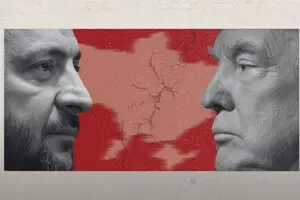
It is not hard to imagine how far the president’s security apparatus could reach under martial law, particularly given Zelenskyy’s determination to win. Hundreds of thousands of service members would be voting at closed special polling stations. Techniques once used to manage votes in the penitentiary system could easily be replicated within the armed forces. In such a setup, the decisive question is not how soldiers vote, but which figures and ballots ultimately reach the CEC.
The issue, then, is not a formal breach of the law, but the construction of a bespoke electoral architecture tailored to martial law and a compressed campaign. While this model allows the authorities to manage the process, it leaves elections exposed in terms of trust, inclusiveness and legitimacy. Rather than resolving a political crisis, such elections would simply extend it—in a different form.
A glossy facade of the old system
Two public months without Andrii Yermak in the frame have become a telling pre-election signal from President Zelenskyy. The appointment of the former first deputy prime minister and minister of digital transformation, Mykhailo Fedorov, as defence minister—one of the few ministers to enjoy a high level of public trust (75%, according to Kyiv International Institute of Sociology data for 2025)—helps project an image of a manageable, technologically savvy and “civilian” government. At the same time, after a long pause, Zelenskyy handed the President’s Office to the head of defense intelligence, Kyrylo Budanov—a figure of a different kind, symbolizing security, military audacity and negotiations. His de facto (though not formal—he has not left military service and, like any serving officer, remains legally eligible to run) entry into state politics serves two purposes at once: it strengthens the negotiating track and stabilizes trust in the president during wartime. Together, the two appointments function as a carefully assembled shop window for a “renewed” government, with roles redistributed, but without any change to the underlying logic of control.
According to the same closed polling, the public already perceives Budanov as an integral part of Zelenskyy. Over the course of a month, the president has effectively “absorbed” three percentage points of Budanov’s rating while boosting his own. At the same time, as we have previously noted, Budanov has been effectively tethered inside the Office: Zelenskyy broke a promise and did not hand defense intelligence over to Budanov’s nominee. The decree appointing Oleh Ivashchenko as head of the Main Intelligence Directorate was issued immediately after Budanov’s appointment as chief of presidential staff. Zelenskyy knows how to knock the ground from under rivals’ feet, using both carrots and sticks. Yet, as all our sources in the Presidential Office say, while it was once impossible to prise Yermak away from Zelenskyy, Zelenskyy and Budanov are difficult to fuse into a single whole.
Shuffling the deck and playing the necessary electoral trumps, the president has also been staging carefully choreographed meetings with opinion leaders. Two points matter here.
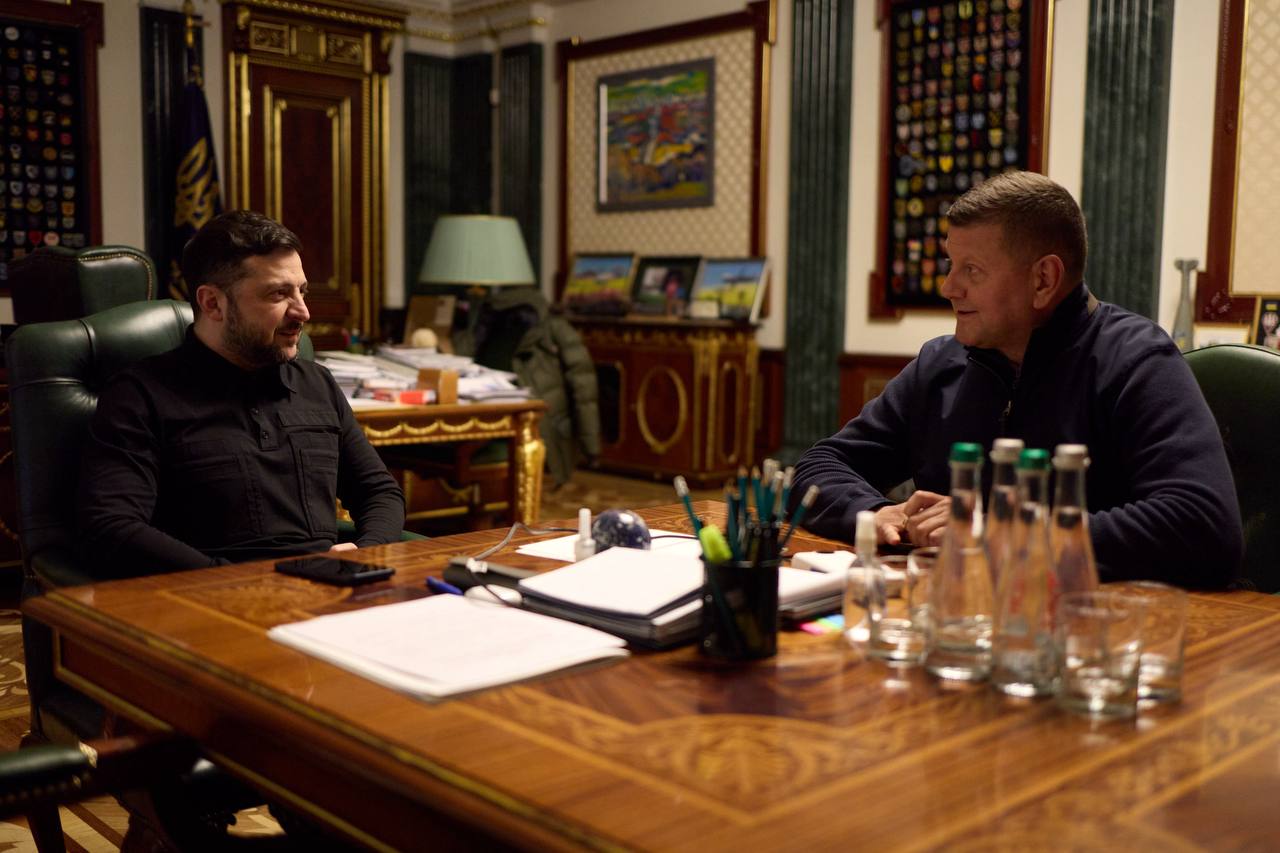
First, the staged photographs of Zelenskyy with Valerii Zaluzhnyi, Serhii Prytula, Serhii Sternenko, Oleksandr Kubrakov, Dmytro Kuleba and Vasyl Maliuk are meant to neutralize the central accusation levelled by society and the media—that he allowed Yermak to keep him in a “warm bath” and monopolize his attention. Now, the message runs, there is a new Zelenskyy, with doors open. The suddenly revived chat with journalists—in which the president democratically answers questions from both foreign and Ukrainian media—fits neatly into the same logic. Why, you might wonder?
The link between participants in that chat and the president is adviser Dmytro Lytvyn, whom journalists recently suspected of shaping the president’s sense of who is friend and who is foe. We make no definitive claims, but according to our information the guarantor of the constitution has given instructions that pressure on opposition journalists and media outlets should continue. On this front, the president can rely on Oleksandr Poklad, first deputy head of the SSU.
Second, each of these PR encounters serves a specific strategic purpose. Every invited guest commands a more or less substantial audience, and each was sent the same signal: the president listens and hears.
The well-known volunteer Serhii Sternenko (now also an adviser to the defense minister), with his million-strong audience, is intended, under this plan, to secure support from the national-radical segment of society here and now. Bringing Prytula into the fold, meanwhile, would allow Zelenskyy to inherit his electorate if Prytula politely declines to run and urges his supporters to back the president. Two-point-four per cent may not sound like much, but it still matters. Polling suggests that Zelenskyy is the second choice for most Prytula voters.
As for the former commander-in-chief of the armed forces and current ambassador to the UK, Valerii Zaluzhnyi, the meeting with the trust-rating leader and chief electoral rival was more an internal necessity for Zelenskyy than a public gesture. As we have already written, Zaluzhnyi promised both Zelenskyy and Yermak that he would not enter domestic politics during the war. From Zelenskyy’s perspective, maintaining martial law keeps that promise in force. Does Zaluzhnyi see it the same way? Not necessarily. At the very least, no one warned him that elections might be held during the war, not after it.
According to our information, at their most recent (photographed) meeting the president offered Zaluzhnyi a rotation with Olha Stefanishyna, Ukraine’s ambassador to the US. Zaluzhnyi was reportedly open to a posting in Washington, but not for the five years Zelenskyy demanded. Such a move would effectively remove him from political life for a long time. For now, it remains unclear whether Zaluzhnyi will run for president or confine himself to parliamentary politics, who would manage his campaign, or who would build its electoral machinery. He remains a mystery, a black box in this story.
All these elements—from staged encounters to “open dialogue” with the media—add up to a controlled display of renewed authority. Behind it, however, the institutional architecture remains the same.
The rules inside the system have not changed. Shortly after Yermak’s resignation, we wrote that he had not disappeared from Zelenskyy’s head—and therefore from decision-making. The continued presence of Yermak’s allies in key posts, including deputy prime minister Oleksii Kuleba, the head of the state financial monitoring service, Pylyp Pronin, and the head of Odesa regional administration, Oleh Kiper, bears this out. And so does a recent investigation by our colleagues at Ukrainska Pravda, which documented meetings between Yermak and the National Security and Defense Council secretary, Rustem Umerov, as well as presidential adviser and former minister of strategic industries Oleksandr Kamyshin.
Understanding the central role of the security bloc ahead of a possible election, Zelenskyy moved swiftly after Yermak’s departure to reinforce the political wing of the SSU with reliable, controllable and effective figures. Poklad, who de facto runs the service, has assembled a team of operators tasked with maintaining domestic stability, controlling the political landscape and shepherding elections under martial law.
Another pillar of presidential power is the prosecutor general’s office. Ruslan Kravchenko irritates many. He has not been forgiven for failing to issue suspicions against the leadership of NABU and SAPO, nor for allowing SAPO to open cases against MPs—a move that further weakened control over the presidential faction. It cannot be ruled out that he, like former SSU chief Vasyl Maliuk before him, may be asked to resign. Waiting in the wings, however, is his deputy, Mariia Vdovychenko, known for her scandal-ridden family ties.
Following its investigation, the Anti-Corruption Action Center asked the SSU to re-vet Vdovychenko, citing the fact that her brother works in Russia’s military prosecutor’s office after defecting in 2014, while her father does business in occupied Crimea. The SSU replied that such a review was “not provided for by law” and passed the request on to Kravchenko to decide on the renewal of security clearance. This, too, underscores the president’s team bet on Vdovychenko and a one-sided electoral game.
The result is a closed system of political control, capable of delivering a managed outcome but incapable of answering the external question posed by the war.
And yet the internal logic of the Presidential Office leaves one question unanswered: why does Putin need all of this?
A package for the dictator
The entire plan discussed so far can be safely binned if it is not initialled by Putin. This is the key premise for any conceivable scenario, regardless of what Trump says or what Zelenskyy wants. Sources close to the negotiating process say at least three possible responses by Putin are currently being discussed internally, each of which would radically alter the logic of what follows. In all cases, however, what matters most to the Kremlin is not the end point but the preservation of managed uncertainty, a process that leaves room for maneuver and pressure.
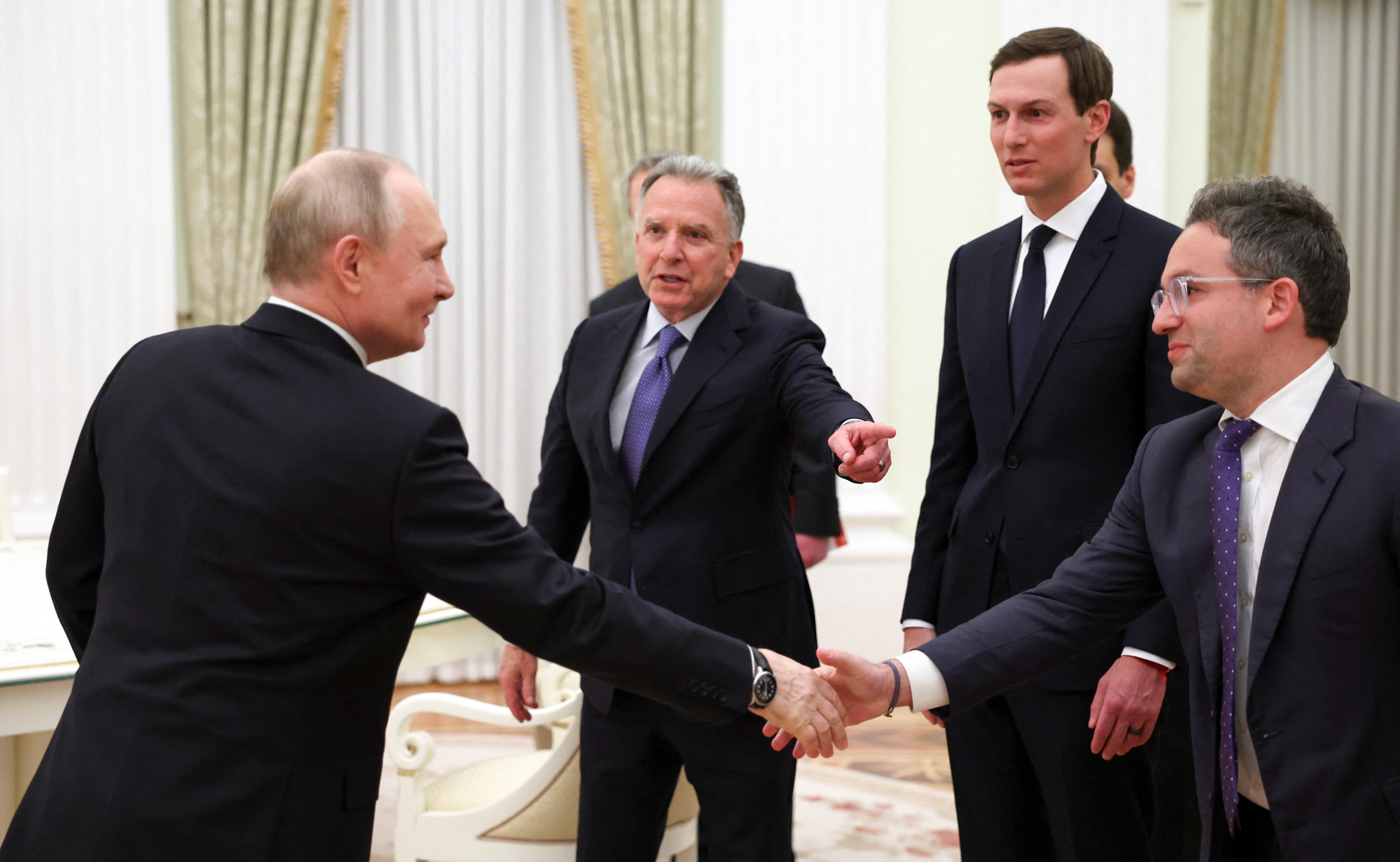
The first option. Putin wants a new leader in Ukraine, yet the “king of the aquarium” could still turn out to be Zelenskyy. If Putin realizes that ending the war opens the door to a second term for Zelenskyy, would he sign off on it? And he will realize it. At the same time, another possibility immediately comes into play: those same doors could slam shut on an overconfident candidate. This may be precisely what makes the arrangement attractive to Putin. By buying into it, Zelenskyy would be going all in, sharply raising the risk of internal instability and division within Ukrainian society. No one can know for sure whether a promise of peace would be enough to neutralize the protest potential accumulated over four years of war.
The second option. Putin may ultimately meet Trump halfway, with whom he is playing several games at once—splitting NATO, pursuing major business projects, weakening Europe and carving it into spheres of influence. But at the final moment, Washington could present Zelenskyy with a condition: not to run. As we have written before, discussions about blocking Zelenskyy’s presidential ambitions are a constant feature within Trump’s team. What arguments might sway Zelenskyy—or whether any such arguments exist at all—is impossible to say. He is famously stubborn. In this scenario, however, it is not only Zelenskyy’s participation that matters, but also which alternative figures external players—above all Washington and Moscow—would find acceptable. One plausible assumption is that a candidate from Zelenskyy’s own camp could emerge, most likely Kyrylo Budanov or Mykhailo Fedorov.
The third option. Putin could move towards formalizing an agreement because of mounting internal constraints. These include growing economic strain, shortages of resources and manpower—up to the renewed salience of the deeply unpopular issue of mobilization—heavy losses and the desire to lock in sweeping sanctions relief and access to joint projects with the United States while Donald Trump remains in the White House. At the same time, these pressures do not create an urgent military need to end the war. Tactical pressure remains, there has been no strategic breakthrough, and this allows Putin to choose both the timing and the form of any settlement—provided that it proves more advantageous than prolonging the process.
The crucial question, however, is on what terms such a settlement would be formalized. The Wall Street Journal has reported on a “package” worth $12 trillion that Moscow has prepared for Washington and that Kirill Dmitriev recently handed to Steve Witkoff. The package reportedly includes a wide array of US–Russian investment and infrastructure projects—initiatives we wrote about a year ago in our article Putin’s Nine Steps Toward Trump and Yalta 2.0. Joint programs in energy—gas, oil and LNG—as well as rare earths and other strategic resources are under discussion. Mining projects and IT stakes are also periodically mentioned. This is what Putin is offering Trump in exchange for resolving the issue of Ukrainian territories on terms favorable to Russia.

Washington’s posture, meanwhile, remains double-edged. On the one hand, Trump signals openness to negotiations and economic deals with Moscow. On the other, he has not lifted sanctions, continues to back European restrictions and maintains a hard line on nuclear security, while delivering pointed slaps through policies on Venezuela and Cuba. This duality does not bring the war closer to an end, but it does allow the United States to keep the process in a manageable state, without formalizing the outcome.
The “fish in the aquarium” continue to dart about. Shoals keep reforming; alliances emerge and collapse faster than they can be recorded. The negotiating process could unravel at any moment—or, conversely, suddenly produce a viable exit.
One thing, however, is already clear. The sequence of a short ceasefire, followed by elections, a referendum and ratification, is capable of formalizing an internal political outcome faster than the war itself can be brought to an end.
That scenario may not guarantee Ukraine a durable peace. But it may guarantee Volodymyr Zelenskyy the retention of power. Which would mean that, while fighting for a qualitatively different country, Ukraine could end up with the same president—and the same country.
So, peace at the cost of the future?
Please select it with the mouse and press Ctrl+Enter or Submit a bug
 Follow on Telegram
 Login with Facebook
 Login with Twitter
 Login with Google