
 Support ZN.ua








Cash for Votes: Inside the NABU Cases Against Yurii Kisiel and Yuliia Tymoshenko


Talk of the so-called “envelopes” used by those in power—and not only them—to pay for votes in the Verkhovna Rada has been around for decades. If we take a very brief look back at the history of the current administration, and if our sources are to be believed, the idea of a fund to pay members of parliament first emerged in 2019. For a motley faction randomly assembled on the party list and pushed through in constituencies under Presidenty Zelenskyy’s name, a common wallet began to take shape—an idea said to have been brought in by a man who could fill a bus and a businessman who flooded the world with juice from our sunflowers. Back then, a number of major businessmen were effectively required to pay into that fund every month, after which the money was distributed according to set programs—five, ten, fifteen thousand dollars—depending on an MP’s place in the system. Those chipping in reportedly included the kings of metallurgy, the kings of chicken and the kings of hardware stores.
According to our interlocutors, it was crucial for the authorities not only to pay, but also to control the source of the money. Business was never allowed to hand out “envelopes” directly to MPs. An MP had to understand clearly who was providing the resource and whose interests they were ultimately serving. That is why the collection and distribution of money was concentrated in the hands of trusted people within the authorities themselves, rather than outside donors. That, apparently, is how a system was built in which loyalty was tied not to business, but to those administering the system.
At first, the authorities had no resources of their own, as it took time to figure out where the “juicy” and “profitable” spots were. “And only later, once the streams had been tapped, starting with the Big Construction program, did their own back offices begin to form, through which these resources were collected and redistributed within the system,” people familiar with the matter say. The need for direct business donations to support the parliamentarians later disappeared. That, however, does not mean businessmen were left alone—there is always something to pay for.
As we remember, even under former director Artem Sytnyk, detectives from the National Anti-Corruption Bureau of Ukraine, or NABU, took an interest in the shuttle runs of Oleksandr Trukhin—the MP who controlled a significant share of the courier routes between the “cash desk” and the parliamentary chamber. The same man who, when confronted by police, first offered to “sort things out” over a car crash and then suggested they let him “quietly go off into the woods.” But they never managed to push that line to the end: first came personnel changes, then the war, which for a time wiped out payments to MPs altogether.

Only now, for the first time, have these conversations formed the basis of formal action.
On 27 December 2025, NABU and the Specialized Anti-Corruption Prosecutor’s Office, or SAPO, formally notified five MPs of suspicion. Among them was Servant of the People faction member Yurii Kisiel, a friend of former presidential first aide Serhii Shefir and head of the parliamentary transport committee. He is suspected of helping create a criminal group and of systematically receiving improper benefits for the “right” votes in the Verkhovna Rada in the interests of the current authorities. According to sources in law enforcement, this concerned a kind of “hub” through which part of the corrupt funds may have flowed in order to secure MPs’ votes.
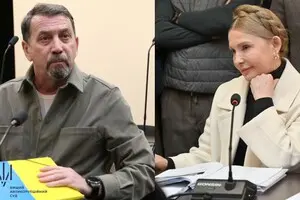
At the same time, NABU is investigating a case involving Batkivshchyna (Motherland) faction leader Yuliia Tymoshenko. On 14 January, after searches had been carried out the previous day at the party office on Turivska Street, she was notified of suspicion of allegedly organizing a system of paid voting among MPs. While Kisiel was working to preserve a manageable majority, Tymoshenko was working to dismantle it. That is the key difference in how the same instrument was used. And while Kisiel and Co went underground in the parliament, making regular visits to NABU detectives, Yuliia Tymoshenko remained true to her political genre. The white coat she wore to the hearing at the High Anti-Corruption Court, where her preventive measure was set, was the launch of a major political campaign to salvage what remains of the Batkivshchyna leader’s reputation.
Both investigations have shaken the parliament, which is clearly sliding into yet another crisis. Bills unpopular with the public, including those envisaged by the Ukraine Facility, are not being passed. Why? Because anti-corruption investigations have supposedly paralyzed MPs’ work. With that message, Servant of the People lawmakers visited ambassadors of friendly European states, asking them to “influence NABU.” Once, law enforcement depended on politicians; now, suddenly, the reverse seems to be true.
According to Andrii Motovylovets, first deputy head of the Servant of the People faction, MPs are afraid to vote for any bills at all, fearing that NABU and SAPO may interpret their actions as corrupt. In his view, the suspicions announced against his fellow faction members in December 2025 created an atmosphere in which “arguments about gathering votes no longer work.” What arguments those are, he did not specify. Perhaps the arguments collected by Timur Mindich’s back office? Or Yurii Kisiel’s back office? Or Vitalii Hahach’s? Or Ihor Abramovych’s? The last two are still operating. Are they not telling you? If one follows that logic, it would mean that corruption itself was what enabled the parliament to pass the decisions necessary for Ukraine’s movement towards Europe.
This is, of course, absurd. The same cannot be said, however, of the ongoing investigations into the MPs mentioned above. Because even before they reach court—and only the court, of course, can finally determine guilt or innocence—the Kisiel and Tymoshenko cases are already opening a door onto the reality of Ukrainian politics. A place where the truth is whispered into someone’s ear, while lies and howls are hurled from the parliamentary rostrum.
To understand what is really going on inside these investigations, and how resilient they may prove in court, we spoke to sources in the parliament, law enforcement and the presidential office.

How many MPs have already been summoned for questioning by NABU, and will more cases be opened? Have detectives traced the clients and suppliers behind the “envelopes” for Servant of the People lawmakers? Is Shefir in the case? Will there be a review of the possible involvement of Servant of the People faction leader Davyd Arakhamia? What position has the prosecutor general taken, and will he allow the investigation to be broadened? Is the expert report in the Tymoshenko case ready? Was the urgent search on Turivska Street lawful? Do the devices seized during the search contain additional information important to the investigation? How is the prosecution proving that there was no provocation by NABU in the Tymoshenko case?
The answers lie in the details of the two investigations.
Kisiel and the cash conversion centers
So, according to NABU and SAPO, a system of regular top-up payments to MPs in exchange for their votes was built around Servant of the People lawmaker Yurii Kisiel. The monthly “payroll” fund amounted to around $500,000, while individual payments ranged from $10,000 to $50,000. The materials gathered suggest that the basic “salary” was paid for loyalty. Supplements depended on status—committee chair, deputy chair, committee secretary and so on. Bonuses, meanwhile, were paid for lobbying votes in the interests of particular state agencies with back offices, or major private companies.
So far, in addition to the organizer—the “wallet” handling the distribution of money in Yurii Kisiel’s office—suspicions have been brought against four other Servant of the People MPs, to whom the investigation assigns different roles within the alleged scheme. Ihor Nehulevskyi is considered an active participant in the so-called criminal group who lobbied for road contracts; Mykhailo Laba is said to have coordinated voting; Yevhen Pyvovarov is viewed as a lobbyist for interests in the energy sector; and there is also MP Olha Savchenko. All of them were released on bail ranging from UAH 40 million to UAH 10 million—the origin of which, one hopes, is being examined by Pronin’s financial monitoring service.
There is also a sixth figure in this genuinely real story: Yurii Koriavchenkov—better known as “Yuzik” from Kvartal 95, the comedy troupe and production studio co-founded by Volodymyr Zelensky before he entered politics—who left Ukraine a few days before NABU served his colleagues with notices of suspicion. However, according to our sources, the president’s friend Koriavchenkov did return to Ukraine, received an invitation for questioning, and assured detectives he would appear.

The investigation rests on several strands of evidence. First, there are video recordings from Kisiel’s office, where, according to detectives, MPs were filmed receiving envelopes of cash. NABU recorded this “series with a cast of characters” for almost two years. The High Anti-Corruption Court heard audio recordings in which Yurii Kisiel is allegedly heard distributing money. A SAPO prosecutor said Kisiel may have received a total of around $145,000 for further distribution among “his” MPs.
Second, there is correspondence among a group of MPs in a WhatsApp chat where voting and payments were coordinated. The Kisiel “cell” offers a glimpse of how payment for MPs’ services was actually arranged. At the same time, according to our information, this “cell” is not the only one—MPs are being “fed” through a clustered system from different back offices. In their investigation, NABU detectives identified around 20 people linked to Kisiel. But that is only part of the regular-payments system; others, apparently, are likewise keeping the core parliamentary bloc of the Servants stable—a bloc that now numbers no more than 120 to 130 MPs. It should also be understood that the authorities spend money on piece-rate payments to political partners in order to maintain a majority in voting.
Prosecutors showed the court screenshots in which commands were issued in real time: “Vote PLUS” or “Take the cards out.” According to SAPO, after the “correct” votes, chat participants received a signal that the “packages” were ready. During searches, investigators found lists with surnames—Pyvovarov, Nehulevskyi, Laba, Savchenko—next to figures matching the dates of the parliament’s plenary weeks.
One participant in the scheme, according to the investigation, has struck a deal and given testimony. The name of that MP remains undisclosed and may remain so even in court, as such a mechanism does exist for hearing cases.
The defense? Its main strategy is to have NABU’s evidence declared inadmissible because of alleged procedural violations in authorizing surveillance, and to argue that the money was merely “party assistance.” Kisiel therefore firmly denies the existence of any criminal group or bribery system. The WhatsApp group featured in the case materials, he says, was simply “ordinary daily communication among members of the transport committee.”
Clearly, with such a large body of recordings in hand, detectives have not disclosed every episode the prosecution intends to use in court. At this stage, the investigation has singled out several clusters of votes for which, prosecutors say, money may have been paid. Among them are amendments to the 2022 budget tied to the redistribution of road fund money to specific infrastructure projects—for kickbacks of 3 to 5 per cent. At the same time, the case materials refer to “bonuses” for MPs in the range of $50,000 to $100,000 on top of their monthly “salary.” The group’s area of activity also included Energoatom matters: personnel appointments and financing for the completion of power units at the Khmelnytskyi Nuclear Power Plant. Specific business groups and equipment suppliers may have had an interest in those decisions.
At present, the case looks like a large-scale vertical structure with clearly assigned roles: Kisiel as operator, the other MPs as executors. It appears that investigators have managed to document the “technical” side of the process—the transfer of money—which makes their position before the High Anti-Corruption Court relatively robust. Prosecutors from SAPO laid out the details—bill numbers, sums and schemes—during open, and partly closed, hearings on pretrial measures in late December 2025 and throughout January and February 2026. The investigation is still ongoing.
There are several key aspects of this case that are causing serious concern not only among MPs, but also among the clients—the people behind the payment system who kept topping up Kisiel’s wallet all this time. The investigation is certainly not limited to the episodes involving the six MPs named above: detectives are digging both horizontally and vertically. As for lawmakers, our information is that around 20 have already been questioned by NABU. And that is not the end of it. Parliamentary sources say MPs have good reason to be afraid because over two years of wiretapping Kisiel’s office, a great deal of water—and conscience—has flowed under the bridge. So yes, hands really are shaking.
But it is not only MPs whose hands are shaking. So are those of Prosecutor General Ruslan Kravchenko, who entered the first five names into the register. According to sources, he has regretted that move more than once. Whether he will agree to a “second season” is an open question. Formally, it was Kravchenko who took the hit. (As a reminder, under current law only the prosecutor general may enter information into the Unified Register of Pretrial Investigations in cases involving MPs.) After that, the process effectively ground to a halt: according to sources in the presidential office, Kravchenko fell out of favor in the presidential office over this step and nearly lost his job. He is now categorically unwilling to enter new parliamentary figures into the register. Much will depend, however, on the quality of the evidence NABU detectives gather. If it proves genuinely compelling, the publicly backed position of the heads of the anti-corruption institutions may force the prosecutor general to sign off.
But the key issue is not only the political fallout. It is also the origin of the money. Has the investigation managed to trace where the money came from before it reached Kisiel’s office? Was it a bank, an oligarch’s safe, or a conversion center? Two figures inevitably come into view here: Serhii Shefir, the former first presidential aide, and Tymur Mindich, a businessman close to the president. According to our information, neither has any direct connection to bribing MPs. At the same time, sources say that at one point Mindich, who controlled Energoatom-related flows, did indeed help the faction out—though it never became a system. As for Shefir, who spent hours talking with his friend Kisiel about all sorts of things, NABU does not see him as a person of interest in this case. “Which is more than can be said for others,” one source added. Serhii Shefir appears in several NABU investigations at once—from the Mindich tapes and Energoatom schemes to cases involving the Odesa Port Plant and the State Property Fund, linked to possible money laundering and abuses in the state sector.
So the most common version shared with us by informed interlocutors, including people from Kisiel’s circle, points to a conversion center where operators on the corruption front prepared the “cargo” for MPs. Probably not without the involvement of the SBU, which has long kept an eye on this “high-end” line of business.
The scheme appears to have worked roughly like this: funding source — cash conversion center — distribution point — MPs. According to our information, the investigation has not yet established where the cash pool itself was formed, at least not using the tools currently available to investigators, including questioning. What is clear, however, is that the “wallet” where the money was distributed was not the only one.
This is where the investigation runs into the next level—the political one. The question is no longer only how the money was passed around, but who may have stood behind its distribution and coordination.
For now, it cannot be said that NABU has found a direct witness or participant ready to expose the entire chain. But what is known is that the Mezhа anti-corruption center submitted a complaint to the prosecutor general alleging a possible criminal offense by Davyd Arakhamia, head of the Servant of the People faction. The organization regards him as a potential participant in the scheme who was allegedly responsible for gathering votes and, given his role, could not have been unaware of the mechanisms used to “incentivize” them.
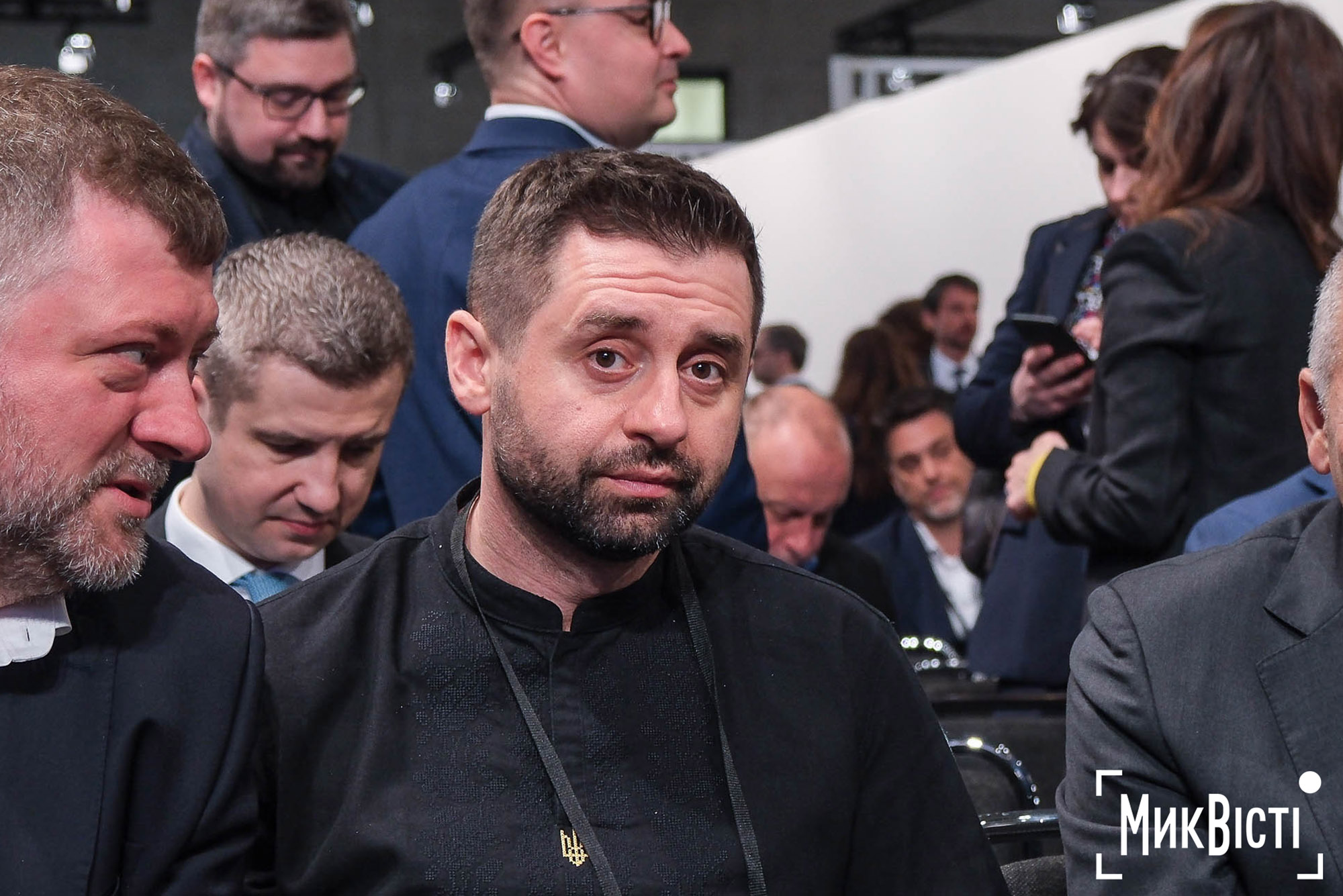
What is more, “journalistic investigations have documented numerous informal meetings between Davyd Arakhamia and representatives of various parliamentary factions, influential business figures, oligarchs and people linked to the criminal underworld,” Martyna Bohuslavets, head of the organization, wrote in the complaint. “These include meetings with oligarch Ihor Kolomoiskyi, allegedly tied to the vote to remove the then speaker of parliament; joint visits to the presidential office with businessman Vemir Davitian, who is linked to Oleksandr Petrovskyi, the so-called Naryk; as well as meetings with former Opposition Platform – For Life MP Ihor Abramovych, who owns energy companies.”
For those following the news, much here reads between the lines. The prosecutor general refused to register the offense. But that does not rule out the possibility that Davyd Arakhamia may be questioned by NABU as part of the Kisiel investigation.
If the Kisiel case is about the mechanics of bribing MPs from the ruling party, the Tymoshenko case is already about politics—and the possible cover provided to that corrupt system by the so-called opposition.
Tymoshenko and the “global oligarchy”
The greatest irony in this story is not that Batkivshchyna leader Yuliia Tymoshenko failed to carry out her plan to bribe MPs and bring down the Servants’ majority. It is that after so many years in politics, she now has to “get the job done” herself. Ms Tymoshenko has almost always been the rickshaw, dragging behind her not merely a cart but an enormous wagonload of pointless loyalty from those around her. But life, presumably, exists for working through one’s mistakes, not multiplying them. In the end, it is her choice.
This dramatic case, however hard Tymoshenko may try to turn it into political burlesque, is really about everything at once: reckoning, values, distrust, and ultimately loneliness. Because whispering, “We pay ten thousand for two sessions,” is not just about wrecking the parliament. It is about wrecking yourself.
Against that backdrop, everything happening both to Tymoshenko herself and to the team that lined up behind her in court looks almost cartoonish. Which, of course, cannot be said for Part 4 of Article 369 of Ukraine’s Criminal Code—offering, promising or providing an improper benefit to a public official holding an especially responsible position. The penalty is five to ten years in prison.
The investigation believes that Yuliia Tymoshenko set up a system for bribing MPs from other factions, including Servant of the People, to secure the votes she needed. The Appeals Chamber of the High Anti-Corruption Court has expressly found that there are reasonable grounds for suspicion. For this particular offense, the actual transfer of money is not required; a stated intention is enough. The court also listed specific sources of information: covert investigative actions, witness testimony and a protocol reviewing Verkhovna Rada data.
Let us go through, point by point, what the prosecution has and how the defense is fighting back.
The urgent search and access for the defense. Tymoshenko’s lawyers are now trying to demolish the case at its foundation by having the search on Turivska declared unlawful. Her team is acting aggressively and on the offensive. The issue of the urgent search has already spilled beyond the investigation itself and, unexpectedly, landed in the Supreme Court. First, the High Anti-Corruption Court found the search lawful. The appeals court, which Tymoshenko’s lawyers then turned to, upheld that ruling and explicitly stated that it was not subject to cassation appeal, in line with the Criminal Procedure Code.
And yet the defense went to the Supreme Court anyway, and the cassation court opened proceedings. The decision was taken by Supreme Court judge Iryna Hryhorieva, who appeared in the Kniazev case, where, notably, urgent searches were also carried out. According to sources, cash seized from her in that case was treated as part of the “Knyazev bribe.” She has not formally been held liable, but Roman Verbovskyi, a lawyer with the Anti-Corruption Action Center, says the very fact that this particular judge opened cassation proceedings over an urgent search is, at the very least, strange—and looks very much like a conflict of interest.
In court, prosecutors insisted that the urgency in this instance was not formal, but real. Searches of this kind in improper-benefit cases are rare—an exception rather than a rule. But here, as sources explain it, the element of urgency genuinely existed: the situation was shifting rapidly, and investigators believed that any delay could lead to the loss of important information or the movement of cash.
There is also the separate issue of defense access. Tymoshenko’s team says there were violations during the search. But according to our interlocutors, a lawyer was admitted and present during the investigative actions. More than that, they say this was also recorded visually. MPs who tried to gain access to the search, by contrast, were indeed not allowed to enter—but the investigation was under no obligation to let them in. NABU therefore considers the claim that the right to defense was violated to be yet another manipulation.
The tapes and the expert review. A key piece of evidence in the case is a series of audio recordings dated January 2026. In them, a female voice resembling Yuliia Tymoshenko’s discusses a monthly “subscription fee” for MPs with a male voice.
“There are strong indicators in the data provided of external interference and post-processing… Accordingly, the track cannot be treated as raw, continuous material. The audio track contains traces of post-production,” Tymoshenko told the court, quoting excerpts from an expert report prepared by the digital media analytical platform Prismvote Analitics 2025.
At the same time, the MP says the conversations did take place, but were about something entirely different, and that everything made public was either stripped of context or processed using AI. It is important to understand, however, that NABU has not handed the defense the original recordings. Under the law, that happens only after the pretrial investigation is complete and the case materials are formally disclosed. An analysis of fragments taken from open sources, including YouTube, can hardly be considered a full expert review.
According to the investigation, the recordings were made using special equipment that completely rules out editing, and the storage media have been sent for a state forensic examination. Prosecutors stress that this is not a single episode, but a series of sustained conversations that are logically linked. Fabricating that kind of sequence is far harder than editing an isolated clip.
All the answers are expected to come from the state expert review, which, according to our information, is already close to completion. It is supposed to determine the integrity and authenticity of the recordings. And while there are no official conclusions yet, our sources make little attempt to hide the fact that the results may not please the defense and may finally put the question of editing to rest. Wicked tongues add that Tymoshenko’s envoys have been working very actively—and generously—to find an approach to the experts. So far, without success. Whether that is because the state experts have consciously sided with the anti-corruption bloc, or because in this specific case the presidential office is not standing in NABU’s way—offended by Batkivshchyna’s attempt to poach its carefully fed majority—is another question.
More broadly, the relationship between the Batkivshchyna leader and the authorities has clearly entered a new phase. Yuliia Tymoshenko, who as recently as July had noisily propped up the presidential office from the parliamentary rostrum in the fight to cut NABU and SAPO down to size, now finds it rather awkward to accuse the current authorities, led by Zelensky, of persecuting the “opposition”. So when it came to identifying the puppeteer on whose behalf, in her version of events, NABU detectives were acting, Tymoshenko did not have to think for long. The mysterious “global oligarchy” suited her just fine.
The cash. Another block of evidence is the cash seized by NABU during the search of the Batkivshchyna office on 13 January 2026: $46,300 in total ($40,000 in bundles of $10,000, plus $6,300). The appeals court lifted the seizure on the $6,300, and NABU returned that money. The rest remains under arrest, while more than UAH 33 million in bail has been posted for Tymoshenko—about €770,000.

According to the investigation, this was part of the “fund” from which payments to MPs were made. NABU links the money to the broader logic of the case: the recorded conversations, the likely size of the bonuses, and other episodes involving cash settlements. In that structure, the seized money is viewed not as a random discovery, but as part of a system.
The defense, predictably, takes the opposite line. Tymoshenko’s team insists that all the money found was legally sourced, declared, and unrelated to any corruption schemes. It was simply convenient to keep cash at work—in the same Nova Poshta envelope.
In the end, the key dispute is not so much the fact that the money existed, as its origin and its connection to the episodes documented by the investigation. That, too, will be one of the issues fought over in court.
The seized devices and the “cash ledger.” Another layer in the case concerns the digital devices and notes seized during the search. According to sources, these include phones, a computer system unit, and draft materials that are now being analyzed by investigators.
It was from one of the computers, prosecutors say, that they obtained an electronic spreadsheet—a kind of “cash ledger”—recording payments made to MPs over several years. Importantly, they say the figures in that spreadsheet correspond to the amounts heard on the audio recordings. More than that, according to sources, investigators compared the data with voting results published on the Verkhovna Rada website and found matches by date and decision. In effect, that ties together the conversations, the figures and the actual votes in a single line of evidence. In other words, this is not an isolated document, but one element embedded in the broader evidentiary structure.
The lists themselves are not the central proof; they are only part of the mosaic. The main emphasis lies in how they match up with other material, including recorded conversations and actual votes.
The defense denies all of this. Tymoshenko has publicly said that the records found reflect nothing more than routine office expenses—“tea, coffee, sweets and biscuits” for visitors. Ms Tymoshenko is, after all, known for her hospitality: she does not let people leave until they have eaten. This time, it seems, the tea and biscuits turned out to be rather expensive.

At the same time, sources say the contents of the seized storage devices go well beyond the episodes already made public. There may be additional information there, not necessarily limited to the scope of the current charges. What exactly it is has not been disclosed, but it is clearly around these materials that the next phase of the procedural battle will be built.
The witness and provocation. One of the defense’s key lines in the case is the claim of provocation — proof of which could sink the case. The lawyers argue that MP Ihor Kopytin, who appears in the case file, acted as an “agent provocateur”, cooperating with NABU under pressure—allegedly because of criminal proceedings of his own. On their account, he signed a cooperation agreement only a few days before the first recorded conversations with Tymoshenko, which means, they say, that his role was not to document a crime but to provoke one.
There is indeed witness testimony in the case from a person who describes both the “backstory”—late December 2025, when monthly payments of $10,000 were discussed—and a specific episode on 12 January 2026 involving an offer and an intention to transfer money through third parties. NABU is avoiding details: it is not prepared to confirm or deny outright whether there was an “agent,” citing the pretrial stage of the investigation and procedural strategy. “Where and how the recordings were obtained is a matter for the court,” interlocutors say.
As for provocation, NABU categorically rejects that logic. It stresses that the provocation argument is a standard line of defense in cases of this kind. The key question here is who initiated the conversation about money. And, according to NABU, it was Tymoshenko who named the sums first. “You can hear it on the recordings, and that essentially closes the question of provocation,” a source said.
It is also important to stress that the case does not rest on a single witness. The question of proof will be decided on the totality of the evidence—witness testimony, audio recordings, documents and other materials. Their sufficiency is assessed by the prosecutor at the close of the investigation; the final word belongs to the court.
As for the list of 65 MPs that was lying on Tymoshenko’s desk, the court of first instance barred Yuliia Volodymyrivna from communicating with the MPs named on it, but the appeals court lifted that restriction. The investigation is still examining how the list connects to this episode of the case. All of NABU’s current communications with MPs, however, are taking place within the framework of the case concerning the so-called criminal group in Servant of the People.
It is worth noting that today both analysts and people close to Tymoshenko, with whom we have spoken, believe she really has landed herself in serious trouble—whatever face her defenders may be trying to put on it. According to our information, NABU is confident in its evidence and has no intention of dragging the investigation out: the question now is whether to send the case to court or extend it for one more month. But that would be the final deadline.
...The Kisiel case showed just how cynically the system of relationships inside the ruling party is arranged. And on what principles the laws and decisions most important to the state have been passed for seven years now. From that same root grow the Mindiches, the Chernyshovs and the Yermaks. Its juices also nourish those who never understood a thing about this country and believed only in their own pocket.
The Tymoshenko case has shown how this rotten system survives and, for decades, has adapted itself within politics. She is trying to play a high-stakes game by the old methods—methods that no longer work. At the same time, the political show into which society is being actively drawn, with the next parliamentary elections in mind, is cynical and repellent. Just like the allies standing behind Tymoshenko, who know perfectly well what their party is made of and what is really going on. But the parts have been assigned. Doubt, like conscience, has been cast aside.
In both cases, the issue is no longer the evidence as such; the court will decide whether it is sufficient. The issue at hand is something else: how deeply rooted this system has become, a system in which a vote in the parliament has turned into a commodity.
And how long it will take for an MP to become a political actor again, rather than an instrument in the hands of yet another back office on whatever street—Bankova, Turivska or Volodymyrska.
Editor’s Note: The article previously reported that, according to the investigation, MPs Pivovarov and Negulevsky were allegedly paid to “advocate” for Bill No. 5655 on urban planning reform, but this was an error. The editorial staff apologizes to readers for the inaccuracy. This paragraph has been removed from the text.
Please select it with the mouse and press Ctrl+Enter or Submit a bug
 Follow on Telegram
 Login with Facebook
 Login with Twitter
 Login with Google