
 Support ZN.ua








The Illusion of Power. What Fatal Mistake Zelenskyy May Be About to Make

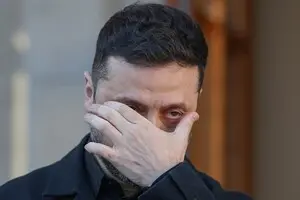
Volodymyr Zelenskyy’s lingering in an internal political crisis is not an unavoidable necessity but a deliberate decision. His refusal to promptly appoint a new head of the Presidential Office, just like his reluctance to remove Yermak’s people from executive power, is a way of postponing any direct engagement with the governance system that Yermak built for him.
In the public eye, this approach can be justified by the sharply deteriorating external environment, linked to negotiations that have entered an active phase. The logic of events temporarily restores Zelenskyy’s room for maneuver. It creates the illusion that nothing has changed, that nothing has been lost.
Three factors reinforce this perception.
First, Yermak remains close, behind the same fence in the elite neighborhood of Koncha-Zaspa.
Second, Zelenskyy has decided that the anti-corruption assault has run its course.
Third, the “Oval Office 2.0” effect kicked in: as international pressure mounted against Zelenskyy during peace talks, many Ukrainians reacted instinctively: when an outsider goes after our president, people close ranks around him.
Thus, Zelenskyy is under the illusion that the old structure built by Yermak can be preserved without any changes. But this stability may collapse at any moment.
Because NABU, having retreated from the public spotlight into procedural work, continues to do its job quite effectively. (There will be confirmation of this very soon, as we explain below.)
Because the rise in public trust amid aggressive negotiations toward Ukraine is not the same as an increase in political ratings while a corrupt system of governance remains intact.
Because Yermak will never be able to provide the level of painful but necessary decisions the country needs to survive, both in confronting Russia and in addressing the problems of unreformed military governance and populist economic policy.
But let us proceed step by step.
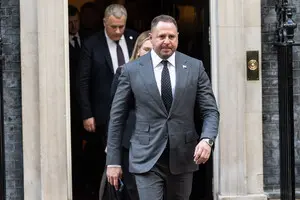
Yermak: still very much present
The corruption scandal around the “Mindich tapes” first struck the president’s closest business circle. Then, when NABU played its card featuring the head of the Presidential Office, Andrii Yermak, conducting a search of his apartment and signaling the possibility of formal charges, the entire house of cards collapsed. The initial shock, followed by Zelenskyy’s outwardly calm public reaction, gave rise to hopes that genuinely new people might emerge in his circle. This could have triggered a real reboot of power, strengthening parliamentary agency and changing the principles by which the Cabinet of Ministers is formed.
Certainly, Zelenskyy would never have agreed to a government of national trust, as the opposition demanded. But he absolutely could have cleared the system run by Yermak’s and Mindich’s people. The key point is that he could have—but chose not to. Because Yermak’s dismissal was not an act of enlightenment but a forced move for self-preservation. As a result, instead of real staff decisions, for the third week in a row we have been watching meaningless interviews with candidates for the post of head of the Presidential Office and reading Zelenskyy’s statements from a suddenly hyper-democratic journalists’ chat.
Among the possible candidates, defense minister Denys Shmyhal and and deputy head of office Pavlo Palisa have long fallen out of contention. Neither the “Budanov-style” office in the form of a military cabinet nor the reformist model of a transparent, technologically driven Presidential Office headed by Deputy Prime Minister Mykhailo Fedorov has been implemented. The president chose not to pursue these scenarios. He remains true to himself—and to Yermak.
Yes, their separation was loud. They argued so intensely that some people around them felt uncomfortable. But they share too much for this to be called a real break: shared knowledge about each other, shared experiences over the years, shared vast sums of money and, above all, a shared deep fear of the future. That is why they cannot part ways. Yermak has not vanished into thin air. He simply no longer sits in the office running processes around the clock. Instead, he remains in constant contact by phone and spends his evenings at the president’s residence in Koncha-Zaspa, behind the same fence. That is all. A true rupture between Zelenskyy and Yermak is possible only in one form: a race to cooperate with investigators and testify against one another. Either they stay together or turn on each other.

This is why Zelenskyy’s likely choice is to further blur the real role of the head of the Presidential Office. According to sources, Zelenskyy is prepared to manage the office personally, reducing it to technical functions and redistributing analytical capacity among existing structures, including the National Security and Defense Council. Under this model, the head of the Presidential Office would not be a political heavyweight but a convenient bureaucrat—someone like deputy head of office Ihor Brusylо or trusted chief of staff Mariia Vytushok.
The pause taken by the president also explains the caution of the old circle, now partly reshuffled. Although Zelenskyy has begun meeting more frequently with parliamentary faction leader Davyd Arakhamia, Prime Minister Yuliia Svyrydenko, First Deputy Prime Minister Mykhailo Fedorov, military intelligence chief Kyrylo Budanov and others, no one is rushing to write Yermak off. This is evidenced, among other things, by the delayed replacement of several regional state administration heads—Yermak’s people—which the media reported weeks ago. Sources say that Deputy Head of the Presidential Office Viktor Mykyta could have submitted the necessary lists for the president’s signature long ago but has refrained from doing so, maneuvering and maintaining close contacts with Deputy Prime Minister Oleksii Kuleba, a Yermak protégé who remains in office.
The head of the Financial Monitoring Service, Filip Pronin, also remains in his seat. The activity of this pocket enforcer of Yermak in blocking NABU investigations—including the prolonged scrutiny of shell companies that posted bail for key figures in the “Mindich tapes” case—has long merited serious interest from anti-corruption bodies.
However, as sources claim, the absence of formal charges remains Zelenskyy’s key argument for not touching Yermak’s people: let NABU and SAPO first prove that everyone around is corrupt.
NABU and the crumbling of the president’s security apparatus
There is a certain internal logic in Zelenskyy’s actions. While NABU is systematizing its evidence base and Andrii Yermak’s lawyer, Ihor Fomin, is constructing a defense strategy, society is witnessing a pause. And so is the president. Zelenskyy reacts not to arguments or advice but exclusively to public mood and media climate. He becomes anxious only when an emotional wave rises. For now, the waters are calm. People lack electricity. NABU is not releasing new recordings or announcing new suspicions, including against Yermak. From the outside, it looks as if everything is over, as if the issue has burned out.
But this impression is deceptive. Let us recall that just one month ago, NABU conducted around seventy searches as part of Operation Midas. Hundreds of electronic devices were seized—computers, tablets, phones. All of this must be unlocked, decrypted and cross-referenced. This is painstaking, time-consuming work—the foundation on which a courtroom case is built. Everything recorded must then be verified against documents from relevant ministries, agencies, tax authorities, financial monitoring bodies and state-owned enterprises. Again, routine technical work—invisible to the public but decisive for the outcome.
It is also crucial to understand that NABU does not work “one case at a time.” Despite a limited number of detectives, investigations proceed in parallel, and the absence of loud statements does not mean cases have stalled. Quite the opposite. One such investigation has not yet been made public, but we will tell you about it now.
As ZN.UA has reported, last week NABU carried out an operation that deeply unsettled a large number of people in power. Surveillance equipment was installed in the office of MP Yurii Kisiel from the Servant of the People party. Over more than two years of wiretapping, confidential contacts were recorded not only with his close friend—former presidential first assistant Serhii Shefir—but also with many other figures sensitive for the Presidential Office. But that is not all.
According to sources close to Kisiel himself, this office was the place where Servant of the People MPs received their envelopes. So it is little wonder that Servant of the People MPs responded with an “Italian strike” in the parliament. First, NABU shut down the center that generated their shadow payroll at Mindich’s operation—and then the cash window at Kisiel’s office.
.jpeg "People's Deputy of the Servant of the People Party Yuriy Kisel")
As we remember, the first case of shadow payments to MPs was investigated back under former NABU director Artem Sytnyk. Then came statements by the late MP Poliakоv and later by Oleksandr Trukhin, a former Servant of the People lawmaker who was charged with attempting to bribe police officers after a traffic accident and subsequently resigned his parliamentary seat, whom NABU effectively removed from the political scene. COVID, war and the lack of authority for the SAPO head to initiate proceedings against MPs without the Prosecutor General’s approval muted the issue—but did not kill it altogether. Two and a half years of wiretaps is serious. NABU has not commented yet, so we await details.
Thus, NABU’s shift from the public arena into procedural work does not signal a weakening of the anti-corruption strike—quite the opposite is true. Investigators have at least a year to assemble and present their case in the High Anti-Corruption Court regarding the Mindich group. And with Pronin’s blocking activities, that is not much time at all.
Where the ground truly is giving way beneath the president’s feet is within the security agencies under his control: the Security Service of Ukraine (SSU), the Prosecutor General’s Office, the State Bureau of Investigation and the National Police. Signs that the system was cracking appeared even before Zelenskyy officially announced Yermak’s dismissal on November 28. Searches of the acting head of the Presidential Office’s apartment produced miracles. Court hearings scheduled for that day were canceled: previously hyper-active prosecutors failed to reach court due to “force majeure,” and cautious judges postponed hearings until spring. The system sensed where things were headed and hedged its bets.
On November 3, NABU detective Ruslan Mahamedrasulov, one of the detectives leading the Mindich investigation, was released from pretrial detention. On December 10, detective Viktor Husarov, suspected of treason, was released under house arrest. (Both detectives were detained and arrested on the eve of a parliamentary vote to strip anti-corruption agencies of their powers—intended as future trophies and proof of NABU’s “ineffectiveness and degradation.” The cases, however, remain open, and the Prosecutor General’s Office will still have to present its evidence to the court and the public.)
An especially desperate attempt to disrupt the course of events came from Prosecutor General Ruslan Kravchenko. On December 12, after a series of provocative posts in pro-government Telegram channels about his possible dismissal, the man at the Reznytska office addressed the public with a direct threat: “I am in my place and continue to perform my duties as Prosecutor General. I know everyone who is now working against me and prosecution as an institution. You can stop hiding—I will come for each of you personally.” As unprecedented a statement as it may be, it’s a sign of weakness, not strength.
This was confirmed days later when the same pro-president Telegram trash dumps leaked intimate photos from the phone of Vitalii Shabunin, head of the Anti-Corruption Action Center (ANTAC), seized during a fabricated SBI investigation. A textbook act of vileness. Importantly, as per our sources, it wasn’t SBI officers who reached rock bottom but Kravchenko’s people, who, as supervising prosecutors, regularly requested materials from the Shabunin case.
Just day before the leak, ANTAC published a list of key figures involved in the operation to dismantle NABU and SAPO. The list continues to grow and still does not include its main protagonists: Andrii Yermak and Volodymyr Zelenskyy. The latter, according to sources, personally oversees the Shabunin case.

Nevertheless, sources within the Presidential Office claim that Kravchenko’s fate was sealed earlier—when Mariia Vdovychenko, another ANTAC investigation figure with Russian roots, became his first deputy. As Yermak’s loyalist, she is set to become acting Prosecutor General once Kravchenko leaves. And he will leave—together with his closest aide, Dmytro Borzykh, a figure in NABU’s “hacker-lawyer” case.
At the same time, the illusion of “bringing the security forces back into line” is mistaken. It does not boil down to Kravchenko’s statements—or even to replacing him with a more emotionally stable trusted candidate. Security officials always look ahead. Deputy SSU head Oleksandr Poklad is already negotiating possible ceasefire scenarios with Budanov—something unthinkable just two months ago.
Deputy Head of the Presidential Office Oleh Tatarov and SSU chief Vasyl Maliuk are no longer acting as aggressive executors of presidential will. Tatarov deliberately built communication with journalists and activists who had previously attacked him, achieving de facto amnesty: he is no longer publicly devoured but quietly bypassed, removed from lists of those who pressured SAPO and NABU.
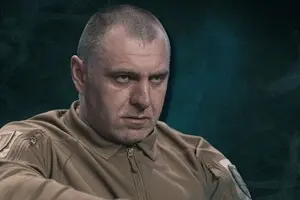
Unlike Tatarov, Maliuk has always been a convenient interlocutor for journalists eager to believe they were in a relationship of trust with the SSU chief. The image of a straightforward, easygoing “regular guy in a shirt” is a role. In reality, Maliuk has a precise sense of boundaries—who can be told what, and who must be told nothing at all. Opponents were allowed to hear about the impending suspicion against Klymenko. Zelenskyy still believes that this was what prompted NABU’s search of Yermak as a pre-emptive strike to protect Klymenko. We do not. Nor does detective Ruslan Mahamedrasulov, who stated that from the outset it was clear that Mindich did not play first fiddle in this orchestra.
(As this text was being written, it became known that the SSU had opened a new criminal case for high treason against Timur Mindich. This was reported in a response to an inquiry by MP Oleksii Honcharenko. Given that the back office was located in the apartment of Andrii Derkach’s daughter, this reaction was logical. What is telling is that Maliuk went ahead with it at all.)
The “Oval Office-2” Effect
While the corruption agenda drags Zelenskyy down and effectively deprives him of reelection prospects, external pressure from Washington and Moscow triggers a different mechanism—situational consolidation of society around the president as the key negotiator (as confirmed by polling).
Zelenskyy senses this. After dismissing Yermak, he publicly focused almost exclusively on foreign policy and diplomacy. The war appeared only symbolically: a short front-line visit, several headquarters meetings, awards. Domestic politics was reduced to distant signals, such as an instruction from Paris to draft an elections law—without real engagement or decisions.
Against this backdrop, the blatantly crude appointment of Rustem Umerov as head of the negotiating team stands out. Only someone gripped by imperial illusions could appoint such a toxic figure, both domestically and internationally (not without reason did Umerov fail to receive U.S. agrément).
First, Rustem Umerov is a figure on the Mindich tapes. They indicate that the president’s friend pressured defense minister Umerov over a body-armor contract for the company Milikon. NABU has already summoned Umerov for questioning, and Ruslan Mahamedrasulov stated that Operation Midas was initially developed with the Ministry of Defense in mind.

Umerov publicly denies the allegations, but questions remain. According to Tetiana Nikolaienko, a member of the MoD Public Anti-Corruption Council, tender conditions were altered to allow companies linked to Mindich; Fortetsia Zakhystu won without a license; tenders worth UAH 1.6 billion were canceled; a repeat tender for UAH 225 million was won by Milikon—a company without its own body-armor model. Independent bodies flagged corruption risks back in March, but their conclusions were ignored. The contract was terminated only under Denys Shmyhal, after expert examination confirmed substandard quality.
Second, Umerov does not shy away from personal contacts with American and European officials. According to four anonymous sources cited by The Washington Post, during a US visit for peace-plan talks, Umerov held closed meetings with FBI Director Kash Patel and his deputy Dan Bongino. “The meetings have caused alarm among Western officials who remain in the dark about their intent and purpose. Some said they believe Umerov and other Ukrainian officials sought out Patel and Bongino in the hopes of obtaining amnesty from any corruption allegations the Ukrainians could face. Others worry the newly established channel could be used to exert pressure on Zelensky’s government to accept a peace deal, proposed by the Trump administration, containing steep concessions for Kyiv,” the paper wrote.

However, according to ZN.UA sources, Umerov’s meeting with FBI Director Kash Patel—which he attended together with Oleksandr Poklad—had nothing to do with negotiations between Ukraine, the US, Russia and Europe. It was arranged through Turkish channels and concerned something else entirely: discouraging the FBI from providing expert or investigative assistance to NABU in the Mindich case. When the White House learned of the meeting’s content, Patel faced serious consequences.
One wonders how serious those consequences were for Umerov once the Presidential Office found out.
Third, Rustem Umerov’s family lives in the United States.
Why does Zelenskyy ignore the obvious? Because he and the Secretary of the National Security and Defense Council are bound not only by power but by resources. Like Yermak, Umerov bears significant material responsibility. These are people who hold the keys to guarantees of the president’s future.
What future?
It is clear that both Trump and Putin have long wanted Zelenskyy gone—each for their own reasons, rooted deep in the past. Zelenskyy knows this. Calls for elections, varying in pressure and tone, are nothing new to him.
Today, however, he is the only one truly prepared for elections: financially, technologically and in media terms, though not so much electorally.
Zelenskyy could trade his political future for security guarantees—and not only that. But since he also cares about the inscription on his monument, he may go further and exchange non-participation in future elections for something genuinely meaningful for the country. Because as a trophy, he remains extremely valuable, to both Putin and Trump.

And here Zelenskyy stands on the threshold of another mistake. He may come to believe in the illusion that everything can remain as it is. That everything has quieted down. That everything has dissolved. That history is written by a card office, a Telegram channel, TV host Nataliia Mosiichuk—by anything except real decisions. This is a dangerous illusion.
The burden on him is colossal. He wants to go back—into slippers, into comfort and familiarity, within arm’s reach. But that past has already crept away. It has crumbled. It is slipping through his fingers. The three components of the presidential illusion do not work.
Because Yermak will no longer solve his problems, and the broken cup cannot be glued back together—not in their personal relationship, and not in Yermak’s relations with other political actors. For them, he is already no one.
Because NABU has stopped nothing—and corruption exposure will only intensify.
Because trust generated by the “Oval Office effect,” Trump’s pressure, Witkoff’s rudeness, Kushner’s categorical tone and openly pro-Russian rhetoric is understandable—but trust is not a rating. We have seen too many people with high trust levels who either failed to enter parliament or barely scraped past the threshold. These are different things. What separates Zelenskyy from the presidency today is not so much a polling number as a constellation of figures and circumstances—Trump, Putin, Yermak, Mindich. Self-deception is dangerous.
After such a shock, after such exposure before the whole world, remaining an “emperor with no clothes” is no longer just Zelenskyy’s problem. It is the problem of the entire state—and above all, the front. Because exhausted people, between battles, had a flicker of hope that something would finally change. Consciously crushing that hope is a stab in the back.
To hold the country together and balance it in this extremely difficult situation, Zelenskyy will have to make unpopular decisions—in the military sphere and in the economy. Because partners are already tightening the grip and talking about mobilization from age twenty. Because the budget is unrealistic, stuffed with pre-election giveaways and populism, and will have to be rewritten. And Yermak can no longer provide this for him.
The old world is gone, and the president does not want—or cannot—create a new one. Perhaps he lacks the strength. Perhaps time. But he must try. Because this is the last chance.
If the country does not become the president’s priority—which today can be destroyed just as easily from within as from without—then very soon neither ratings, nor trust, nor monuments will matter to anyone.
Please select it with the mouse and press Ctrl+Enter or Submit a bug
 Follow on Telegram
 Login with Facebook
 Login with Twitter
 Login with Google