
 Support ZN.ua








A Blow to Decentralization: The Syndrome of Expired Power



The past week was rich in events that Ukrainians were invited to take pride in.
First, the European Commission presented its annual report within the 2025 EU Enlargement Package, where Ukraine appears in a somewhat better light than last year. Yet the “war discount” granted by the Europeans is evident to anyone living in Ukraine, going to court, running a business or waiting for law enforcement to uphold the law. Therefore, while we thank our European partners for their understanding, it is hard to avoid the question:
are they not doing us a disservice with their “rosy” reports, giving an increasingly self-contained government, one that rules without elections, an argument to throw in the face of the opposition: “Be quiet; everything is fine here”? (There has already been enough reflection on this dilemma, including on ZN.UA. Notes in parentheses here and below are mine—I.V.)
As for the second event, which is the focus of this text, it was the adoption by the parliament of Draft Law No. 14048—a triumphal compromise between the Presidential Office and the local authorities that have been in permanent resistance to it. According to the MPs who voted for it, the introduction of state supervision over local self-government bodies moves decentralization into its final phase and, most importantly, gives Ukraine the right to receive 30 billion UAH in budget support under the Ukraine Facility.
Yet for those who truly understand the field, a different question arises: has the introduction of mock, rather than real, oversight already buried decentralization for good—or not yet?

Europe, of course, will once again turn a blind eye for a while—not to shatter the picture it has painted and not to give its constituents (whose backing is central to continued funding for Ukraine) any reason to doubt our “successes.” However, without legal oversight of local councils’ acts, and amid an unreformed judiciary and law-enforcement system, the state will in essence continue to nurture an uncontrolled “monster”—one endowed with money and powers but lacking accountability.
And no matter how offended sitting mayors may feel by such wording (and they truly bear a colossal wartime burden), the state has its own tasks: to maintain the backbone of security and prevent the emergence of new feudal-corrupt enclaves such as Kyiv or Odesa.
The issue, then, is not which level of government, central or local, is more to blame. Much has already been said about corruption at the top, authoritarianism tendencies and the overreach of the security apparatus. The question is different: what kind of institutional framework are we establishing so that the system of governance in a warring country—even amid the degradation of “expired” power at all levels—will strengthen rather than decay?

Therefore, let us set down several key reasons for the failure of the reform, outlining its risks and prospects. Perhaps this will be useful to those who come after, when the paint applied by the current authorities finally peels away and Ukraine’s walls are repainted by new masters of the power game.
The start and the sealed “window” of opportunity
So, after the end of martial law, the political appointees—heads of regional state administrations—will “supervise” the legality of local self-government decisions only in regard to powers delegated by the central government. In essence, this is oversight without oversight: all the “juicy” areas—land, construction, utilities—remain in the shadow of local council decisions. The deeper level of control, initially envisioned by the reform at the lower district administration level has been eliminated. As has the very logic according to which the heads of local state administrations were to be civil servants, not presidential cogs in the machine.
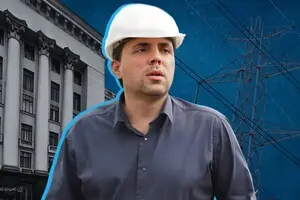
Thus, at the local level, nothing has changed: the mayor, prosecutor, police chief, judge and head of the regional administration still maintain a fragile balance of power. Sometimes the scales tip in favor of the local side (they still refuel the police cars), sometimes toward Kyiv, where, when necessary, the leash can always be tightened. At such moments, the balance collapses, and we hear either claims from the Presidential Office about “irresponsible mayors” or, conversely, a stream of complaints from the mayors themselves and their representatives about “pressure from law enforcement agencies.”
Why did it happen this way? Why has a deal convenient for everyone, yet clearly destructive for both communities and the state, remained in force and even been presented as a victory?
Many of those who can speak frankly off camera point to their predecessors: “Because back in 2015, the system of oversight should have been introduced simultaneously with the transfer of funds and powers to the communities.” Now, however, local authorities have grown so strong that they can block any attempt at control, even in the parliament.
Strange as it may be, this is a natural process.
Indeed, looking back at the start of decentralization, there is a grain of truth in that argument.
The 2015 state budget, with accompanying amendments to the Tax and Budget Codes, became the first decentralization budget, spearheaded by the parliament and its Speaker Volodymyr Hroisman.
After the Revolution of Dignity President Petro Poroshenko, a man not instinctively inclined toward democracy, was forced to publicly support the reform, despite his reluctance to share money and powers with the regions. In terms of oversight, he preferred his own gubernatorial vertical, whereas the reform envisioned a different model of state representation at the local level.
That same year, the fifth President of Ukraine effectively derailed the constitutional amendments that were supposed to entrench decentralization in the country’s basic law. The reform needed to be “written into” the Constitution to give it stability and shield it from political manipulation. However, during the drafting, a secret provision was slipped into the Transitional Clauses—a deal with Putin on granting a “special status” to the certain areas of Donetsk and Luhansk regions (CADLR). This sparked massive protests outside the parliament. As a result, both the “special status” and decentralization itself were thrown overboard.

In 2016, a draft law on oversight of local self-government bodies was drawn up, coordinated with the Association of Ukrainian Cities (AUC) and the Council of Europe. But at a Cabinet meeting—chaired by Hroisman, who had by then become Prime Minister (and thus causing the center of reform to shift from the parliament to the government)—the AUC spoke out against it, and the document was withdrawn from consideration.

The reform began to sink into its own contradictions: voluntary community amalgamation stalled, coordination between ministries was absent, and the country increasingly imitated reforms—from police to prosecution. Absent a genuine law enforcement reform, the transfer of money and powers without oversight turned decentralization into feudalization.
In 2019, Poroshenko had one more opportunity. In February, the Verkhovna Rada, by 334 votes, enshrined Ukraine’s course toward the EU and NATO in the Constitution. According to our sources, a conversation then took place between the president and the prime minister: Hroisman urged him to add a third provision, enshrining in the Constitution the establishment of district and regional prefectures. But Poroshenko, confident of his re-election, preferred manual control and personal deals with mayors over systemic solutions and institutional oversight. Provoking the local authorities before the election was not in his interest.
Looking back, experts now acknowledge: the reform was launched in 2015 amid a political and financial minefield. Hence the bet on “money and powers first, control second.” At the start, this seemed reasonable: local self-government was weak, the oversight methodology had to be refined, and no one wanted to scare the mayors away.
The continuation and collapse of the framework draft law No. 4298
The Europeans are not mistaken when they call decentralization Ukraine’s most successful reform.
For it was, in many ways, a matter of good fortune. But any stroke of luck must be met with readiness.
First, after Volodymyr Zelenskyy came to power, the new team at the line ministry did not discard the “decentralizer-in-chief,” Viacheslav Nehoda. He remained deputy minister, preserving the institutional memory of the reform and the pool of experts who had built it. Second, the parliamentary committee also had young yet sensible members capable of grasping and carrying forward their predecessors’ ideas.
.jpg "Former Deputy Minister of Community and Territorial Development Vyacheslav Negoda, MPs Vitaliy Bezgin and Oleksandr Aliksyichuk")
On 12 June 2020, the Cabinet of Ministers adopted 23 resolutions designating the administrative centres and approving the territories of territorial communities across all oblasts. This decisive act ended the period of voluntary amalgamation and made it possible to establish 1,469 communities, a crucial step in the decentralization process. Thanks to it, the Central Election Commission was able to call the first local elections on the new territorial basis. A month later, the Verkhovna Rada adopted Resolution No. 3650, abolishing 490 districts and creating 136 new ones in their place. The reform was gaining momentum, though not without political snags. (The parliament did not always manage to withstand pressure from local “feudal lords,” who “merged” communities and drew district boundaries to suit their own interests.)
In 2021, the parliament adopted in the first reading Draft Law No. 4298 on local state administrations, which was to close the main gap of the reform: the absence of state oversight over the legality of local self-government acts.
It was a balanced document premised on EU-minded logic:
- oversight—not for subordination, but for legality;
- oversight—not only over delegated powers, but also over communities’ own powers (a separate law on the clear division of competences between the centre and local self-government was being drafted in parallel);
- independent prefects—civil servants recruited from a staff reserve instead of presidential appointees.
The AUC did not endorse the draft publicly, but neither did it mount an active campaign to block it—evidence of a fragile yet real compromise between the central and local elites. However, after the first reading, everything changed at the Presidential Office. President Zelenskyy flatly refused to accept prefects as civil servants rather than his direct subordinates.
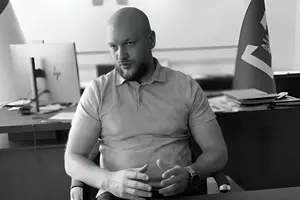
The issue was then overseen by Kyrylo Tymoshenko, Deputy Head of the Presidential Office. In the search for political balance, the law’s author Vitalii Bezhin rewrote it for the second reading in favour of the president. Prefects were turned into political figures directly subordinate to the head of state. A European-style oversight instrument morphed into a tool of vertical control—effectively a mechanism to suppress local self-government. The AUC, predictably, opposed the revised text outright.
The document then languished for years between committees, losing the support of both experts and mayors. This coincided with the failure of the merged Ministry, established under Deputy Prime Minister Oleksandr Kubrakov in 2022. Decentralization and regional policy were kicked into the long grass, while the ministry focused legislatively on commercial post-war reconstruction.
By the spring of 2025, after four years of war and the reorganization of the ministry now headed by Oleksii Kuleba, attention returned to Draft Law No. 4298. The subcommittee chaired by Bezhin reworked the text—imperfectly, yet no longer in the president’s favour.
It restored the key principles and could have become a foundation for gradual improvement. Every expert we spoke with agreed on one point: It had to be adopted, perhaps with revisions, but without delay.

At that very moment, however, empowered local authorities drew a line.
The AUC, relying on the political weight of mayors and local councillors, blocked the law in the committee. All this unfolded against a backdrop of the continued concentration of power in the president’s hands (including the widespread introduction of military administrations, even in communities whose councils were functioning normally). This allowed local authorities to cloak their own interests in what was, in reality, an anti-state game.
The soundbite about “26 oversight bodies” became a convenient smokescreen. In fact, no one in the state now reviews local council decisions for legality. What we know about the Kyiv City Council and the Odesa City Council stems only from cases that NABU has managed to reach, but NABU cannot cover them all. Meanwhile, the mayor, prosecutor, police chief, judge and head of administration continue to guard their own pockets rather than the communities. Besides, the AUC’s reference to the need to first amend the Constitution (for which this parliament obviously lacks votes since all of decentralization was carried out on the verge of constitutional breach) and its years-long blocking of the Law on the Capital only confirm the local elites’ rejection of any state oversight.

As a result, the systemic draft law was replaced by surrogates and compromises, light versions devoid of substance. Everything culminated in what we have today: “oversight without oversight,” a formal report to the EU and another occasion for the authorities to tell Europe “we’re doing fine,” while the AUC claims it “won the battle but not the war.” Because what follows is the same old backroom deal, against the backdrop of growing authoritarian tendencies in the country. Against which there is no protection. “The government ignored the position of the Verkhovna Rada of Ukraine and submitted the budget for a second reading with 60 percent of the personal income tax assigned to communities. This is going to be interesting,” wrote Vitalii Bezhin.

Need we remind anyone of Prosecutor Kravchenko’s interest in the communities?
Risks and forecasts
The attempt to draw a line under the decentralization reform has, in fact, opened up an entire layer of new risks—political, institutional, financial and societal.
Having formally completed the reform, Ukraine has effectively entered a stage of neo-feudalism, where the central government retains control over political appointments, while local authorities operate without real oversight, relying instead on their own resources and informal arrangements.
It is also important to note that neither the Constitution nor the European Charter of Local Self-Government contains any exceptions that would limit state supervision only to delegated powers. In other words, the current law has, in effect, restricted the Constitution itself.
It is already perfectly clear that no profound changes in the sphere of oversight or the balance of powers will occur before the end of this parliament’s term.
The adopted law will most likely be counted by Europe as a fulfilled indicator, with a “war discount.” Ukraine will receive the money but not the solutions: the systemic problems will not be resolved—they will be frozen.

A real chance will appear only during the first year of the next parliament’s work, when MPs have not yet become entangled in dependencies and schemes, when political quotas are not yet carved up, and before a new power configuration has solidified. That will be the moment to return to the core legislative package: a new Law on Prefects and Local State Administrations; constitutional amendments on decentralization; an updated Law on Local Self-Government or a Municipal Code; a law on the division of competences and a new model of local finance. (Incidentally, a group of experts is currently working on the division of competences under the auspices of the Cabinet of Ministers. Tellingly, the AUC, which until recently insisted that “competences must be divided first, and only then should oversight be introduced,” is now ignoring the group’s meetings.)
.jpg)
It is also clear that, as before, the European Union will remain the main driver of this process. Sooner or later, the EU will “open its eyes,” and when it sees the reality, we will have to fix it. Quickly.
And here arises one of the key questions: with whose hands and minds?
The reform survived for as long as it did because, despite the change of political teams, the expert community remained united (and the legislative package has been in development since 2008!). Now, unfortunately, that unity is gone—as is, it seems, the respect of younger politicians (those likely to enter the next parliament) for the experience of the “old guard of decentralization.” Still, there is reason to believe that these are merely growing pains of the current stage. And that the creators of decentralization—experts, politicians and civil servants (including local ones) who spent ten years building a new system of state governance—might yet manage to come to an understanding, keep aloft the tattered banner of decentralization and hand it over to the next political generation for the sake of Ukraine’s democratic future.
Please select it with the mouse and press Ctrl+Enter or Submit a bug
 Follow on Telegram
 Login with Facebook
 Login with Twitter
 Login with Google