
 Support ZN.ua








Zelenskyy’s Genie: Can the Unleashed Security Services Be Forced Back Into the Bottle?

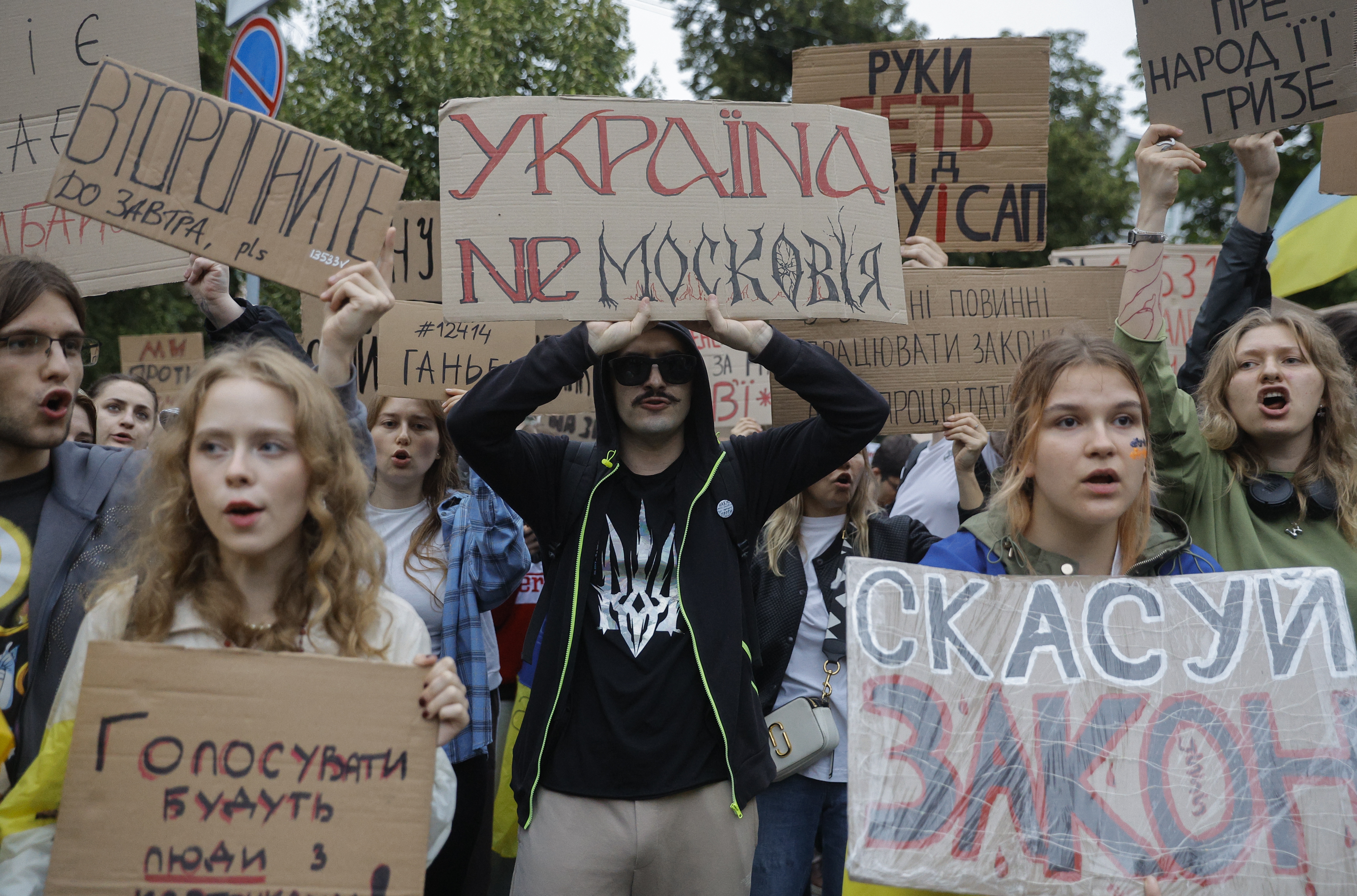
Only victims of propaganda could think that bill No. 12414—aimed at undermining the independence of NABU and SAPO—was passed by MPs who then, “frightened” by people with cardboard signs, rewound the tape. In reality, the script was in the hands of a single director who commands the SSU, the prosecutor’s office, the bar, the parliament, etc. And only one person could implement it: President Volodymyr Zelenskyy. Just as only one person could decide to retreat in order to regroup and then press on.
Almost two months have passed since the draconian law was repealed and the president was publicly humiliated in the eyes of the public and international partners. If that had been an admission of error, the SSU would long since have pulled back in its war with NABU. But the Presidential Office never admits mistakes; it keeps moving forward. From new legislative tactics—small amendments and bills leading to the same goal—to a strategic arrangement with the UAE to return to Ukraine the “main witness,” fugitive MP Fedir Khrystenko. His testimony is expected to provide evidence in the case against NABU detective Ruslan Mahamedrasulov, whom the Pechersk Court has remanded in custody until October 28.
Those who believe Khrystenko returned of his own free will should be reminded: such a special operation would be impossible without the president’s involvement, even if it was technically executed by the SSU deputy head Oleksandr Poklad. Now, under the control of the special services and dozens of prosecutors, the “FSB agent” Khrystenko is being turned into a “suicide bomber” meant to blow up himself and the anti-corruption institutions. The role has been written. The plan is in motion.
The most frightening thing is that the gas of oppression with which the authorities are poisoning society by destroying anti-corruption institutions has neither taste nor smell. According to an online survey conducted by the Info Sapiens sociological company for the National Public Broadcasting Company of Ukraine (Suspilne) on September 9–10, 26 percent of Ukrainians view the suppression of the independence of anti-corruption bodies merely as a “struggle for influence among the security forces.” At the same time, 39 percent trust neither the SSU, nor NABU and SAPO. Yet 16 percent tend to trust the SSU (the SSU’s combat wing reliably covers the shame of politics and business but cannot compensate for the damage their colleagues inflict on the state), while only 12 percent trust anti-corruption institutions. (Although we worked with Info Sapiens on the Making Sense of the Country project and were surprised by the poor quality of the results provided, we cite their data for lack of others.)
What is happening to the state right now? Who is fueling the war among the security forces, pulling NABU and SAPO into public brawls and eroding trust in them and why? How are NABU’s key investigations into the president’s “friends” and the SSU leadership progressing? And the main question: is it possible to bring the special services back into the fold of law or has the point of no return already been crossed?
Triggers and strategies of the authorities
To complete the picture, let me remind you: NABU’s investigations into the president’s child’s godfather, former Deputy Prime Minister Oleksii Chernyshov, was not the initial trigger for the Presidential Office that spurred it to take action. Nor was the investigation into the former deputy head of the Presidential Office, Rostyslav Shurma, or even the tapes recorded in Timur Mindich’s apartment where the president’s entourage (and possibly the president himself) discussed personnel and business issues. The first trigger was NABU’s crackdown on the so-called hacker lawyers scheme, whose participants were notified of suspicion on April 2.
Until then, lawyer Dmytro Borzykh, invisible to the broader public, was very visible in narrow circles. According to the investigation, the man who for several years oversaw illicit access to the Unified Register of Pre-trial Investigations (URPI) and sold information about searches and other investigative actions has long-standing ties to the current Prosecutor General, Ruslan Kravchenko. Both come from a military-prosecutorial background. Borzykh’s relationship with the above-mentioned SSU deputy head Oleksandr Poklad is even closer: they are godparents to each other’s children. Poklad is a fixture in the office of Presidential Chief of Staff, Andrii Yermak. And Yermak is always at the president’s side.

We have already reported in detail on the number of corruption cases involving high-ranking officials that this “group” controlled. Law enforcement officials believe they monitored NABU’s activities in the suspects’ interests through the register of pre-trial decisions. This allowed the Presidential Office to see what NABU was doing. When this coherent methodology was destroyed, the authorities were left in the dark and had to grope for threats to fat cats of every stripe. That is inconvenient and even dangerous. Hence, preparations for an operation against NABU and SAPO— under the banner of “reforming” the anti-corruption agencies—began back in the spring. But cases involving people close to the Presidential Office—Mindich, Chernyshov, Shurma—apparently forced them to speed up.
On June 16, Ruslan Kravchenko replaced the loyal but cautious Andrii Kostin as Prosecutor General. Sources say Kostin wouldn’t risk crossing legal lines, much less smashing them. Kravchenko is a different breed.
Meanwhile, NABU continued its investigations, and the blows became especially painful—above all, for the president himself. Because there is no “Chernyshov group,” “Shurma group” or “Mindich group.” There are “Kurchenko-1,” “Kurchenko-2” and “Kurchenko-3.” You remember this “young oligarch” onto whom the real owners of factories and ships hung their assets. People like Kurchenko were brought in at various stages to implement and manage tasks in specific areas. The formula is simple: without Yermak and Zelenskyy, they can do nothing. With Yermak and Zelenskyy, they can do anything. These are just convenient gloves for the hand. At this rate, they might as well rename the Ministry of Defence “Mindich & Co”—a veiled testament of who calls the shots.
The way the media inflate these people’s “autonomy” suggests a campaign which, willingly or not, by chattering about “groups of influence” in the Presidential Office, diverts attention from Yermak and Zelenskyy— in our view, the real masters of what is happening. They must always have people for specific tasks: to organize and protect schemes, to front for the real beneficiaries in various businesses—not only gray ones, but white ones too.
For example, the Fire Point defense company, long rumored to be linked to Mindich, has received enormous public and foreign funding. Whether kickbacks are involved today has not been proven. But there is little doubt that after the war this will be one of the most profitable legitimate businesses in Ukraine. You understand that no Mindich could have negotiated such a budget with the Danes and allocated it from the state coffers. Only two people in the country can do that. And believe me, Mindich is not even Kurchenko in terms of managerial qualities. People who know this affable man well say he is hopelessly lacking in management finesse. Follow his tracks and the next government, if it bothers to look, will soon be standing on the doorsteps of his cronies.

Moreover, the issue is not only the losses tied to removing the assets of the Presidential Office from the game. It is also their knowledge—deep, delicate, comprehensive. The problem is turning this knowledge into testimony. Have you seen bedtime story for the prominent Ukrainian journalist, Denys Bihus, on “Kniazev’s cashier” Oleksii Honchar? There are three Scheherazades’ worth of revelations here and if they speak, everyone will be horrified. Therefore, the main task is, if not to destroy, then to discredit the main listeners: NABU and SAPO.
So, to save its go-to cronies, on July 21 the Presidential Office swung a sledgehammer at others. On the one hand, there was the raid by Vasyl Maliuk’s loyal “hawks” on NABU detectives, resulting in more than 70 searches and the detention of detectives Ruslan Mahamedrasulov and Viktor Husarov. They were accused of collaborating with Russia. The SSU conducted searches without court orders and resorted to physical force.
On the other hand, there was the compliance of “fledglings” in the parliament: on July 22 they obligingly cut NABU’s powers, handing control over the entire law enforcement system to the president’s political appointee and the special services. (Let us remind you that one of the key authors of this bill was Dmytro Borzykh.) That same evening, the president signed the law. The next day, it was reinforced by a “historic” press conference by Prosecutor General Ruslan Kravchenko and SSU head Vasyl Maliuk, where they explained in simple terms why they needed so much power and why the anti-corruption agencies had to be destroyed, whatever wording they used.
However, on July 31, after youth protests—those same cardboard messages sent not only to the authorities that got carried away but also to international partners (whose public support grew in tandem with the protests)—the parliament voted for a new bill restoring NABU’s and SAPO’s powers. At the president’s initiative.
After what happened, the country had a tiny chance that Zelenskyy would come to his senses and, under the pressure of self-preservation, clean out his Augean stables of the political “strategists” who had set him up. But no: the Presidential Office left its strategy intact; it just altered the tactics.
Handy tools
Some observers have called the authorities’ current approach the “salami-slicing tactic,” with the main tools unchanged: the parliament and the SSU, guided by the prosecutor general.
The parliament. Two of the most notable thematic novelties from MPs—some of whom publicly repented for voting against NABU—are these.
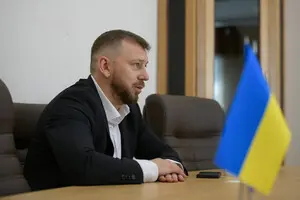
First, amendments for the second reading of bill No. 12439 on business protection. The gravest threat to NABU and SAPO is the provision granting exemption from liability for tax crimes, smuggling and abuses on the basis of official “clarifications” from the authorities. This is an official indulgence: it can be obtained corruptly, it undermines the role of the courts and opens the door to abuse in taxation, customs and procurement. The same bill strips the Economic Security Bureau (ESB) of the right to register proceedings under Article 191 of the Criminal Code (misappropriation, embezzlement or seizure of property by abuse of office)—MPs believe only the prosecutor general should do this, taking all such cases away from the ESB. (According to our information, the heads of NABU and SAPO, who publicly condemned this initiative, suggested to the new head of the ESB, Oleksandr Tsyvinskyi, to go three-ways on it, arguing that “strength is in numbers.” Tsyvinskyi, who criticized the bill in an interview with ZN.UA, has his own tactics.)
.jpg "Head of SAP Oleksandr Klymenko and Director of NABU Semen Kryvonos, July 2025.")
Second, draft law No. 11228-1 “on countering the intelligence activities of foreign special services.” Its key innovation is exemption from criminal liability for persons who have carried out an approved counterintelligence or intelligence task, even if they caused harm to law enforcement interests. In essence, the document introduces total immunity for SSU employees, intelligence officers and those involved in their tasks. Moreover, the bill does not specify what kind of harm is permissible, potentially up to damage to the state or citizens’ health. Particularly dangerous is that the SSU will be able to involve officials and businesspeople in “secret missions,” effectively exempting them from any responsibility. You see the trend.

In this story, the key body among the anti-corruption institutions—the National Agency for Corruption Prevention (NACP), headed by former NABU detective Viktor Pavlushchyk—stands apart. Now is not the time to delve deeply into this case (we will do that later), but it is worth saying: if the NACP were functioning properly, it would be its head telling MPs and international partners about the inadmissibility of curtailing NABU’s and SAPO’s independence and the obvious risks of the legislative changes above. The NACP has all the tools provided by law, including an entire department for anti-corruption expertise of legislative acts. It just needs to perform its direct duties, rather than shifting responsibility for the country’s future onto the people.
The SSU and the Prosecutor General’s Office. It is important to understand: the Security Service not only carries out the president’s political “orders” but also—under NABU’s close scrutiny—protects its own. After Artem Shylo and Illia Vitiuk, NABU set its sights on the head of the Main Directorate for Counterintelligence Support of Critical Infrastructure and Countering Terrorism Financing within the SSU’s Department for National Security Protection, Pavlo Dudar, and Ivan Sukhorada, head of a division within that directorate. They are suspected of passing information to Ihor Kolomoiskyi’s lawyers in the Ukrnafta and Ukrtatnafta case through the Presidential Office’s “fixer” Bohdan Yakymets. During searches in February, Yakymets’s phone was seized and became key evidence. Sukhorada and Dudar were suspended and placed at the SSU’s disposal, which cannot but worry Vasyl Maliuk.
NABU also focused on the closest associate of the SSU head, Brigadier General Serhii Duka, first deputy head of the Department for National Security Protection. (According to the Anti-Corruption Action Center, relatives of General Duka may hold Russian passports and have businesses registered in the Russian Federation.) It was Duka and his deputy, Anton Kravchuk, who oversaw the force component of high-profile political special operations against Bihus.info investigative journalists and NABU detectives, including Ruslan Mahamedrasulov. There is serious business rivalry among “groups of influence” inside the SSU—Dudar/Sukhorada, Poklad and Duka. Nevertheless, when it was necessary to unite against NABU, they did. Duka is very close to Maliuk. And perhaps Maliuk, far from enthusiastic about what is happening, would have stepped aside, but now he cannot. We disagree with the version that Illia Vitiuk is a bargaining chip for the SSU—he is of a different caliber. But Duka with Kravchuk and Dudar with Sukhorada are a serious story. That’s the sore spot. That is the lair.

Anton Kravchuk was being groomed for promotion to general when it became known that NABU was gathering evidence for a suspicion. So he was sent on a business trip to Dubai for almost a month, from where he and Poklad returned with Khrystenko. Kravchuk also hoped that this feat would discredit NABU’s intention to serve him with a suspicion, thereby restoring his chances of receiving general’s epaulettes.
That is why the SSU is working hard and making plans. And these plans are often drawn up not at Maliuk’s desk but in hotels owned by Russian oligarch Aleksandr Babakov. Over coffee, croissants, and spa negotiations.
As of today, the SSU has three illustrative cases against NABU.
First, the case of NABU employee Viktor Husarov, detained after the July searches. The detective from the closed D-2 division of the Central Office became a defendant in a treason case. According to the SSU, he was likely recruited by Russia’s FSB back in 2012. The investigation is checking the version that Husarov allegedly passed more than 60 pieces of classified information to the former deputy head of Viktor Yanukovych’s security, Dmytro Ivantsov. On July 22, 2025, the Shevchenkivskyi District Court of Kyiv imposed detention without bail. The appeal left this decision unchanged. Husarov is charged with treason and unauthorized actions with information.
And this is currently the SSU’s only tangible lead. According to SAPO head Oleksandr Klymenko, after persistent requests from the anti-corruption institutions, the SSU provided evidence against Husarov that currently satisfies NABU and SAPO. Their leaders have repeatedly stated publicly that they are ready to conduct internal investigations and, if illegal activities by any of their employees are confirmed, to assist the probe.
Second, the case of NABU detective Ruslan Mahamedrasulov, whom the SSU also detained on July 21, 2025, on suspicion of preparing to aid the aggressor state. According to the investigation, the detective (who handled documentation in the Mindich case) allegedly contacted representatives of the Russian Federation and may have passed information to them. (Formally, this suspicion has not yet been presented, but it was on this basis that Khrystenko was brought back to Ukraine. According to our information, Khrystenko has not yet given the testimony the organizers hoped for, although he is taken from the detention center to daily interviews at the SSU.)

In recent weeks, the SSU has focused on an episode involving the supply of industrial hemp, which the Service claims the detective allegedly helped his father smuggle into Dagestan, Russia. The defense argues that the suspicion against Mahamedrasulov does not mention supplies at all—only alleged preparation—and that the conversation published by the SSU concerned Uzbekistan, which can be heard on the audio the SSU released. However, the defense has not received the original recordings for independent examination. Nor have the heads of NABU and SAPO received materials for an internal inquiry.
.jpg "NABU detective Ruslan Magomedrasulov in the Pechersk courtroom, September 2025.")
In court, psychological pressure was applied through his elderly father, who was subjected to a humiliating “physical examination” before the hearing. Conversations between his parents were also played, including personal remarks by his mother, which the investigation is trying to fit into the “pro-Russian” narrative of the charges against the detective. Mahamedrasulov’s lawyer, Olena Shcherban (a lawyer and board member of the Center for Political and Legal Reform), stated that with this approach—and with the SSU’s ability to listen to anyone without a court order—tomorrow any citizen could be arrested for kitchen talk.
At the time of writing, the SSU had brought another charge against Mahamedrasulov. Investigators claim that, in addition to helping his father trade with Russia, he used connections and official influence for tax fraud. In spring 2025, the detective allegedly agreed, for a reward, to influence State Tax Service decisions to remove about ten companies from the “risky” list and allow transactions worth almost UAH 30 million. He was promised UAH 900,000. According to the SSU, the detective approached a former tax official and a law enforcement acquaintance; both allegedly confirmed his requests.
The defense called the accusation “another sham,” based on a subjective interpretation of alleged screenshots of phone correspondence. Anything can happen during operational work. Where is the evidence of a crime and what exactly are its elements? Or perhaps first take testimony from Kravchenko, who headed the tax service at the time, about Mahamedrasulov? “With this approach, you can bring new charges against him every day: the main thing is to dump screenshots into the public and keep discrediting him. But in reality, the goal is broader,” says Shcherban. “It’s intimidation of detectives working on high-profile cases. Detention centers, delays in appeals—everything works against NABU’s and SAPO’s effectiveness.”

The suspicion was signed by Prosecutor General Ruslan Kravchenko. He likes to do everything himself, to touch everything, to crown himself with laurels: draft bills against NABU and SAPO, sign suspicions, appear in court and even hide under a table or behind a curtain in his office.
Once again: Kravchenko’s aides today include the very person with whom Mahamedrasulov corresponded when Kravchenko headed the State Tax Service. Why they did not expose the detective together at the time is the question. Perhaps because, as our sources note, the new prosecutor general has already mastered the basics of money laundering conversion centers and the gambling business. And Kravchenko has someone to educate him: one of the protagonists of Ukrainska Pravda’s “Monaco Battalion” investigation, Serhii Viazmikin (until 2019, he served as deputy head of the National Police’s economic protection department, you can google), is among Kravchenko’s most trusted associates and provides him with private security.
Third, the case of NABU detective Vitalii Tebekin, who on September 11 received a suspicion notice from the SSU for allegedly filing a false asset declaration. The investigation claims he failed to declare an apartment in Uzhhorod worth about UAH 4.3 million, registered to another person but actually used by his family. The court set bail at UAH 2.9 million and ordered Tebekin to surrender his travel passport, notify authorities of any change of residence, and appear when summoned by the prosecutor. The defense argued that the bail was disproportionate and unlawful. The lawful maximum in this case is no more than UAH 60,000—and both the prosecutor and the judge knew it.
(The Tebekin case file contains information that his parents have Russian passports and live in temporarily occupied territories. It also notes that Tebekin failed to disclose this when signing state-secrecy documents. What is not mentioned is that the detective filled out the SSU questionnaire in 2022, and his parents received their passports in 2023. Nor does the SSU procedure require early notification of such changes. During the next check, Tebekin would have reported the new information.)

Thus, the absolute disregard for its own procedures and the law here is not just demonstrative cynicism; it is a signal to everyone else: no one will protect you. Because we listen to whomever we want (the SSU can conduct counterintelligence activities without any judicial oversight). We monitor whomever we want. We accuse whomever we want. We set whatever bail we want. We humiliate whomever we want in court… And that is at the public level, under journalists’ eyes; we can only guess what happens on the ground.
Stress testing anti-corruption agencies
By design, NABU and SAPO have fewer means of protection: they have the law, while the special services have lawlessness and serious financial resources to push the authorities’ narratives across pro-government Telegram channels. After the destruction of Borzykh’s hacking system, monitoring of NABU’s activities continues in a different way. According to our information, NABU detected abnormal interest in the registry of all its cases. Sources in law enforcement say someone has been viewing 342 NABU criminal proceedings in the URPI over the past two months. Of course, they could be judges, but when the legal address of the interested party uses a VPN and private access, that is a pattern to which NABU responds—and it has worked more than once. The matter is under review.
Despite obvious staff anxiety, NABU and SAPO are continuing key investigations into both the president’s inner circle and SSU employees. All of them were initiated long before the attack on the anti-corruption agencies and, a priori—even in terms of timing—cannot be revenge by the SSU for the arrest of detectives, despite the Service publicly accusing NABU of that after suspicion was served on Illia Vitiuk. (On September 2, 2025, NABU and SAPO notified SSU General Illia Vitiuk of suspicion: according to the year-long investigation, he bought an apartment for UAH 21.6 million at a contract price below the market, with funds of dubious origin.)
Of course, for most NABU detectives and SAPO prosecutors, pressure from the authorities is a challenge they should have been prepared for when they took the job. Anti-corruption work requires the ability to operate under duress, especially in a country as corrupt as Ukraine. “If you can’t handle it, leave!” as the head of the Anti-Corruption Action Center, Vitalii Shabunin, rightly said on one broadcast.
Recently, plenty of stones have been thrown at the Anti-Corruption Action Center (ACAC)—which has made serious mistakes in the fight against corruption, about which we wrote and warned—and at NABU and SAPO, whose effectiveness suddenly concerns everyone. But criticism from pro-Presidential Telegram channels and hand-picked political analysts is one thing; it is quite another when the same narratives are amplified in mainstream, official media. Context always matters. Right now, together with relevant public organizations, it is the leaders of the ACAC and anti-corruption institutions—under the heaviest, including personal, pressure—who have the courage to tell the truth. Not only to preserve the institutions they painstakingly built but also to keep Ukraine from becoming Russia. This does not mean we shouldn’t ask questions (we have already sent a request regarding the Archer defense company, whose director publicly accused NABU and SAPO of doing someone’s bidding). It means we must be very clear about how our words influence what is happening right now.
(Incidentally, right now the parliamentary temporary investigative commission (TIC), led by Serhii Vlasenko and his deputy Maksym Buzhanskyi, who were among the parliamentary drivers of curtailing NABU’s and SAPO’s independence, is pressuring the High Anti-Corruption Court (HACC). Its head has been inundated with requests that, to put it mildly, exceed the TIC’s powers, according to our information. These include a list of judges with security protection. We remember this TIC was originally created as a key, subtler tool for exposing the anti-corruption agencies. However, NABU’s persistence regarding the president’s inner circle left no room for subtle pressure tools. Sources say the HACC fears provocations aimed at publicly discrediting the court and judges, as well as possible legislative attacks on its powers.)

As for the ongoing investigations: colleagues at Ukrainska Pravda have described in sufficient detail developments in key cases involving the president’s entourage, including the hole in Mindich’s apartment for eavesdropping that was in the floor, not the ceiling. That fact immediately spawned conspiracy theories about the owners of the apartment below. The owner is said to be the daughter of the well-known custodian of “tapes,” Andrii Derkach. And conspiracy theorists may get lost in versions—up to and including the claim that it was not NABU detectives who initially began listening to Mindich but other informed actors seeking to strip the president and Yermak of independence. One way or another, according to our information, NABU has the tapes and the investigation is ongoing. The only fear there (as law enforcement sources say) is whether the institution will survive to the moment when it can present ironclad evidence in court, rather than “exposé videos” from overly informed MPs.
A few notes on Chernyshov and Shurma. The latter’s phone, seized by German law enforcement during a search in July, has not yet been handed over to NABU. The Bureau attributes this fact to traditional European bureaucracy. We will live and see. As for Chernyshov, the process is slowed by a second episode involving security guards employed by Naftogaz and the Ministry of Infrastructure who, let’s say, received good salaries. We wrote about this, and it adds another 7–8 months to the investigation.
Back inside the lines
First, it is absolutely clear that President Zelenskyy has made his choice. And it is not in favor of state interests. Rivalry and even conflict among the security forces have always existed but under wraps and within a system of checks and balances guaranteed by the president. Old-timers recall how traffic police officers serving interior affairs minister Kravchenko towed away a surveillance car sent by Derkach to follow Kravchenko—and Leonid Kuchma had to have a stern talk with them: “Don’t fight, boys.” Zelenskyy, however, is not above the fray. He is a party to it. He was a party to the conflict with Zaluzhnyi. He is a party to the conflict with the Main Intelligence Directorate. He is a party to the conflict with NABU and SAPO.
.jpg "President of Ukraine Volodymyr Zelenskyy and Head of the Presidential Administration Andriy Yermak")
This undermines the state’s stability during wartime, and it is a pity no one stops the president in this form of self-realization; he’s nothing but encouraged. What the whole country (at war!) is now witnessing signals the complete disqualification of the president and his team as arbiters. The president has decided he can do anything, with no regard for the war, society or partners. Against the backdrop of the special services dismantling the anti-corruption architecture, all the sham government’s attempts to implement the Ukraine Facility plan look like a blatant mockery.
Second, as the Mindich tape affair progresses (and, according to our information, the Presidential Office does not understand from which side NABU is digging or who might be hit first), we should expect even more serious attacks on the anti-corruption agencies than the stories of detective Tebekin’s undeclared assets and screenshots from Mahamedrasulov’s phone. There is also director Kryvonos, with a pre-NABU background, who in fact raised doubts when he won the competition. However, everything that happened afterwards gives reason to believe: people change and grow.
Third, opinions within the president’s entourage differ on what should happen next. Here it is worth recalling the relevant deputy head of the Presidential Office, Oleh Tatarov, whom we have undeservedly forgotten. Active in the first stage of the operation against NABU, Tatarov has now stepped into the shadows. Everything is now developing with minimal involvement on his part. As an experienced anti-Maidan participant and seasoned curator of the security forces, he may be reassessing the prospects of such a presidential policy. But what does that matter when, for Zelenskyy, it is no longer so much about elections and retaining power (in Ukraine it is hard to claim victory relying solely on the special services—been there, seen that) as about guarantees for the future. His personal future, including financial.

Fourth, understanding that under the current government no one intends to put the genie of the special services back in the bottle does not negate the critical need for SSU reform. The EU and NATO continue, albeit quietly, to insist on its demilitarization and depoliticization. This means not only cutting its bloated staff but also stripping the Service of functions that do not belong to it. Economic and corruption crimes should be investigated by NABU, the State Bureau of Investigation and the ESB, while the SSU should focus on its core function: protecting the constitutional order, carrying out counterintelligence efforts, combating terrorism and repelling hybrid threats. Parliamentary and public oversight, re-certification and maximum transparency are essential. The SSU must transform from a cumbersome, politicized structure into a modern European-style special service.
So, can the genie that Zelenskyy released be put back in the bottle today? Our answer is this: not under this government. Nothing here is independent. The government. The parliament. The special services, when it comes to setting their actions and priorities. There are only two independent actors in the country: Yermak and Zelenskyy.
Every flock and every pack may have a black sheep or a rabid wolf. Detective Husarov is a small disgrace to NABU; Dmytro Koziura, head of the SSU’s Anti-Terrorist Center who worked for Russia, is a major disgrace to his organization. But neither the former nor the latter is a reason to destroy institutions. The SSU stands. And NABU must stand. Or should we have closed the Cabinet because Prime Minister Hroisman’s interpreter turned out to be a traitor?
Guys, look at yourselves and you will be horrified. Starting with alleged traitors Kulinich and Naumov and ending with Koziura.
Please select it with the mouse and press Ctrl+Enter or Submit a bug
 Follow on Telegram
 Login with Facebook
 Login with Twitter
 Login with Google