
 Support ZN.ua








Head of SAPO Oleksandr Klymenko: “The team does not understand why their colleagues are detained when no real evidence of violations of the law has been provided”

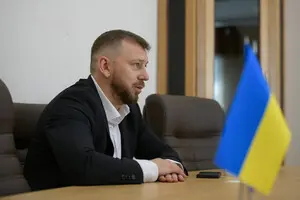
They sought to destroy the independence of the anti-corruption agencies. People with cardboard signs, activists, human rights defenders, independent journalists, assertive MPs and EU leaders have defended SAPO and NABU. But not to “whitewash” their activities; rather, to have someone to be held accountable. That’s not the case with Sukhachov and the State Bureau of Investigation (SBI). It is also pointless to expect accountability from Security Service (SSU) head Maliuk, who is ready to “ unload the whole clip into the detectives.” Under the current government, that is for sure.
Therefore, in my conversation with SAPO head Oleksandr Klymenko, I asked questions that he might not have liked. Of course, he can always hide behind the secrecy of the investigation, and we do not want to interfere with NABU investigations. But at the same time, we want to understand how far key cases have progressed and what the prospects are for these cases.

So I asked my interlocutor to try to find a middle ground between the secrecy of the investigation and the right of the people, who have grounds for suspicion, to know what is happening with top-level corruption and why people have been forced to watch the confrontation between the president's security forces and independent anti-corruption institutions over the past two weeks.
Whether he fulfilled his promise in the first part of the interview is up to you to decide. As, in fact, is whether he will fulfill it in the second part, where we will talk about the institution of plea bargains, Odesa airport, and the SAPO agreement with Borys Kaufman, a figure in two NABU criminal proceedings.
On independence, the vulnerability of detectives and the state of the nation
IV: Mr Klymenko, I will start off with a question about a situation that makes one want to stare at the floor in disbelief. What does the president's statement about you and Semen Kryvonos REPORTING TO HIM that “one of Ukraine's people's deputies, as well as heads of district and city administrations and servicemen of the National Guard of Ukraine, were exposed for bribery” mean? What kind of reports are these from independent anti-corruption institutions to the president? Volodymyr Zelenskyy, of course, did not specify that he was referring to Oleksii Kuznetsov, a member of parliament from the Servant of the People party, and the head of the district administration, Serhii Haidai, a former head of the Luhansk Regional State Administration who is close to the head of the Presidential Administration, Andrii Yermak. Incidentally, the president could appoint Haidai as the head of the Poltava Regional State Administration literally in a day. Please explain.
OK: The word “report” was used in communications from the president’s office, not by us. Regarding the reasons for the meeting with the president: after the arrest of the MP, a number of entrepreneurs and heads of military district administrations, we needed to conduct searches in the National Guard. Only the head of the military unit is currently under suspicion, while the actions of a larger number of National Guard members are being investigated. However, when NABU deals with the National Guard, state officials deliberately accuse us of working for the Kremlin without any evidence. In addition, we had no guarantee that no one had heeded the public advice of the head of the Security Service that it was possible to “empty two clips” at the NABU officers who came to conduct the search.
IV: Are you saying that you acted preemptively to win the president as an ally?
OK: Yes, or at least to remove the right to ignorance. But only after the MP was detained, when we were actually controlling the transfer of funds, did the head of NABU inform the president, as commander-in-chief, that such a situation had arisen and that we would be searching the National Guard. After that, the president invited us to an official meeting. In other words, no one informed anyone before the operation was carried out.

IV: So you were protecting the detectives?
OK: Yes. Indeed, the independence of NABU and SAPO was defended, people dispersed, but we must not forget that two detectives remained in custody. And this situation, one way or another, affects the mood within NABU and SAPO. The staff does not understand why their colleagues are in custody, and no one has provided any real evidence of these people breaking the law. A detective can come with a search warrant to the National Guard, and tomorrow the SSU can also arrest him. Some detectives have begun to investigate serious cases involving the Security Service or top officials very cautiously. But despite this challenge, we continue to work and do our job. It is encouraging that there are also opposite cases, where some people, on the contrary, have become much more motivated to work and demonstrate the results that society expects from us in the first place.
IV: Are you in communication with the SSU regarding the arrested detectives, in particular Ruslan Magomedrasulov, who investigated the case of Timur Mindich?
OK: The director of NABU is in communication with the head of the Security Service. NABU sent a request asking for evidence, since the ongoing official investigations concern the detained detectives and the director needs to understand the real situation in order to make personnel decisions. But, as far as I know, NABU has not yet provided any materials. The appeal has also been postponed until the end of August.

At a press conference, the head of the SSU and the prosecutor general reported that detective Ruslan Magomedrasulov had initiated searches in the National Guard. But they did not specify that these searches were conducted within the framework of two different proceedings, with different investigators and prosecutors. One of the cases was initiated by the SSU. Despite this, we are being accused of having a “Russian trace.” The internal affairs minister publicly suggested that the searches could have been initiated by the Kremlin. How can such assumptions be made without evidence, and publicly at that? This is not normal. The consequences of such statements will continue to be felt, and we do not know whether the detention of detectives will continue in the future, as NABU is investigating numerous cases in the field of defense.
IV: As you know, every project always has a client, a group of architects, a contractor and a foreman. In the case of the bill that stripped NABU and SAPO of their powers, who played what role? Please tell us who commissioned this law, who drafted it, and who implemented it through the hands of the people's deputies? The MPs themselves do not count. First, 263 voted, then they rewound—by a constitutional majority. They are not real agents. Who were the real masterminds of this project?
OK: We cannot resort to public accusations and go beyond the legal framework. But for ourselves, we have clearly defined who played what role, who was proactive, and who demanded what during the so-called attack on NABU and SAPO, which they called a blitzkrieg that had to happen as quickly as possible so that we would not have time to recover. We saw which law enforcement agencies performed these functions, who authorized them, and who moderated them. The information that appeared in the media about those who were involved in this has been confirmed. In addition, we know exactly who was the most proactive and engaged.
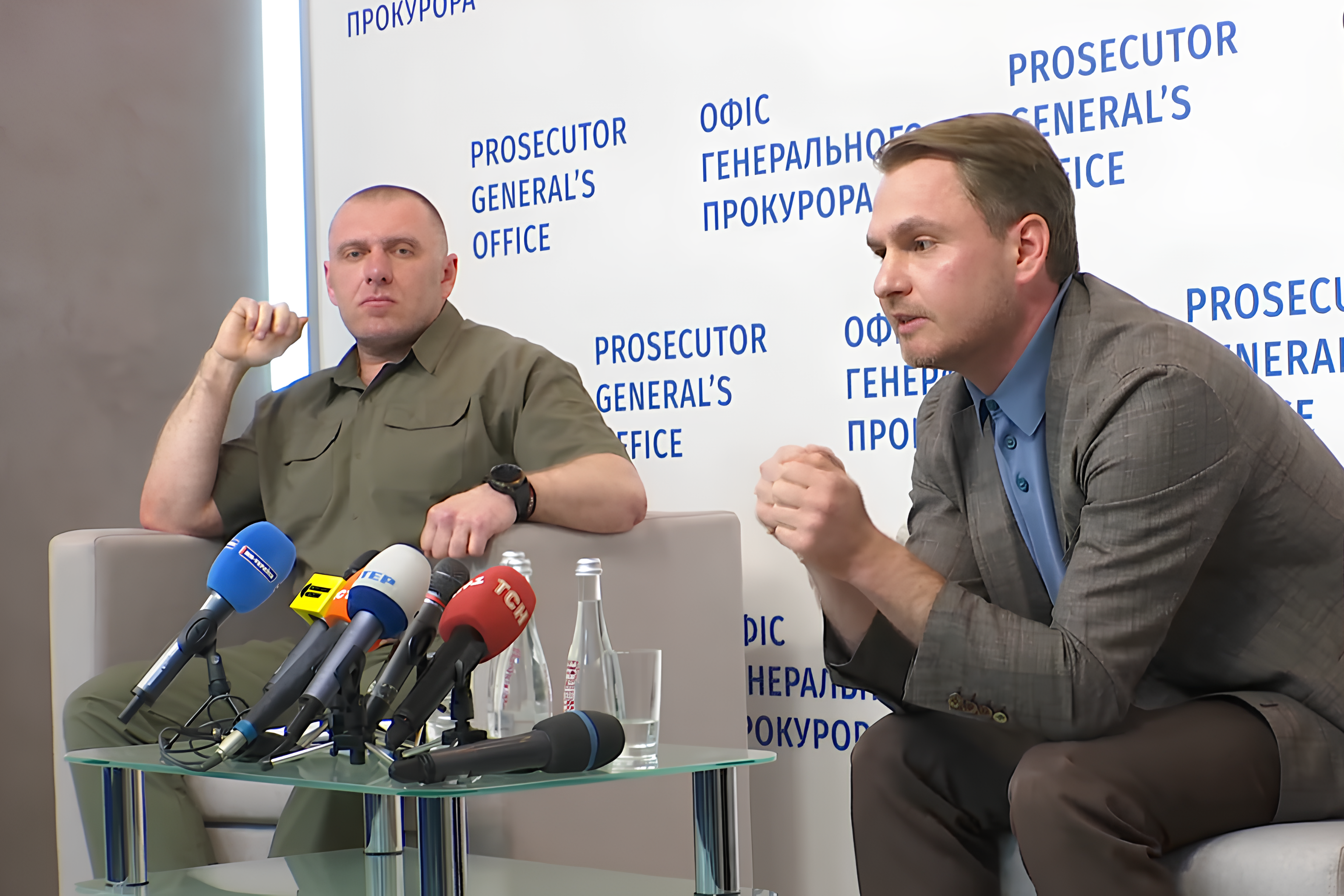
IV: Many people criticized you for thinking only about NABU and SAPO when you wrote your part of the second presidential bill. When it was passed, the prosecutor general received even more, including personnel-related powers.
OK: We wrote the part that restores the powers of NABU and SAPO. And we really have nothing to do with the rest of the law. It is difficult for us to communicate this because the question immediately arises: why are you interfering in something that does not concern you? We do not have the authority to make decisions on legislation—that is the job of the Verkhovna Rada. But, of course, we understand perfectly well that we have effectively returned to the situation that existed before July 22. Nothing has changed. The law used to impose on us the duty to investigate corruption among MPs, and it still does. However, both before and after this blitzkrieg, we were and still are unable to initiate investigations or carry out investigative actions against MPs (such as searches) without the approval of the Prosecutor General's Office. Should this be changed? Definitely! This, by the way, is one of the key points of strengthening the anti-corruption part of the Ukrainian Facility Plan.
IV: The anti-corruption agencies were created as an island, whose principles were supposed to gradually spread throughout the entire law enforcement system and clean it up. However, this did not happen. Moreover, this island was almost destroyed by the law enforcement system itself.
OK: The key principle of democracy is the ability to elect and replace those in power and the existence of independent institutions. The more institutions we have that are independent of political leadership, the more democratic our country will be, as balance will be maintained. You cannot tell law enforcement agencies, “Arrest them because we don't like them.” If the agency were independent, it would not follow such instructions. It would check whether there is evidence, and if there is none, it would refuse to take further action. In my opinion, there are currently only three politically independent institutions in Ukraine: NABU, SAPO and the High Anti-Corruption Court (HACC).
IV: So I shouldn't ask you about the NACP?
OK: I have already named three institutions.

IV: Neither the previous nor the current government had the political will to fight corruption. But why are you being obstructed right now?
OK: This is a reflection of the results of our work. In fact, it is a cumulative effect.
IV: But the trigger was that you reached the president’s inner circle.
OK: What happened is the result of our investigations. We have never been liked. Everything that has been achieved over the past ten years—powers, resources, guarantees—was obtained under pressure from international partners and society. All of this was voted on by parliament despite its reluctance. Europeans, understanding the importance of independent institutions, have clearly mentioned in every requirement for Ukraine's EU accession the strengthening of the independence of NABU and SAPO, guarantees of their independence and capabilities. This was and is being done in order to preserve this achievement.
IV: Before voting on the president's bill, MPs demanded guarantees from faction leader Davyd Arakhamia and the authorities that there would be no retaliation from detectives and prosecutors. The key message that circulated everywhere after your interview with Suspilne, where you promised to investigate the operation against NABU and SAPO “down to the molecules,” was that there would be reprisals.
OK: This is manipulation. We have never engaged in political persecution and never will. There has never been and never will be any political subtext in our proceedings. If sufficient evidence of a corruption crime has been gathered, we move forward with the case. If there isn’t any, we do not proceed. And this is regardless of the affiliation or voting results of any person, any MP. We are trying to calm the teams because the main thing in this situation is to preserve the institutions. Externally, we must not allow them to be destroyed by legislation, and internally, we must not allow the team to become demoralized.
IV: During the searches, there were many violations on the part of the SSU. Several detectives were searched on the basis of publications in Telegram channels close to the president’s office. What is this about?
OK: It's about violations of rights, the law, opacity and lack of transparency. Did you search the detectives' homes on such charges? Okay. This caused a great deal of controversy. So why don't you come out and communicate with the public? Show the evidence. It's simple.
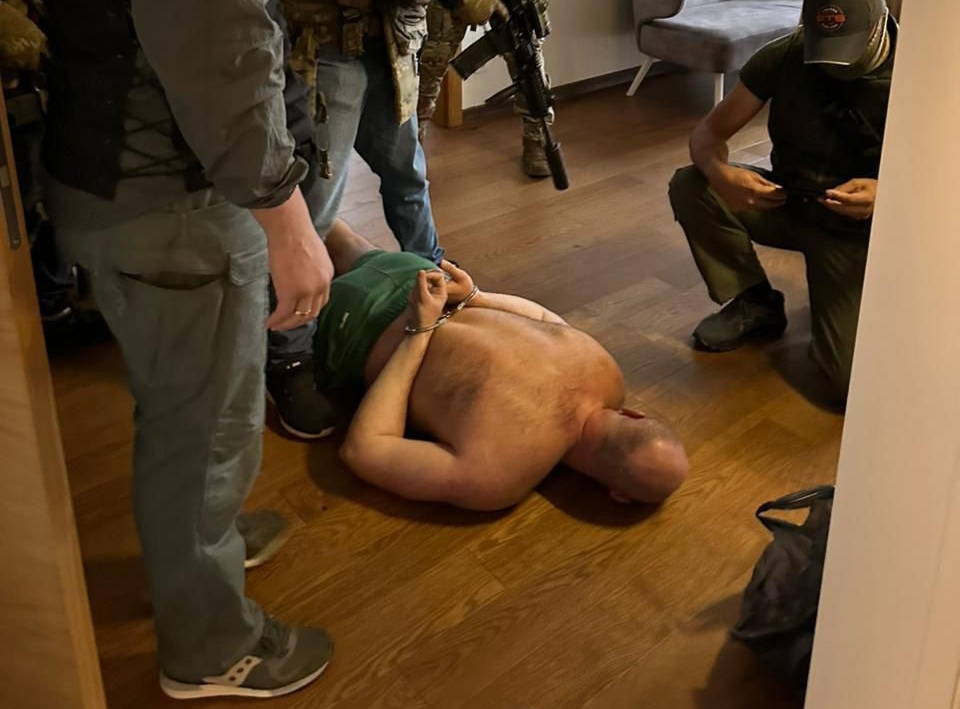
IV: I have a strong feeling that we ourselves did not notice how we ended up on the brink. Because behind the facade of the president's “victorious” law, we have this: no one in the state is reacting to the unacceptable statements of the head of the Security Service of Ukraine, to the lack of court orders for searches, to the use of physical force, to the violation of the presumption of innocence and to the publication of names. Face down on the floor. Without evidence. Anything goes. Because it's war. And who should investigate this? Who should say that we don't do this in a state governed by the rule of law? Who can say that today? If the president remains silent.
OK: We have a prosecutor general.
IV: But Ruslan Kravchenko was one of the main “castrators” of NABU and SAPO! Let's just remember how, the day after the Verkhovna Rada destroyed the independence of NABU and SAPO, he and the head of the SSU held a press conference to justify the actions of the security forces and parliament. A historic start for the new prosecutor general.
On top-level corruption, expertise and the Yermak Jr. case
IV: How do you feel when Herman Halushchenko, the former head of Energoatom state energy company, under whom the latter became unprofitable, and the former energy minister in whose department thefts took place during the war, which is actually being investigated by NABU, is appointed Minister of Justice on the initiative of the president?
OK: We do not communicate with the Minister of Justice very often. Only when changes that affect our work are being developed. We may be invited to working groups and discussions of final acts. Therefore, as an institution, we do not feel anything. Almost. Our jurisdiction covers top state officials, so by definition we have to be prepared for the fact that officials with whom we have some kind of working relationship may become our suspects tomorrow. We are constantly working on this. As for the Energoatom case, it is under investigation. To provide the balance you requested, I can say that we have more than one or two proceedings in this area, and they have been identified as priorities by both myself and the director of NABU. Work in this area is continuing very actively, and I can assure you that no names of suspects will stand in the way of these investigations.

IV: How do you feel when the former head of the Kyiv Scientific Research Institute of Forensic Expertise, Mr. Ruvin, whose record is stained all over, becomes the official advisor to the same Minister of Justice, Mr. Halushchenko, and sits in an office next to the minister's reception room? Some of the directors of expert institutions have already been transferred to temporary contracts, and negotiations are underway with them regarding their future.
OK: Taking all this into account, our position remains unchanged: the anti-corruption agencies need independent forensic expertise. Not “their own” expertise but independent expertise. This is because the European Court of Human Rights has ruled that the expert institution issuing the expert opinion must be independent of the pre-trial investigation body. In other words, it must be independent of NABU but conduct expert investigations exclusively in NABU cases. It is also important that not only detectives but also the defense can submit a request for an examination or a ruling if the case is under investigation by NABU.
We have already cooperated with all existing institutions, and everywhere we have had cases where, during searches of suspects, we found draft conclusions of expert institutions for NABU. Therefore, we understand how extremely important expertise is for our investigations. Besides, it will be important in the reconstruction process because all cases involving construction, reconstruction and renovation will require expert examinations.
IV: And do you think that the legislature and the current government will allow the creation of an independent expert examination when Ruvin is appointed as an advisor?
OK: We need to do our own thing. Currently, the key message and argument that legislators use is that there is no need to create a separate independent institution; instead, they advocate reforming the entire institution of expertise. First, this will take a very long time, and there is no guarantee that it will be a successful project. Second, if we start with one truly independent institution, it will be faster and cheaper, and if the project is successful, the state will be able to transfer this experience to all other expert institutions.
IV: But back in 2023, as part of the reform of forensic expertise, the Scientific and Research Center for Independent Forensic Expertise of the Ministry of Justice of Ukraine was established. It has a supervisory board with international experts, a polygraph and limited influence from the Ministry of Justice. However, according to my information, in two years, NABU has only turned to it twice, while other law enforcement agencies actively cooperate with this institution.
OK: First, I am convinced that for truly independent work guarantees of independence for such an institution must be enshrined in law. Second, where everyone is involved at once, the priority on combating top-level corruption will not be achieved. With this approach, any institution will be bogged down in a flood of cases.
IV: We have already figured out your ability to investigate crimes committed by MPs but not yet with financially sensitive people from the president's circle, whom you have already reached. Timur Mindich, Oleksii Chernyshov, Oleksii Reznikov, Rostyslav Shurma, Serhii Shefir... Who shall we start with? Is there any news on the case of former Minister of Community and Territorial Development Chernyshov, who, according to the investigation, is suspected of abuse of office and receiving illegal benefits in the amount of over 14.5 million UAH in the form of discounts on the purchase of elite housing, and who was guaranteed impunity after returning from abroad at the cost of eliminating the independence of the anti-corruption authorities?
OK: There are more episodes in this case than have become known to the public through suspicions, that is true. They are being investigated. If sufficient evidence is gathered, the public will learn about it from the official channels of NABU and SAPO.

IV: Moving on to Timur Mindich and the story of the recording of conversations in the famous apartment where the president celebrated his birthday five years ago and where top officials discussed political and business issues. I don't know how you will comment on this, but all the media outlets wrote about it. As well as about Mindich leaving the country. Will there be a notice of suspicion?
OK: We do not comment on proceedings that are currently being handled by NABU and SAPO.
IV: Well, for those who can read between the lines, this is also an answer. But Semen Kryvonos has already publicly confirmed the search of the house of former Deputy Head of the Presidential Administration Rostyslav Shurma in Bavaria, which we knew but did not write about so as not to harm the investigation. According to the investigation, the case is related to corruption schemes in the field of “green tariffs” for electricity, involving companies linked to Shurma's brother, Oleh, which allegedly received payments for electricity from solar power stations illegally, in particular from occupied territories. Now we are talking about the transfer of evidence by the German side. What evidence?
OK: Again, I believe that it is wrong to comment on the course and results of investigative actions in any proceedings. Even if this information has been disseminated in the media. I understand that the country and society have the right to know, but then we are accused of commenting too much and violating the presumption of innocence, for which we receive lawsuits from the defense. We have already had such cases. But it is clear that no one will say that the searches did not take place if they did.
IV: Can you confirm that, in addition to the request to Germany, NABU has made a request to another friendly country regarding Shurma? Has there been a response yet?
OK: Our priorities are energy, defense and other areas. Therefore, this is one of our priority cases. But any additional information could definitely harm the investigation. The suspect will find out about our requests and realize that they may come after him. That's absurd. And then society will ask: where are the results? And we have already said that we sent requests here and there, thereby alerting the suspects. We don't want to talk about our plans, we want to show results.

IV: On July 3, a search was conducted at the home of former Defense Minister Oleksii Reznikov as part of a case involving the purchase of food for the Armed Forces of Ukraine at inflated prices, in particular the infamous eggs at 17 UAH per piece. According to our information, a phone was seized. There are many suspicions in this case but not to the minister. Why?
OK: We have many investigations into purchases made during Mr. Reznikov's tenure as defense minister, and we are not ruling out any versions. We are checking all investigative versions and the involvement of all persons who had anything to do with those purchases. As for the search at Reznikov's residence, I saw your publication. This did indeed take place, we conducted many searches, but I would not rush to conclusions about the evidential value of the seized items, including this particular device.
IV: Serhii Shefir, an advisor and friend of the president, was mentioned not only in materials related to the case of Herman Halushchenko but also in the case of the Odesa Port Plant and former head of the State Property Fund, Dmytro Sennichenko. Mr. Sennichenko is suspected of organizing a criminal group and abusing his official position, which led to the misappropriation of state funds in the amount of over UAH 500 million. The main episodes of the case concern fraud during the sale of state property, in particular the Odesa Port Plant, as well as in the mining and chemical industry.

OK: The case against the former head of the State Property Fund and his criminal organization is under investigation. There are many suspicions, there are also other jurisdictions, and a special investigation team has been set up. Searches and seizures of property abroad are being carried out. The key issue is the extradition of persons who are in hiding. There are two problematic issues here: allegations of improper conditions of detention of extradited persons and the threat to personal safety in Ukraine due to the war.
The issue was partially resolved thanks to former Prosecutor General Kostin, who, together with the Ministry of Justice, selected facilities for holding extradited persons, renovated them and trained staff. It is guaranteed that these individuals will only be held in such facilities if they are subject to preventive measures, i.e., detention.
As a result, the number of extraditions has increased, although it is not yet at its highest level. Important progress has been made in countries such as Germany. The next step is Austria, where there are the most suspects. If other countries also grant extradition, it will be difficult for Austria to refuse.
We always communicate on all platforms where we meet with partners and representatives of other countries: “Look, there is a huge demand for Ukraine to fight corruption properly. We are starting. These people are fleeing to your countries, and you are not extraditing them to us. We convict them in absentia, send you the verdict so that at least the funds can be confiscated and returned to us. But you don't even do that because you want a verdict under the general procedure. But you yourselves are putting us in a stalemate.”
IV: So we won't be seeing Sennichenko in Ukraine?
OK: As with other suspects, we have sent a huge number of extradition requests to various countries. In his case, the procedure is still ongoing in Spain. In total, four extradition procedures have been initiated in different countries in this case. We will see what the outcome will be. The issue is usually resolved within 9–10 months, or maybe a year, because there are ways to delay it. The suspects apply for refugee status, and the court suspends extradition until this issue is resolved. Then there are appeals in courts of all instances. When the asylum procedure is completed, the court will continue to consider the extradition case.
The situation is similar with the United Kingdom. We also have some of the defendants there for whom arrest warrants have been issued, and some have even been detained. The extradition process has already begun, but it is quite lengthy. Several people were detained in the Odesa Port Plant case, and now the procedures for their extradition are beginning.
IV: How would you assess the scale of the damage caused to the state by this scheme? Apart from that, you forgot about Shefir. To what extent was this story covered up politically?
OK: There was a public trial on preventive measures, where a lot of correspondence between the defendants and their connections with state officials was exposed. I don't want to comment on this, but anyone who has read the information from the public court hearings could assess their actions.
This is definitely a big deal. And we know where to go from here. The problem is proving it when someone doesn't leave any traces, doesn't sign any papers or doesn't officially give orders but just gives unofficial commands. So, it's hardest to document the organizer. It's always like that.
IV: But you do it somehow?
OK: We try to. Look, it's 2025 now, we all use phones. In fact, it is our whole life. But we do not have the right to wiretap phones. If we ask the Security Service of Ukraine for this, our suspects will immediately know that we are interested in them. Therefore, we do not wiretap. This all comes down to effectiveness. An audit of NABU has been conducted, and there is a list of measures that need to be taken to increase efficiency. There are a huge number of legislative decisions, including the repeal of the harmful Lozovyi amendments [amendments to the Criminal Procedure Code of Ukraine regarding the establishment of terms for pre-trial investigation], the creation of an independent expert institution and the possibility of wiretapping independently of the SSU. These issues have been raised for many years, but in essence, they have not been resolved.
IV: What is needed for you to be able to wiretap phones?
OK: The government must provide funding for this project, and the Security Service must provide the technical capability. Mobile operators also need to be involved.
IV: NABU is handling the case of Andrii Yermak's brother, Denys Yermak. Did he trade positions of power or not? Will anyone answer this question five years later?
OK: I don't remember such a case during my tenure. But I will check. (The head of the SAPO picks up the phone. — I.V.). As I was told, NABU transferred this case to the police in 2020, and the police transferred it to the SSU.
.png "Denis Yermak, 2019")
IV: Can you provide statistics on cases that were transferred to other law enforcement agencies—the SBI, the ESB, the Ministry of Internal Affairs, the SSU—during your term for certain reasons?
OK: No, there were no cases where proceedings were taken away from us against our will. Only as a result of our own decisions related to the final determination of jurisdiction.
IV: What about the case of the fifth president, Petro Poroshenko, concerning the conflict over the Ukrainian section of the Samara-Western Direction oil product pipeline? According to the investigation and journalistic inquiries, in 2017, under pressure from the Poroshenko administration, the Rivne Region Economic Court transferred the pipeline to a company associated with Viktor Medvedchuk. The case was subsequently investigated by NABU and then by the SDU. Why is that?
OK: It was a joint decision by NABU and SAPO. We referred part of the proceedings to the court concerning the expert appraisers who provided an inaccurate assessment, claiming that the pipe had been modernized, although this had not happened. We proved that no repairs had been carried out and that the expert assessment was inaccurate. We also filed a lawsuit to return the pipeline to the state. Following the court proceedings, a final decision was made and the entire pipeline was transferred to the state. During the investigation, we repeatedly appealed to the High Anti-Corruption Court with petitions, but our requests were denied due to a violation of jurisdiction. Therefore, the prosecutor supported the detectives' initiative, and a decision was made to transfer the case to the Security Service of Ukraine. But just recently, the case was returned to us.
IV: I know that NABU hesitated to take it back. So, is everything okay with the evidence if they did take it back?
OK: I can only say that in our practice, there are examples when we took cases from other agencies based on jurisdiction—and closed them. Because formally, it is our jurisdiction, but there are flagrant violations or significant problems with the evidence, and the means to collect the evidence have already been lost. Sometimes, colleagues from other law enforcement agencies try to “dump” their shortcomings on us in this way: we have taken cases, but after careful examination, we have returned them. But there have also been cases where we took a case and successfully brought it to fruition.

IV: This week, anyone interested could watch the High Anti-Corruption Court hearing on the National Guard case, which involves the former head of the Luhansk Regional State Administration and former head of the Mukachevo District State Administration, Serhii Haidai. “I have known Yermak for over 20 years, and he listens to me.” The prosecutor quoted one of Mr. Haidai's remarks recorded during the preliminary investigation.
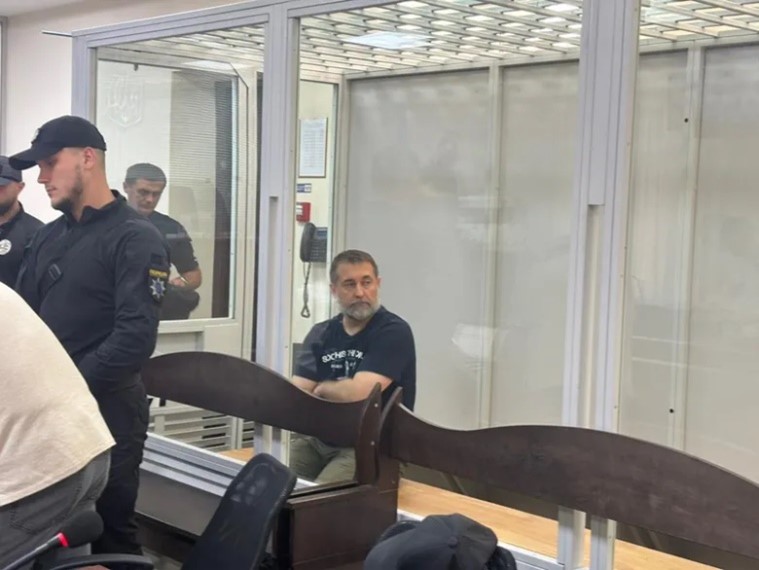
OK: The prosecutor voiced this as one of the risks that the suspect is connected with officials who have influence in the state.
IV: Does this motivate you as participants in the investigation to take further action?
OK: One should understand that we do not deal with all corruption. When the latest amendments to the Criminal Code were made, we proposed to include the head of the president's office, his deputies, deputies of the head of the State Bureau of Investigation, heads of regional state administrations, regional military administrations and district state administrations among our subjects. But the parliamentary law enforcement committee did not take this into account.
The positions of the head and deputies of the president's office are not under our direct jurisdiction. NABU has the right to investigate corruption crimes committed by such officials only under clearly defined articles of the Criminal Code of Ukraine and only under certain conditions, if the amount of unlawful benefit exceeds the equivalent of US$40,000, or if the amount of damage caused exceeds UAH 15 million.
Another condition is that the crime must be committed in collusion with other officials who are directly under our jurisdiction. We have always spoken out about the need to bring these positions and those listed above under our jurisdiction.
Please select it with the mouse and press Ctrl+Enter or Submit a bug
 Follow on Telegram
 Login with Facebook
 Login with Twitter
 Login with Google