
 Support ZN.ua








Successor or Neutralization? Why the President Chose Budanov to Lead Presidential Office
 Reader Survey
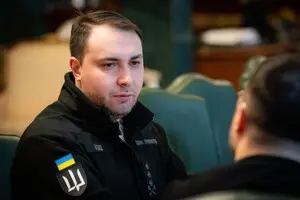
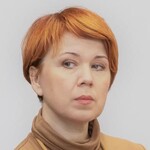
Kyrylo Budanov had been in the running for the post of head of the Office of the President from the very beginning. Zelenskyy himself made this clear by featuring Budanov in official photo releases alongside other contenders—Deputy Prime Minister Mykhailo Fedorov, Deputy Foreign Minister Serhii Kyslytsia, and Deputy Head of the Presidential Office Pavlo Palisa.
However, the more time passed since the scandalous resignation of Andrii Yermak (who, as we have already written in detail, never disappeared from Zelenskyy’s inner circle), the higher the chances became that a technical candidate would be appointed. Someone who would de facto act as the former head of the office’s hands on Bankova Street. One such option was Sanctions Policy Commissioner Vladyslav Vlasiuk. Trusted sources continue to insist that he was the key figure on the list when Zelenskyy set off for his meeting with Donald Trump.
Yet after the president’s return from Mar-a-Lago, everything changed. A turning point followed. The information Zelenskyy brought back from the United States ultimately led him to a different decision. Whether that decision was shaped by official talks—where it became clear that Trump could not bend Putin on territorial issues—or by a personal meeting focused on guarantees for the president, his family, and his closest circle remains a matter of speculation.
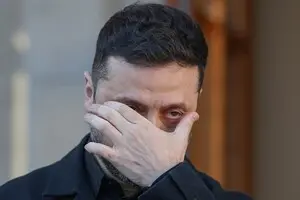
Let us repeat: Zelenskyy did not intend to appoint Budanov as head of his office. And for a month, he did not do so. Budanov’s proposals—packaged as a set of twelve points—failed to impress him. All this time, they lay idle on the president’s desk, just like the initiatives put forward by Mykhailo Fedorov.
What happened? What guided Zelenskyy in making this unexpected move with Budanov? And why did Budanov himself agree to trade the chair of the legendary head of the Main Intelligence Directorate for the second-class seat at the presidential chancellery, still overshadowed by Yermak’s lingering presence?
There may be several factors at play.
Factor one. Diverting attention from Yermak
“The end of Yermak!” was a tempting treat the president unexpectedly dangled before the public. The media and opinion leaders took it eagerly. But people—including presidents—do not give up what keeps them afloat.
Yermak is still everywhere. Yermak is at home. Yermak is at the gym. Yermak manages the everyday details—from food deliveries to personal services. Even the masseur falls under his purview. He is close. And he is part of the inner circle.
But the public toxicity of the former head of the Presidential Office—both at home and internationally—left the president, at a critical stage of his term, with little choice but to play a trump card. Not to abandon Yermak, but to fend off pressure and try to turn the game around.
A new trump card was brought into play.
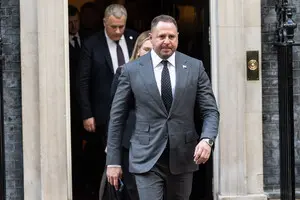
Undoubtedly, the appointment of a military heavyweight like Kyrylo Budanov—without political experience but with a high political rating (third after Valery Zaluzhny and Zelenskyy himself)—will alter the balance of power. Yermak’s influence will be constrained, if only because whispering in the president’s ear and issuing commands from an office on Bankova Street are not the same thing.
But let us remind the forgetful once again: this is not Yermak’s system. This is Zelenskyy’s system. All appointments and all individuals were personally approved by the president. And it is he who will decide to what extent it should be changed—substantively, not formally.
The only question is whether Kyrylo Budanov, now the former head of Ukraine’s military intelligence, understands this. The Financial Times is seriously mistaken in claiming that Zelenskyy allegedly spent a month persuading Budanov to head his office. That is not the case. Budanov wanted this status. And those same twelve points he brought to the president are direct proof of that.
We will discuss Budanov’s motives below. For now, let us note that he made this decision convinced that he could change a great deal. Exactly what he wants to change—and by what means—is another question. Up to this point, one of the key instruments Budanov has relied on has been connections. Just about everyone seems to have HUR “credentials.” Such a diaspora may bring both advantages and some very serious drawbacks. In any case, Budanov is placing his main bet for support of his actions not inside Ukraine, but outside it. That is, the person—or force—he can rely on is beyond its borders.
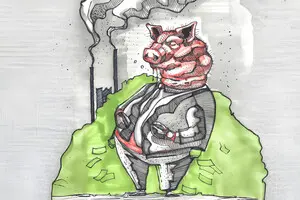
Factor two. Budanov’s personal ties with Americans and Russians
Budanov is the only figure within Ukraine’s system of power today who enjoys the trust and respect of the current US administration. His network of personal relationships includes Keith Kellogg—who still has access to Donald Trump’s office—as well as J.D. Vance, Steve Witkoff, and a number of other figures from the US president’s closest circle. The CIA, as a partner organization, and its director, John Lee Ratcliffe, also support Budanov. They view him not only as a hero of the war, but as a figure with a realistic assessment of it. Moreover, he has not been tainted by the high-profile “Mindychgate” scandal or by classic corruption involving public funds. This is a fundamentally important point, one that automatically expands Budanov’s influence. (More than that: were it not for Budanov’s special relationship with the Americans, Zelensky and Yermak would have “devoured” him a year and a half ago.)
In addition, the former head of Ukraine’s military intelligence has maintained dialogue with the Russians throughout this period. For many years—and without alternatives, with Yermak merely an additional element—it was Budanov who handled prisoner exchanges, and he now heads the relevant coordination body. It is clear that discussions around exchanges are never confined to the humanitarian track alone: such conversations routinely extend far beyond it. As a result, Budanov has real, working channels of communication with the Russians—and they are unique.
This is precisely why his rapprochement with the president—and his appointment at this moment—appear functionally justified. According to available information, the formation of at least two negotiation groups is envisaged going forward. One, focused on reconstruction, will most likely be headed by Prime Minister Yuliia Svyrydenko. The other will concentrate on ending the war and the peace track. It is here that Budanov’s role becomes pivotal. In effect, he emerges as a potential head of the key negotiating delegation.
Whatever the course of events—peace or continued war—Budanov remains a natural fit for this role, both for a domestic audience that believes in systemic change and for external partners for whom Budanov is an entirely acceptable figure.
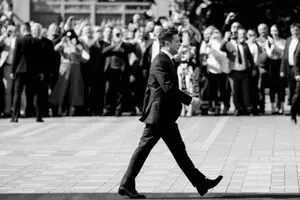
Factor three. Neutralization of a competitor
Formally, Budanov ranks third nationally in political support. Yet it is still hard to argue that this translates into realistic prospects of becoming the country’s leader. How society—and especially external partners—would respond to a military figure in peacetime or transitional elections remains far from clear.
Nevertheless, Zelenskyy is well aware of this rating. Budanov’s appointment to the Office of the President can therefore be read as an attempt to accomplish two objectives at once. The first is to detach him from his own power base—the “root” from which his political weight has grown. The second is to disrupt his electoral trajectory. As practice shows, almost no one launches a successful electoral campaign from the post of head of the Office of the President. It is not a springboard, but an anchor.
There is, however, an alternative view: some argue that this status could instead strengthen Budanov’s position.
But something else is more important here. The initial understandings were violated by the president almost immediately after the doors of Budanov’s office closed behind him. It is no secret that, upon leaving the HUR, Budanov expected to retain influence over the “state within a state” he had built. That is why he asked the president to appoint either his formal right-hand man, Vadym Skibitskyi, or someone from his own team as head of the HUR. However, the very next presidential decree issued after Budanov’s appointment named Oleh Ivashchenko as head of the HUR. Now former head of the Foreign Intelligence Service Ivashchenko is not simply a “Yermak person.” He rose through the ranks within the HUR, is a classic career officer and a capable military intelligence chief. But not of the type Budanov constructed. These are fundamentally different models. Ivashchenko is not the kind of figure willing to act as a “surrogate leader.” He will not service political or commercial interests, nor will he accommodate external projects that fall outside the core mandate of military intelligence.

For Budanov, this means one thing: reaching an understanding with Ivashchenko will be impossible. Ivashchenko is incompatible with anything other than a rigid, classically defined service logic. That is precisely why his appointment represents a serious blow to Budanov’s capabilities and to the system of influence he built over the years.
In other words, by appointing Budanov while simultaneously making the personnel decision on Ivashchenko, the president did not merely “bring a competitor closer”—he immediately pulled the rug out from under him. This is no longer an alliance; it is captivity.
In the same vein, another major personnel move should be viewed as well—the replacement of Defense Minister Denys Shmyhal with Mykhailo Fedorov. Commentators are divided. Some argue that only Fedorov is capable of shaking up the ossified generals’ nest and that he alone has a genuine plan for the war—hence expectations of high-profile dismissals within the armed forces. Others insist that Shmyhal, who had only just begun to grasp the inner workings of the ministry, should not have been touched at all—let alone replaced by “the creative Fedorov, who would not get to the bottom of what he has walked into even in five years.”
Military bureaucracy is not civilian bureaucracy. It is far harsher and far more dangerous. It is a system adept at burying problems under infographics, percentages and reports; at clicking heels flawlessly, nodding along and doing exactly what it has always done—simulating governance without altering its substance. This is precisely why replacing Shmyhal with Mykhailo Fedorov appears extremely risky. Fedorov built his ministry in an almost sterile, non-competitive environment, where he himself set both the rules and the pace. The Ministry of Defense operates differently. There, the system lives by its own laws—and it will resist.
Moreover, it was precisely Shmyhal whom Budanov—a figure closer to the old military system than to a new one—could rely on, including politically. It was Arakhamia, Shmyhal and Budanov (with Fedorov joining them only at the very last moment) who organized the intra-team revolt against Yermak.
According to our sources in the Office of the President, a personnel reshuffle has also been decided in the diplomatic bloc. The current Deputy Head of the Presidential Office for international policy, Ihor Zhovkva, is expected to move to the Ministry of Foreign Affairs. His position will be taken by First Deputy Foreign Minister Serhii Kyslytsia, as the president announced at the time of writing. This appointment is telling. Kyslytsia is a figure highly comfortable for Andrii Yermak. He is closely tied to the Ministry of Foreign Affairs and, over the past year, has served as the former head of the primary channel of the Presidential Office for foreign-policy communication. The current foreign minister, Andrii Sybiha, by contrast, irritated Yermak, who preferred to handle sensitive issues not with the minister himself but specifically through Kyslytsia.
In other words, having effectively acted against his own instincts and appointed—essentially—an outsider, Budanov, as head of his office, the president immediately put him in his place. The carrot was for the public; the stick was for Budanov.
We have already written that neither Trump nor Putin view Zelenskyy as a second-term figure. But it remains unclear how much this perception shapes the president’s actual decisions. What we do see is a methodical campaign to “take down” Valerii Zaluzhny. Everything is being brought up against him: the success of the Russian offensive in the south of Ukraine in early 2022, his PhD obtained at the university led by odious former MP Serhii Kivalov, vacation in the Dominican Republic and the military discharge for health reasons. It is possible that Zelenskyy has now set his sights on a second potential competitor. But not through a frontal attack—rather through a different logic: to draw closer and suffocate in an embrace.
Factor four. A potential successor
There is another risky and internally contradictory version: Budanov’s appointment is not meant to neutralize a competitor, but to test a potential successor—an attempt to pass on to him not only electoral potential, but also part of the administrative authority, decision-making power and international leverage.
The problem, however, is that these two logics are mutually exclusive. Either a potential candidate is “neutralized” by being placed in the position of presidential chief of staff, or a successor is deliberately cultivated. Doing both at the same time is impossible. Hence the duality—both in Zelenskyy’s motivations and in Budanov’s own decision.
Thus, the key question to which we still have no answer is whether Zelenskyy intends to seek a second term.
If he does, then Budanov’s appointment clearly functions as neutralization: a position that rarely serves as a springboard into elections.
If he does not, then for Budanov this may look like an opportunity. Budanov receives the negotiation track, enters the public arena not as a military figure but as a state manager and acquires the missing pieces of the presidential puzzle: experience, international contacts and participation in key decisions. A general with state governance experience is a very different kind of candidate.

Had Zelensky been firmly planning to run again, it would have been more logical to appoint Fedorov as chief of staff. Hence the version that Zelenskyy may be preparing for a deal.
Moreover, the mood within the elites has shifted markedly. Those who sincerely believe in Zelenskyy’s victory are becoming fewer—and the president senses this. Budanov, apparently, does as well. He may have calculated that under any scenario, a window of opportunity opens for him.
Some well-informed interlocutors ask the question directly: “After all, we have never seen a second round of ‘Zaluzhny versus Budanov.’ Do you understand?” And we do not know how, in such a configuration, the negotiation track, international support and the image of a person capable of reaching agreements would work.
Could Budanov be the Americans’ bet? We do not know whether they place bets at all. But Zaluzhny was certainly not forgiven for failing to answer the phone when Vance called him—at that very critical moment when President Zelenskyy, after the Oval Office scandal, was flying to London.
Factor five. Protection from the military
As we have already noted, Budanov is expected to head the negotiation group. In this respect, appointing a military figure as head of the office of the president serves not only an external purpose but a domestic one as well. Zelenskyy needs Budanov as a safeguard against the military themselves—in case Ukraine is forced to sign an excessively harsh agreement. Only a military figure is capable of restraining the military.

In effect, this is about the “honest conversation between the authorities and society” that is so often discussed, yet that no one wants to initiate. Budanov has already begun it—first informally, then fragmentarily in comments and later more openly. Including in conversations with the president—and not now but long before the current events. Budanov voices things that are considered unpopular in the public domain. And he takes responsibility for them. Budanov is not prepared to surrender territories, but he states openly that the war must be brought to an end. That resources—above all human resources—are exhausted. The authorities have failed to deliver effective mobilization.
This makes him inconvenient, but this is precisely what makes him valuable to Zelensky, who avoids domestic political issues. Budanov is a person willing to sacrifice much, and his methods can be multifaceted and far from comfortable for the system.
Factor six. Trust-based relations with the anti-corruption institutions
The anti-corruption authorities are a separate and significant motive. Within the president’s circle, it is believed that through Budanov it may be possible to reduce the level of confrontation with NABU and SAPO. Budanov has no close or friendly relations with the anti-corruption bodies. But he has something else—mutual respect and trust on certain fundamental points. This is neither an alliance nor a partnership but a working relationship that today no one else in the president’s inner circle possesses.
At the same time, to provide a full context, it is worth noting that it was Budanov’s arrival that destabilized the position of Vasyl Maliuk, head of the Security Service of Ukraine (SSU). In the view of the former military intelligence chief, Maliuk had not fully adhered to the government’s line in the NABU and SAPO case. According to our information, a conversation between the president and Maliuk did indeed take place, and he was offered the post of head of the Foreign Intelligence Service. Maliuk declined both the president’s offer and the option of submitting a resignation—passing the matter to the parliament, where there would certainly be problems with securing votes. After all, Maliuk is associated among both the military and MPs primarily with Operation Spiderweb, rather than with curtailing the powers of the anti-corruption bodies.
Conclusion
All things considered, Budanov’s appointment is an urgent, multi-layered move by Zelenskyy which, as we have already noted, has several motivations.
It is obvious that each actor is playing their own game.
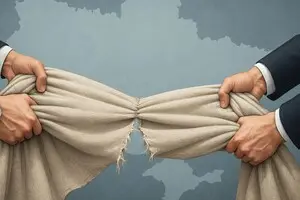
Zelenskyy, focusing on negotiations, has introduced military figure Budanov into the equation at a new level, demonstrating to society both his readiness to reboot power and his willingness to continue the war should negotiations fail.
Budanov, a senior military figure who is also ready for a ceasefire, appears to see his agreement to share responsibility with Zelenskyy as a chance to gain real power in the future. Even so, he cannot but understand that, quite literally on his very first day, the president clipped his wings by surrounding him with his own people in the HUR, the Ministry of Defense and the Presidential Office.
For now, however, this remains only a proto-stage of the process—ambiguous, unformed and dependent on the course of the war, the negotiations and the positions of the United States and Russia. What follows will hinge on a single key question that remains unresolved: does Zelenskyy intend to run in the next elections?
It is evident that Budanov’s appointment is intended by Zelenskyy as a signal to society that he senses the public demand for change.
In reality, however, this system of power is unlikely to transform. First, because all personnel reshuffles are taking place within the same narrow circle of insiders—drawing on the same familiar figures already embedded in the system. This is neither new blood nor a new logic.
Second, the authorities simply no longer have the time required for genuine transformation. Everything we are witnessing now is an attempt to soften attitudes toward the government domestically and, above all, in the United States. But real systemic change can only be expected after new elections.
Please select it with the mouse and press Ctrl+Enter or Submit a bug
 Follow on Telegram
 Login with Facebook
 Login with Twitter
 Login with Google