

 Support ZN.ua








The Sanctions Stranglehold: How to Cut Off the Kremlin’s Economic Lifelines

Sanctions are a cornerstone of the global strategy to defeat the aggressor. One would think that by now this unprecedented pressure should already have paralyzed the Kremlin’s economy and military-industrial complex (MIC). Yet reality tells a different story: Russia demonstrates a remarkable capacity to adapt, and critical components for its armaments continue to flow through the “grey zones” of global trade.
The effectiveness of sanctions will remain under direct threat until the international coalition learns to seal off the channels of circumvention, close loopholes for imports via third countries and step up secondary measures on all of the aggressor’s accomplices.
So how exactly does the Russian Federation circumvent existing sanctions and how can we turn the current sanctions stranglehold into an irreversible choking mechanism that makes continuation of the war impossible?
Evasive maneuver: “shadow” logistics and MIC financing
The main problem that negates the efforts of the international coalition lies in the aggressor’s strategic circumvention of technological restrictions. This has been made possible by the use of so-called neutral jurisdictions that act as logistical intermediaries.
Despite formal prohibitions, the Kremlin’s war machine continues to receive critical components necessary for producing rockets, drones and other weaponry. According to analysis conducted by the ANTS National Interests Advocacy Network, the adaptation of the regime and the vulnerable points in the sanctions architecture remain the key issues.
Central Asian countries, Türkiye and the United Arab Emirates have become effective and safe logistical hubs for the Kremlin. The bulk of Western microelectronics, optical instruments and high-precision computer-numerical-control (CNC) machines are first imported into these states from the West and then, with minimal documentation changes, re-exported to the Russian Federation. As a result, we regularly see Western technology used in Russian weaponry. As long as this scheme operates, the economic strains that force the Kremlin to seek additional revenue to support the MIC will not lead to its complete exhaustion.
Circumventing technological restrictions is impossible without financial backing. Many transactions that service re-exports are conducted through banks that have not been subject to full SWIFT exclusion or via settlements in national currencies rather than dollars or euros. This creates opacity and complicates tracing of ultimate beneficiaries for Western regulators, enabling the aggressor to finance its “grey” logistical chains effectively.
Export leaks: donors of the war economy
Sanctionary pressure on export revenues, which are a source of foreign currency inflows to the Russian budget, remains insufficient due to several key leaks in the system.
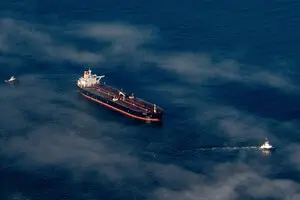
The Price Cap mechanism on Russian oil was meant to be an economic blow, but its effectiveness has been substantially undermined by the emergence and active use of a “shadow fleet.” As analysts have already found, the “shadow fleet” comprises more than 1,000 tankers operating outside the jurisdiction of Western insurance and logistics companies and is a key tool for circumventing oil-export sanctions. This allows Russia to export significant volumes of raw materials at prices that often exceed the established cap, filling its budget and undermining the fiscal function of sanctions.
One of the most threatening, yet less frequently mentioned, loopholes is the absence of large-scale sanctions against Russia’s nuclear sector and the Rosatom state atomic energy corporation. Because a number of European and global states are critically dependent on Russian nuclear fuel and technologies, Rosatom continues to receive stable, multi-billion revenues. This corporation is part of the Russian MIC and, by exploiting its “untouchability,” supports other sectors of Russia’s defence industry, remaining a powerful source of foreign currency and political influence (for example, Rosatom is building the Paks-2 nuclear power plant for Hungary).
Restrictions on trade in Russian diamonds, controlled by the Alrosa state company, also face resistance. Circumvention occurs via Armenia, Belgium and India, where Russian diamonds are cut, mixed with others and laundered, creating opacity of origin and allowing the Kremlin to fund aggression. Similar problems exist with other strategic commodities such as titanium, palladium and nickel, where Western industry has still not found full substitutes for Russian supplies.
How to make sanctions count
To turn the sanctions stranglehold into a genuine mechanism of suffocation, surgically precise and strict measures are needed that would be aimed at cutting Russia out of the global economic system.
The international coalition must finally make full use of secondary sanctions to close loopholes exploited through third countries. It is important to emphasize that this should not be merely an expansion of a “blacklist,” but an automatic mechanism that denies access to American and European financial systems for any legal or natural person—banks or logistics companies—in third countries involved in the re-export of critical dual-use technologies to Russia. This will transform the risk of cooperating with the aggressor into a genuinely palpable threat for foreign businesses.

Furthermore, to ensure the effectiveness of technological restrictions, control measures must be strengthened, namely:
- full embargo: it is necessary to harmonize and deepen the list of critical technologies subject to a complete embargo, including all types of CNC machines, high-precision sensors and industrial control software;
- presumption of diversion: a presumption-of-diversion mechanism should be introduced. The essence of this mechanism is that if the import volume of critical components into “risky” third countries significantly exceeds their pre-war levels of domestic consumption, such import should be presumed intended for Russia and, consequently, fall under secondary sanctions. This shifts the burden of proving the final destination and use onto intermediary companies.
Strengthening financial sanctions, in turn, requires significant political will to implement a full embargo on the key sources of foreign currency inflows: it is necessary to completely exclude from international settlements the remaining Russian banks that service export operations, including those in the energy sector, and to impose an embargo on Rosatom. As long as the nuclear sector—which is not only a source of foreign currency but also an instrument of political influence—remains outside the sanctions regime, financial pressure on the Russian economy will be incomplete.

Sanctions that do not lead to the irreversible weakening of the MIC and the aggressor’s economy are only an illusion. To turn the sanctions stranglehold into a real mechanism of suffocation, the international coalition must demonstrate the political will to apply secondary sanctions and to impose a full embargo on the energy and technological sources that finance the war. Only by making the cost of aggression unbearable for the Kremlin can we achieve a just peace and restore international law.
Read this article in Ukrainian and russian.
Please select it with the mouse and press Ctrl+Enter or Submit a bug
 Follow on Telegram
 Login with Facebook
 Login with Twitter
 Login with Google