
 Support ZN.ua








Legitimate Target: The Military Nature of Attack on Nord Stream



Who carried out the sabotage of the Russian Nord Stream gas pipelines in the Baltic Sea and why? Was it a terrorist attack or a strike against an aggressor?
The press floated different versions. At first, suspicion fell on Russia. Moscow retorted: it was the Americans. Later, investigators looked for a “Polish” or “Ukrainian” trace. We will likely not learn the full truth for years to come. But already now several Ukrainian citizens have been charged by German law enforcement and placed on international wanted lists, and one Ukrainian has been arrested in Italy. Next, the remaining Ukrainian suspects will likely be sought, arrested and tried.
How should Ukraine act? It must protect the rights and freedoms of its citizens; this is written in our Constitution. President Zelensky immediately declared that Ukraine had nothing to do with the Nord Stream explosions. The statement was clear and unequivocal, but for the investigative and judicial authorities of Germany and Italy, statements by politicians—even heads of state—are not evidence. To protect our citizens, a convincing and legally calibrated defense strategy is needed. The key elements of such a strategy are set out below, on the basis of the existing norms and practice of international law and official decisions by international organizations concerning Russia as an aggressor—decisions, incidentally, voted for in those bodies by representatives of Germany and Italy, the very states involved in the arrests.
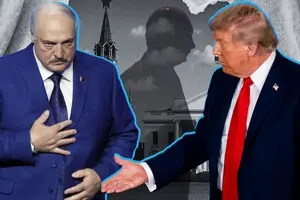
The Nord Stream 1 and Nord Stream 2 pipeline explosions has become one of the most widely discussed topics in recent times. The aim of this text is to examine whether the Nord Stream pipelines fall under the definition of a legitimate military objective in contemporary international law.
In recent decades, Russia has turned gas into a weapon of war (this phenomenon has a name—the weaponization of gas). As Josep Borrell, EU High Representative for Foreign Affairs and Security Policy, aptly stated back in 2022, “Energy policy has always been a geopolitical issue and this has become even clearer now with the war on Ukraine. For years we have debated the need to reduce our dependence on energy imports from Russia, a country that uses energy as a political weapon. Now we know we can no longer afford to put this off: we are funding the Kremlin’s ability to wage war against Ukraine.”
The story of the Nord Streams is, above all, a story about the global influence of the Russian Federation in Europe and about the windfall profits of the international criminal, Vladimir Putin (let us recall that on 17 March 2023 the International Criminal Court issued an arrest warrant for the “president” of the Russian Federation).
The Nord Streams are owned by Gazprom PJSC, the largest corporation in the Russian Federation, 50 percent of which is owned by the aggressor state.
Gazprom finances Russia’s aggression against Ukraine—both indirectly (through taxes) and directly. The company has funded the Potok and Fakel private military companies. Deutsche Welle (DW) notes that recruitment of “volunteers” for participation in the war began as early as August 2022 and was financed by Gazprom. According to DW, fighters from the Potok and Fakel PMCs fought in the area of Soledar and near Bakhmut.
From the standpoint of international law, this makes the Nord Streams a legitimate military target.
Of course, this claim requires justification, and it is appropriate to begin with the statement by Petr Pavel—President of the Czech Republic and Chair of the NATO Military Committee from 2015 to 2018—who called the Nord Streams a strategic and legal military target.

On 13 October 2022, the Parliamentary Assembly of the Council of Europe adopted Resolution No. 2463 declaring the Russian regime terrorist.
On 23 November 2022, the European Parliament adopted a Resolution recognizing Russia as a state sponsor of terrorism and a state that uses means of terrorism.
Thus, Russia is a terrorist state that employs terrorist methods to achieve its criminal aims in Ukraine and worldwide.
Given that the Nord Streams belong to Gazprom—and, de facto, to the Russian terrorist state—and given that the excess profits derived from the operation of the pipelines were directed toward militarizing the economy and sustaining the Russian Federation’s invasion of sovereign Ukrainian territory, including financing Potok and Fakel the private military companies that committed crimes in Ukraine, the Nord Streams are legitimate military objectives.
How is this position grounded in the norms of international humanitarian law?
In wartime, almost any civilian object can be used for military purposes and may therefore be regarded as a military objective for as long as such use continues. In the practice of the International Criminal Court and the International Criminal Tribunal for the former Yugoslavia, “civilian objects” are defined by reference to Article 52 of Additional Protocol I of 8 June 1977 to the Geneva Conventions of 12 August 1949, which states that “civilian objects are all objects which are not military objectives… military objectives are limited to those objects which by their nature, location, purpose or use make an effective contribution to military action and whose total or partial destruction, capture or neutralization, in the circumstances ruling at the time, offers a definite military advantage.” The article uses the formula “in the circumstances,” meaning that the classification of something as a military objective depends on specific conditions.
Typical examples of dual-use objects include logistics infrastructure (roads, bridges, railways, ports and airports), power plants, and electricity and communications networks. If a particular dual-use object makes an effective contribution to military action directed against an adversary, and its neutralization or capture yields a specific military advantage, that object is classified as a military objective, regardless of its simultaneous civilian use.

For an object to be classified as a military objective, it must satisfy certain criteria:
“Nature”: this category concerns objects whose inherent characteristics eo ipso make an effective contribution to military action;
“Location”: objects that are not military by nature but, by virtue of their placement, contribute to military action fall under this category;
“Purpose”: this category concerns the planned future use of an object in support of military action;
“Use”: this category covers civilian-type objects that are actually used for military purposes.
These approaches are applied in decisions taken with reference to international humanitarian law. In Prosecutor v. Dominic Ongwen, the Trial Chamber of the International Criminal Court determined that “the existence of ‘military advantage’ must be assessed from the attacker’s perspective in relation to each object of attack […].”
Accordingly, military objectives include “only those which by their very nature or purpose or use, make an effective contribution to military action, or exhibit a generally recognized military significance, such that their total or partial destruction in the actual circumstances gives a substantial, specific and immediate military advantage to those who are in a position to destroy them.”
It is also appropriate to note the positions of Denmark and Sweden, in whose exclusive economic zones the Nord Streams were blown up. Denmark and Sweden ended their investigations into the pipeline explosions in 2024. In a statement published on the website of the Danish Police, it was noted: “However, in the opinion of the investigation, there are not sufficient grounds for pursuing a criminal case in Denmark. Therefore, the Copenhagen Police have decided to close the criminal investigation into the explosions.”
Thus, based on the norms of international law and the relevant case law, one may assert that the Nord Streams are entirely legitimate military objectives.

First, the Russian Federation, as a shareholder of Gazprom and a co-owner of the pipelines, is itself a terrorist and a financier of terrorism.
Second, Gazprom, which operates the Nord Streams, directly and indirectly finances the Russian Federation’s military aggression against Ukraine. Gazprom’s multibillion-dollar tax payments are channeled through the state budget to the aggressor’s military needs, What is more, it has been proven that Gazprom directly finances private military companies engaged in aggression against Ukraine.
Third, the Nord Streams are legal military objectives from the standpoint of the practice of international humanitarian law.
And finally, Ukraine’s national interest is to support an objective investigation; therefore, politicians should not “bury their heads in the sand.” We must be involved as fully as possible in the investigation into the Nord Stream explosions and the defense of Ukrainian citizens accused in this case.
Read this article in ukrainian and russian.
Please select it with the mouse and press Ctrl+Enter or Submit a bug
 Follow on Telegram
 Login with Facebook
 Login with Twitter
 Login with Google