
 Support ZN.ua








Russia in a Whirlpool of Repressions: Regime Consumes Itself


A new wave of repression is sweeping across Russia.
As the Telegram channel We Can Explain observes, the country “is witnessing an explosive surge in convictions under political charges.” This may not yet be the tsunami of 1937 that swallowed millions of lives, but it already resembles the dark hurricane that ravaged the years from 1946 to 1953, shattering hundreds of destinies.
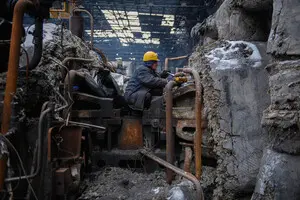
In the first half of 2025 alone, 210 people were convicted under terrorism-related articles of the criminal code—compared to 25 during the same period in 2024 and just eight in 2023. That is a twenty-six-fold increase over 2023! The number of sentences for “justifying terrorism” has also climbed sharply, reaching 243, nearly double that of early 2023. Convictions for spreading so-called “military fakes” rose to 45, a 2.5-fold increase, while 33 people were found guilty of “discrediting the army,” twice as many as a year earlier.
In mid-October, the dragnet widened still further: the FSB branded members of the Anti-War Committee of Russia as “terrorists,” opening a criminal case for alleged involvement in a terrorist organization and violent seizure of power against 23 of its members. Among those targeted are former Yukos head Mikhail Khodorkovsky, ex-Prime Minister Mikhail Kasyanov, opposition politicians Vladimir Kara-Murza, Dmitry Gudkov and Garry Kasparov, political scientist Yekaterina Shulman, entrepreneur Boris Zimin, actor Artur Smolyaninov and others.
Putin’s repressive machine
“All traitors of Russia have only one path—the path to hell,” declared State Duma member Mikhail Romanov recently, after denouncing a group of St Petersburg street musicians from the Stoptime band for performing songs by Noize MC and Monetochka, both well-known Russian artists who have spoken out against the war. Yet verdicts today are handed down not only to politicians, human rights champions, musicians and actors who oppose the war and Putin’s regime. Repression has ceased to be selective: the authorities are now turning their fury inward—against their own security forces, vice governors, ministers and mayors.
Cases have been opened against billionaire Ibrahim Suleimanov, vice governors of Sverdlovsk and Krasnodar regions Oleg Chemezov and Alexander Vlasov, head of the National Guard’s North Ossetia directorate Valery Golota, former chairman of the Council of Judges Viktor Momotov and many other high-ranking officials. Earlier, deputy defense ministers Timur Ivanov, Dmitry Bulgakov, Pavel Popov and other senior military officers were accused of abuse of power.
This week brought new arrests. On Monday, the FSB detained Vladimir Pushkarev, a former deputy head of the Ulyanovsk regional government. On Thursday, Andrei Melnikov, Director General of the Deposit Insurance Agency (ASV), was brought to the Lefortovo pre-trial detention center for investigative actions in a large-scale fraud case. That same day, Ryazan mayor Vitaly Artemov was suspended from office pending an anti-corruption probe.
The political system built by Putin is taking on a new quality during wartime, and arrests of officials and security officers have become routine. The Russian outlet Novaya Evropa (New Europe) calculated that this year alone 155 high-ranking officials have been arrested. Compared to 2024, that’s a 27 percent increase, and almost triple the number in 2021. As Russian economist Vladislav Inozemtsev notes, “We are only at the beginning of the repressive practice—the witch hunt is just starting.”
Some analysts suggest that the regime is turning repression into a foundation of governance, suppressing discontent. But experts with whom ZN.UA discussed the situation believe otherwise: the Kremlin is not deliberately organizing repression—it simply does not interfere with it. The spring of repression unwinds on its own: the lower ranks see in it a path to career advancement, while the upper ranks see a means to redistribute property and resources—and an opportunity to settle scores with old rivals.
According to Tatyana Stanovaya, an expert at the Carnegie Russia Eurasia Center in Berlin, “No matter how loyal or trusted a person may be, that no longer protects them from arrest because there are no disloyal or untrusted people left in the system.” Excesses? Overzealous local enforcers? No doubt. Even pro-Kremlin political analyst Sergey Markov has been labeled a foreign agent. Yet the Kremlin seems perfectly content with such excesses.
When neither loyalty nor connections save you
It still seems unlikely that the security forces will target the top elite—Sechin, Shoigu, Chemezov, Patrushev, Kiriyenko... But those just a rung or two below them—very much so. They are soldiers and chekists, administrators and businessmen—functionaries without real agency. For now, sitting governors remain untouched. And when arrests are planned, as in the case of former Kursk governor and ex-Minister of Agriculture Roman Starovoit, they occur only after dismissal. Starovoit, however, did not wait to be arrested and he shot himself.
Those implicated in corruption cases belong to various clans led the Rotenberg brothers, Security Council Secretary Sergey Shoigu, National Guard head Viktor Zolotov and others. They once seemed untouchable. But now, phone calls and connections no longer help: when your patron himself has enemies—and faces the risk of becoming a target—he cannot protect his clients.
In the Defense Ministry, generals from Shoigu’s circle are being arrested and sentenced to long terms—and he does nothing to shield them. During wartime, corruption charges become aggravated offenses. Everyone knows that corruption and kickbacks are integral to Russian political life. But the Kremlin’s “towers” have become less autonomous, and the Putin regime more authoritarian. In such a system, old agreements are easier to break.
Repression within the regime’s own ranks is not limited to officials and military officers. Next in line are the so-called Z-patriots—war correspondents who obstruct the authorities’ political maneuvering and infuriate generals with Telegram posts exposing the arbitrariness, incompetence and corruption of commanders. One such figure, war correspondent Roman Alekhin, has already been branded a foreign agent—in part because of the personal animosity of Kremlin propagandist Vladimir Solovyov.
The screws are tightening so hard that one wonders: will the screws give way? Will the repressions lead to political protest or a plot against the “tsar”?

Will the screws give way?
Lawrence Freedman, Professor of War Studies at King’s College London, believes that the war makes Putin’s regime vulnerable not from the outside but from within.
Alas, political protests are unlikely in Russia in the short term. There may be local riots against municipal authorities over poor housing services or demonstrations over environmental disasters—but not against Putin, who still enjoys broad public support.
Moreover, people relish the spectacle of “justice” when another boyar falls from Olympus. It creates the illusion of purification and equality before the law: punishment reaches not only ordinary citizens but also those “above the law.” In a society where corruption and ostentatious luxury among officials are the norm, such arrests offer moral satisfaction. Even if everyone understands that they reflect clan warfare rather than justice, the spectacle of “righteous retribution” brings gratification.
At the same time, this struggle—taking the form of raids and anti-corruption cases—poses no threat to the regime. The Kremlin even welcomes it. On one hand, it helps keep the establishment under control; on the other, these show trials become tools of social management, channeling public irritation and discontent not against the regime itself but against individual “bad boyars.”
Against this backdrop, even the nationalization of enterprises is framed as “returning the people’s wealth.” In reality, it is a redistribution of property—the big fish devouring the smaller ones. Yet for most Russians, what matters is not who gets the assets but the symbolic act of “justice,” when powers-that-be to return resources to “the state.”
As Freedman also notes, regimes rarely collapse by popular will: they usually decay from within when elites lose faith in their own system. The fate of a regime is determined not by protests or rallies but by the moment when the elites stop believing in its future. And war accelerates precisely this process.
For now, the top elites—though frustrated by the protracted “special military operation”—remain rallied around Putin: they are invested in preserving the system that grants them power and wealth. Any change would threaten both. But things could shift if repression reaches the untouchables from the top tier.
Nor do the generals rebel. Unlike in Turkey or Pakistan, the Russian general staff is not a “deep state” and lacks independent political will. The military are intimidated, dependent on the power vertical and embedded in a system of personal loyalty to Putin. The generals are busy preserving their privileges. Even if officers are increasingly irritated by failures at the front, corruption or personnel policies, this discontent never turns into a mutiny like Prigozhin’s. At best, it results in whispers.
Repression in Russia today is not an aberration—it is the norm. But the more massive the arrests become, the higher the likelihood that one day they will trigger the collapse of the entire Putin construct. For repression is not a sign of the regime’s strength—it is the clearest symptom of its decay.
Read this article in Ukrainian and russian.
Please select it with the mouse and press Ctrl+Enter or Submit a bug
 Follow on Telegram
 Login with Facebook
 Login with Twitter
 Login with Google