
 Support ZN.ua








Russia Deploys Additional Forces to Donetsk Region: What to Expect Next

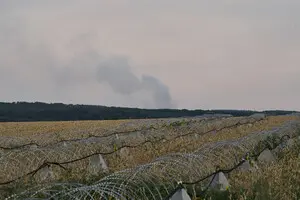

The past few weeks on the battlefield between Pokrovsk and Kostiantynivka have quite possibly been the hottest in the entire history of Russian attempts to advance in this area. The enemy’s progress became critical when Russian troops closed in on the highway connecting Dobropillia with the rear base in Kramatorsk, significantly complicating the logistics of Ukrainian forces.
Ukraine was forced to urgently deploy additional forces to this sector, including the 1st Azov National Guard Corps, which became the main driving force in stopping the enemy there. However, the situation remains extremely tense, and it has not been possible to fully regain control of the enemy’s initial breakthrough zone.

A ZN.UA correspondent personally spoke with lower-level unit commanders defending this area and is ready to share details and forecasts about the future of hostilities in the Pokrovsk area.
The most important task now is to understand the reasons behind the enemy’s initial breakthrough deep into the Ukrainian army’s defensive lines. According to military personnel who spoke to ZN.UA on condition of anonymity, there are at least two reasons.
The first — more general — reason is the absence of a front line in the classic sense of the term. That is, a continuous line of trenches, dugouts, and bunkers where infantry hold their ground against advancing enemy forces. In 2025, the front line consists of strongpoints and trenches positioned at considerable distances from each other, with no clear organization of defensive space in between.
Control over the approach of enemy assault forces is carried out mainly by short-range reconnaissance drones. Drones are also used to destroy advancing equipment, with FPV drones playing a key role. Yet in areas where the enemy manages to break through into the territory controlled by Ukrainian forces, there is often no one there to meet them.
The second reason, according to two ZN.UA sources, is that at the moment of the Russian units’ breakthrough in this area, Ukrainian forces were undergoing rotation and could not mount an organized defense against the enemy assault groups. Incidentally, the Russians skillfully used sabotage-and-reconnaissance tactics here, attempting to break into our rear at night using camouflage robes and heat-reflective blankets.

A crucial factor was that the Russians did not have time to expand the breakthrough zone or strengthen their flanks. This allowed newly deployed Ukrainian units to cut through the offensive fist of the Russian Armed Forces and clear the villages of Zolotyi Kolodiaz and Vesele. As of the first days of September, such operations were being carried out in the villages of Kucheriv Yar and Nove Shakhove.
However, it is too early to speak of completely nullifying the enemy’s initial success. It can already be stated that the Russians have managed to bring FPV drone units into the breakthrough zone, which are attempting to strike Ukrainian logistics more than 20 kilometers from the front line, while also expanding their “bridgehead” toward Shakhove and Sofiivka, moving to the flank. These factors undoubtedly constrain the activities of Ukrainian units that were previously deployed here.
As previously reported by the Hostri Kartuzy (Peaky Blinders) UAV unit deployed in the Pokrovsk direction, up to 90 percent of all enemy infantry assault forces are destroyed as they near the line of engagement. According to FPV pilots from the Azov National Guard brigade, recently deployed in this sector, this figure is somewhat lower but still reaches 75–80 percent and is the highest since the beginning of the war. Nevertheless, the unprecedented number of assault infantry used by the enemy still enables them to achieve tactical objectives again and again.
Recently, however, the enemy’s tactics near Myrnohrad and Rodenske have somewhat changed. Infantry unit commanders interviewed by ZN.UA note the increasing use of equipment, although so far mostly light equipment. But this may change dramatically in the near future.

There’s every indication that the Russians intend to return to their original tactics of mechanized assaults, involving the massive use of armored vehicles, including tanks, infantry fighting vehicles and armored personnel carriers. In recent days, convoys of dozens of vehicles have been observed moving from the temporarily occupied territories of Zaporizhzhia and Kherson regions into Donetsk region.
As of today, the following forces are reliably known to have been transferred from Russia or the occupied territories:
- the 40th and 155th Marine Brigades of the Russian Armed Forces;
- the 11th and 76th Airborne Brigades;
- the 17th Motorized Rifle Division, which has already engaged in combat near Kostiantynivka.
According to a company commander of the 93rd Kholodnyi Yar Brigade, who spoke to ZN.UA, the Russians’ new tactics may combine the massive use of armored vehicles on narrow sections of the front with significantly intensified air strikes. Before that, the Russians will carry out reconnaissance of weak points in the Ukrainian defense to determine the precise direction of attack.
According to Western OSINT researchers, from mid-July to mid-August the Russians carried out 1,400 strikes with guided aerial bombs along the front line between Pokrovsk and Kostiantynivka. These strikes were one of the factors behind the enemy’s success near Shakhove and Kucheriv Yar, according to Ukrainian military personnel, who are now expecting even more intense air strikes.
At the same time, ZN.UA sources in the 93rd Kholodnyi Yar Brigade and the 12th Azov National Guard Brigade confirmed that the enemy suffered significant infantry losses while attempting to advance toward Dobropillia. Estimates from these brigades differ slightly, but preliminary figures indicate that 2,500–3,000 occupiers were killed among assault units alone.

The question of when exactly the Russians will launch a new large-scale offensive remains open. And preparation is needed, not only by moving additional brigades and UAV units to the front line, but also by strengthening the rear, logistics and considering options for a possible retreat in advance, says an officer of the 93rd Kholodnyi Yar Brigade. In his view, chaotic retreats from positions are one reason why the Russians are able to push 10–15 kilometers into the rear of the Defense Forces.
As a representative of the 12th Azov National Guard Brigade also noted, coordination between adjacent brigades is an important issue. While these problems should be resolved with the introduction of a corps structure, this has not yet been fully implemented.
Ultimately, as the military emphasize, it is the retention of Ukrainian units along the Kostiantynivka–Dobropillia–Pokrovsk line that will be the decisive factor in the battle for the Ukrainian Donbas. This line of defense, built since 2022, is the main one—and it is precisely over this line that battles will be fought during the new Russian offensive. Therefore, its future, like the future of the entire Donetsk region, will be decided in the near term.
Read this interview in Ukrainian and Russian.
Please select it with the mouse and press Ctrl+Enter or Submit a bug
 Follow on Telegram
 Login with Facebook
 Login with Twitter
 Login with Google