
 Support ZN.ua








Ukrainian PMCs: Not by love, But by Consent



Let’s see how an ordinary Ukrainian PMC (private military company) is organized, using the example of a typical company of combat drones. Like any innovative unit, it is led by an outstanding individual—a Maidan activist, a volunteer since 2014, a serviceman since 2016, a historian by education, a pilot by calling and something of a businessman.
This is a concrete example, which is why so many precise details are given. Of course, the biographies of other RUBAK (Ukrainian abbreviation of companies of unmanned aerial systems) commanders differ. But what unites these people is that they create innovative military units not only as effective combat formations but also as successful “business projects”—enterprises that provide at least 50 percent of their own combat capacity with everything needed for war; that apply their own technical and tactical methods not prescribed by any statute; that independently recruit motivated fighters; plan and carry out military operations; and independently develop and implement their own “unmanned aerial systems.”

Our “typical PMC” was created in the first days of the war, when employees of one private company, engaged in drone design and production since 2014, took up arms, took drones and went to defend the approaches to Kyiv. Half of them had combat experience, half did not—but weapons and ammunition, medicine and equipment, radios and food, cars and drones had all been prepared in advance. These people had been preparing for the inevitable war.
Good training, psychological readiness, the use of the latest technology at the time and the best drones made this small volunteer unit (fewer than ten people) extremely effective and in demand on the front west of Kyiv. There they successfully carried out reconnaissance and adjusted artillery fire, extracted troops from encirclement and pursued retreating Russian units. Then came the battles in the Zaporizhzhia area.
And when in early summer 2022 it became clear that the war would be long and they needed to officially enlist in the military, our small PMC registered with the army—in their own vehicles, with their own drones, weapons and ammunition, fuel stocks, food, medicine and with their own production base, where drones were being developed by yesterday’s designers, electronic engineers and programmers, now soldiers of the Armed Forces of Ukraine.
Official military service made its own adjustments. It turned out that illegal small arms were not allowed, trophy grenade launchers were not permitted, RPG-7 rounds could not be used as warheads for drones. They needed their own certified pyrotechnician, a medic, a high-ranking commander (“Who are you to be giving orders here?!”), and their own trusted volunteer fund—one that could finance the purchase of drones for the whole unit and ensure repairs, fuel and other needs.
The army accepted the fighters but didn’t give them the promised Switchblades, Bayraktars or NLAWs. Be grateful you’re now serving in the AFU. The standard composition of our innovative unmanned unit looked like this: mission assignment — district… personnel — 12… assault rifles — 12… cartridges — 1,440… cars (personal) — 6… C-4 — 120 kg… electric detonators — 40… not a word about drones—developed, manufactured and deployed by these same servicemen.
No one complained at first—the war is one for all. But a year later, volunteer support dropped sharply, personal vehicles turned into scrap, and there was no trace left of the confidence that everything was going right—even if everything was going very terribly awry.

At a meeting with the group commander, a general said: “Who the hell are you people…? Where did you come from? You’ve been in the army for a week… What do you even know how to do? Drones? Push buttons? I don’t need pretty boys like for anything! I need infantrymen!”
The enormous effort and $200 million in enemy losses during the first year of the drone war were flushed down the drain with one decision from a high-ranking commander. Then we went to General Zaluzhnyi. It wasn’t hard to reach him—well-known and not-so-well-known volunteers, businessmen and oligarchs, journalists and psyop guys, Right Sector movement and Azov fighters, rank-and-file soldiers and generals all met near his office. The Commander-in-Chief received us, listened, posed for selfies, gave the order to establish a full-fledged RUBAK company (one of the first in the AFU), and then things took off! The number of personnel multiplied, drone production tripled, and they equipped their own permanent and forward deployment points in combat zones. Until suddenly, a new Commander-in-Chief was appointed.
The new broom swept differently. The campaign to find internal reserves to plug gaps at the front reached our drones. The brigade we had been “attached to” by order of the previous Commander-in-Chief saw little use for drone technology. They ordered us to hand the drones over to the warehouse and go to the trenches as assault infantry to defend the homeland. We had to look for a new place.
The new place seemed promising at first. For the first time since 2022, two years after the full-scale invasion started, the unit received several official military vehicles and the first government-funded orders for drones for our own needs. Unprecedented personnel benefits and freedom in planning combat operations were promised. Riding the wave of mutual enthusiasm and shared belief in victory, our sponsors tripled fundraising to enhance the unit’s infrastructure and drones.
Suddenly, the love ended. “Politics” intervened. Despite undeniable combat successes, the unit fell out of favor over a careless interview given by one officer. Not even the interview itself—the scandalous headline written by the journalists. That was likely just a pretext because the unit’s leaders—the ones who created effective drones and a functioning combat machine, who raised over 40 million hryvnias since the start of the invasion—didn’t want to “submit” themselves to newly created “structures” or follow senseless orders.
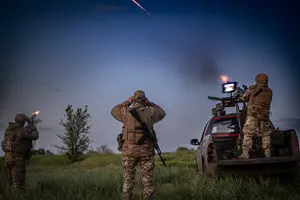
Here we must emphasize: the Ukrainian “private military company” is not about money. It is about efficiency, independence and patriotism. It is no coincidence that the first Ukrainian PMCs, though informal, unlawful and unrecognized by the state or society, emerged among drone, EW and SIGINT units, where technology naturally outweighs boots, insignia and a properly barked order. After all, drones don’t fly on command, no matter how badly someone wants them to. Nor do highly skilled engineers or programmers work on orders—even from the highest headquarters.
Yet Ukrainian PMCs aren’t limited to high-tech companies. In fact, they are even more numerous— by tens of times—among units, mid- and large-size formations, created around ideology, values and internal standards, led by their own trusted authorities and relying on their own sources of funding and mobilization.
It’s clear that before the full-scale invasion, the authorities didn’t recognize and would never have recognized the existence of such special, separate and independent units. Today, they have no choice—they recognize both nationalist and secular formations backed by major business structures, even “party” battalions and brigades sponsored by opposition parties. It’s not the time for luxury.
These nationalist, corporate and party PMCs share a certain autonomy and decision-making freedom. Outwardly, they resemble other AFU units and publicly declare unity with Ukraine’s Defense Forces. Internally, however, they are often structured quite differently and only formally acknowledge the statutes and orders of higher commands.
There is, in fact, a distinct approach from the high command when dealing with such PMCs: a specific “deal”—hold the line and we’ll give you resources (ammo, fuel, whatever we can) and won’t interfere in anything else.
Ukrainian ground PMCs of brigade or corps size are a unique phenomenon in modern military history. They don’t fight for money, don’t ask for extra funding (apart from standard pay), yet independently meet their own needs through volunteer and sponsor support. They plan their own training and operations. They easily adopt new technologies because they are open to anything that brings victory. They live the war. They were created for war, not for rank or career.

Senior commanders rarely—and only if invited—visit the bases or fronts where Ukrainian PMCs operate. The management of these “private military companies”—be they high-tech drone units or large ground formations—is based on mutual agreement: “hold this front,” “advance on this town,” “strike Moscow with drones.” Only then does it work. High commanders don’t even think of replacing their commanders or inserting outsiders—they won’t be accepted. They’ll be rejected. And then the generals will have to personally hold a 20–100 km section of the front. Who needs that?
We must acknowledge that it is not one army at war today but many. At the front, AFU units fight alongside the Territorial Defense, the National Guard, the Security Service, the National Police, the State Border Guard Service, the Main Intelligence Directorate and even the Foreign Intelligence Service. Each has its own elite units with respected commanders, motivated fighters, independent funding and even their own design bureaus and production lines for advanced weapons.
This is neither good nor bad. These are wartime realities. Bad—because the army should ideally be unified, monolithic, evenly armed and supplied, and staffed with motivated personnel. Good—because the front survives thanks in large part to these innovative, independent units.
The story of Ukrainian PMCs—starting with the Ukrainian Volunteer Corps, Aidar, Azov, the Kulchytskyi Battalion and others—is a story of state weakness, of law enforcement’s failure to create effective forces. But it is also a story of the strength of Ukrainian society and its ability to self-organize and take responsibility for the nation’s fate.
In truth, our entire army and law enforcement system could become just as effective and innovative—if only our headquarters and commands were led by the same passionate, enterprising people who lead Ukraine’s PMCs today. It seems obvious. But the unambitious, unenterprising—and therefore ineffective—officials at the top fear fair competition.
But fair competition is inevitable. Now, during wartime, successful unit commanders gain weight and authority—among their troops, in society, in business and even abroad. After the war, that earned authority will transform into defense, economic and political projects. New leaders—the ones bringing victory closer today—will rise to positions of power.
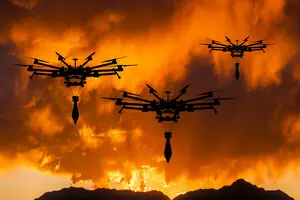
Do Ukrainian PMCs have a future? Of course—because they are the fertile soil from which a new Ukrainian army will grow. One that will become a guarantor of security in Europe. This new army—innovative, organizationally flexible, horizontally connected and built on motivation and professionalism—will deeply influence all of Ukrainian society (like the Turkish army before Erdoğan), the economy, foreign policy and the reform of the state itself.
Will Ukrainian PMCs ever become true PMCs, providing security in conflict zones for money? Unlikely. It’s hard to imagine Azov or Achilles going off to fight for pay after the war is over. Unless perhaps under a UN mandate—though that organization has long discredited itself and is no longer what it was in the Korean War era. More likely, former PMC fighters and commanders will form new units for other tasks (like peacekeeping), in the spirit of British or American PMCs. But that would require legal reform since current Ukrainian legislation does not permit such activity.
And finally, let us return to “our typical PMC.” Like many other RUBAKs and similar innovative units, they are constantly fighting on two fronts: against the enemy—the aggressor—where everything is clear; and against the internal military system, where even after 11 years of war, Soviet traditions still dominate. This old system, built on subservience to rank and deep disrespect for junior officers and enlisted personnel, even when they are professionals and volunteers, fiercely resists any change. Through action or inaction, it often engages in de facto sabotage. And if someone at the top gives the order to “deal with” outspoken fighters who speak and write the truth, the system will happily organize a public crucifixion.
So when you say you “believe in the Armed Forces of Ukraine,” don’t forget to specify whom you believe in—those who haven’t invested a gram of labor, a spark of talent (because they have none) or a single coin into the army… or those who built a new army from scratch, who gave everything they had for the sake of victory.
Support the right people.
Please select it with the mouse and press Ctrl+Enter or Submit a bug
 Follow on Telegram
 Login with Facebook
 Login with Twitter
 Login with Google