
 Support ZN.ua








Retired Four-Star U.S. General: “I Hope U.S. Support for Ukraine Increases”



The former Commander of U.S. Forces-Afghanistan (USFOR-A) and the International Security Assistance Force, the 40-nation NATO-led campaign in Afghanistan, retired Army four-star General David McKiernan, believes that Ukraine has every chance to hold the front line, but under certain conditions.
Ukraine’s Defense Forces undergo structural changes that could tip the balance in Kyiv’s favor in one of Russia’s war most decisive arenas: military organization. Yet the Armed Forces still struggle with clearly delineating command responsibilities across branches engaged in combat operations.

Nevertheless, Ukraine remains committed to defending its territory, regardless of the will of its European or American partners. These conclusions reflect insights retired Army Gen. David McKiernan drew during his visit to Ukraine.
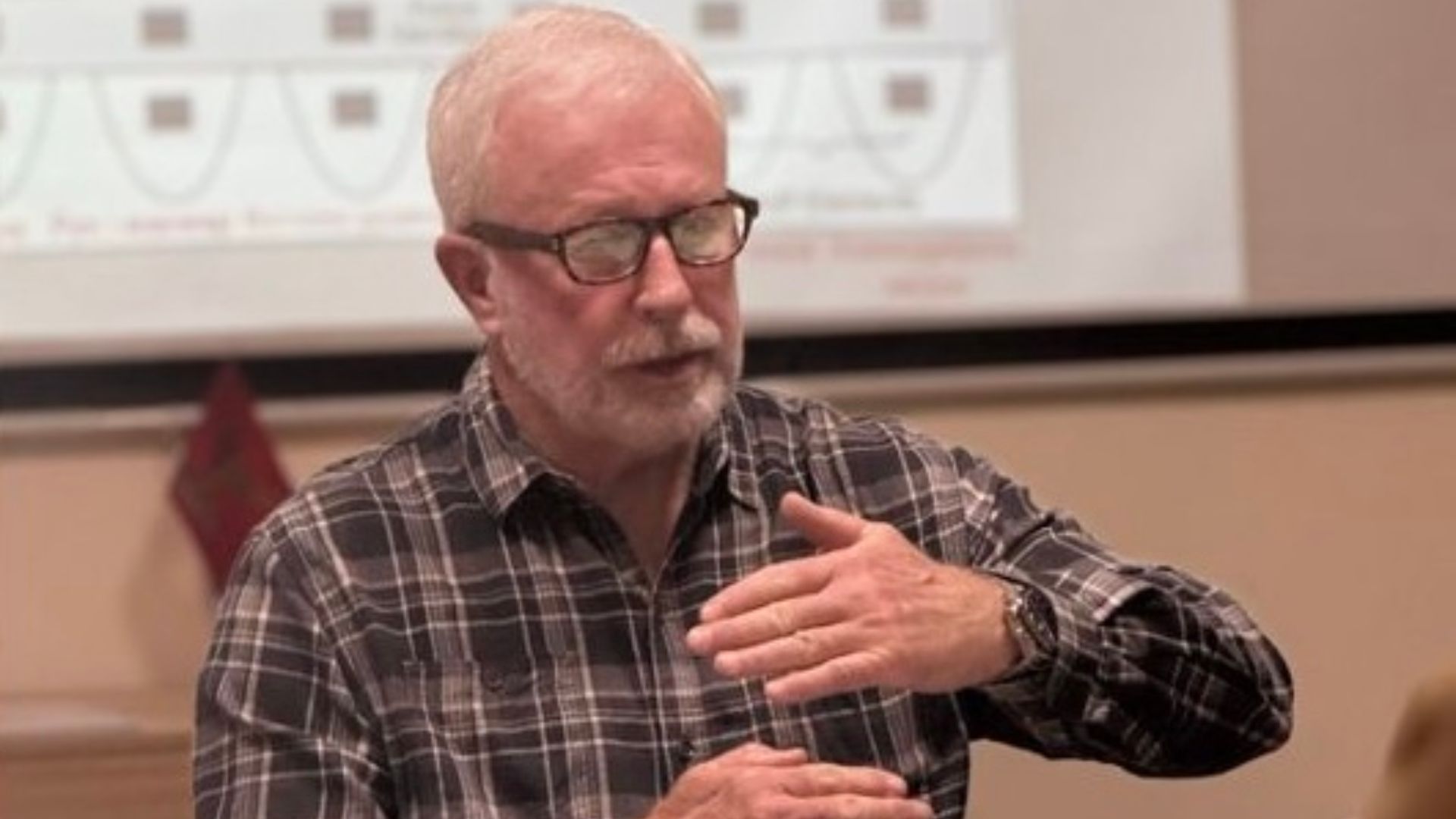
ZN.UA’s defense reporter sat down with a former senior U.S. Army officer, who led led U.S. forces during the 2003 Iraq invasion and later commanded U.S. and allied forces in Afghanistan from 2008 to 2009. In the interview, Gen. (ret.) McKiernan shares his insights on the trajectory of Russia’s war, the role of Western military aid, Ukraine’s efforts to stand up corps-level commands, and the command and control issues he observed firsthand.
ZN.UA: General McKiernan, how do you assess the current state of forces and the balance on the battlefield in Russia’s war as of April 2025?
Gen. (ret.) McKiernan: I’m convinced that Ukraine continues to wage an existential struggle for its freedom. Ukrainian troops clearly surpass their enemy in quality and are deeply motivated by the defense of their homeland and future. However, they face a numerically superior and brutal Russian adversary, one that effectively views civilian casualties as acceptable losses.
While Russian forces' advances are slow and come at a heavy cost, Ukraine suffers from a shortage of manpower and remains in constant need of logistical, materiel, and intelligence support from the West.
ZN.UA: What did you take away from your visits to Ukraine? What impressed you, and what raised concerns?
Gen. (ret.) McKiernan: During my two visits to Ukraine, I witnessed the unwavering resolve of Ukrainian soldiers and commanders to fight with skill, initiative, and courage for as long as it takes.
In many respects, the conflict has evolved into a "drone warfare."
Ukraine’s use of UAVs has been highly effective for targeting, reconnaissance, and logistical support. However, this constantly gives rise to new technological challenges, as both sides rapidly adapt with countermeasures and counter-countermeasures. It becomes a continuous cycle of action–reaction–counteraction.
In the U.S. Army, we strive to follow a set of leadership principles known as Mission Command in every operation. The principle I consider most critical for mission success is mutual trust.
From what I’ve seen, trust exists at the tactical level in Ukraine’s military. However, there is a noticeable gap in trust and coordination between tactical and operational headquarters (HQ). The same applies to joint-force formations, resulting in insufficient operational synchronization among army units, marines, airborne troops, UAV units, and the Air Force.
ZN.UA: You’ve commanded large formations in combat. How would you assess the command and control structure of Ukraine’s Armed Forces? What areas need improvement?
Gen. (ret.) McKiernan: My primary recommendation would be to establish a clearer delineation of command lines, responsibilities, and accountability between force-generating structures and operational forces.
Force-generating structures, namely the General Staff and the branches commands, should have a singular mandate: the recruitment, training, and force generation of combat-ready units for the HQ that exercise operational command and control in the battlespace.
The operational forces, in turn, are responsible for integrating these trained and ready units into their respective areas of responsibility and employing them in operations.
By operational forces, I refer specifically to the emerging corps-level HQ and subordinate tactical-level formations.
A clear division of responsibility between force provision and force employment would also mitigate the problem of excessive command echelons and overlapping HQ issuing operational directives, something that too often results in confusion and lack of synchronization during combat operations.

ZN.UA: How do you assess Ukraine’s creation of corps-level commands? What impact might they have, and how soon?
Gen. (ret.) McKiernan: I believe that provided the new corps HQ are properly provided their assigned battlespace is clearly delineated, this will enable Ukraine’s Armed Forces to exercise more effective command and control at the operational level.
While restructuring command architecture during active combat operations is inherently challenging, now may be the optimal moment to do so. War can serve as a crucible for reforming and streamlining command structures.
A gradual, deliberate establishment of corps HQ, paired with building out their internal structure for operational effectiveness, will significantly enhance the coherence and synchronization of military operations.
ZN.UA: What is your forecast for Russia’s next moves? What battlefield surprises might Ukraine face?
Gen. (ret.) McKiernan: I am convinced that Putin will not stop until he has established control over the entire Ukraine and, without doubt, will seek further expansion of the “Russian empire,” even in the event of a ceasefire agreement or a delineation line. I also believe he will continue offensive operations using poorly trained soldiers and officers, proxy forces such as North Korean units, and will persist in indiscriminate attacks on the civilian population with long-range glide bombs, UAVs, and missiles, all aimed at breaking the will of the Ukrainian people.
ZN.UA: Given current conditions, how long can Ukrainian forces hold the line?
Gen. (ret.) McKiernan: Despite everything mentioned above, I see extraordinary resilience in the Ukrainian people and their unwavering determination to fight for their freedom. The duration of this struggle will ultimately depend on manpower, sustained Western logistical and material support, intelligence sharing, and continued international pressure on Putin.
ZN.UA: Can Europe and other allies make up for the potential loss of U.S. military assistance, which seems increasingly likely?
Gen. (ret.) McKiernan: As a U.S. citizen, I sincerely hope that our support not only continues but increases. However, it remains uncertain whether Europe will be both willing and able to provide sufficient and comprehensive assistance if U.S. aid were to stop.
ZN.UA: Which types of U.S. military aid would be hardest to replace, and why?
Gen. (ret.) McKiernan: In my view, the most difficult capabilities to substitute are intelligence sharing, long-range strike systems, and air defense systems. These are absolutely critical, and among the most complex capabilities to replicate in both technical and operational term.
Please select it with the mouse and press Ctrl+Enter or Submit a bug
 Follow on Telegram
 Login with Facebook
 Login with Twitter
 Login with Google