
 Support ZN.ua








H-Hour: Russia’s War Against Europe


Last year, during a working discussion with officials at NATO headquarters, I received a comment in response to a statement made in one of Strategy XXI’s studies—something that seemed obvious in the 11th year of Russian aggression: “The war in Ukraine is a war in Europe.” The comment from Brussels was: yes, but this is not Europe’s war. That is, it’s your war with Russia; we are, of course, on your side against Russian aggression, but this is not our (NATO’s, the EU’s) war. We are now witnessing a transformation of European thinking, a shift in the approach of part of the alliance’s European members in assessing the fact that war is ongoing on the continent, and that this war is directed against Europe. But this rethinking of reality is not happening simply because Europeans have suddenly seen the truth about Russia. This awakening has been driven by the fact that the “roof” of the European house has started to slide off. The security roof. The American one. The one they’ve grown accustomed to over 80 years since World War II. The roof under which they failed to pay due attention to Russia’s final transformation—under the FSB’s guidance—into a mafia state and to the actions of Putin’s regime in Europe over the past quarter-century. The Hague Summit, perhaps temporarily, slowed this “roof slippage” but did not stop it, especially given the growing priority of the Indo-Pacific for the United States. Russia has now been designated a long-term threat because this is not just aggression against Ukraine—it is a war in Europe, unfolding from within, and one that may soon escalate into a conventional conflict.

On the nature of things
Since Putin was brought into the Kremlin in 1999, the Russian special services hierarchy has been acting against the West systematically and consistently. The Baltic states, Georgia and Ukraine have been and remain a thorn in the side of the Putin regime. After all, it was these countries, moving along the path of what the Kremlin sees as the West’s “aggressive takeover of originally Russian territories after the fall of the Berlin Wall,” that became, in Moscow’s eyes, the root cause of the greatest geopolitical catastrophe of the 20th century—the collapse of the USSR.
Hence the symbolic “punitive actions” carried out in hybrid fashion: in 2003, the cessation of Russian oil transit through Latvia; in 2006, through Lithuania; the gas blockade of Ukraine and Georgia at the start of 2006; and the unprecedented large-scale cyberattack against Estonia in 2007. Russia began implementing large-scale oil and gas projects bypassing the Baltic states and Ukraine—Baltic Pipeline System-1, Baltic Pipeline System-2, Nord Stream, South Stream—aimed at cutting them off from transit. Putin’s speech at the 2007 Munich Security Conference marked Russia’s open challenge to the West—and primarily to the United States as its leader. At a time of high oil prices, which were bringing windfall revenues to the Putin regime and emboldening its open displays of force, Russia invaded Georgia in 2008. Then, amid another surge in prices, the aggression against Ukraine began in 2014.
However, Europe’s political class interpreted Russia’s actions in Ukraine, Georgia and the Baltic states very differently—preferring not to see the threat, satisfied instead with the corrupt flows of oil and gas. In Berlin, the belief that “when you trade, you don’t go to war” seemed to be an axiom. But Moscow had, since Soviet times, developed a methodology to wage war even while trading profitably with the very states it was undermining—reshaping them from within to its own advantage.
A bit of recent history: organizational weapons
The methods developed in Soviet times by Spartak Nikanorov and Sergey Solntsev (the methodology of “control over control systems”) began to be effectively applied during the Putin era—a period of total integration of advanced special service techniques to achieve strategic goals. Organizational weapons refer to a set of non-military, long-term influence measures designed to erode an adversary’s ability to resist. One report by the Izborsky Club, a Russian conservative think tank, stated: “In fact, organizational weapons are a way to activate a pathological system within the functional system of a target state.” The result of applying such methods is the replacement of the target country’s basic value system with that of the aggressor—as the supposedly more promising one. In other words, the pathology stealthily introduced into the state organism of the victim country by the aggressor disables its immune system—its national security and defense apparatus—and reprograms the operations of its security and military institutions according to a logic in which they no longer identify threats to the state’s existence and do not counter them.
However, the Kremlin’s greatest victory in its war against the West since Munich 2007 has been the effective disorganization of the United States—the main force in the transatlantic space—and the fragmentation of the “collective West.” This was not achieved immediately. The breakthrough of 2016 failed to develop further in 2020, but 2024 fulfilled the goals of decades of effort. In 2025, we are witnessing the rapid transformation of the United States under the current administration into an authoritarian plutocracy—undermining the traditional American system of democracy, with its checks and balances. Trump’s idol is Putin; his role model—the mafia state built by Putin. This stands in ever sharper contrast to Europe, whose fears are growing exponentially due to two unpredictable figures: Trump and Putin.
Still the “Alliance of the Frightened”
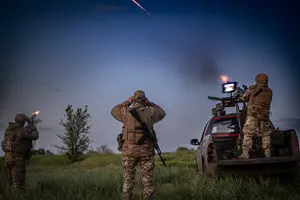
Another wave of discussion is now underway regarding how Russia might act against NATO without resorting to—or only minimally resorting to—military force. The Baltic states, of course, are seen as the weak and poorly defended link on NATO’s eastern flank. Once again, there is talk of a Crimean-style scenario with “little green men,” a Donbas-style one with the likes of Strelkov-Girkin, or the Suwałki Corridor. But now, in the 12th year of the war against Ukraine and observing NATO’s (in)action in countering Russia, the Kremlin has developed new innovative ways to strike at the allies.
The accession of Finland and Sweden to NATO, while strengthening the Alliance, has not made it more capable. Despite repeated affirmations of commitment to collective defense at the Hague summit, the question “Who will die for Narva?” remains unanswered.
Moreover, recent comments from Rob Bauer, former Chairman of the NATO Military Committee—that Article 5 of the North Atlantic Treaty does not guarantee an automatic military response in the event of a Russian attack, and that NATO might not respond even if, for instance, a village in Estonia were invaded—sound like encouragement to the Kremlin. Especially so when NATO and the EU show no willingness to act based on the logic of compelling the aggressor to peace—settling instead for partial deterrence, which does not actually deter Russia but instead encourages it to go further. Here is the most recent example: information from Ukraine’s military intelligence on increased production of Iskander missiles (both ballistic and cruise), which clearly exceeds the needs of the Ukrainian front—suggesting preparations for broader use.
Above all, Russia is betting on exploiting Europeans’ fear. Since 2014, and even more so since 2022, NATO has consistently shown itself to be an “Alliance of the Frightened.” The summit in The Hague did not dispel this impression; on the contrary, it confirmed it—shying away from calling things by their real names, namely, acknowledging that Russia is waging war in Europe. The “Coalition of the Willing” remains an abstract concept. Beyond the fear of war, a comparable fear among European citizens and politicians lies in the potential impact on their psyche and behavior: the loss of comfort to which generations of Europeans have become accustomed—at least over the past half-century. This is precisely what lies at the heart of Russia’s strategic planning against Europe: the exploitation of subconscious fears, through psychological shocks aimed at knocking Europeans out of their comfort zones. Imagine a European suddenly cut off from communications, the Internet, banking services, water and electricity.
Strike First
Russia’s core operational scenario is a “multi-crisis Europe”: the creation of concurrent crises across telecommunications, digital infrastructure, transport and energy systems. The objective is to generate operational paralysis in the vital systems that underpin European social fiber, provoking mass psychological shock and a pervasive sense of helplessness. The instruments for achieving this are hybrid: cyber tools, influence agents, social networks, migrants, criminal elements and marginalized groups—coordinated by pre-infiltrated cells, private military contractors and operatives of Russian intelligence services that have embedded themselves across Europe over the past decade.
At the 2015 Valdai Forum in Sochi, President Putin candidly stated: “Fifty years ago, the Leningrad streets taught me a rule—if a fight is inevitable, strike first.” This logic guided Russia’s actions in Georgia and Ukraine—and arguably, NATO too. Recall the 1999 dash by Russian special forces (then part of the peacekeeping contingent in Kosovo), under Major Yunus-Bek Yevkurov (now Deputy Minister of Defense), to seize the Pristina airport ahead of NATO forces.
Another reason for the Kremlin to strike preemptively is retaliating for its setbacks in the Middle East: the loss of Syria and the defeat of Iran by Israel and the United States. North Korea’s growing involvement—not only in supplying shells and missiles but potentially also personnel—suggests Russia’s readiness for a protracted conflict with both Ukraine and Europe.
The participation of the DPRK in the war in Europe served another purpose: testing NATO’s resolve. Would any NATO leader commit troops alongside Ukraine’s Armed Forces in response to a visible East Asian presence in the European battlespace? The allies failed the test. No one sent the troops. Not even the French president, who in spring 2024 spoke vaguely of shielding Odesa from air attacks. Moscow is convinced that the same inaction would occur if one of the Baltic states were attacked—despite their NATO membership—especially under the “Trumpian” reinterpretation of Article 5.
Putin’s recent statements about Russia posing no threat to Europe, alongside his unusual public complaints about domestic economic hardship, should be seen through the lens of Sun Tzu’s dictum: war is the art of deception, especially considering that they coincide with preparations for the Zapad-2025 military exercises. One should remember that since the launch of the “special military operation” in 2022, the Russian regime has remained politically viable only through constant motion—military action ensures regime stability. A new front is, therefore, further extending Putin’s long-standing rule in the Kremlin to defend Peter the Great’s Baltic “window to Europe” from NATO “encirclement.”

Algorithms of Disruption
US disengagement from Europe, combined with obstructionism within NATO from member states such as Hungary, Slovakia and Spain, automatically creates a military edge for Russia. Without US backing, Europe lacks credible deterrence against the Russia–North Korea axis. It is not a matter of tanks—Ukraine’s steppe already served as a graveyard for much of Russia’s armored forces. A ground invasion isn’t necessary. Through the capture of “beachheads” like Hungary and Slovakia via the use of organizational weapons, and with access to significant missile production capabilities as well as North Korean ballistic support, Russia can generate a large number of missiles and strike drones. This capacity is sufficient, in the event of a transition from hybrid to conventional war, to target key nodes of Europe’s critical infrastructure: power grid substations, urban water supply systems, data centers, etc. Precisely in such a scenario, systems like the Iskander, KN-23 and Kalibr would come into play—striking not only physical targets but also the fragile psychological fabric of Europeans, who would now witness terrifying images not from a “distant and foreign” land but from within their own cities.
Locations such as the often-cited “Estonian village” or even Narva may hold little strategic value for Russia. However, the sparsely populated islands of Estonia’s Moonsund archipelago, whose seizure would also secure control over the Gulf of Riga near Latvia, present a more compelling interest. As do the Åland Islands—demilitarized despite Finland’s accession to NATO and once part of the Russian Empire until 1917.
The algorithm for European destabilization, aimed particularly at the Baltic Sea region and involving a shift to limited conventional warfare, includes multiple variable clusters of action and might unfold as follows:
- Cyberattacks targeting energy grids, transportation, data centers, mobile communications, banks and water supplies in large urban agglomerations;
- Integrated use of fixed and mobile (naval) electronic warfare (EW) systems in the Baltic Sea, including GPS spoofing and signal disruption;
- Orchestration of sudden protest actions by migrant groups, escalating into criminal and terrorist acts across European cities;
- Staging of a large-scale environmental disaster—such as an oil spill in the English Channel or North Sea—under the guise of an accident;
- Sabotage of critical energy and communication infrastructure, including gas pipelines, high-voltage power lines and fiber-optic communication lines (FOCL) in the North and Baltic Sea regions;
- Nuclear blackmail, both via the threat of using Iskander missiles and potential seizure of one or more nuclear power plants located along the Finnish and Swedish Baltic coasts;
- Deep-sea sabotage operations targeting FOCL between Europe and North America, conducted by the Main Directorate of Deep-Sea Research of the Russian Ministry of Defense;
- Sabotage of ammunition depots, armament and equipment storage facilities, and fuel bases;
- Deployment of AI-controlled drone swarms to conduct strikes on selected Baltic targets that avoid NATO force deployment zones (especially American and German contingents), accompanied by diplomatic overtures offering safe withdrawal guarantees—framed through a “not your war” narrative, in the event of refusal to respond to the Russian attack militarily.
When?
The Kremlin believes Europe is incapable of acting preemptively—only reactively, and even then, in a de-escalatory mode. Incidents over the past three years in which Russian UAVs, cruise missiles, and military aircraft violated the airspace of NATO member states—including Poland and Romania, and at times also Hungary, Croatia and Estonia—without being intercepted, reinforce the conclusion that the Alliance remains incapable of mounting even an adequate response. European leaders are afraid of escalation. They lack inner fortitude and are psychologically brittle. The collective deferential attitude toward Donald Trump only reinforces the Kremlin’s perception that now is the moment to strike first.
What is more, NATO planners project a five- to ten-year horizon for preparing to counter a Russian war. But such thinking is based on a flawed, linear assumption: that Russia would require a similar timeframe. In reality, Russia does not need to launch a frontal assault from Kirkenes to the Bosporus. Nor will the Kremlin wait for the Alliance to be ready. Russia is already actively operating within Europe from inside its borders. Moscow clearly understands that NATO and the EU will either fail to respond or will respond only with limited unconventional measures to avoid armed escalation in the face of sub-threshold unconventional warfare. For some reason, it is wrongly presumed that Russia will act reciprocally and with restraint. A striking example of Russian action met with Western inaction is the incident on 14 March 2023, when a US MQ-9 Reaper drone was downed over the Black Sea—not by direct weapons fire but through kinetic provocation by a Russian Su-27 fighter. The US response was purely verbal, and reconnaissance drone flights were subsequently suspended to avoid further escalation. Russia achieved its objective without facing consequences.
The Kremlin sees clearly that NATO-EU unity is a Potemkin village—especially when Trojan horses within both blocs can obstruct consensus from within. According to Kremlin perceptions, the deliberate chaotic disruption and dysfunction of institutions at both European and national levels will culminate in political crises within governments, ultimately resulting in a “new normal”: the rise of transformed regimes in the Hungarian or Slovak mold. Pathology becomes the norm. What fails today in France, Germany or Romania may succeed tomorrow.
Thus, Russia is already prepared to act along axes where Europe is most vulnerable. Whether these actions are synchronized with the Zapad-2025 exercises in the coming months or unfold at another strategically advantageous moment next year is of secondary importance. Consider another telling indicator: on June 25, Russia unilaterally approved a new set of coordinates for its maritime baselines in the Baltic Sea, effectively imposing new maritime boundaries at its own discretion. This move flagrantly disregards the requirement to consult neighboring states—Finland, Sweden, Lithuania and Estonia—in accordance with the 1982 United Nations Convention on the Law of the Sea.

Details Matter. In the shadow of global developments, localized incidents are easily dismissed: a “shadow fleet” tanker drifting over undersea cables in the Baltic or North Sea; arson attacks on Bundeswehr trucks in Germany by pacifists or pro-Palestinian activists; mysterious drone flights near US bases in Europe; local blackouts; vehicular assaults on crowds at public events. In reality, these are training operations for Russia’s dispersed irregular assets before the H-hour. The periodic disruption of undersea communication and power cables in the Baltic, disguised as accidental damage, fits the emerging pattern. As do mysterious explosions at European defense companies.
In 1960, Russian émigré Yevgeny Messner—an imperial army officer—predicted this mode of warfare in his work: “In the future war, warfare will be happening not on the line but on the entire area of both opponents because behind the armed front line there will appear political, social, economic fronts; they will wage war not in two dimensions as it used to be in ancient times; not in three dimensions as it was from the moment military aviation was born; but in four dimensions; the psyche of warring nations is the fourth dimension. A warring side will be on the territory of another side, creating and supporting guerilla movement, it will support opposition parties, with ideas and in kind, by propaganda and finances; it will be nourishing disobedience, wrecking, sabotage and terror there by all means, creating rebellions…” “...They wage war using regular troops with their military monopoly lost, and using irregular forces, now a powerful war factor... They wage war using guerillas, subversion agents, terrorists, propagandists and saboteurs... But also using other unconventional weapons: aggressodiplomacy, oil weapons, pornography weapons, narcoweapons, brainwashing weapons...”
Messner, writing in exile in Argentina 65 year ago, forecast the very contours of Russia’s war against Europe in the 21st century. What he could not foresee were the additions of the cyber and AI dimensions—today developed with the support of China, a fellow beneficiary of EU and NATO disintegration.
Read this article in Ukrainian and russian.
Please select it with the mouse and press Ctrl+Enter or Submit a bug
 Follow on Telegram
 Login with Facebook
 Login with Twitter
 Login with Google